From my years designing and installing outdoor kitchens here, I can state that the success of a modular BBQ setup in
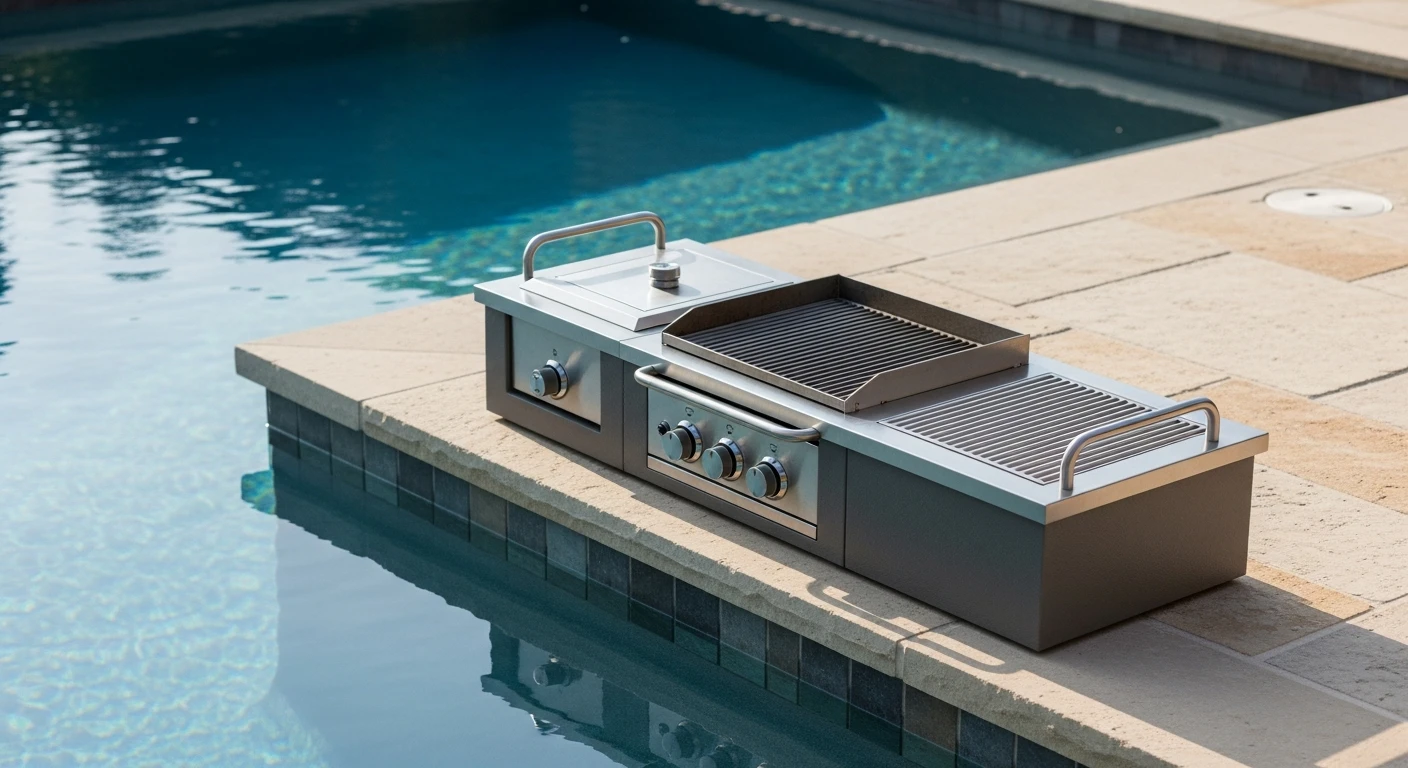
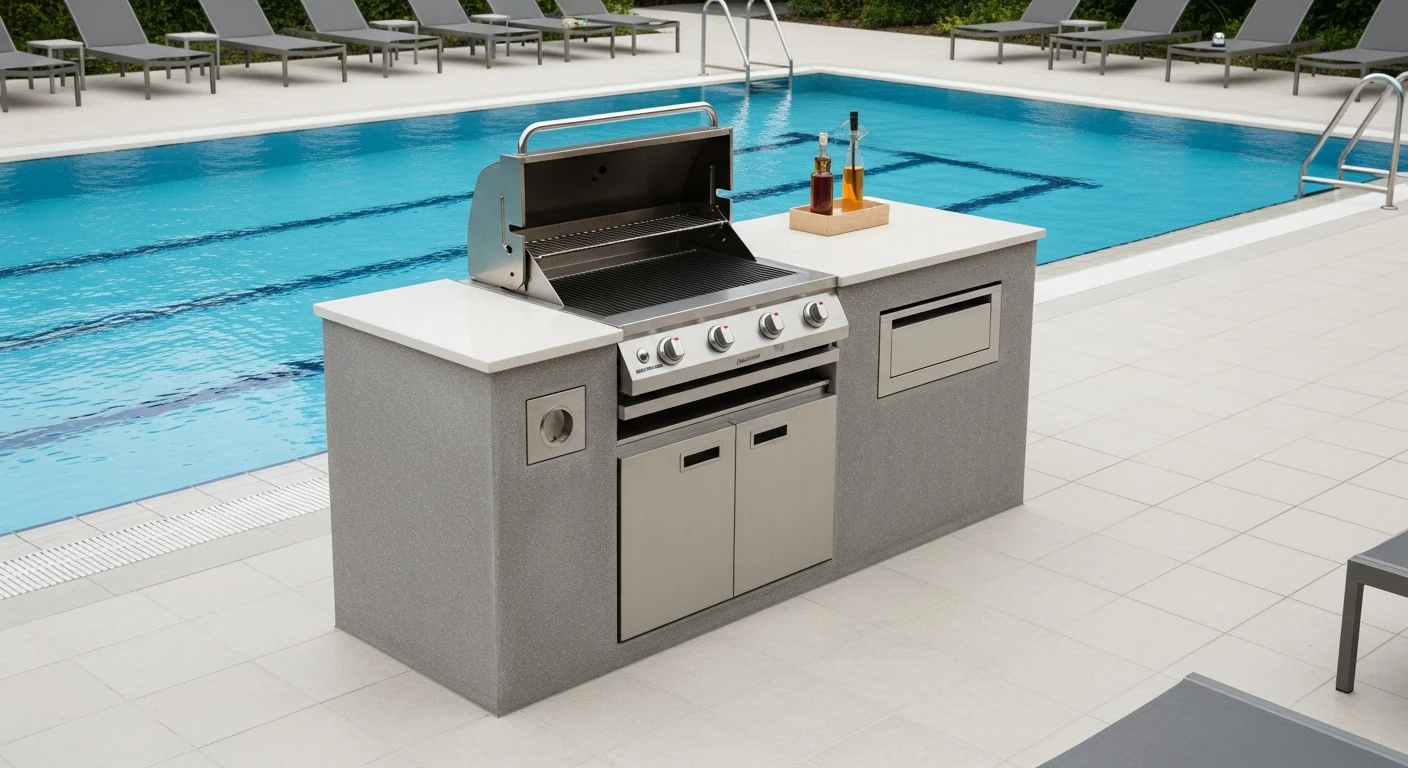
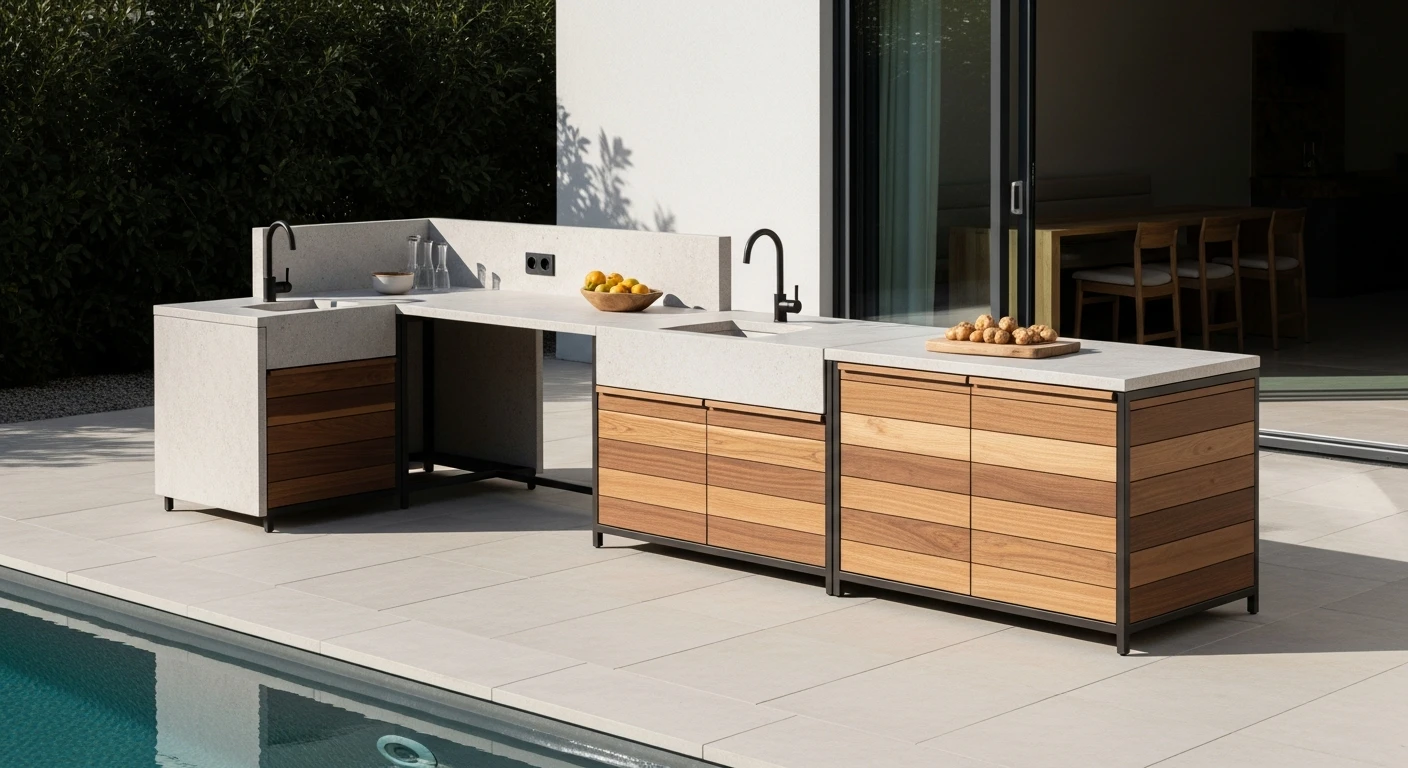
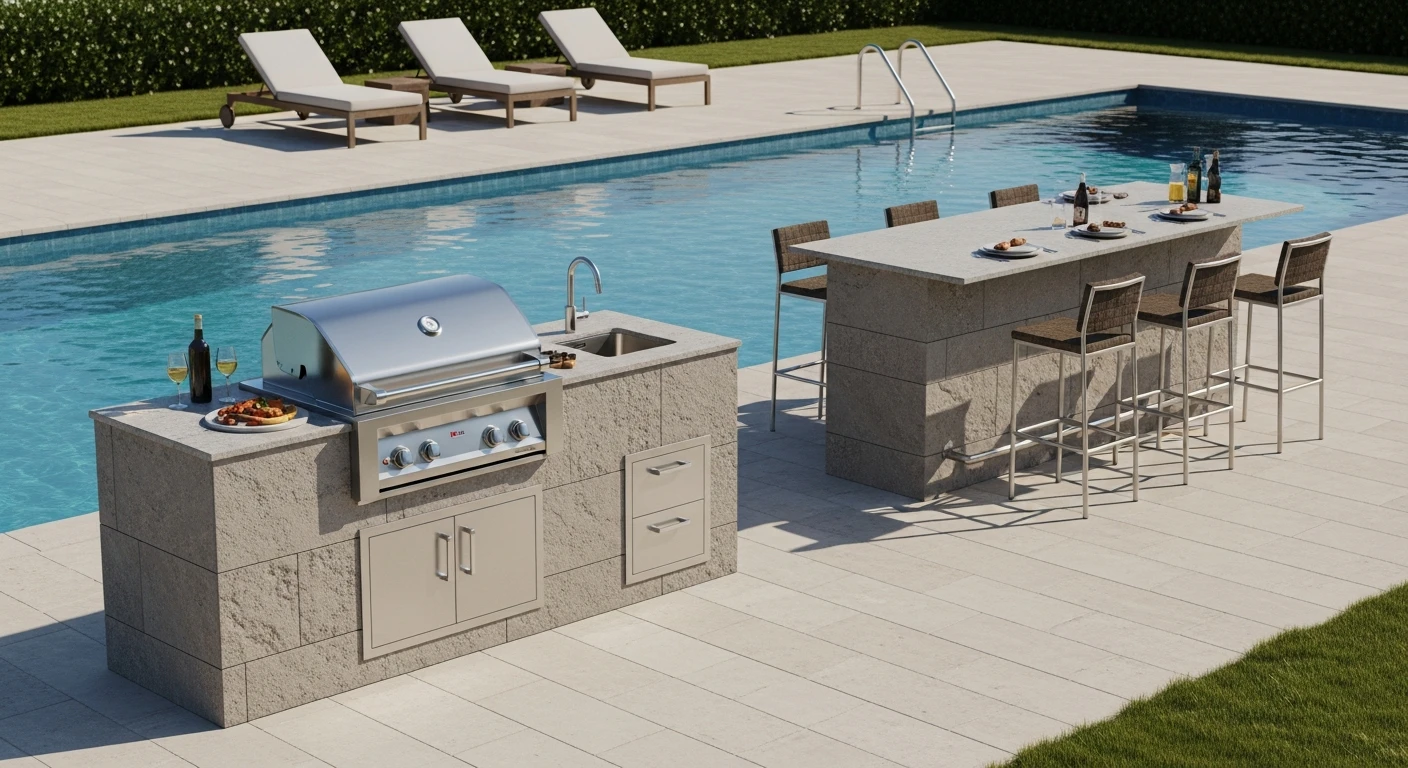
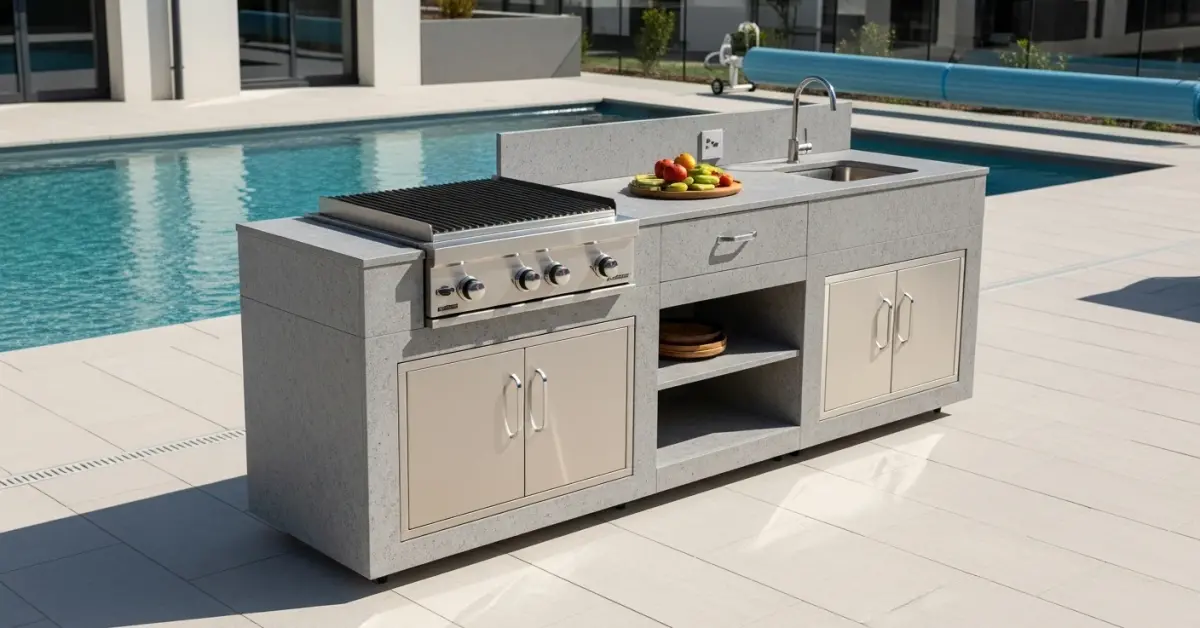
From my years designing and installing outdoor kitchens here, I can state that the success of a modular BBQ setup in Sarasota hinges less on the brand and more on its material resilience to our specific coastal conditions. Homeowners often focus on appliance features, but the real long-term value is determined by how the structure and finishes handle constant humidity, salt spray, and intense sun. A system that looks great in a catalog can fail spectacularly in a Bird Key or Siesta Key backyard if it wasn't specified for this exact environment.
- Material Specification is Non-Negotiable: Standard 304 stainless steel is inadequate for coastal Sarasota; 316L (marine-grade) stainless steel is the professional standard to prevent rust and pitting.
- HOA Pre-Approval is Mandatory: Most Sarasota communities, especially in areas like Lakewood Ranch or Palmer Ranch, have strict architectural review boards (ARBs) that must approve materials, colors, and placement before any work begins.
- Ventilation is a Code Requirement: A common oversight is failing to plan for proper ventilation for the grill, which is a safety and building code issue, especially under a covered lanai.
- Foundation and Utility Planning: Modular doesn't mean portable. A proper concrete pad and correctly stubbed-out gas, water, and electrical lines are critical and require licensed trades.
The Planning Failures That Inflate Budgets and Timelines
The most common misstep is underestimating the impact of Sarasota's environment on materials. A homeowner selects a beautiful modular system with powder-coated steel cabinets, not realizing that a single scratch from a chair or tool will expose the base metal. Within a year, the salt air finds that breach, and you have bubbling paint and spreading rust. It’s a costly and entirely preventable failure.
The Underestimation of Salt Air Corrosion
I consulted on a project on Longboat Key where the client had self-ordered a high-end modular island. The unit featured 304-grade stainless steel components, which is often marketed as “outdoor grade.” After just one summer, rust spots were appearing on the cabinet doors and access panel hinges. The critical error was assuming all stainless steel is the same. In our coastal zone, the chloride in the salt spray aggressively attacks 304 steel. The fix involved replacing all the doors and hardware with 316L marine-grade steel, effectively doubling the cost of the cabinetry.
The On-the-Ground Process for a Modular Kitchen Installation
Installing a modular kitchen here is a multi-stage process that begins long before the components arrive. It starts with a site plan that accounts for prevailing winds (for smoke drift), proximity to the main house for utility runs, and compliance with local building code setbacks. This plan is what we submit to both the county and, crucially, the homeowner's HOA for approval.
Key Selection Criteria for Sarasota Homeowners
When evaluating modular systems, your focus should be tailored to our local challenges. Generic online reviews won't help you here.
- Confirm the Stainless Steel Grade: Ask for written specification of 316L or marine-grade stainless steel for all exposed metal, including fasteners and hinges.
- Verify UV-Resistant Finishes: For any non-metal surfaces like polymer cabinets or finished panels, demand proof of high UV resistance to prevent fading and cracking under the intense Florida sun.
- Check for Sealed Cabinetry: Ensure the cabinet boxes are designed to be water-resistant and sealed to keep humidity and pests out. This is a major issue in our climate.
- Analyze the Warranty for Coastal Exclusions: Many manufacturer warranties have clauses that void coverage for corrosion in coastal areas. A reputable brand for our market will explicitly cover it.
Comparing Modular vs. Custom-Built and Portable Grills
The decision between a modular kitchen, a fully custom-built masonry island, and a high-end portable grill cart comes down to budget, permanence, and tolerance for the construction process. Each has its place in a Sarasota backyard, but the trade-offs are significant.
| Feature | Modular BBQ Kitchen | Custom Masonry Kitchen | High-End Portable Grill |
|---|---|---|---|
| HOA Approval Process | Simpler; based on pre-approved designs and materials. | Complex; requires detailed architectural plans and material samples. | Generally not required unless a permanent utility line is installed. |
| Installation Timeline | 1-3 days after site prep. | 4-8 weeks, depending on inspections. | Less than 1 hour. |
| Cost (Typical Range) | $10,000 - $30,000 | $25,000 - $75,000+ | $3,000 - $8,000 |
| Coastal Durability | High, if marine-grade materials are specified. | Very high, but stucco/stone can have moisture issues if not sealed. | Variable; often uses lower-grade steel that rusts quickly. |
When a Modular Kitchen is the Wrong Choice
A modular system is not the right fit if your lanai or patio has a highly irregular shape or severe slope. Modular units are built on standardized dimensions and require a level, stable foundation. Forcing them into a custom space often results in awkward gaps and a disjointed look that a fully custom-built-in-place kitchen would solve seamlessly. In these cases, the cost of site prep to accommodate a modular unit can negate its price advantage over a custom build.
A Safe Hiring and Purchasing Checklist
Vetting your installer and your product is paramount. The wrong choice can lead to a beautiful kitchen that disintegrates in a few years.
- Verify the installer holds a Florida Certified Specialty Contractor license or works under a licensed General Contractor. Ask for their license number (e.g., SCCxxxxxxx) and verify it on the DBPR website.
- Request a certificate of insurance showing both general liability and worker's compensation coverage.
- Get a detailed proposal that specifies the exact grade of all materials (e.g., “316L stainless steel cabinet doors,” “Dekton countertops”).
- Demand a clear statement on who is responsible for pulling permits with Sarasota County and for submitting plans to your HOA.
- Ask for at least three local references for projects completed within the last two years in coastal areas like Casey Key or Lido Key.
- Ensure the contract includes a clear timeline, payment schedule, and warranty information for both labor and materials.
Decisions That Define a Successful Outcome
The single most important decision is choosing materials based on performance in a marine environment, not just on aesthetics. I've seen homeowners fall in love with a particular cabinet color or countertop style, only to find out it's not rated for high-salt, high-UV conditions. A good designer’s first job in Sarasota is to steer the client toward a palette of durable, appropriate materials and then work on the design from there.
The Moment Most Homeowners Get It Wrong
The mistake happens during the appliance selection. A client will spend 80% of their budget on a professional-grade grill and refrigeration but then try to save money by housing them in a lower-quality structure. The reality is that the grill head is replaceable; the island structure is not. I always advise clients to allocate the budget to the best possible marine-grade structure and countertops first. You can always upgrade the grill in five years, but you can't easily replace a crumbling, rusted-out island.
Practical Realities of Building in Sarasota
Navigating the local requirements is as important as choosing the right grill. The process involves more than just a credit card and a delivery truck.
What is the HOA Architectural Review Board (ARB) Process?
In communities like The Founders Club or University Park, the ARB requires a formal submission package. This typically includes a site plan showing the kitchen's location, dimensioned drawings of the unit, material samples or color chips for all exterior finishes, and a description of any new lighting or landscaping. Approval can take 30-60 days, and work cannot begin without their written consent. Attempting to bypass this can result in stop-work orders and fines often exceeding $1,000.
Do I Need a Permit from Sarasota County?
Yes, in most cases. Any outdoor kitchen involving permanent gas or electrical connections requires a permit from the Sarasota County Building Department. The licensed contractor is responsible for filing for this permit. The process involves plan review and will require at least two inspections: one for the utility rough-in (before the island is placed) and a final inspection once the project is complete. This ensures the connections are safe and up to the Florida Building Code.
Choosing Between Natural Gas and Propane
If your home already has natural gas, extending a line is typically the most convenient and cost-effective long-term solution. However, the cost to run that line can be significant, sometimes a few thousand dollars depending on the distance and complexity. If natural gas is not available, a liquid propane (LP) setup using a standard 20 lb tank housed within the island is the default. The main drawback is the inconvenience of refilling tanks and the potential for running out of fuel mid-cookout.