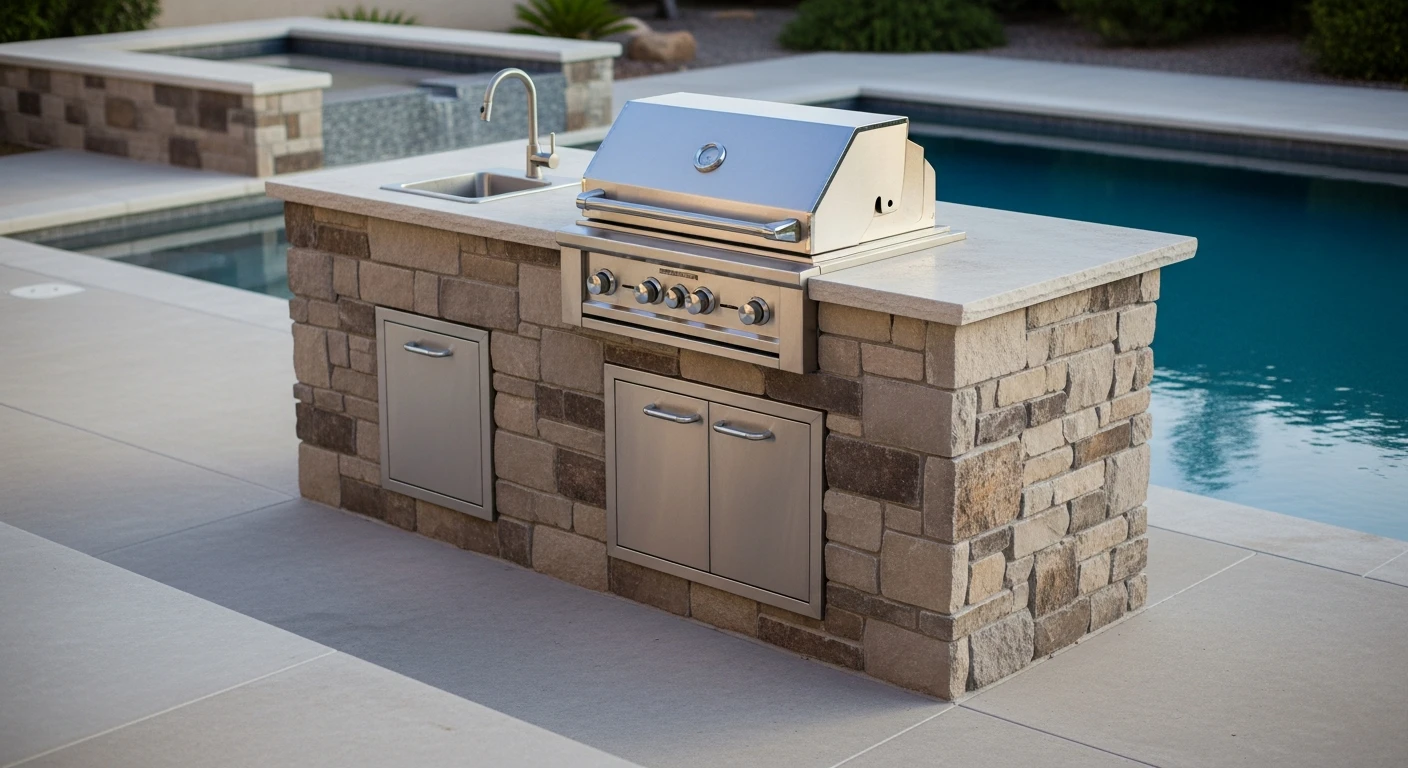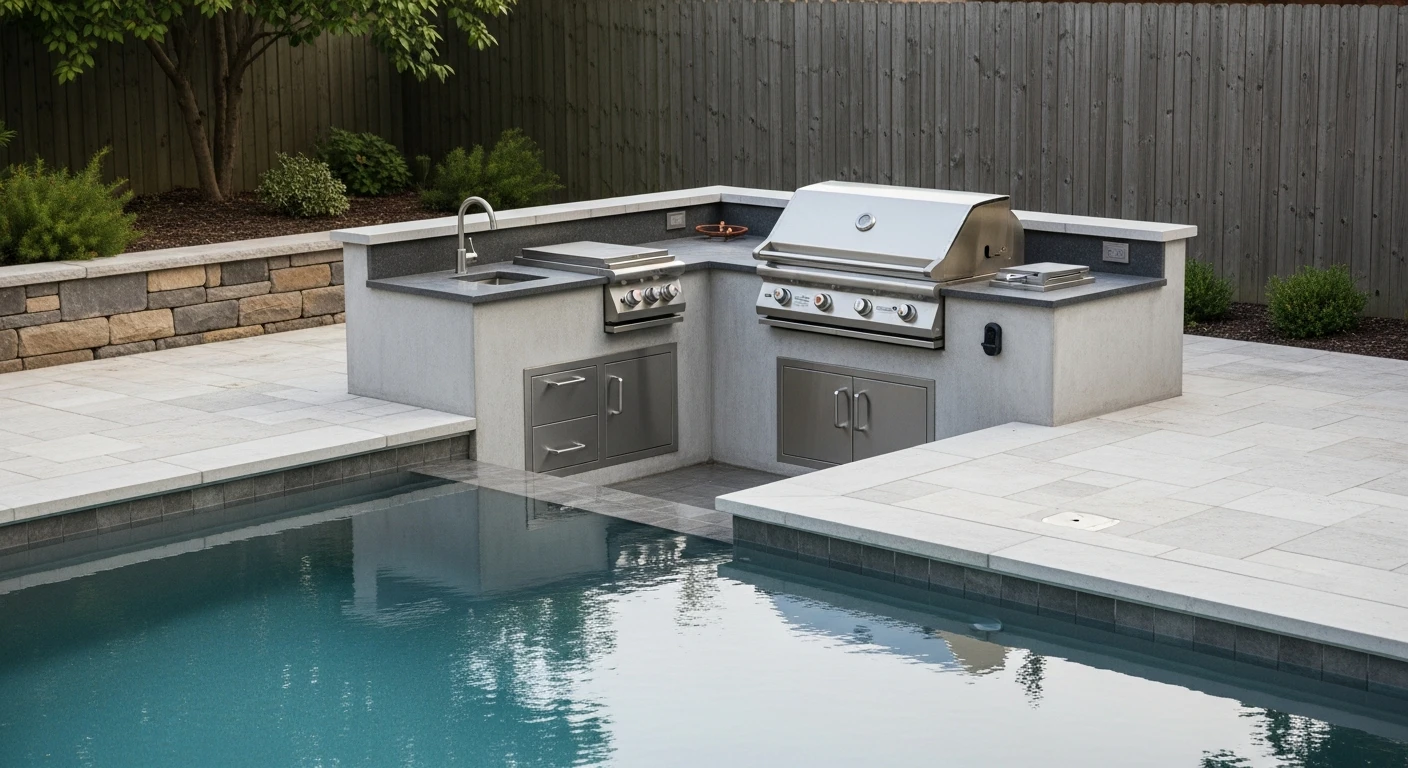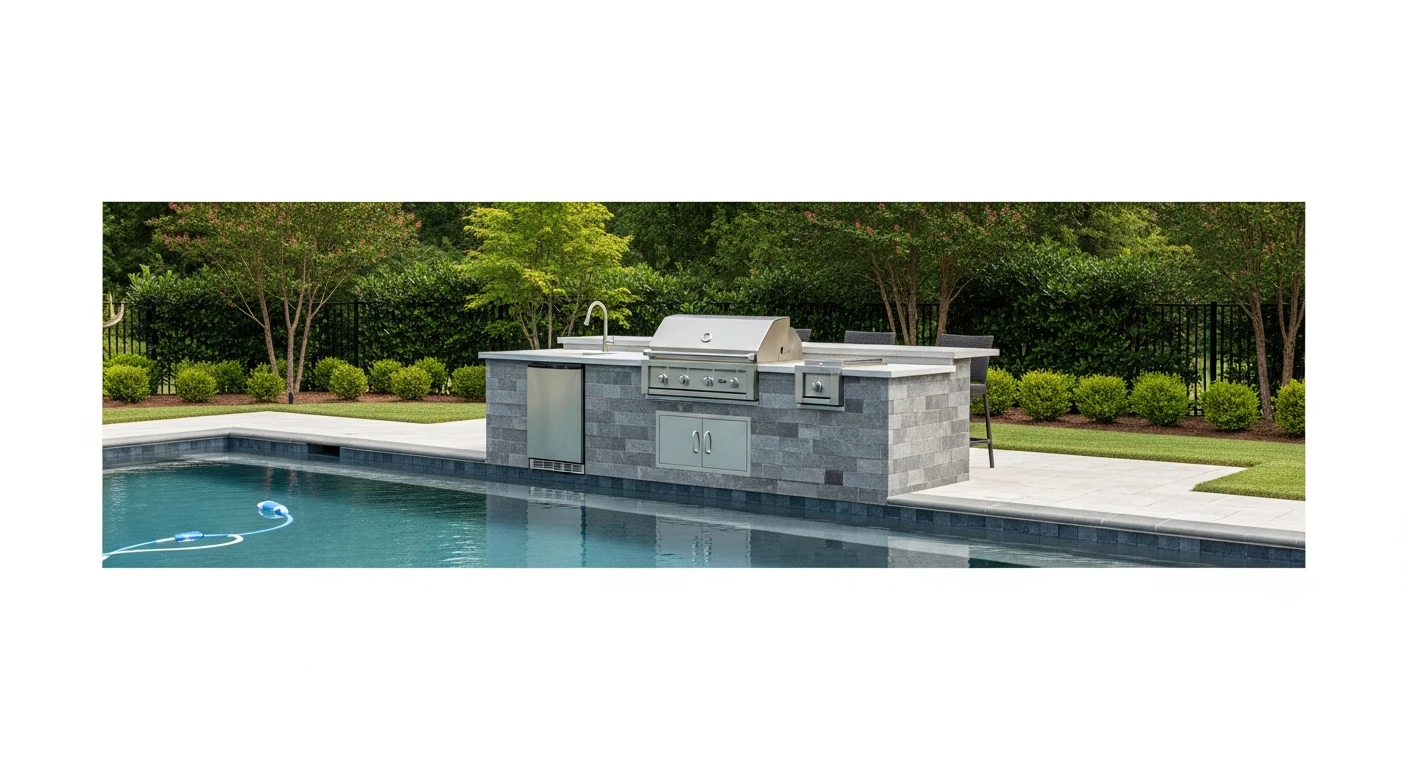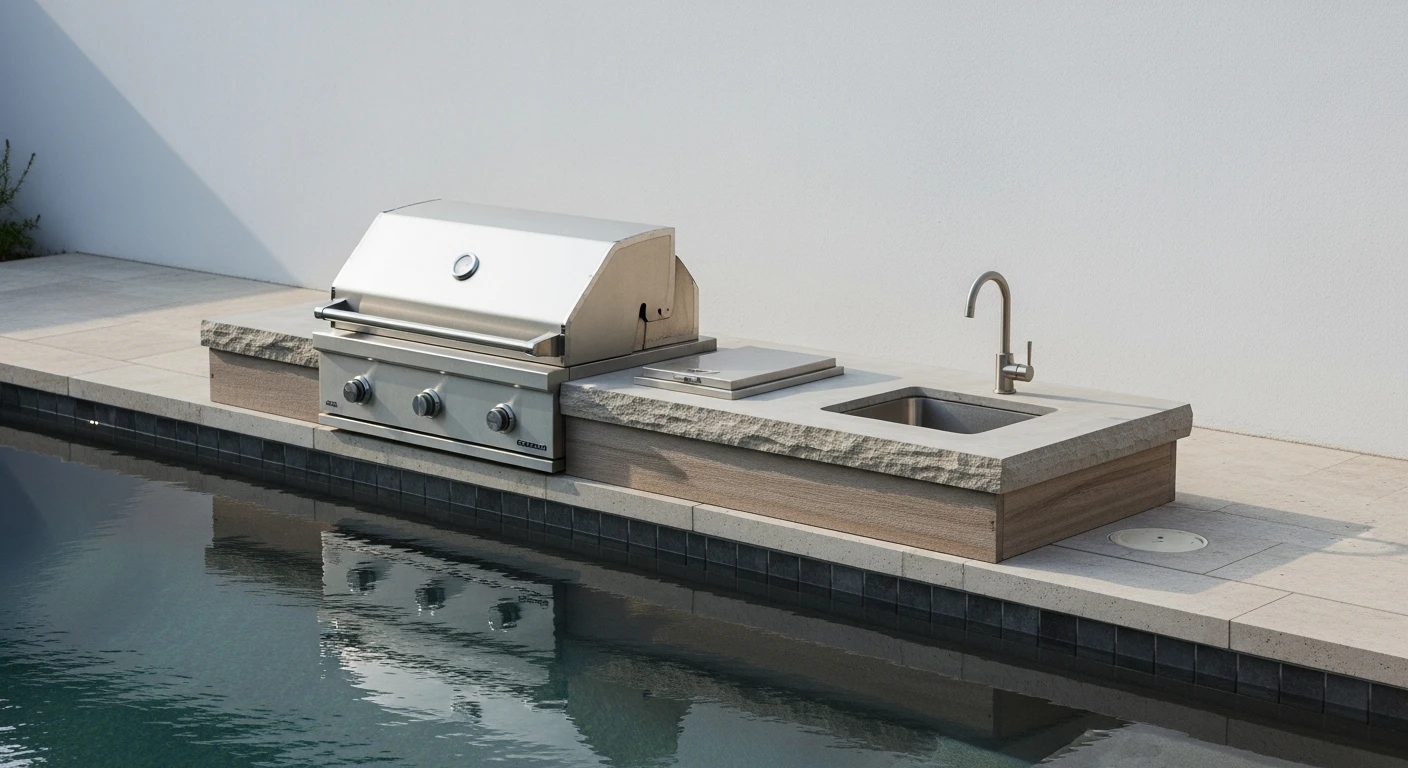
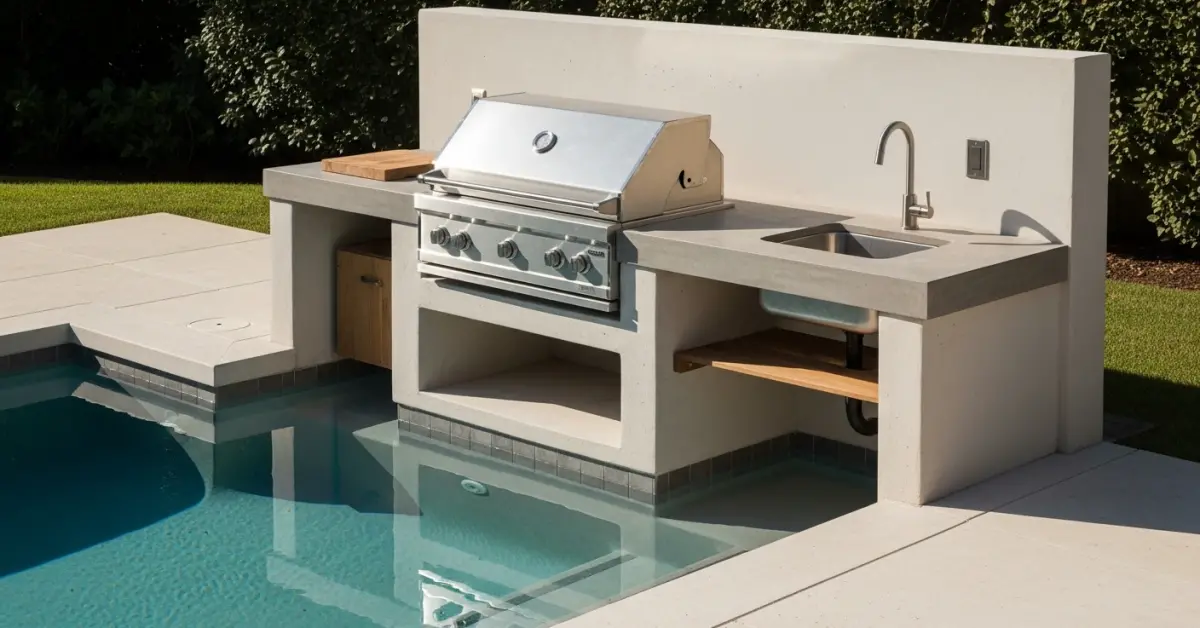
The biggest mistake I see in Sarasota outdoor kitchen projects isn't a design flaw; it's a material science failure. A client in a waterfront community on Lido Key installed a stunning outdoor kitchen with beautiful stone veneer and what they were told was “marine-grade” cabinetry. Within two years, the salt air had corroded the hinges and drawer slides, and the moisture caused the cabinet boxes—made from a PVC composite not suited for constant humidity—to swell and delaminate. They focused on the grill and the granite, but the structure holding it all together failed first. That’s the core challenge here: building for the postcard view means engineering for the unseen environmental assault.
Your Sarasota Outdoor Kitchen: A Durability-First Approach
From my experience building these projects from Palmer Ranch to Siesta Key, a successful custom outdoor kitchen in this
From my experience building these projects from Palmer Ranch to Siesta Key, a successful custom outdoor kitchen in this region is 90% about material selection and 10% about appliance choice. The intense UV, relentless humidity, and corrosive salt spray will find any weakness in your build. Homeowners often get fixated on the brand of the grill, but the longevity of their investment truly depends on the non-corrosive structure and weather-resistant finishes that protect it.
- Material Priority: Always prioritize non-corrosive and UV-stable materials. This means 316 marine-grade stainless steel for all hardware, high-density polyethylene (HDPE) or powder-coated aluminum for cabinetry, and non-porous countertops.
- Structural Integrity: The frame is the skeleton. A welded aluminum frame is the gold standard here, as it won't rust, warp, or succumb to termites like wood or steel-stud framing can.
- Ventilation is Non-Negotiable: A common oversight is improper ventilation for built-in gas grills. Sarasota County inspectors are strict about this; a ventilation hood and proper clearance are required by code to prevent dangerous gas buildup.
- HOA Pre-Approval is Mandatory: Nearly every upscale community in Sarasota requires pre-approval from an Architectural Review Committee (ARC). Submitting plans without their stamp is a recipe for costly tear-downs and fines.
The Planning Failures That Drive Up Costs
The most significant budget overruns I've witnessed stem from assumptions made during the planning phase. Homeowners often underestimate the site preparation and utility work required, thinking it's as simple as building a piece of furniture on their existing lanai. This is rarely the case, especially in older homes or on properties with complex landscaping.
The Most Expensive Oversight: Ignoring Utility Runs
A client in The Landings wanted a custom BBQ island with a sink, refrigerator, and side burners. They had a budget for the structure and appliances but hadn't accounted for the cost of running new water, drain, and gas lines under their paver patio. The project required trenching, plumbing, and electrical work that nearly doubled their initial "materials" budget. The true cost is often hidden in the ground. We had to carefully remove and replace a large section of their patio, a surprise expense that could have been anticipated with a proper site evaluation before any contracts were signed.
The Build Process in Sarasota: From Concept to Completion
Building a custom outdoor kitchen is a multi-stage construction project that involves design, permitting, and skilled trades. It's not a weekend assembly job. The process begins with a detailed site assessment to map out utilities, evaluate sun exposure, and understand the prevailing wind direction, which affects smoke management from your custom outdoor grill.
Key Selection Criteria for Sarasota Homeowners
When you're choosing a contractor, you need to look beyond the portfolio photos. The durability of your project depends on their technical knowledge of our local environment. Here’s what I tell clients to verify:
- Does the contractor have specific experience with coastal builds west of I-75? Ask to see projects that are at least 3-5 years old to assess how their materials have held up.
- Can they provide proof of a current Sarasota County license and liability insurance? Don't accept a state license alone; local registration is key.
- Do they handle the entire permitting process, including drafting plans for the building department and the HOA submission? This is a critical service that separates professionals from casual builders.
- What is their policy on material sourcing? Insist on seeing specifications for all hardware, fasteners, and framing to ensure they are using corrosion-resistant materials like 316 stainless steel.
Comparing Custom-Built vs. Modular vs. Pre-Fab Kits
A fully custom outdoor kitchen offers unlimited design freedom but comes at a premium. It’s important to understand the trade-offs compared to other options available in the market. The right choice depends on your property's constraints, your budget, and how you plan to use the space.
| Feature | Fully Custom-Built | High-End Modular | Pre-Fabs / Grill Carts |
|---|---|---|---|
| Material Longevity (in FL climate) | Excellent (if built correctly with marine-grade materials) | Good to Excellent (depends on brand and material specs) | Poor to Fair (often uses lower-grade steel and plastics) |
| HOA Compliance | Highest; designed to match home's architecture | Moderate; may require customization to meet guidelines | Lowest; often not permitted as a permanent structure |
| Cost | Highest initial investment | Moderate; predictable pricing | Lowest initial cost |
| Resale Value Impact | Significantly increases home value | Moderately increases value | Minimal to none |
When a Custom Build Is the Wrong Choice
Honestly, a full custom outdoor kitchen is not the right fit for everyone. If you are planning to move within the next 2-3 years, you are unlikely to recoup the full investment, which can range from $15,000 to over $50,000. In that scenario, a high-quality freestanding custom outdoor grill station or a premium modular system offers a better balance of functionality and cost without the permanence and permitting hassles of a built-in structure.
A Contractor Vetting Checklist for Your Sarasota Project
Hiring the right team is the single most important decision you'll make. A slick salesperson doesn't equate to a skilled builder. Use this checklist to protect your investment and ensure a quality outcome that will withstand the Florida environment.
- Verify their Florida Certified Contractor License: Use the Florida Department of Business and Professional Regulation (DBPR) portal to confirm their license is active and free of complaints. A specialty license like a Residential Contractor (CRC) or General Contractor (CGC) is typically required for projects involving utility runs.
- Request a Certificate of Insurance: They must have both General Liability and Workers' Compensation coverage specific to Florida. Do not proceed without this.
- Check Sarasota County Permit History: You can search the county's public portal for permits pulled under the contractor's name. A long history of approved permits is a good sign of experience with local codes.
- Ask for a List of Local Suppliers: Reputable builders have strong relationships with local suppliers for stone, aluminum, and appliances. Call one or two to ask about their experience working with the contractor.
- Insist on a Detailed Scope of Work: The contract should specify every material, from the type of concrete board used to the gauge and grade of stainless steel for doors and drawers. Vague terms like “high-quality materials” are a red flag.
- Review Their HOA Submission Process: Ask for an example of an HOA package they've submitted for a past project. It should be professional, detailed, and include architectural drawings.
Decisions That Define the Final Outcome
Over the years, I've seen that the most successful projects are driven by a few key decisions made long before the first block is laid. It's the thoughtful planning around functionality and durability that separates a beautiful, lasting outdoor living space from one that becomes a source of frustration.
The Moment Most Homeowners Get It Wrong
The critical mistake happens when the conversation starts with appliances. A client will say, “I want this specific $8,000 grill,” and then try to build the cheapest possible structure around it. This is backward. The enclosure—the custom BBQ island itself—is the most important part of the investment. A mediocre grill in a well-built, weatherproof structure is a far better long-term value than a premium grill in a frame that will rust, rot, or fall apart in our humid, salty air. Prioritize your budget on the non-corrosive frame and durable cabinetry first, then select appliances that fit the remaining budget.
Practical Answers for Building in Sarasota
Navigating the local regulations is often the most confusing part for homeowners. The rules are in place for safety and to maintain property values, but they can feel like bureaucratic hurdles. Here is what you need to know to keep your project on track.
What is the Permitting Process in Sarasota County?
Any permanent outdoor kitchen structure, especially one with gas or electrical lines, requires a permit from the Sarasota County Building Department. This involves submitting detailed structural plans and site plans. The review process typically takes 4-6 weeks after submission. If your property is within city limits (e.g., City of Sarasota, Venice), you will deal with the municipal authority, which has its own timeline. Work cannot begin until the permit is issued and posted on-site.
How Do I Handle HOA Architectural Review?
Most Sarasota planned communities have an Architectural Review Committee (ARC) or Board (ARB). You must submit your plans—including materials, colors, and location on the property—for their approval *before* applying for a county permit. They will check for compliance with community standards. Disregarding this step can lead to forced removal of the structure at your own expense. A good contractor will manage this submission for you as part of their service.
Understanding Florida's Contractor Licensing for This Work
In Florida, any project involving structural work or utility connections must be performed by a licensed contractor. An unlicensed individual cannot legally pull the required permits. A "handyman" cannot build your custom outdoor kitchen if it involves gas, plumbing, or electricity. Hiring an unlicensed contractor not only puts you at risk for shoddy work but also makes you liable for any worker injuries on your property and can void your homeowner's insurance.