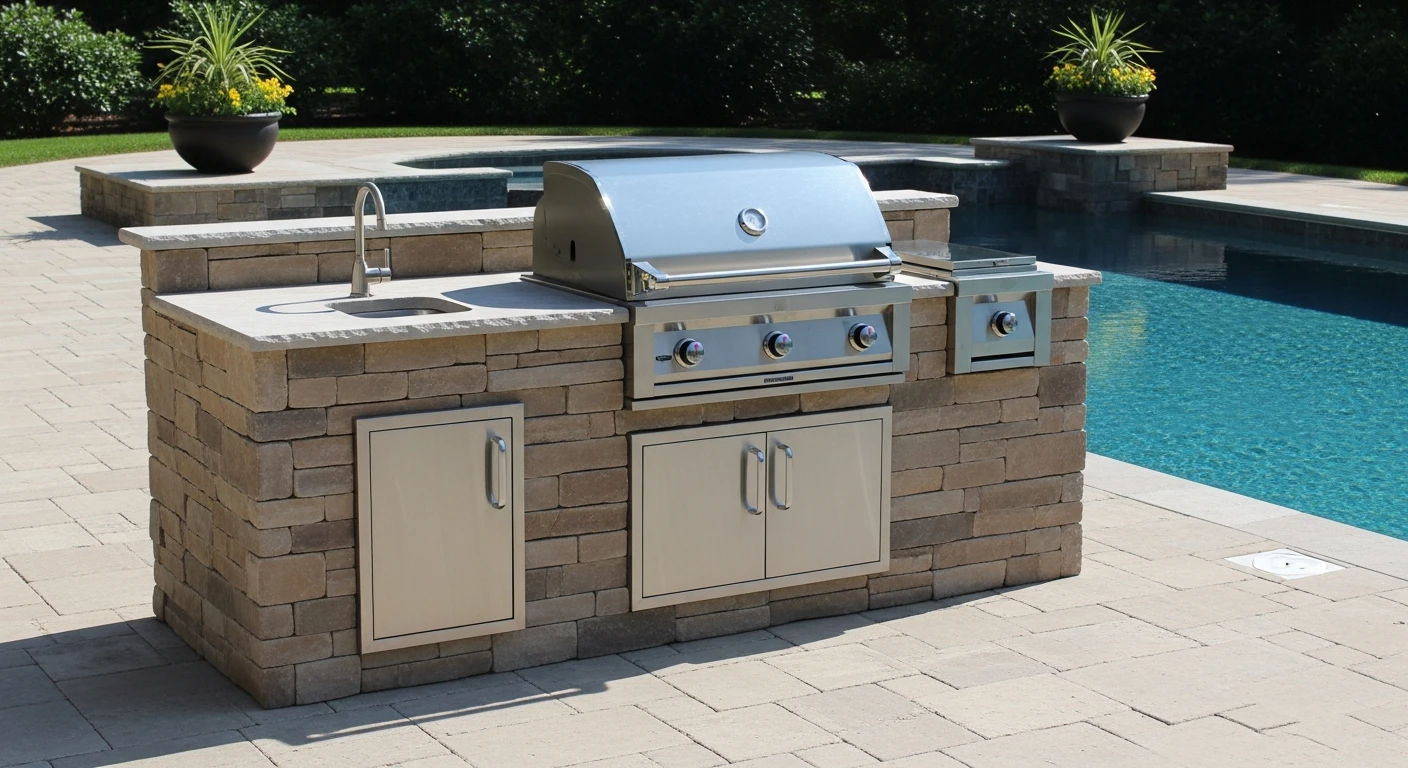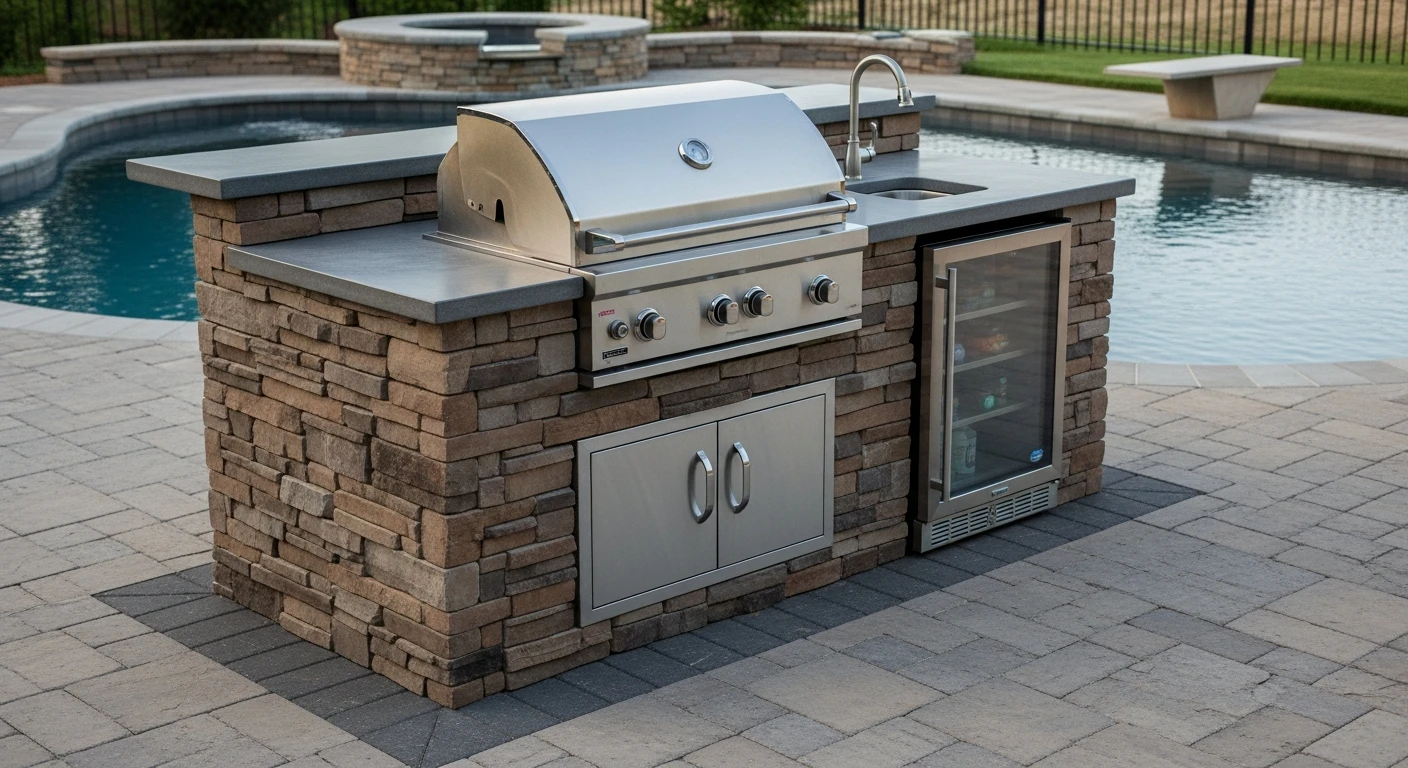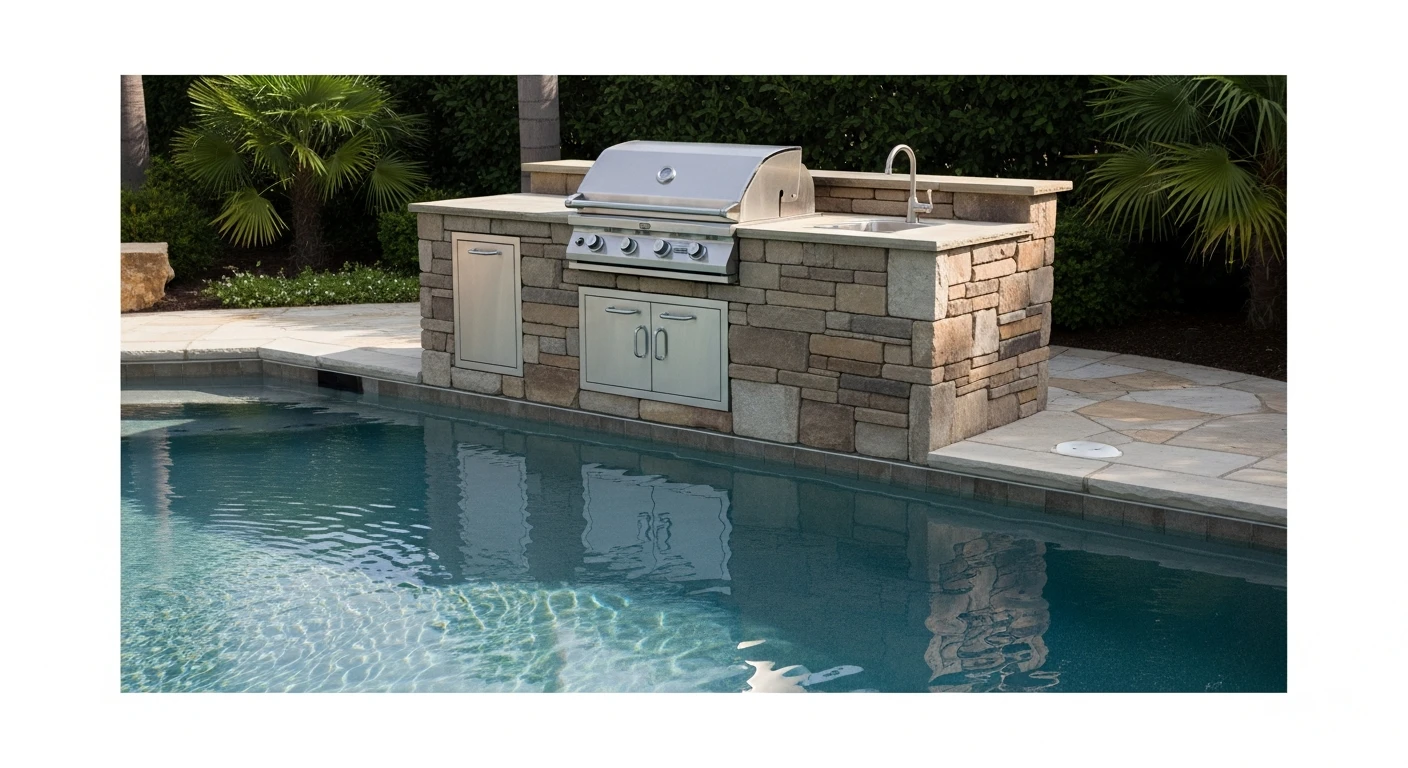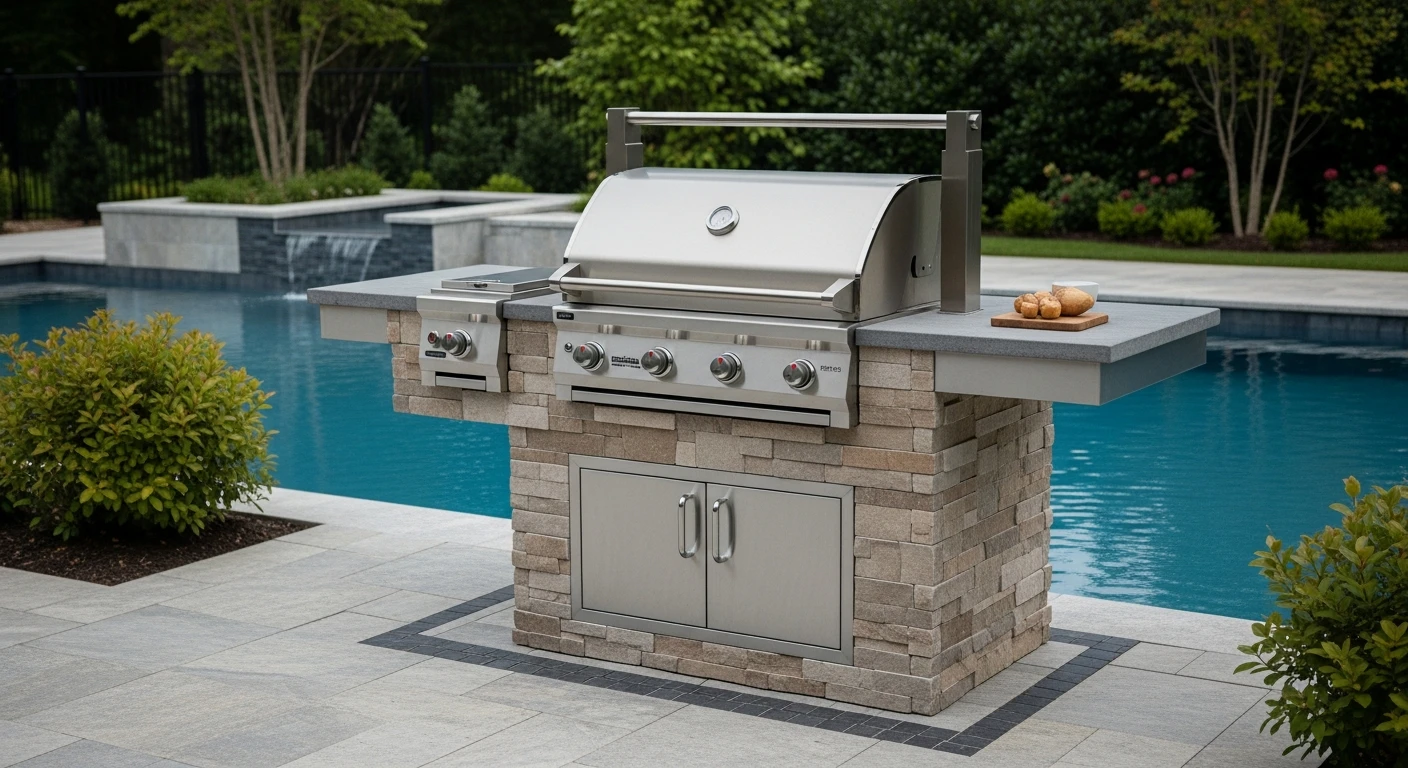
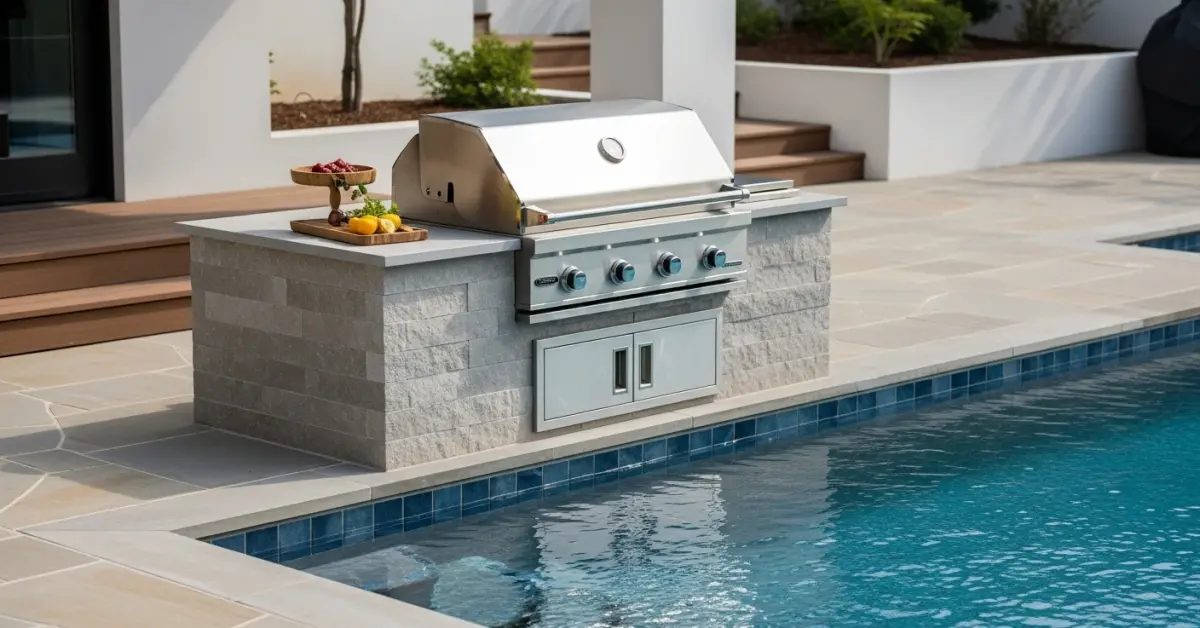
Building for the Sarasota Environment: An Executive Summary
From my years designing and building outdoor kitchens from Longboat Key to Lakewood Ranch, the central challenge is not
From my years designing and building outdoor kitchens from Longboat Key to Lakewood Ranch, the central challenge is not aesthetics but longevity against our coastal climate. A successful custom outdoor grill in this environment is an integrated system designed to resist humidity, salt, and intense UV exposure. The grill head is just one component; the structure, countertop, and ventilation system are what determine its useful life and safety. The most common failure I see is a mismatch between materials and the specific micro-environment of the property.
- Material Science is Non-Negotiable: Standard outdoor materials fail here. Marine-grade 316L stainless steel for all metal components, non-porous sealed stone like quartzite for counters, and marine-grade polymer or sealed teak for cabinetry are essential to prevent corrosion and mildew.
- Code Compliance is Paramount: Projects must adhere to the Florida Building Code, particularly regarding ventilation for gas appliances and clearance from combustible structures. Sarasota County permit requirements for gas lines and electrical work are strictly enforced.
- HOA Approval is a Primary Hurdle: In communities like Palmer Ranch or The Founders Club, the Architectural Review Committee (ARC) has final say on finishes, location, and overall design. Submitting a vague plan is the fastest way to get a rejection.
- Investment vs. Expense: A properly built custom barbecue island is a permanent home addition that adds value. A pre-made outdoor grill island, while cheaper, often uses inferior materials that degrade quickly, turning an intended investment into a future replacement cost.
The Planning Failures That Haunt Sarasota Homeowners
The most devastating mistakes happen on paper before a single block is laid. Homeowners, focused on the layout and appliances, often overlook the foundational elements that are impossible to fix later. The humid, salty air is relentless and exposes every shortcut taken during the planning phase.
The Most Expensive Failure: Underestimating Ventilation
I was called to a project on Siesta Key where the homeowner had a beautiful, enclosed lanai with a new custom grill. The problem was the builder followed indoor kitchen standards for ventilation. Within months, the ceiling was stained with grease, and the smoke was unbearable. The core mistake was treating an enclosed lanai like an open patio. Per Florida Building Code, any grill under a solid roof structure requires a commercial-grade vent hood with specific CFM (cubic feet per minute) ratings, a costly retrofit that involved cutting through the roof and restructuring the ceiling. The homeowner spent nearly 40% of the original project cost just to fix the ventilation.
The Build Process in Practice: From Concept to Completion
A custom outdoor kitchen project in Sarasota is a multi-stage process involving design, permitting, and construction. It’s not as simple as buying a grill and building a counter around it. The timeline is heavily influenced by supply chains for specific materials and, most importantly, the local permitting and inspection schedule.
Key Selection Criteria for Sarasota Homeowners
When you evaluate builders, the conversation should quickly move past the brand of grill they offer. The real differentiators are their technical knowledge of our specific environmental and regulatory challenges.
- Demonstrated Experience with 316L Stainless Steel: Ask for a portfolio of projects located west of I-75. Do they understand why 304-grade steel is unacceptable for doors, drawers, and fasteners in a coastal setting?
- In-House Gas Line Certification: Does the builder have licensed professionals to run and connect the gas lines, or do they subcontract this critical, permit-required work? Subcontracting adds delays and potential communication gaps. A Sarasota County gas permit can cost between $100 and $300, plus inspection fees.
- Verifiable HOA Submission Experience: Ask for examples of design packets they have successfully submitted to HOAs in prominent Sarasota communities. A builder who understands this process can prevent months of delays.
- Knowledge of Local Wind-Borne Debris Zone Requirements: Depending on the location, the structure may need to be engineered to withstand specific wind loads. This is not a concern in many other parts of the country but is critical here.
Comparing Custom Builds to Pre-Made Islands
The choice between a fully custom built bbq island and a pre-made or modular unit is a major decision point. While pre-made options offer speed and lower initial costs, they often fall short in durability and integration within the Sarasota market.
| Feature | Custom Built BBQ Island | Pre-Made Outdoor Grill Island |
|---|---|---|
| Material Durability | Specified for coastal use (e.g., 316L steel, marine-grade polymer, concrete block framing) | Often uses lower-grade 304 steel and galvanized metal studs that rust in high humidity |
| HOA Compliance | Designed to match home aesthetics and meet specific ARC guidelines for materials and finishes | Limited styles; may not meet strict community architectural standards, leading to rejection |
| Integration & Layout | Perfectly fits the lanai space, accommodating existing features like pool equipment or columns | Standard dimensions can create awkward gaps or inefficient use of space |
| Long-Term Value | Considered a permanent home improvement, positively impacting property value | Viewed as a piece of outdoor furniture; often needs replacement in 5-7 years, offering poor ROI |
When a Custom Build Isn't the Right Choice
A full custom backyard bbq is not for everyone. If you are a seasonal resident who uses the grill infrequently, or if your budget is strictly limited to under $10,000, the investment may not provide a worthwhile return. In these cases, a high-quality freestanding grill from a reputable brand combined with weatherproof outdoor furniture can provide the function without the commitment and cost of a permanent structure.
Safe Hiring Checklist for Your Outdoor Kitchen Project
Hiring the right contractor is the single most important factor for success. The slickest salesperson can hide a lack of technical depth, and in Florida's climate, that's a recipe for disaster.
- Verify Florida State Contractor License: Use the Florida Department of Business and Professional Regulation (DBPR) portal to confirm their license is active and they are certified for the work (e.g., a General Contractor or Residential Contractor license).
- Confirm Liability and Workers' Comp Insurance: Ask for the certificate of insurance. Without it, you could be liable for any accidents that occur on your property during construction.
- Check Sarasota County Permit History: You can search the Sarasota County permitting portal for a contractor's name to see the types of projects they have successfully permitted and passed inspections on. A clean record is a good sign.
- Demand a Materials Specification Sheet: The contract should explicitly list the grade of stainless steel (316L), the type and thickness of the countertop, and the materials for the framing. Vague terms like "high-quality steel" are red flags.
- Insist on a Clear HOA Approval Clause: The contract should state that the project is contingent on receiving written approval from your HOA's Architectural Review Committee, with a clear plan for who is responsible for submissions and modifications.
Decisions That Determine the Final Outcome
After decades in this field, I can trace project success or failure back to a few key moments. These are the decisions that have an outsized impact on the final result, long after the initial excitement of choosing a grill has faded.
The Moment Most Homeowners Get It Wrong
The critical mistake happens during the design phase, when homeowners approve a layout based on a 2D drawing without physically mapping it out in their lanai. A design that looks spacious on paper can feel cramped and create terrible workflow in reality. Before you sign any contract, use painter's tape or cardboard boxes to outline the exact dimensions of the proposed island, cabinets, and appliances in your actual space. Walk around it. Mimic cooking on it. Is there enough clearance behind the bar stools? Does the refrigerator door swing open without hitting the wall? This simple, no-cost step has saved my clients from years of frustration with an awkward layout.
Practical Answers for Building in Sarasota
Navigating the local bureaucracy and practicalities is often the most stressful part of the project. Here are the answers to the questions that come up on nearly every custom barbecue island build I've managed in this area.
How do I handle the Sarasota County permitting process?
Any project involving new gas lines or electrical circuits requires a permit from Sarasota County. Your contractor is responsible for submitting the plans, which must include diagrams for the electrical and plumbing/gas systems. Once the permit is issued (a process that can take several weeks), inspections will be required at various stages—typically for the gas line pressure test and the final electrical connection. Do not allow a contractor to tell you a permit isn't needed for this work; it's a major red flag.
What are typical HOA requirements for custom barbeque islands?
Most Sarasota HOAs, especially in master-planned communities, require a detailed submission packet. This usually includes scaled drawings, a site plan showing the grill's location on the property, and samples or photos of all exterior-facing materials (stone/stucco finish, countertop, cabinet doors). The ARC will review the submission to ensure it aligns with the community's established architectural style. Approval can take 30 to 60 days.
Is 304 or 316L grade stainless steel really that different?
Yes, and in Sarasota's coastal air, the difference is night and day. 304 stainless steel contains 18% chromium and 8% nickel. It's durable but susceptible to corrosion from chlorides (salt). 316L grade contains the same, but adds molybdenum, which drastically increases its resistance to salt corrosion. I have seen 304-grade components show surface rust (tea staining) in as little as one year on properties on the keys. 316L is the minimum standard for any outdoor metal here.