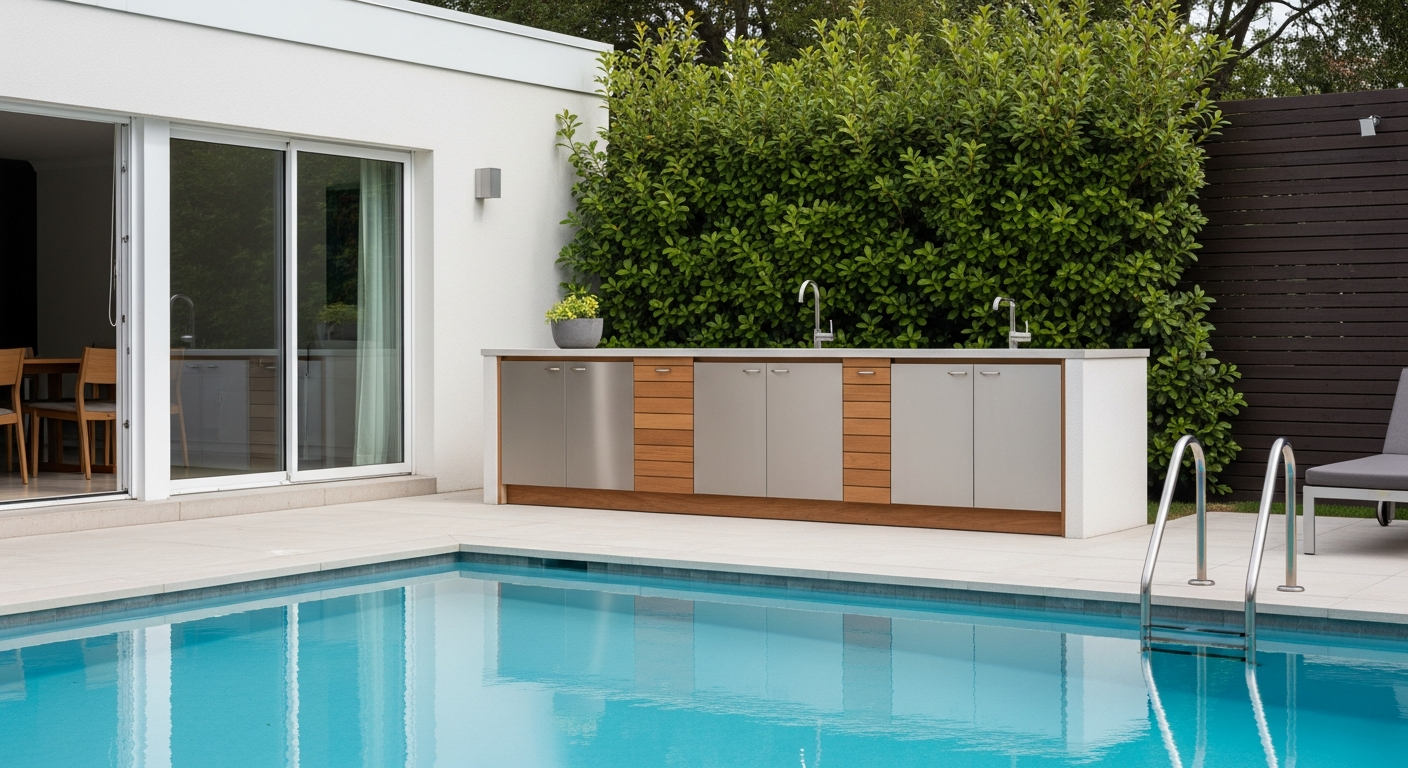
Many believe that the biggest challenge with outdoor kitchen cabinets is choosing a style that matches their home. In
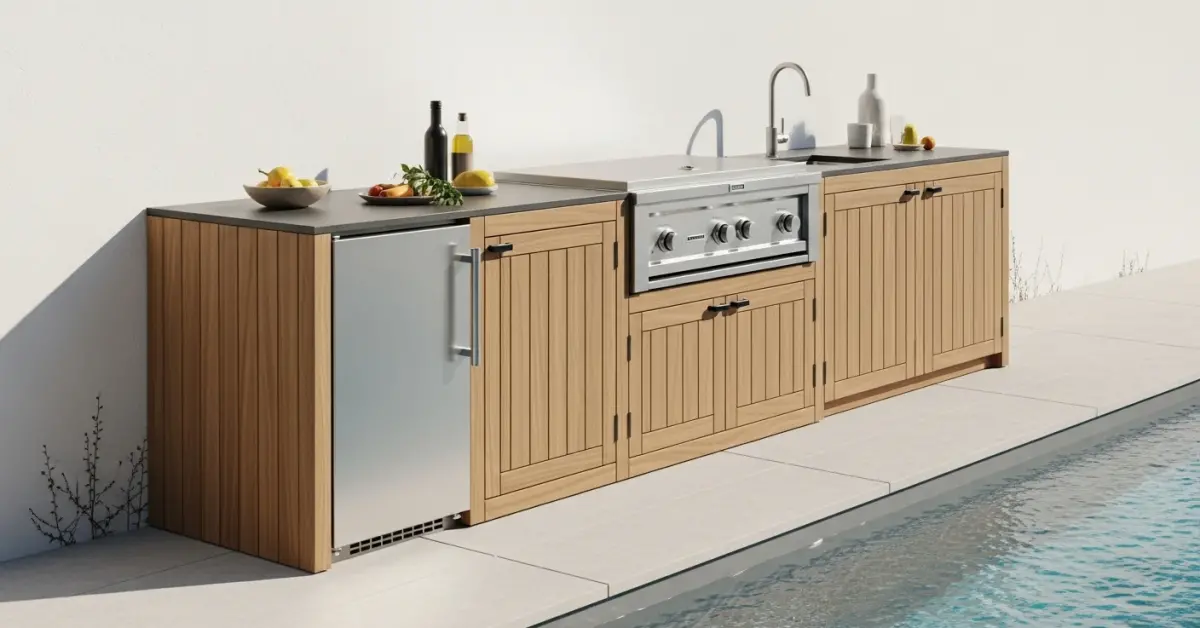
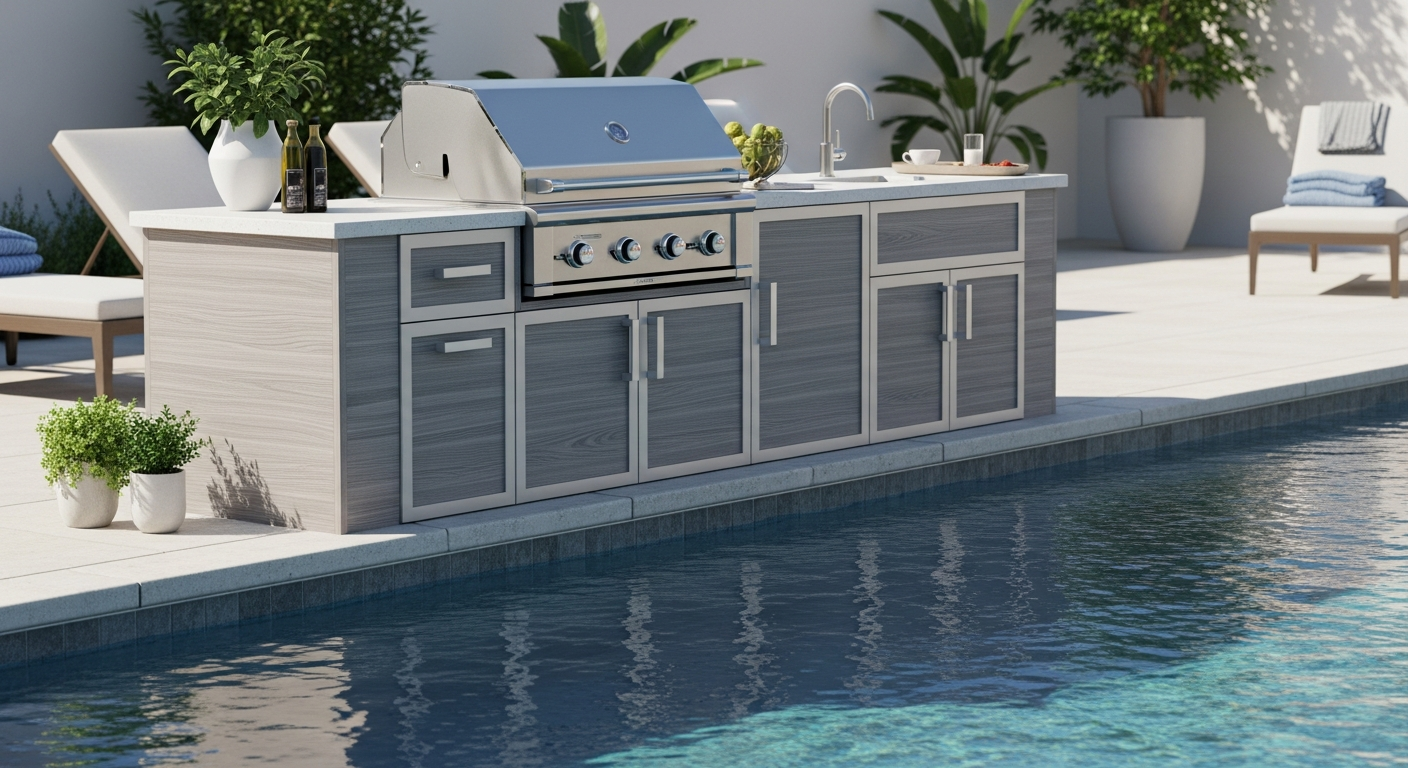
Many believe that the biggest challenge with outdoor kitchen cabinets is choosing a style that matches their home. In reality, the most critical factor is selecting materials that can survive the unrelenting salt, sun, and humidity we face daily. I've seen countless projects, particularly in waterfront areas like Lido Key, where beautiful but poorly specified cabinetry begins to delaminate, rust, or warp within a few seasons. True custom work in Sarasota goes beyond aesthetics; it's about engineering a solution that withstands our unique coastal environment for the long term.
This means understanding the distinct performance differences between 316-grade stainless steel, marine-grade polymers, and improperly sealed woods. An outdoor kitchen is a permanent addition to your home, and the cabinet choices you make are the foundation of its longevity and functionality. Getting it right involves a deeper conversation about material science and construction methods tailored specifically for Florida's Gulf Coast.
Why Your Indoor Cabinet Logic Fails in Sarasota
From my years designing and building outdoor kitchens here, the single most expensive mistake I see is homeowners
From my years designing and building outdoor kitchens here, the single most expensive mistake I see is homeowners applying indoor design logic to an outdoor space. They focus on the door style and color, assuming all “outdoor-rated” materials are equal. They are not. In Sarasota, especially near the water, the combination of high salinity, intense UV radiation, and constant humidity creates an accelerated failure environment. Your primary concern isn't just rain; it's the corrosive, moisture-laden air that infiltrates every joint and hinge.
Material is Everything: The choice between 304 and 316 marine-grade stainless steel is not a minor upgrade; it's the difference between surface rust in a year and a lifetime of performance.
Hardware is a Weak Point: The most common failure point I witness is not the cabinet box, but the hinges and drawer slides, which seize up from salt and corrosion if not specified correctly.
Ventilation is Non-Negotiable: A sealed cabinet box traps moisture, creating a perfect environment for mold and mildew. Proper ventilation is a functional requirement, not an option.
HOA Compliance is Key: In communities like The Founders Club or Lakewood Ranch, the materials, finish, and even hardware must often pass an architectural review board, a step many homeowners overlook until it's too late.
Planning Failures That Guarantee Costly Replacements
The most common planning failures happen long before a single cabinet is ordered. Homeowners often underestimate the harshness of our local climate, leading to material choices that are doomed from the start. They see a beautiful wood-look cabinet online, not realizing it's a composite that will swell and delaminate in our 90% humidity.
Another major oversight is neglecting the base or “toe kick” construction. Placing cabinets directly on a concrete slab without a proper non-porous barrier wicks moisture straight into the cabinet structure, causing rot or corrosion from the bottom up. This is a slow, silent failure that becomes apparent only when the cabinet integrity is already compromised.
The Most Expensive Failure: Ignoring Salt Spray Zones
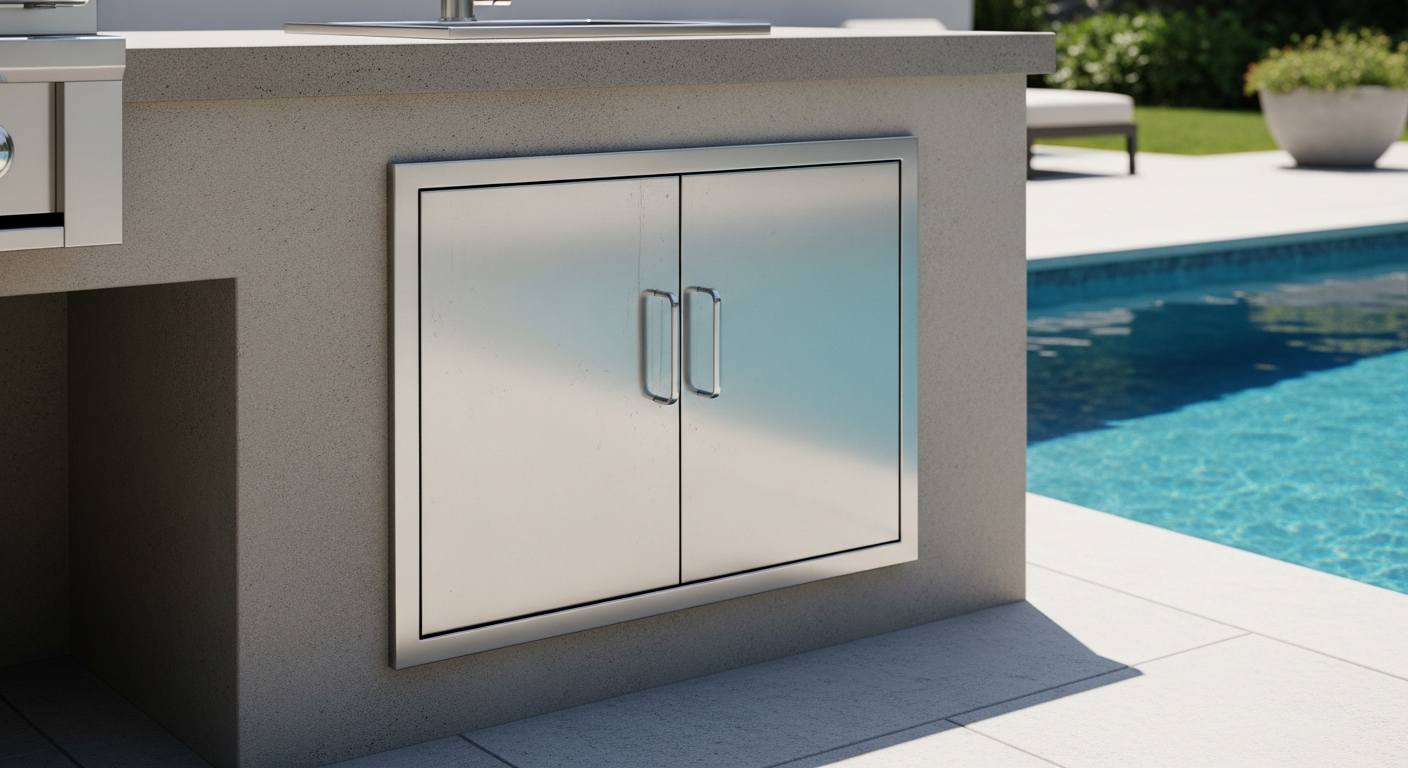
The pattern is consistent: a client on Bird Key or Siesta Key invests in a beautiful outdoor kitchen with 304-grade stainless steel doors, which is a good material for many parts of the country. But within 18 months, they call me about tea-staining and pitting near the handles and edges. The failure was assuming all stainless steel is the same. For any home within a mile of saltwater, 316L (marine-grade) stainless steel is the only viable long-term option. The extra 15-20% cost upfront prevents a complete refacing or replacement project that costs tens of thousands down the line.
The Custom Cabinet Process in Sarasota County
A true custom outdoor cabinet project is a design-build process, not a shopping trip. It starts with an on-site analysis of sun exposure, prevailing winds, and proximity to saltwater. We then move to material selection based on that environment, followed by layout planning that considers workflow, appliance integration, and required clearances for gas lines and electrical.
Once a design is finalized, fabrication begins. Unlike pre-made outdoor cabinets, custom work allows for precise dimensions to fit unique spaces and integrate specific grills, sinks, or refrigerators seamlessly. The final step is installation, which must account for proper leveling, sealing against the structure, and ensuring all ventilation and utility requirements are met per Sarasota County building codes.
Selection Criteria for Sarasota Homeowners
Confirm the Grade of Stainless Steel: Ask for material specification sheets. For waterfront properties, insist on 316L grade for all metallic components, including fasteners and hardware.
Evaluate Polymer Density: If choosing a marine-grade polymer (like HDPE), ask about its UV inhibitors. Low-quality polymers can yellow or become brittle under the intense Florida sun.
Request a Sample for Your HOA: Before committing, get a physical sample of the door material and finish to submit to your Homeowners' Association architectural review committee. This avoids costly rejections.
Verify Welded Construction: For stainless steel cabinets, ask if the boxes are welded or held together with mechanical fasteners. Welded corners provide superior rigidity and prevent moisture ingress points.
Comparing Custom Cabinets vs. Alternatives
Custom-built cabinetry is a significant investment, and it's not the only option. Homeowners often consider pre-made modular units or masonry-built structures. Understanding the trade-offs is crucial for making a decision that aligns with your budget, timeline, and long-term expectations in our local climate.
Comparison of Outdoor Kitchen Cabinet Options in Sarasota
Excellent (structure); Door durability depends on grade
Design Flexibility
Highest; built to exact dimensions
Limited to standard sizes and configurations
High for structure, but limited by door/drawer insert sizes
Installation Time
Moderate to High
Lowest
Highest; requires masonry work
Typical Cost
High
Low to Moderate
Moderate to High (labor-intensive)
When a Full Custom Build Isn't the Right Choice
I'll be direct: if your budget is under $10,000 for the entire kitchen project, a full custom cabinet solution is likely not the most practical path. In these cases, a well-built masonry island with high-quality stainless steel doors and drop-in storage components can provide excellent durability and a great look. The trade-off is less integrated functionality and a more fragmented storage experience, but it avoids the pitfall of investing in low-quality pre-made cabinets that will quickly fail here.
Safe Hiring Checklist for Your Cabinet Project
Verify Florida Contractor License: Ensure the contractor holds a valid license with the Florida Department of Business and Professional Regulation (DBPR). A cabinet maker may not need one, but the person installing the full kitchen, including utilities, certainly does.
Ask for Proof of Liability and Workers' Comp Insurance: A certificate of insurance is non-negotiable. Without it, you are liable for any accidents on your property.
Request a Portfolio of Local, Coastal Projects: Don't just look at pictures. Ask for addresses of projects they completed over three years ago in coastal areas like Longboat Key or Casey Key to see how their work holds up.
Discuss Permitting: Ask who is responsible for pulling permits from Sarasota County. An outdoor kitchen with gas and electrical connections requires permits, and a building permit application can take 4-6 weeks for review.
Review the Warranty in Detail: A lifetime warranty on a cabinet box is useless if the finish, hinges, and drawer slides are only covered for one year. These are the components that fail first in our climate.
Check Better Business Bureau (BBB) and Local Reviews: Look for patterns in complaints, especially regarding project delays or material quality issues.
Decisions That Determine the Outcome
The success of your outdoor kitchen hinges on a few key decisions made at the very beginning. The first is committing to materials truly suited for our environment, even if it means adjusting the budget. The second is prioritizing functional layout over pure aesthetics—ensuring you have adequate prep space next to the grill and a logical flow between cold storage, prep, cooking, and cleaning areas.
A successful project I worked on in Palmer Ranch started with the homeowner's focus on longevity. They chose a powder-coated 316L stainless steel cabinet system. While the initial cost was higher than a polymer option, they understood that the durability against UV fading and corrosion meant they wouldn't be facing a costly replacement in a decade. Their focus was on total cost of ownership, not just the upfront price tag.
The Exact Moment Most Homeowners Get It Wrong
The critical mistake happens when homeowners fall in love with a design and then try to reverse-engineer it to fit a budget by downgrading materials. They'll approve a layout with premium marine-grade polymer, but when the quote comes in, they'll ask, “What if we use this other, cheaper material that looks similar?” The right approach is to establish the material standard first based on your location, and then design a layout that fits your budget. This ensures the core integrity of the kitchen is never compromised.
Practical Answers About Operating in Sarasota
Navigating the Sarasota County Permitting Process
Any outdoor kitchen involving new gas lines, plumbing, or electrical work requires a permit from Sarasota County Planning and Development Services. The process involves submitting detailed plans for review, which must comply with the Florida Building Code. Expect this review to take several weeks. A reputable contractor will handle this entire process, but you should always confirm that a permit has been pulled and is posted on-site before work begins.
Meeting HOA Architectural Review Standards
In many Sarasota communities, you cannot simply install the outdoor kitchen you want. Most HOAs have architectural review committees (ARCs) that must approve the design, materials, and colors. I've seen projects delayed for months because a homeowner selected a cabinet color that wasn't on the pre-approved palette for their neighborhood. Always get written ARC approval before ordering any materials.
Understanding Material Maintenance in Florida's Climate
No material is truly “no maintenance” here. Marine-grade stainless steel, while highly rust-resistant, will still show water spots and fingerprints and benefits from a periodic cleaning and polish to maintain its luster, especially in salty air. Marine-grade polymers are very low maintenance but should be cleaned regularly to prevent mildew growth in textured areas. Understanding these minor, but consistent, upkeep needs ensures your investment looks great for years.
Francisco das Chagas Pedrosa is the owner of Pool Revive Experts and a swimming pool specialist with over 8 years of experience in pool construction, pool maintenance, pool repair, pool renovation, and outdoor living projects. Throughout his career, he has helped homeowners and businesses create, restore, and maintain safe, efficient, and visually stunning pools. His expertise covers leak detection, equipment installation, water treatment, remodeling, and custom pool design. Francisco is committed to delivering high-quality workmanship, honest service, and practical solutions that keep pools
Tags
Custom Outdoor Kitchen Cabinets – Transform Your Backyard with Premium Solutions Creating the perfect outdoor kitchen starts with high-quality, custom outdoor kitchen cabinets that seamlessly combine functionality and style. These cabinets are more than just storage; they form the backbone of an efficient outdoor cooking space, allowing homeowners to keep essential tools, utensils, and ingredients organized while enhancing the overall aesthetic of the backyard. Investing in custom cabinetry ensures that every inch of your outdoor kitchen is tailored to your unique layout, providing solutions that standard cabinets simply cannot match. From built-in grill enclosures to versatile storage modules, each component can be designed to withstand harsh weather conditions while complementing your outdoor living area. One of the most important aspects of custom outdoor kitchen cabinets is their durability. Unlike indoor cabinetry, outdoor cabinets must resist moisture, UV rays, and temperature fluctuations. Materials such as stainless steel, marine-grade polymer, and treated wood are popular choices for homeowners seeking a combination of elegance and longevity. Stainless steel cabinets, in particular, offer unmatched resilience against rust and corrosion while giving your kitchen a modern, professional look. For those who prefer a more natural appearance, treated hardwoods or weather-resistant composite materials provide warmth and character without sacrificing performance. Durable cabinetry not only protects your kitchen essentials but also enhances the longevity of your outdoor investment. Functionality is another cornerstone of exceptional outdoor kitchen cabinets. With custom designs, homeowners can incorporate features like pull-out drawers, sliding shelves, and integrated trash or recycling bins, making the cooking and cleaning process more efficient. Cabinets can also include specialized compartments for wine storage, spice racks, or even a concealed mini-fridge, ensuring that every element of your outdoor kitchen is easily accessible. Tailoring these cabinets to your specific cooking habits and lifestyle creates a space that is not only visually appealing but also highly practical for entertaining guests or enjoying family meals. Functional cabinetry transforms ordinary outdoor cooking areas into fully equipped culinary hubs. A well-designed custom outdoor kitchen requires thoughtful planning and precise measurements. Professional designers often collaborate with homeowners to ensure that every cabinet, countertop, and appliance is positioned for optimal workflow. Considerations include the placement of the grill, sink, and storage areas, as well as clearance for movement and ventilation. By investing in custom solutions, you can achieve a balanced layout that maximizes space efficiency while maintaining a clean, cohesive look. Properly planned cabinetry also allows for easy expansion or upgrades, so your outdoor kitchen can evolve with your needs over time. Aesthetics play a crucial role in outdoor kitchen design, and custom cabinets allow homeowners to harmonize style with the surrounding environment. Cabinets can be finished in a variety of colors, textures, and materials to match stone countertops, tiled backsplashes, or wooden decks. Additionally, decorative elements such as hardware, handles, and trim can be customized to reflect your personal taste, creating a truly unique outdoor living space. By prioritizing both function and style, custom cabinetry elevates the overall ambiance, making your backyard a destination for relaxation and social gatherings. Maintenance is another key factor to consider when selecting custom outdoor kitchen cabinets. High-quality materials reduce the need for frequent repairs or replacements, but regular care ensures that your investment remains in top condition. Stainless steel surfaces can be easily wiped clean, while treated woods may require occasional sealing or oiling. Choosing low-maintenance materials and finishes allows homeowners to spend more time enjoying their outdoor space rather than managing it. In addition, weather-resistant cabinetry prevents damage from rain, sun, and pests, ensuring your kitchen retains its beauty and functionality for years to come. Technology integration is an emerging trend in custom outdoor kitchen cabinets. Many modern designs include built-in lighting, smart appliance controls, and power outlets discreetly incorporated into the cabinetry. These enhancements create a seamless blend of convenience and innovation, allowing for nighttime entertaining or precision cooking. For homeowners who enjoy hosting large gatherings, modular cabinet designs with integrated countertops and prep areas provide flexible solutions that can be reconfigured as needed. By embracing innovative cabinetry, your outdoor kitchen can become a state-of-the-art hub for both culinary creativity and social enjoyment. Beyond practicality and aesthetics, custom outdoor kitchen cabinets contribute to the overall value of your home. A thoughtfully designed outdoor cooking area not only enhances lifestyle quality but also increases property appeal, attracting potential buyers who appreciate high-end, functional outdoor living spaces. From a real estate perspective, investing in durable, stylish, and highly functional cabinetry is a decision that yields both immediate satisfaction and long-term returns. By combining superior materials, tailored design, and practical features, custom outdoor kitchen cabinets establish a standard of excellence for modern backyard living. In summary, custom outdoor kitchen cabinets represent the intersection of design, durability, and functionality. They provide essential storage, protect your cooking tools, and create a cohesive, aesthetically pleasing environment tailored to your unique outdoor space. With options ranging from stainless steel to treated wood, every detail can be customized to fit your lifestyle and personal taste. Whether you are a passionate home chef, an avid entertainer, or simply looking to enhance your backyard experience, custom cabinetry transforms ordinary outdoor kitchens into versatile, elegant, and enduring culinary destinations. By prioritizing quality, design, and innovation, homeowners can create outdoor kitchens that are as practical as they are beautiful, turning every backyard gathering into an exceptional experience. Investing in custom cabinets ensures a balance of longevity, convenience, and style, making them a cornerstone of any high-end outdoor kitchen project.
custom outdoor cabinets
custom stainless steel doors for outdoor kitchen
pre made outdoor cabinets
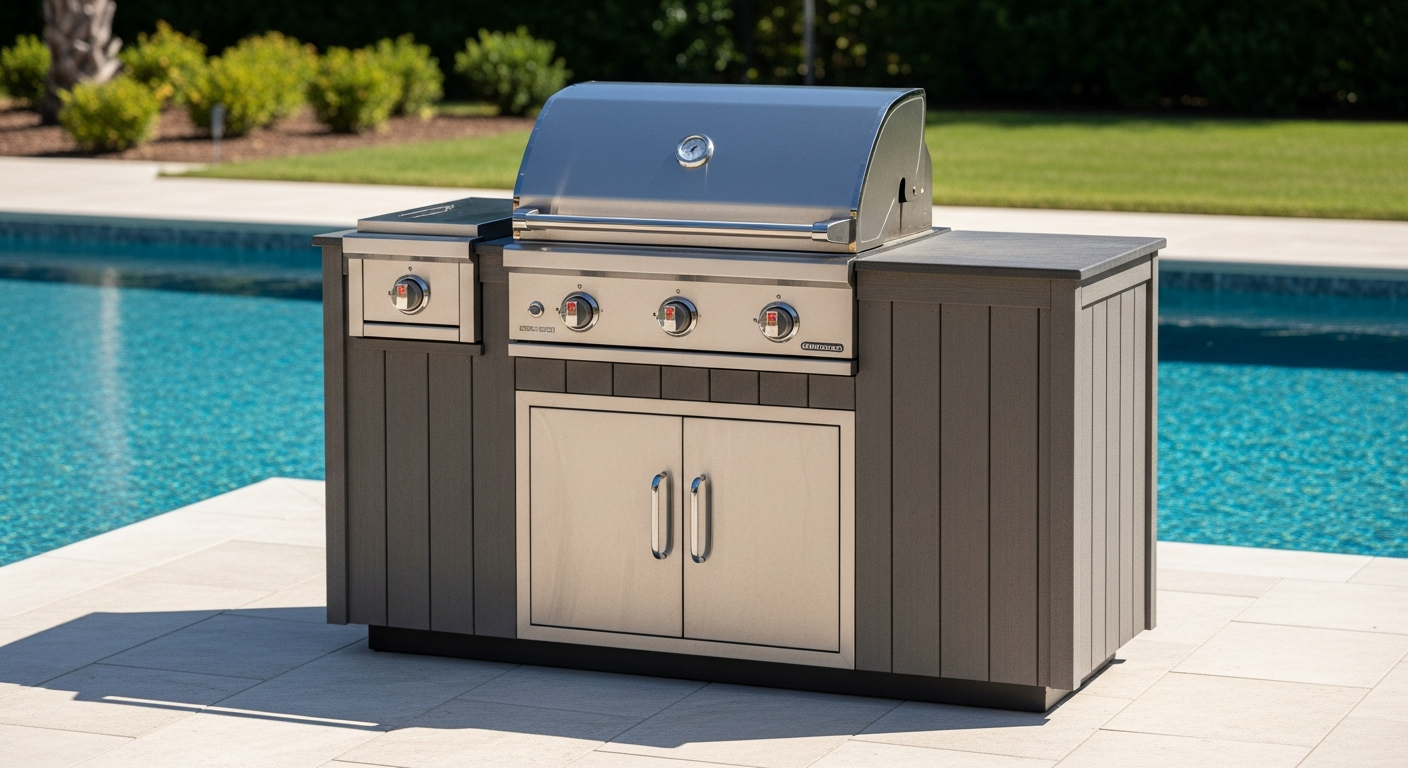
outdoor grill with cabinet
Custom Outdoor Kitchen Cabinets in Sarasota FL FAQ
?What material for outdoor cabinets will actually survive harsh weather without constant maintenance?
High-density polyethylene (HDPE), often sold as a marine-grade polymer, is the most durable, low-maintenance material for outdoor cabinetry. Unlike wood which requires annual sealing to prevent rot and warping, or certain grades of stainless steel that can still show rust spots from salt air or chlorine, HDPE is a solid, non-porous plastic that is impervious to moisture. It won't delaminate, swell, or fade significantly under intense UV exposure, and you can clean it with just soap and water, avoiding the specialized cleaners and polishing that 304-grade stainless steel often requires to look its best.
?Are outdoor kitchen cabinets completely waterproof and sealed from pests?
No cabinet is completely waterproof or pest-proof, but high-quality designs incorporate features to manage moisture and deter critters effectively. Look for cabinets with rain-management features like sloped tops and integrated channels that direct water away from the interior. For pest resistance, ensure the cabinets have tight-fitting, gasket-sealed doors and are installed on a solid, level base to minimize gaps. Remember, a common failure point is the cabinet base; if it's not perfectly sealed to the patio, insects and rodents will find a way in from underneath, regardless of how well-sealed the doors are.
?How much should I budget for custom outdoor cabinets, and what are the hidden costs?
For a standard 10-foot run of high-quality custom outdoor cabinets, expect to budget between $8,000 and $20,000, depending heavily on the material and features. The hidden costs often lie in site preparation and utilities, not the cabinets themselves. You may need to run new gas lines, dedicated electrical circuits for refrigerators or outlets, and plumbing for a sink, which can easily add another $3,000 to $7,000. A critical but often overlooked expense is ensuring proper deck or patio reinforcement to support the significant weight of granite countertops and appliances, which can require structural work.
?Do I need special ventilation for a grill built into my outdoor kitchen cabinets?
Yes, proper ventilation is a non-negotiable safety requirement for any built-in grill, and standard range hoods are not suitable. You must install an outdoor-rated vent hood if the grill is under any type of combustible overhead structure like a pergola or roof. More critically, the cabinet enclosure itself needs insulating liners and ventilation ports to prevent heat from the grill from damaging the cabinetry or creating a fire hazard. These vents allow for air circulation to dissipate heat and prevent the dangerous buildup of gas from a potential leak.
?Can I use indoor cabinet materials like wood or MDF if my outdoor kitchen is covered?
Using interior-grade materials like MDF or standard wood cabinets in a covered outdoor space is a costly mistake that will lead to failure. Even in a covered patio, ambient humidity, temperature swings, and indirect moisture will cause MDF to swell and delaminate, and standard wood to warp or rot within a few seasons. The glue and joinery used in indoor cabinets are not formulated to withstand these conditions. You must use materials designed for exterior exposure, such as marine-grade polymer, teak, or powder-coated stainless steel, to ensure the structure remains stable and functional long-term.
?What's the biggest mistake people make when designing the layout for their outdoor cabinets?
The most common design flaw is failing to account for the prevailing wind and sun exposure, leading to an uncomfortable and underused space. Homeowners often place the grill in the most convenient spot relative to the house, only to find that the prevailing wind blows smoke directly into the seating area or back into the house through open doors. Similarly, placing a refrigerator in a location that gets direct afternoon sun forces the unit to work much harder, shortening its lifespan from a typical 8-12 years down to 5-7 years and dramatically increasing energy consumption.
Best Service Custom Outdoor Kitchen Cabinets in Sarasota FL near me
Explore other versions and models available in your area.
Reviews · Custom Outdoor Kitchen Cabinets in Sarasota FL
See what other customers say and share your experience.
Leave a comment
It takes less than a minute. Your feedback helps others.
Latest Comments
J
Jessica Garcia
Consider adding weather-resistant materials to your custom outdoor kitchen cabinets for a longer lifespan and lower maintenance.
C
Christopher Moore
It's crazy how a simple addition like custom outdoor kitchen cabinets can totally transform a backyard into an actual outdoor living space that's worth spending time in, instead of just a bunch of lawn and a grill.
B
Brian Scott
The point main here is that custom outdoor kitchen cabinets can really increase the home's resale value, which is something many people overlook when planning their outdoor spaces.
Get Your Free Pool Quote
Same-day quotes available!
Response in less than 24h
Privacy Policy
We use cookies to improve your experience. By clicking "Accept", you consent to our use of cookies.