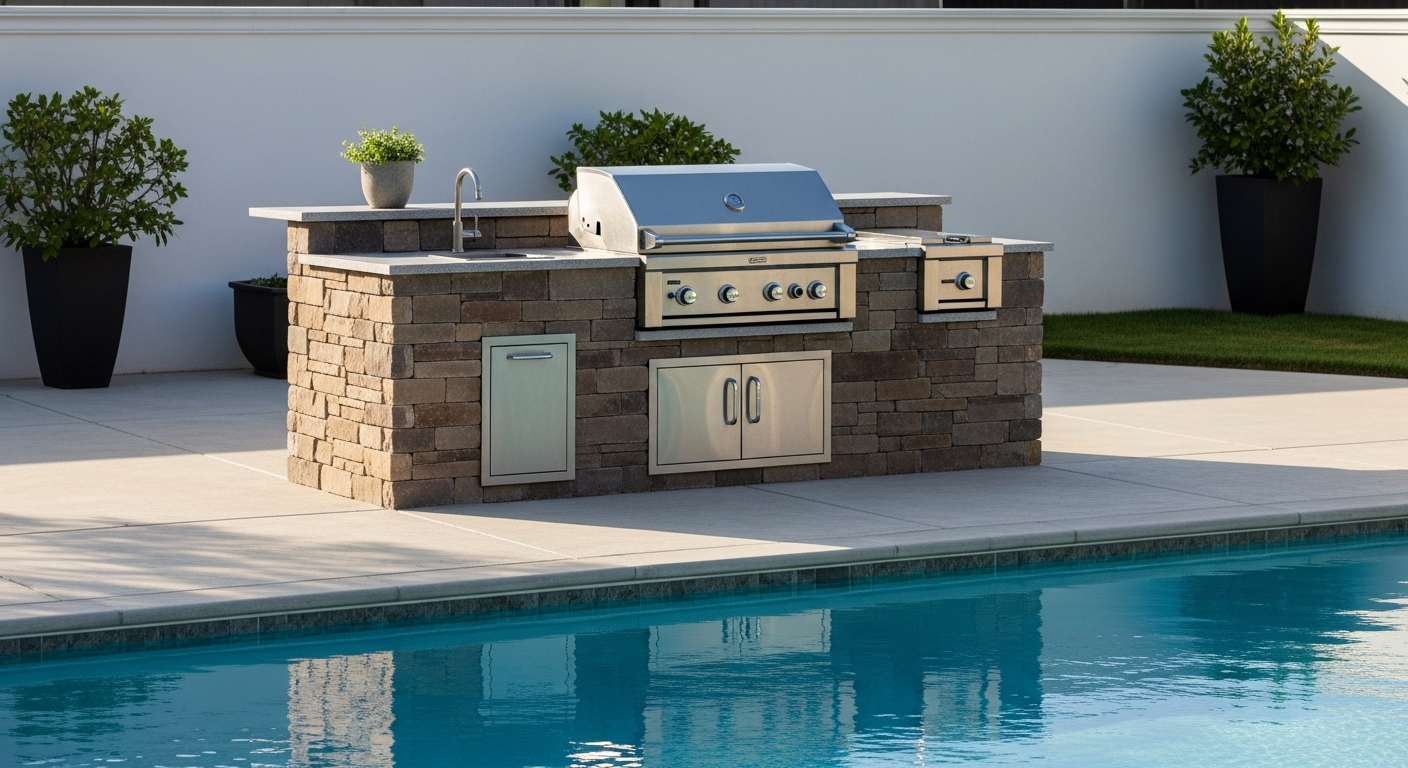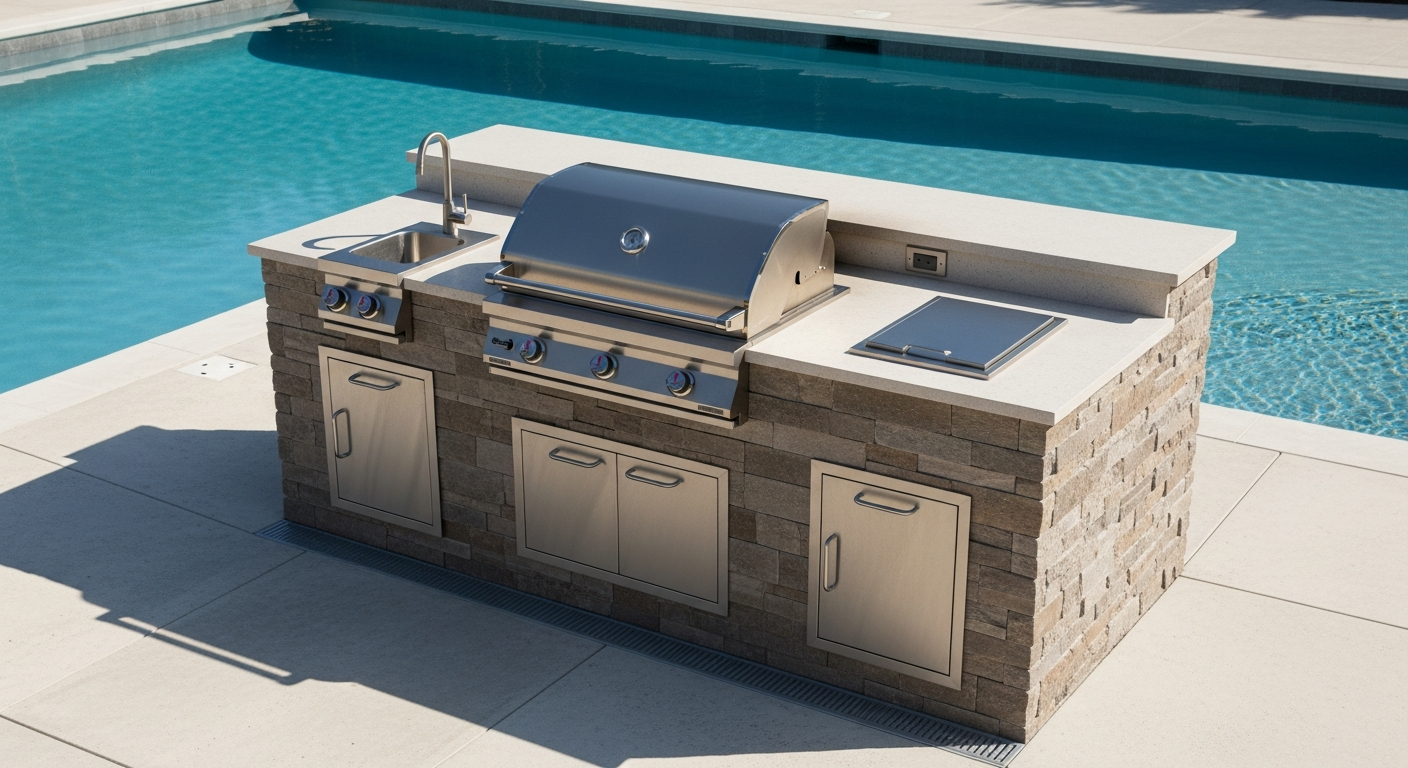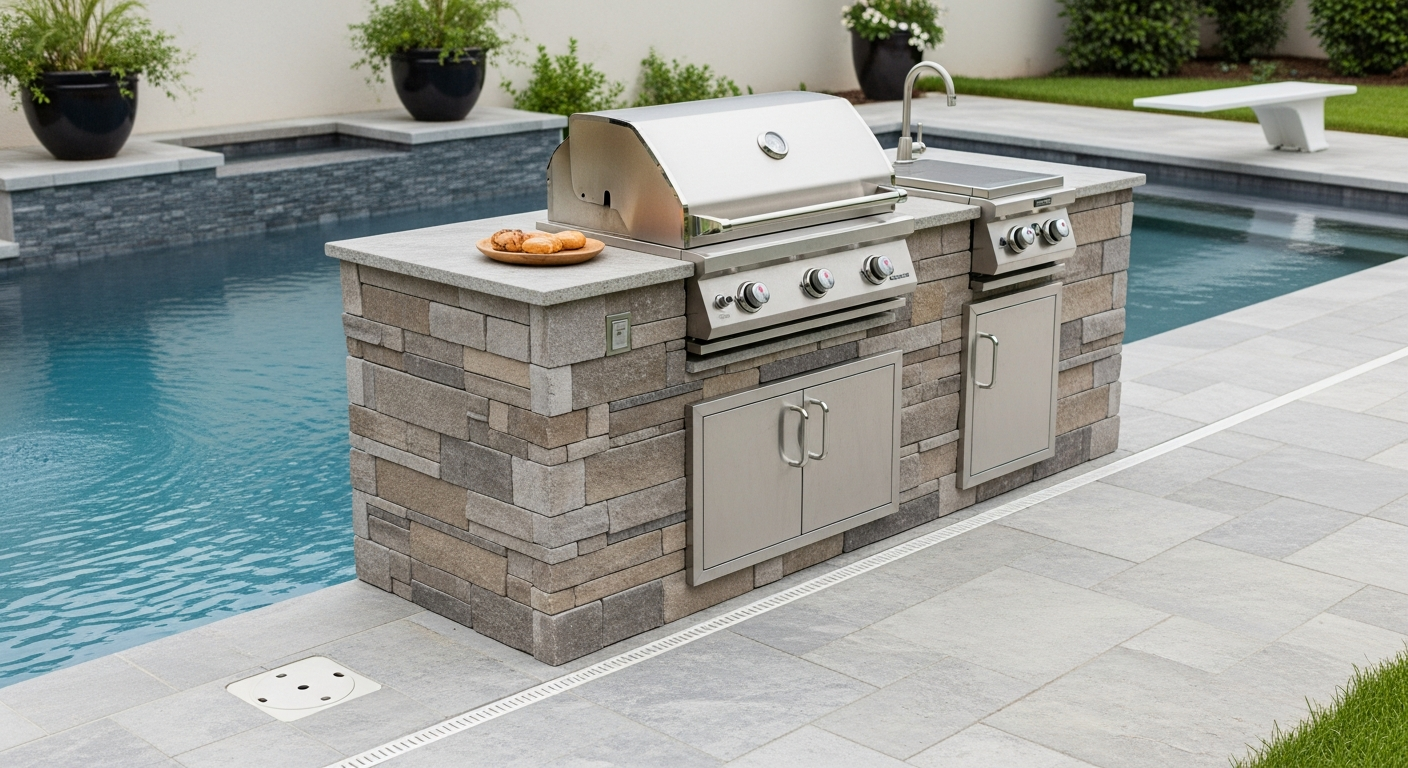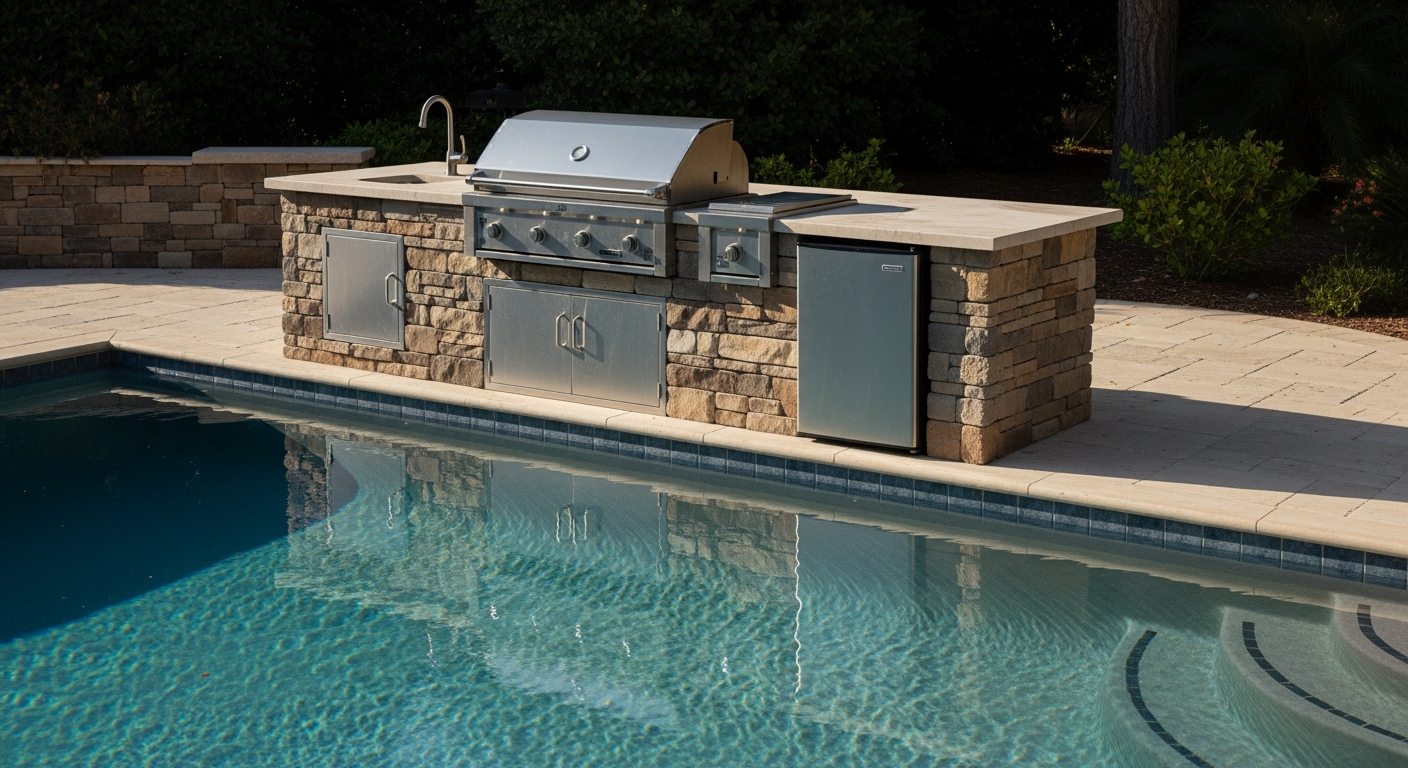
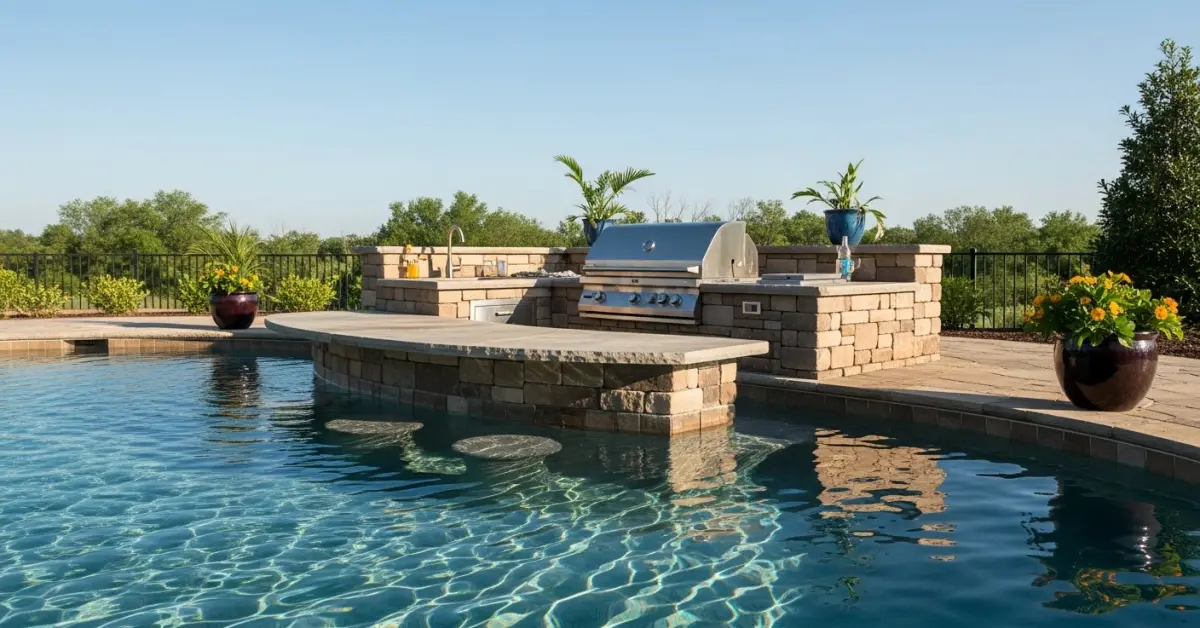
Executive Summary: Building a Grill Island for Sarasota's Climate
From my 15 years designing and building outdoor living spaces in Florida, I can tell you a grill island in Sarasota is
From my 15 years designing and building outdoor living spaces in Florida, I can tell you a grill island in Sarasota is less about the brand of the grill and more about the structural integrity against wind uplift and saltwater corrosion. Homeowners often focus on granite and stainless steel, but the real points of failure are the unseen frame, the footings, and the electrical connections that aren't properly weatherproofed for our coastal environment. A successful project here is an exercise in marine-grade construction principles applied to a residential backyard.
- Wind Load Compliance: Structures must meet or exceed Sarasota County's 165 mph wind load requirements, which dictates specific footing and anchoring methods.
- Material Selection: 316-grade stainless steel is the minimum for hardware and components; anything less (like the common 304-grade) will show pitting and rust within a few seasons.
- HOA Architectural Review: Most high-value communities, like those in Lakewood Ranch, require detailed plans including material samples and color palettes before any work begins.
- Permitting Scope: Any grill island with permanent plumbing or electrical connections requires a permit from Sarasota County Planning and Development Services, a process that can add 4-6 weeks to the timeline.
The Planning Failures That Drive Up Grill Island Costs
The most common misstep is underestimating the site preparation and utility runs. Homeowners see a finished price for a beautiful outdoor grill and bar but forget that running gas lines, plumbing for a sink, and dedicated electrical circuits through an established paver patio or landscape can easily match the cost of the island itself. It's the hidden groundwork that inflates the budget after the contract is signed.
The Most Expensive Failure: Ignoring the Footing Requirements
I was called to a project in Palmer Ranch where a homeowner had a beautiful, high-end prefabricated outdoor grill island installed on their existing paver patio. The first major storm shifted the entire 1,500-pound unit. The core failure was the lack of a proper concrete footing tied into the ground. The installer simply placed it on the pavers. This not only voided the manufacturer's warranty but also created a serious safety hazard and required a complete removal, foundation pour, and re-installation, costing nearly 70% of the original price to fix.
The Construction Process in Practice for Sarasota
A properly executed grill island project follows a strict sequence dictated by local codes. It begins with a site plan and engineering drawings that specify footing details, frame construction, and utility connections. These plans are submitted to Sarasota County for review. Only after the permit is issued can excavation for footings and utility trenches begin. This is a non-negotiable step for any island with hard-piped gas or electrical service.
Selection Criteria for Sarasota Homeowners
- Verify Hurricane Engineering: Ask for the engineering specs showing how the unit is tied down to meet local wind codes. A simple verbal assurance is not enough.
- Confirm Marine-Grade Materials: Specifically request 316L stainless steel for all visible metal and fasteners. For cabinetry, demand marine-grade polymers or concrete-based structures, not wood-framed systems susceptible to moisture and termites.
- Review the Contractor's HOA Submission Package: A professional will have a ready-made package for communities like The Founders Club or University Park, showing they understand the rigorous review process.
- Check for a State LP Gas License: Any contractor connecting a propane or natural gas line must hold a specific license from the Florida Department of Agriculture and Consumer Services. This is separate from a general contractor's license.
Comparing Custom-Built vs. Prefabricated Grill Islands
The choice between a custom-built masonry island and a high-end prefabricated unit is a major decision point. Each has distinct advantages and disadvantages tailored to different priorities and site conditions in Sarasota.
| Indicator | Custom-Built Masonry Island | Prefabricated Grill Island |
|---|---|---|
| Hurricane Resistance | Superior, as it's built on-site with a monolithic concrete footing and block construction. | Dependent on the anchoring system; can be excellent but requires precise installation to meet code. |
| Material Longevity in Salt Air | Excellent when using proper stucco, stone veneer, and sealed concrete countertops. Fully customizable. | Varies by manufacturer. High-end units use powder-coated aluminum or stainless frames, but cheaper models use galvanized steel that will rust. |
| HOA Approval Likelihood | Higher, as materials can be matched exactly to the home's existing exterior finishes. | Can be more difficult if the factory finishes do not align with strict community architectural guidelines. |
| Installation Timeline | 4-8 weeks, including permit, inspections, and construction. | 1-3 weeks after delivery, assuming site and utilities are ready. |
When a Prefabricated Island Is Not the Right Choice
A prefabricated outdoor grill island is the wrong choice for properties with significant grade changes or uneven surfaces. These units require a perfectly level, solid concrete slab for support. I've seen attempts to install them on decks or sloping patios, which results in instability, cracked countertops, and doors that won't close properly. In these situations, a custom-built island is the only viable, long-term solution.
Safe Hiring Checklist for Your Outdoor Kitchen Project
Hiring the right team in Sarasota is critical. The market has many landscape and patio companies that offer grill islands as an add-on service but lack the specific licensing and engineering knowledge required for a compliant and durable installation.
- Verify the contractor holds a Florida Certified General, Building, or Residential Contractor license, which is required for any project involving structural footings.
- Confirm they have specific experience with Sarasota County's permitting for outdoor structures, including electrical and plumbing sub-permits.
- Ask for proof of liability and workers' compensation insurance. An uncovered accident on your property can become your financial responsibility.
- Request a list of at least three local projects completed in the last two years, preferably in coastal or waterfront areas like Siesta Key or Longboat Key.
- Ensure the contract explicitly states that the project will be built to meet Florida Building Code wind load requirements for Sarasota County.
- Check for the specialty gas license if your project includes a natural gas or built-in propane line.
- Discuss the plan for protecting your existing landscaping, pool deck, and irrigation during construction.
Decisions That Determine the Final Outcome
The most critical decision is choosing the structural frame of the island. Many builders use galvanized steel studs to save on cost, which is a catastrophic mistake in our coastal climate. Salt air penetrates the exterior finish and corrodes the frame from the inside out. Within five to seven years, you get rust stains bleeding through the stucco and a structure that is fundamentally failing.
The Moment Most Homeowners Get It Wrong
The mistake happens during the material selection phase. A contractor presents two quotes, one significantly cheaper than the other, and explains the difference is the "internal frame." Homeowners, focused on the granite and the grill, choose the cheaper option to save money. The correct decision is to insist on a welded aluminum frame or a concrete block (CMU) build. It adds 15-20% to the initial cost but it's the only way to guarantee a 20+ year lifespan for the structure in Sarasota.
Practical Answers for Building in Sarasota
Navigating the local bureaucracy and environment is key. These are the questions that come up on nearly every project I manage in the area.
How does the Sarasota County permit process work for a grill island?
If your island includes permanent electrical service for outlets or lighting, or hard-piped plumbing for an outdoor grill with sink, a permit is mandatory. You must submit scaled drawings to the Sarasota County Planning and Development Services department. The process involves plan review, issuance, and then on-site inspections for footing, electrical rough-in, plumbing, and a final inspection. Expect this to add at least a month to your project timeline before any work can begin.
What are typical HOA requirements for grill islands in this area?
In communities like Lakewood Ranch or Prestancia, the Architectural Review Committee (ARC) has final say. They will require a detailed site plan showing the island's location relative to property lines and the main house. You'll also need to submit material samples for the finish (stucco, stone) and countertops, ensuring they harmonize with the home's existing aesthetic. Some HOAs even have rules about visible appliance brands or the inclusion of features like an outdoor grill and pizza oven.
Are there special considerations for waterfront properties?
Absolutely. For properties on the Intracoastal Waterway or the Gulf, the Florida Department of Environmental Protection (FDEP) may have jurisdiction if the construction is near the Coastal Construction Control Line (CCCL). Additionally, all materials must be upgraded. We exclusively use 316L stainless steel, weatherproof electrical outlets with “in-use” covers, and non-corrosive fasteners for everything from the cabinet hinges to the grill mounting bolts.