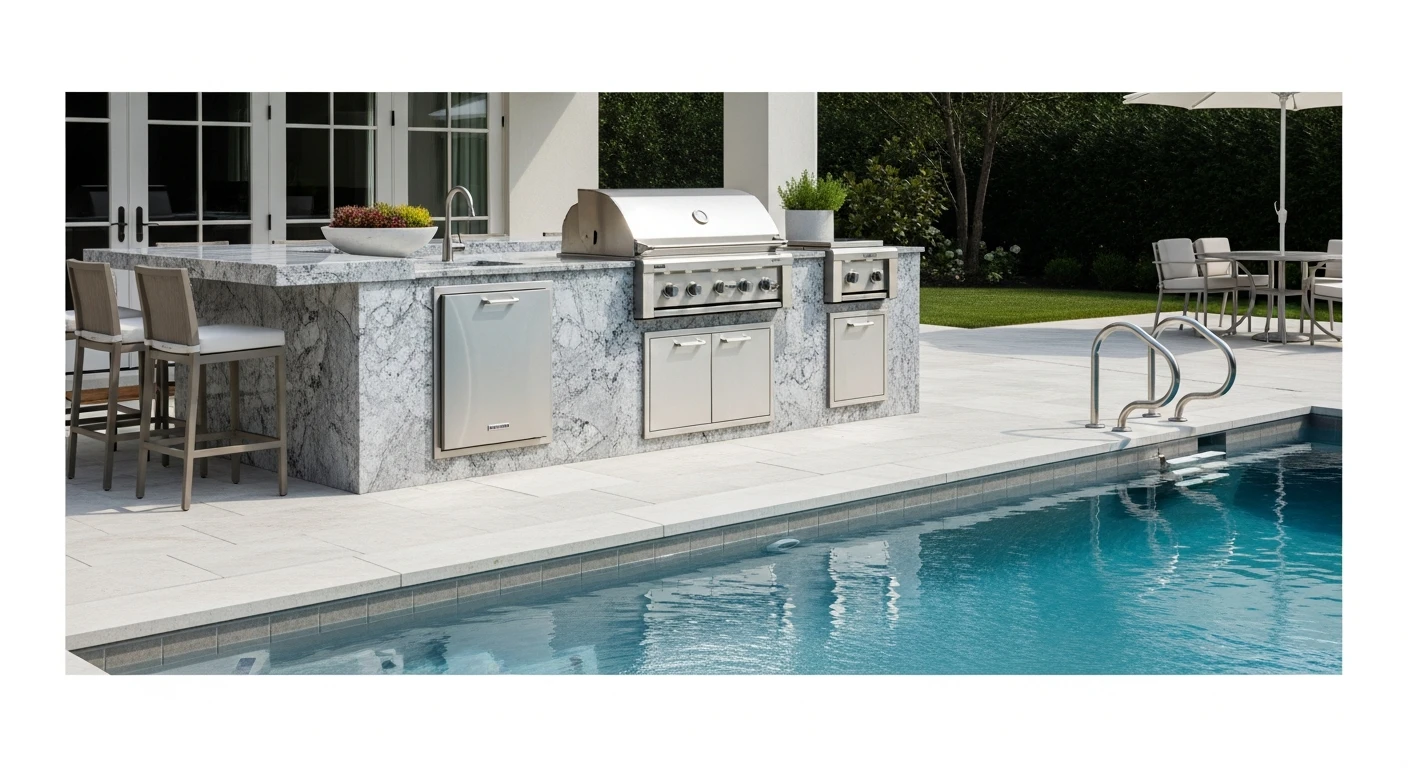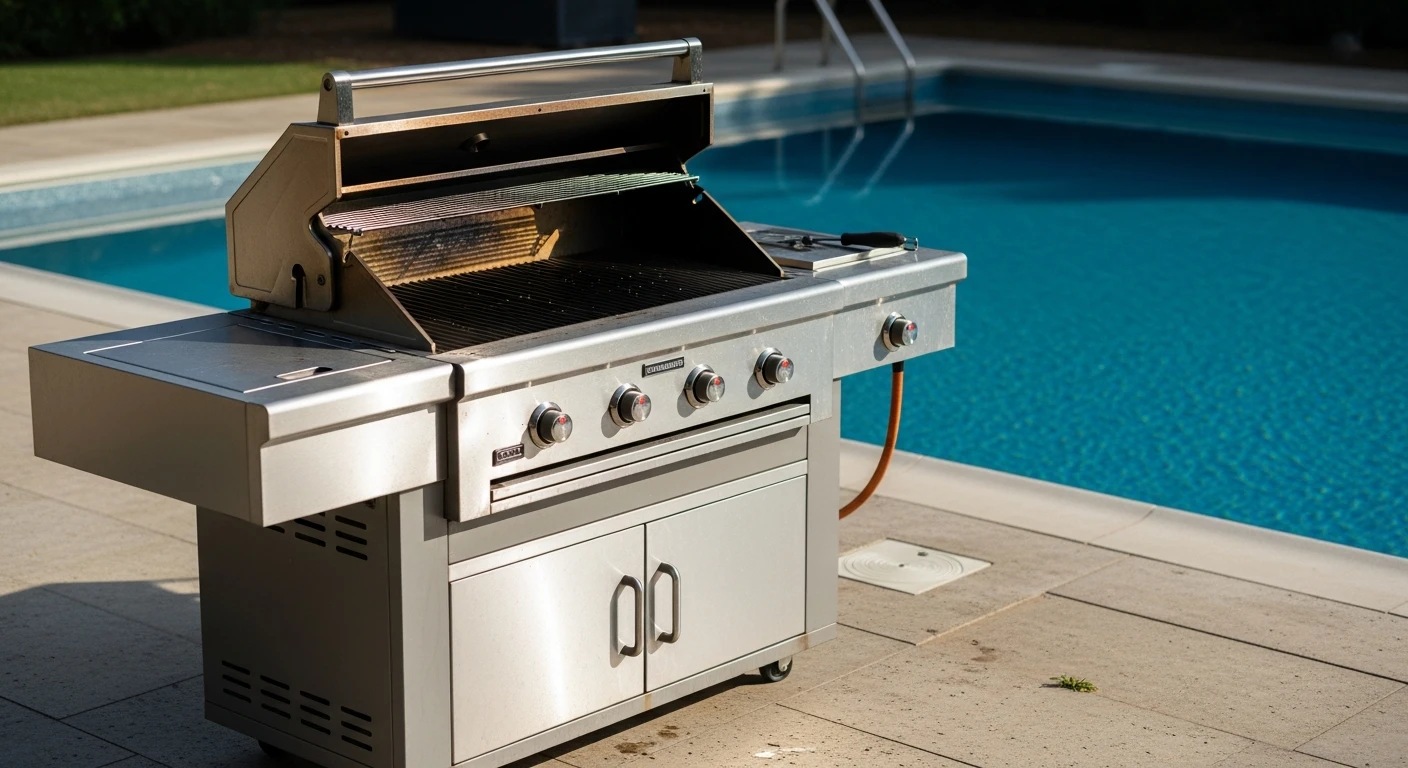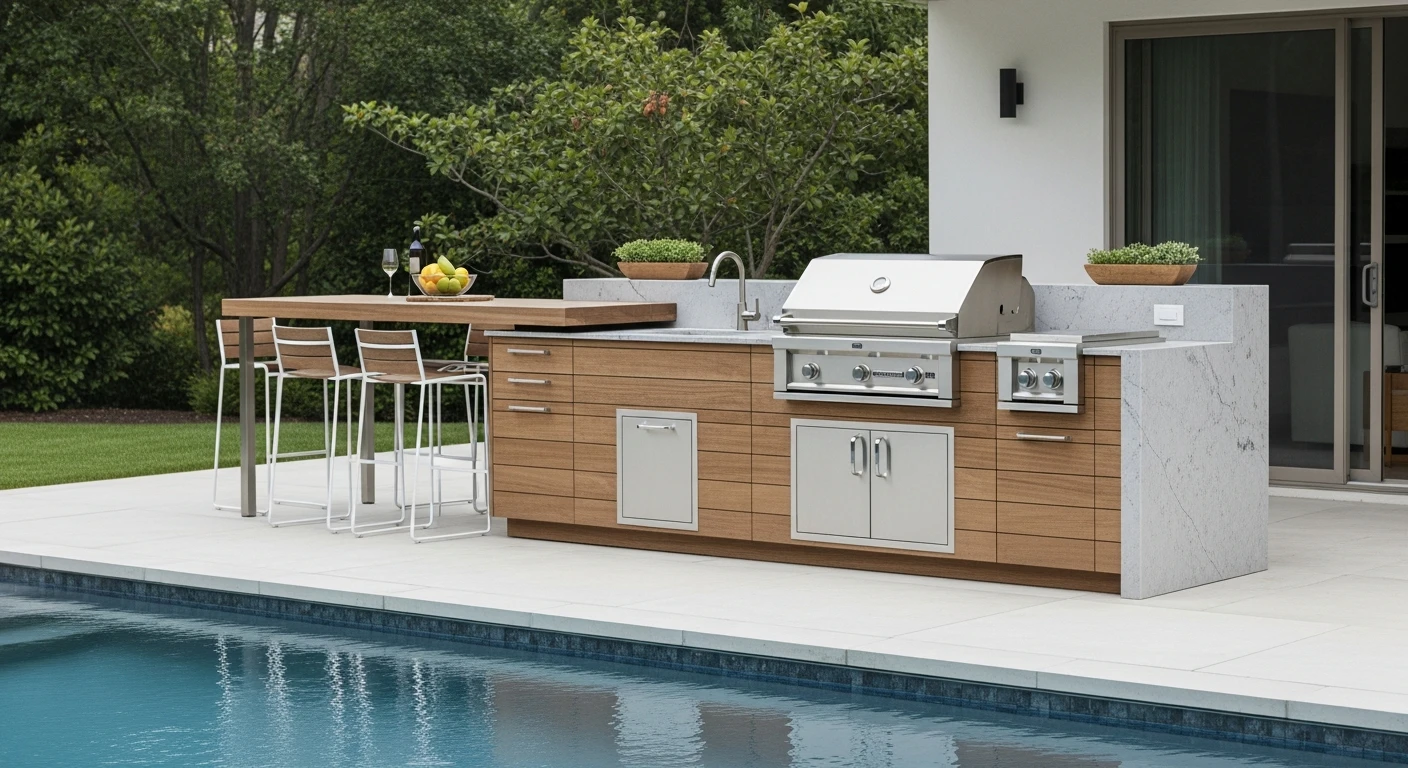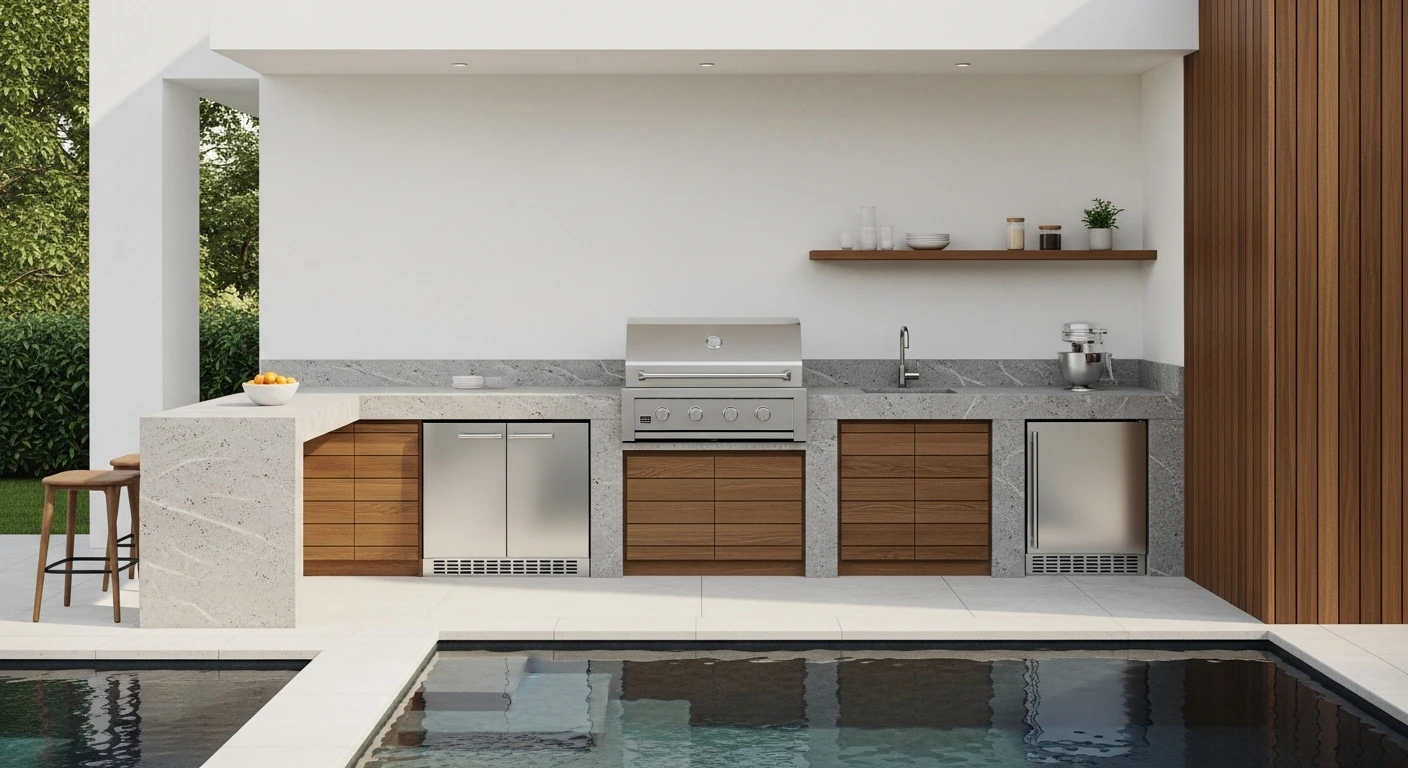
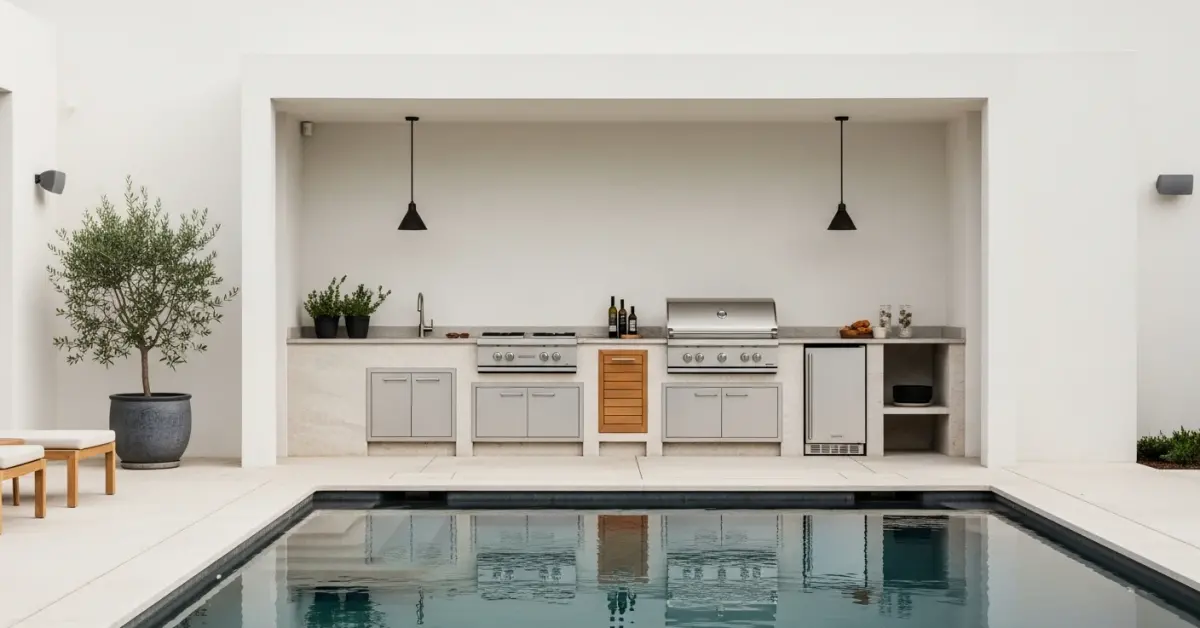
In Sarasota, I’ve seen more luxury outdoor kitchens fail from corrosion and material degradation than from any other cause. The mistake isn't in the budget or the design concept; it's a fundamental misunderstanding of what “luxury” means in a coastal Florida environment. It’s not about having the most expensive imported grill. It’s about having a system engineered to withstand the relentless assault of salt air, UV radiation, and tropical humidity. The most common error is specifying 304-grade stainless steel for everything, a standard choice inland, but one that practically guarantees surface rust and pitting within 18-24 months near the coast.
Executive Summary: Building a Sarasota-Proof Outdoor Kitchen
From my direct experience managing high-end outdoor kitchen projects from Casey Key to Longboat Key, a successful build
From my direct experience managing high-end outdoor kitchen projects from Casey Key to Longboat Key, a successful build hinges on material science and structural integrity, not just aesthetics. The defining characteristic of a truly luxurious and durable outdoor kitchen in this market is its ability to perform and look pristine five years post-installation, despite constant exposure to corrosive salt air and intense sunlight. The key is shifting focus from appliance brands to the grade of the materials and the construction methods used to assemble them.
- Material Specification is Paramount: All exterior metal components, including grills, access doors, and hardware, must be 316L marine-grade stainless steel. This is not an upgrade; it is a baseline requirement for coastal Sarasota.
- Structural Materials Matter: The framing cannot be wood or standard steel. We use welded aluminum framing or concrete block (CMU) construction exclusively to prevent rot, termite damage, and structural failure from moisture.
- Ventilation is a Non-Negotiable Safety Feature: Enclosed gas appliances require specific ventilation hoods or cabinet vents to comply with Florida Building Code and prevent dangerous gas buildup. This is a life-safety issue, not an option.
- Countertop Selection Beyond Aesthetics: While quartzite and granite are popular, sintered stone or ultra-compact surfaces like Dekton offer superior UV resistance and non-porosity, preventing staining and fading from the Florida sun.
The Planning Failures That Compromise Longevity
The most significant errors happen long before the first block is laid. Homeowners are often sold on a beautiful 3D rendering, but the technical specifications behind that image are what determine the project's success. The primary failure is underestimating the corrosive power of our specific coastal environment.
I've been called to “fix” kitchens less than three years old where every cabinet handle, hinge, and even the grill face is peppered with rust. The original contractor used 304-grade stainless, which is fine for Orlando, but not for a home in a waterfront community like Bird Key. The cost to replace these components often exceeds 30% of the original project budget, turning a perceived good deal into a costly lesson.
The Most Expensive Oversight: Ignoring Airflow and Drainage
The costliest mistake is designing a beautiful, solid-looking structure with inadequate ventilation and no internal drainage plan. Moisture and heat get trapped inside the cabinet structure, creating a perfect environment for mold, mildew, and accelerated corrosion of internal components. I consulted on a project in The Oaks where the homeowner had a custom-built island with no weep holes or ventilation panels. After one summer, the interior was a swamp of black mold, and the electrical wiring for the outlets and refrigerator was compromised, creating a serious fire hazard. The entire structure had to be demolished and rebuilt.
The Build Process in Practice for Sarasota County
A properly executed luxury outdoor kitchen project in Sarasota is a construction project, not a simple appliance installation. It requires permits, inspections, and licensed trades, and the process reflects that complexity. It is not something a handyman or landscaper is legally or technically equipped to handle.
The process begins with a structural and utility plan submitted to the Sarasota County Permitting office. This involves site plans, electrical load calculations for refrigerators and lighting, and gas plumbing schematics. Once the permit is issued—a process that can take 4-8 weeks depending on their backlog—the physical work can begin. This includes footing installation, blockwork or framing, utility runs by licensed electricians and gas plumbers, and finally, the installation of countertops, cladding, and appliances. Each major step requires a county inspection before proceeding to the next.
Selection Criteria for a Sarasota Homeowner
- Verify a Certified General Contractor (CGC) License: In Florida, any structural outdoor kitchen requires a CGC or a specialty license. Verify their license is active and without complaints on the Florida Department of Business and Professional Regulation (DBPR) website.
- Demand 316L Stainless Steel in Writing: Get the material specification for all metal components listed on the contract. Do not accept “high-grade” or “commercial stainless” as a substitute.
- Review Their Plan for Stormwater Management: Ask how the design accounts for torrential rain. Where will the water go? A proper plan includes correctly sloped countertops and consideration for drainage around the base of the structure.
- Ask for a Portfolio of Coastal Projects: Look at projects they completed 3-5 years ago in Sarasota, not just their latest work. This is the only way to see how their materials and methods hold up to our specific climate.
Comparing a Custom Build to Alternatives
Homeowners often weigh a fully custom, site-built kitchen against modular units or high-end portable carts. While alternatives have their place, they serve a fundamentally different purpose and have different performance characteristics in our coastal environment.
| Feature | Custom Site-Built Kitchen | High-End Modular System | Luxury Portable Grill Cart |
|---|---|---|---|
| Corrosion Resistance | Excellent (with 316L steel & CMU) | Varies; often powder-coated aluminum or 304 steel | Good (if 316L specified), but fasteners are weak points |
| Hurricane Wind Load Resistance | Engineered to meet Florida Building Code | Must be anchored; may not meet code | Must be moved indoors or secured |
| Home Value Appreciation | Significant; considered a permanent home feature | Moderate; may be viewed as semi-permanent | Minimal; considered personal property |
| Initial Cost | $25,000 - $100,000+ | $10,000 - $30,000 | $5,000 - $15,000 |
When a Custom Kitchen Is Not the Right Choice
A fully integrated, custom-built outdoor kitchen is a permanent structural addition to your home. If you are not certain about your long-term plans for the property or if your outdoor space is limited and requires flexibility, this is not the right investment. A client in a historic downtown Sarasota home with a small courtyard was better served by a high-end portable grill station. It gave them the cooking power they wanted without the permanence and permit complexity that would have overwhelmed their historic property and limited future layout changes.
Safe Hiring Checklist for Your Sarasota Project
Hiring the right team is the single most important decision. A beautiful design from the wrong builder will result in a failing structure. The verification process must be rigorous and specific to Florida's contracting laws.
- Confirm the contractor holds a current, state-issued General Contractor (CGC) or Residential Contractor (CRC) license, not just a local business license.
- Verify they carry both General Liability and, crucially, Workers' Compensation insurance. Ask for the certificate of insurance and call the provider to confirm it's active.
- Check the Sarasota County permit portal for their company name to see the volume and type of projects they have successfully permitted and closed out.
- Ensure the contract explicitly states that they are responsible for pulling all necessary permits (building, electrical, plumbing/gas) and scheduling all required inspections.
- The contract must detail the specific materials to be used, including the grade of stainless steel (316L) and the type of framing (aluminum or CMU block).
- Clarify the warranty provided, specifically asking how it covers finish failure due to corrosion, which is a common point of contention.
- Never pay more than 10% of the contract value as a deposit, as stipulated by Florida law for most home improvement contracts.
Decisions That Determine the Final Outcome
Two key decisions separate a stunning, long-lasting outdoor kitchen from a disappointing and expensive problem: prioritizing structural materials over cosmetic finishes and integrating the design with the existing landscape and architecture from day one.
I worked with a client in Lakewood Ranch who initially allocated a huge portion of their budget to a rare Brazilian quartzite for the countertop and a high-tech smart grill. I advised them to reallocate some of that budget to upgrade the standard appliance package to full 316L marine-grade units and to use welded aluminum framing instead of a cheaper modular frame. Two years later, their kitchen is flawless. A neighbor who made the opposite choice—investing in the flashiest finishes but skimping on the underlying structure and materials—is already dealing with rust stains and warped cabinet doors.
The Moment Most Homeowners Get It Wrong
The critical mistake happens during the design phase when the conversation is dominated by appliance selection and countertop colors. The most important discussion should be about the unseen elements: framing, ventilation, and waterproofing. Before you talk about what brand of grill you want, you should be asking the contractor, “How will you build the structure to ensure it stays dry inside? What is your strategy to prevent galvanic corrosion where different metals meet? How will you flash it against the house to prevent water intrusion?” A contractor who can’t answer these questions in detail is a designer, not a builder, and is not qualified for a coastal Sarasota project.
Practical Answers for Building in Sarasota
Navigating the local regulations and environmental challenges is key. Generic advice doesn't apply here; success requires understanding the specific demands of Sarasota County and its municipalities.
Navigating the Sarasota County Permitting Process
Any outdoor kitchen with permanent electrical and gas lines is considered a structure and requires a building permit from Sarasota County (or the respective city, like North Port or Venice). The plans must be drawn to scale and show all utility connections, footing details, and materials. A common bottleneck is the plan review for compliance with the Florida Building Code's high-velocity hurricane zone (HVHZ) requirements, which dictates how the structure must be anchored.
HOA Architectural Review in Communities like Palmer Ranch
In deed-restricted communities, the HOA's Architectural Review Board (ARB) has the final say, often before you can even apply for a county permit. They regulate location, materials, colors, and even the visibility of the structure from neighboring properties. Submitting a full design package with material samples is typically required. Getting ARB approval can add 30-60 days to the project timeline before the county permit process even begins.
Florida's Lien Law and Your Financial Protection
Florida has specific construction lien laws to protect contractors and suppliers. However, they can also put homeowners at risk. Before making your final payment, you must obtain a “Final Release of Lien” from the general contractor and all major subcontractors and suppliers. This document confirms they have been paid in full and waives their right to place a lien on your property. A reputable contractor will provide this proactively as part of their project closeout procedure.