Why Your Metal Kitchen Choice is Different in Sarasota
In over a decade of building outdoor living spaces from Lakewood Ranch to Casey Key, I’ve seen a clear and costly
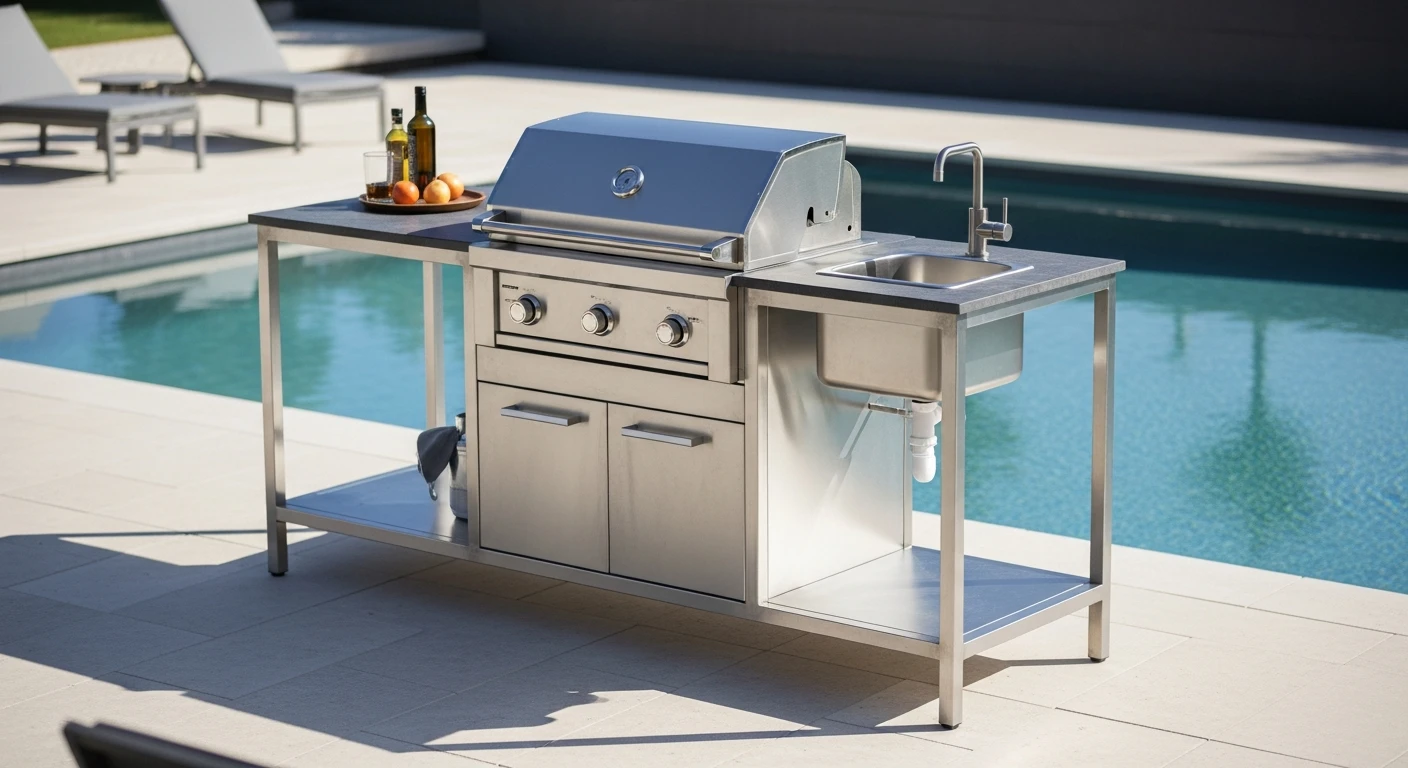
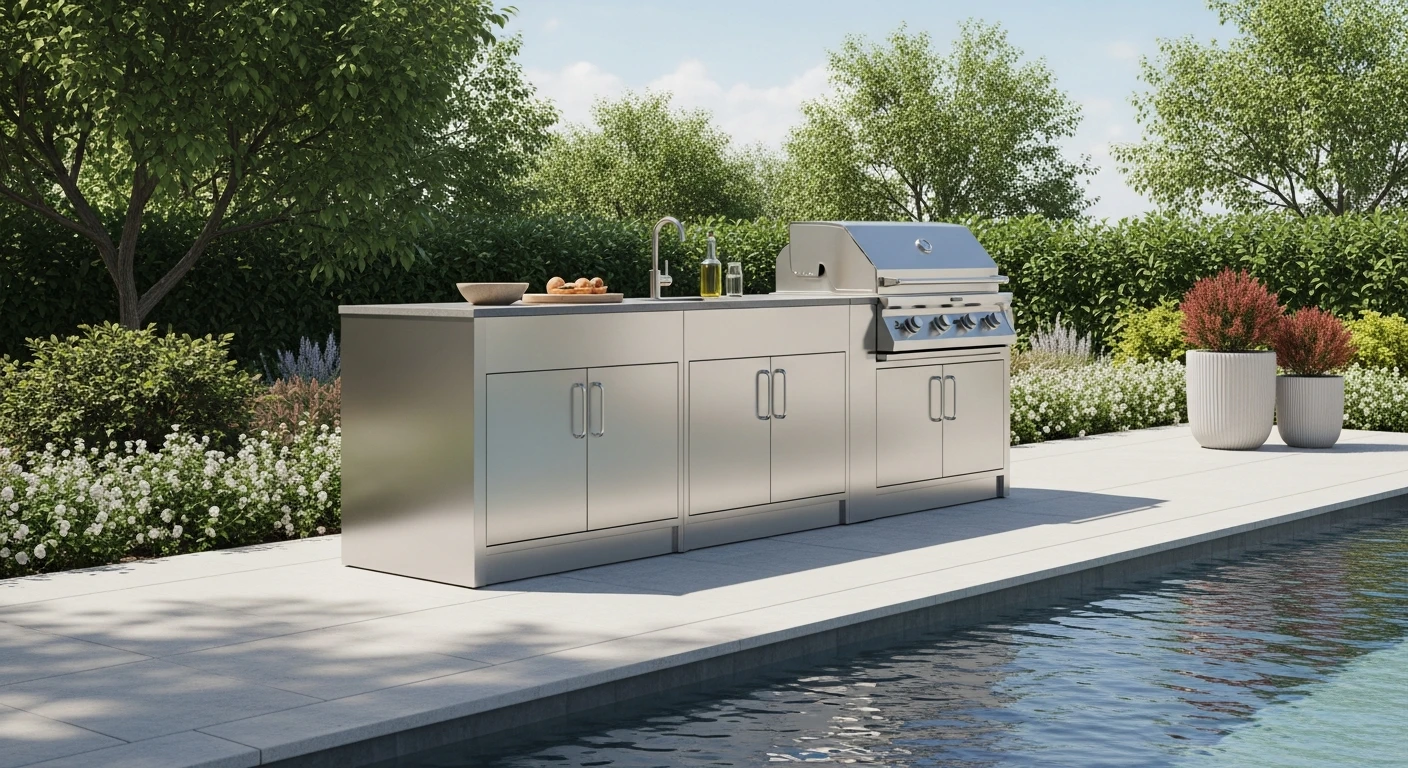
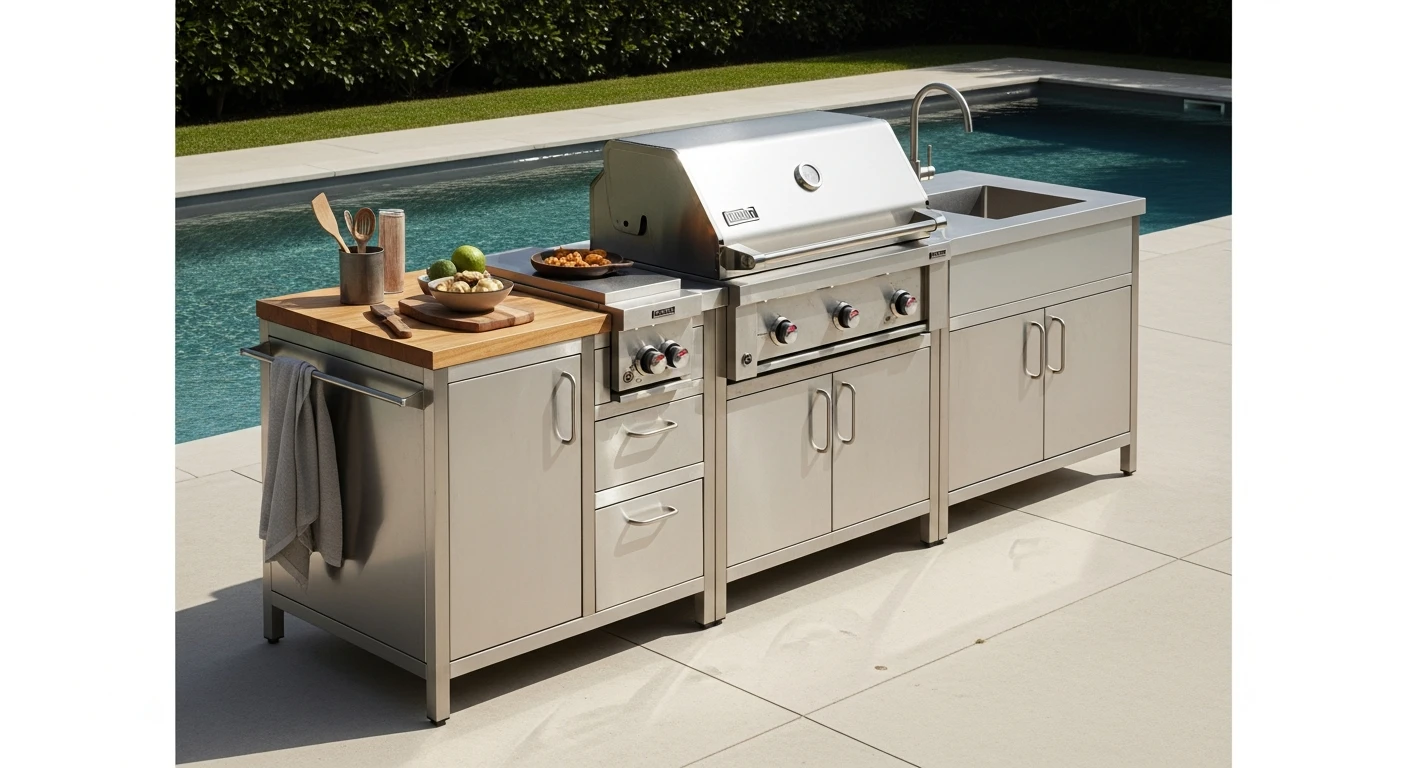
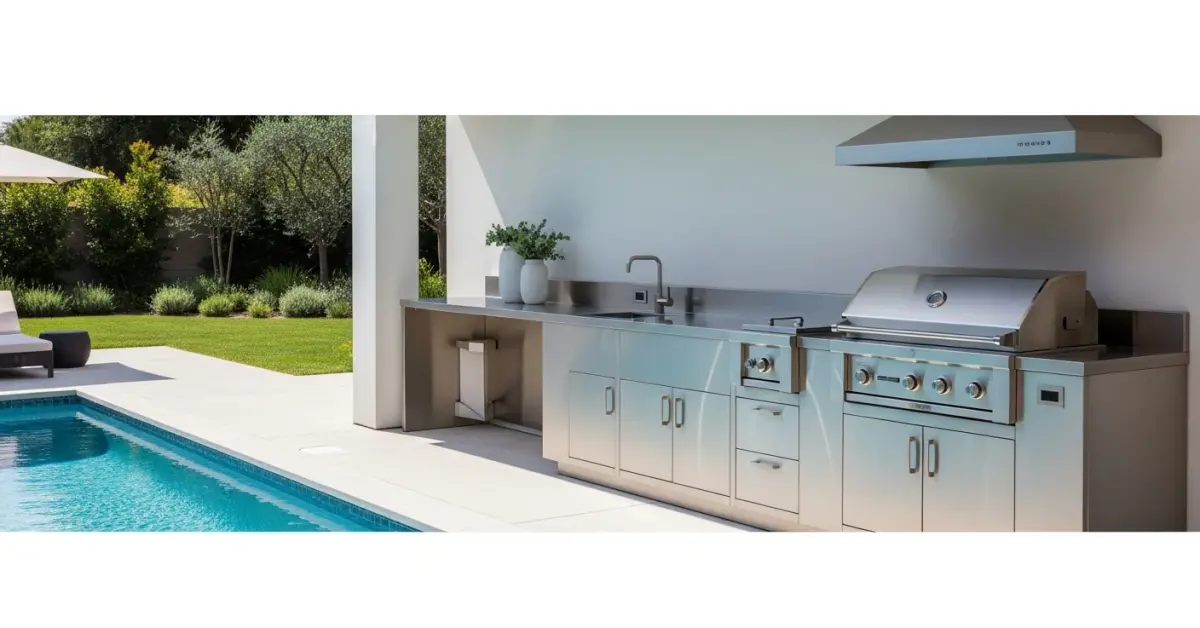
In over a decade of building outdoor living spaces from Lakewood Ranch to Casey Key, I’ve seen a clear and costly pattern: homeowners choose metal outdoor kitchens for their sleek look and promise of durability, but overlook the specific environmental threats here in Sarasota. The combination of intense year-round humidity, high UV exposure, and pervasive salt spray from the Gulf of Mexico creates an aggressive corrosive environment. A generic “stainless steel” kitchen that would last a lifetime in a dry climate can show pitting and rust stains here in under three years if the wrong grade and construction methods are used. My work is focused on preventing this premature failure by engineering kitchens specifically for this coastal reality, not just assembling pre-fabricated parts.
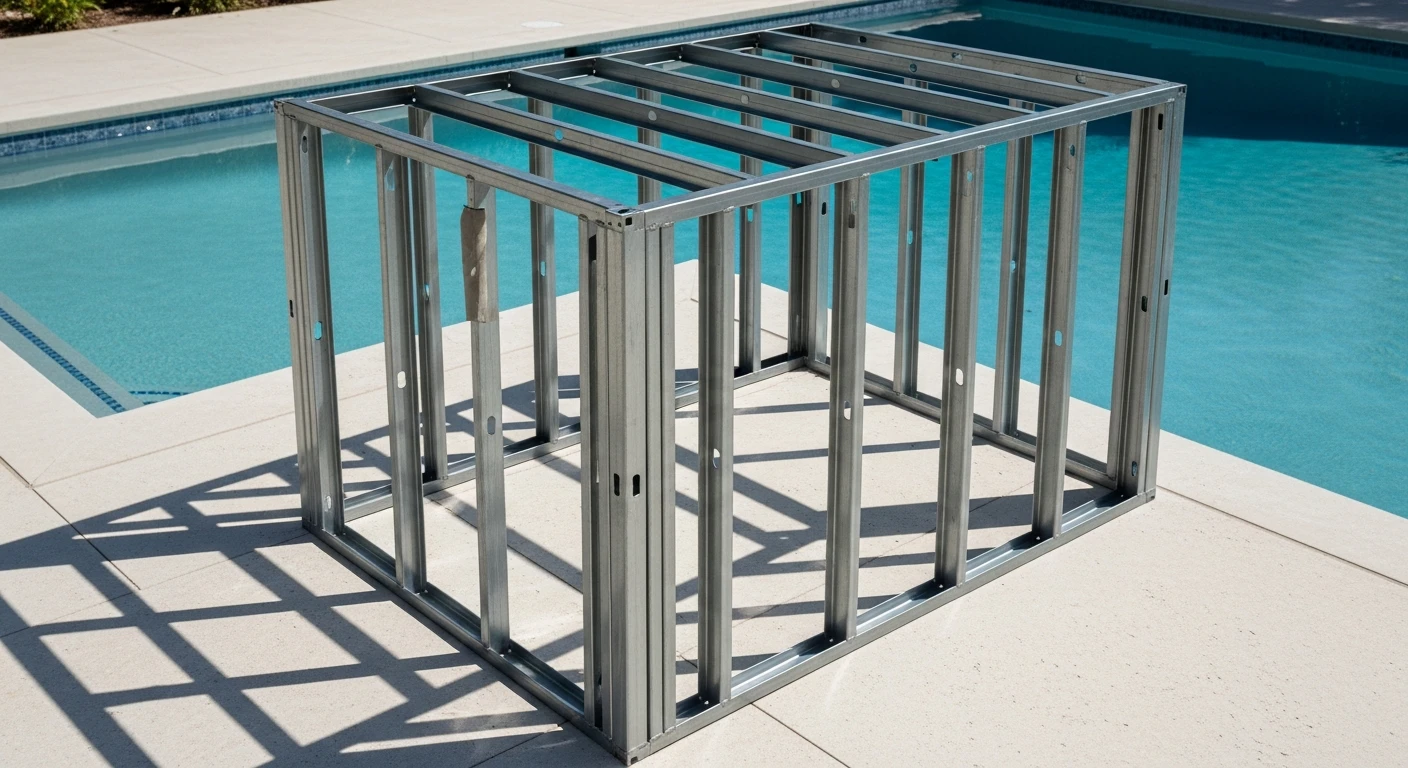
- Metal framing must be galvanized steel (G90) or aluminum, never wood, to prevent rot and termite infestation fueled by our humid climate.
- All exterior-facing steel, including cabinet doors and countertops, should be 304-grade stainless steel at a minimum; for properties west of I-75, 316-grade (marine-grade) is a non-negotiable necessity.
- Fasteners are a primary failure point; all screws, bolts, and hinges must be 316 stainless steel to prevent galvanic corrosion and rust streaks.
- Proper cabinet ventilation is critical to allow trapped, humid air to escape, preventing condensation and mold growth inside expensive grill and storage units.
The Critical Planning Failures I See in Sarasota Projects
The most common mistake is focusing entirely on the appliances and countertop aesthetics while ignoring the invisible structure—the framing. Homeowners are sold on a high-end grill but don't ask what's holding it up. Using wood or even standard steel studs inside the kitchen island is a ticking time bomb in our climate. The constant moisture and humidity will lead to rot, mold, and structural failure, often hidden until the stone veneer starts cracking or the countertop sags.
The Most Expensive Failure: Under-Specifying Stainless Steel
I was called to a beautiful home on Lido Key where the owner had spent over $40,000 on a new outdoor kitchen just two years prior. He had rust streaks running down the face of his brushed stainless steel cabinets. The issue was galvanic corrosion. The builder used cheaper 430-grade stainless steel for the cabinet faces and standard zinc-plated screws. Every screw head was a rust bloom. Worse, the salt air had started to pit the cabinet surfaces themselves. The fix wasn't a repair; it was a complete tear-out and replacement. Specifying 316-grade stainless steel for all components in coastal areas is not an upgrade; it is the baseline requirement for a lasting investment. This single decision can be the difference between a 2-year and a 20-year lifespan for an outdoor kitchen in Sarasota.
The Real Process of Building a Metal Kitchen for Our Climate
A properly constructed metal outdoor kitchen in Sarasota is a custom fabrication project, not an assembly-line product. It starts with a site evaluation to understand environmental exposure, particularly proximity to saltwater. The core structure is typically a welded aluminum or heavy-gauge galvanized steel stud frame, which provides a rigid, non-combustible, and rot-proof foundation for the entire build. This frame is then clad in a cement backer board, creating a stable surface for the final finish, whether that's stone, stucco, or tile.
Key Selection Criteria for a Sarasota Homeowner
When you're evaluating builders for a metal outdoor kitchen, the conversation must go beyond looks. Here are the questions I tell my clients to ask:
- What specific grade of stainless steel (304 vs. 316) do you use for doors, drawers, and access panels, and will you put that in the contract?
- What material do you use for the structural framing, and can I inspect it before the cladding goes on?
- Are all your fasteners—every single screw and bolt—made from 316 stainless steel?
- How do you design ventilation into the cabinet cavities to manage the extreme humidity and heat from the grill?
- Does your liability insurance cover marine construction, a detail relevant for many waterfront Sarasota properties with docks and seawalls?
Comparing Metal Framing to Other Construction Methods
Homeowners often weigh metal against concrete block (CMU) or wood framing. While each has its place, metal's advantages in our specific environment are compelling, especially regarding weight and flexibility on lanais or elevated decks where CMU is often too heavy. The choice directly impacts longevity and future maintenance costs.
| Indicator | Welded Aluminum/Steel Stud Frame | Concrete Masonry Unit (CMU) | Pressure-Treated Wood Frame |
|---|---|---|---|
| Corrosion/Rot Resistance | Excellent (if correct materials are used) | Excellent | Poor (will eventually rot in Florida humidity) |
| Weight & Suitability for Decks | Lightweight, ideal for lanais and elevated structures | Extremely heavy, requires substantial foundation | Moderate weight, but structural integrity is a long-term risk |
| Design Flexibility | High; allows for complex curves and custom shapes | Moderate; best for rectilinear designs | High, but limited by material weakness over time |
| Cost | Higher upfront material cost | Lower material cost, higher labor cost | Lowest initial cost, highest long-term replacement risk |
When a Full Metal Kitchen Isn't the Right Choice
I'll be the first to admit, a full metal structure isn't always necessary. If a client's outdoor kitchen is in a well-protected lanai, far from any salt air influence (for instance, deep inside a community like The Founders Club), and they are choosing a heavy stone finish, a properly constructed CMU block base can be a cost-effective and durable alternative. The critical element is ensuring that any metal components, like the cabinet doors and drawers, are still specified correctly for the climate. The trade-off is sacrificing some design flexibility and adding significant weight for a potential reduction in initial framing cost.
Safe Hiring Checklist for Your Outdoor Kitchen Project
Verifying a contractor's legitimacy and expertise is crucial. The sleek portfolio means nothing if they don't understand the material science required for our coastal environment. Before signing anything, check these points.
- Verify Florida Contractor License: Check the Florida Department of Business and Professional Regulation (DBPR) portal to ensure their license is active and they are certified for this type of construction. A "Certified General Contractor" (CGC) or "Certified Building Contractor" (CBC) is appropriate.
- Confirm Liability and Workers' Comp Insurance: Ask for the certificate of insurance. A legitimate company will provide it without hesitation. In Sarasota County, this is non-negotiable.
- Ask for Local Material Suppliers: A builder who fabricates for this environment will have relationships with local metal suppliers and can talk specifically about where they source their 316-grade stainless steel.
- Review Past Projects in Coastal Areas: Don't just look at pictures. Ask for addresses of projects they completed over five years ago in areas like Siesta Key or Longboat Key. See for yourself how their work has held up to the salt and sun.
- Check Sarasota County Permit History: You can search the Sarasota County permitting portal for a contractor's name to see the type and volume of work they've successfully permitted and passed inspection on.
- Insist on a Detailed Materials List: The contract should explicitly list the grade of all steel (framing, cabinets, fasteners) and the manufacturer of all components. Vague terms like “high-quality metal” are a red flag.
Decisions That Determine the Final Outcome
The success of a metal outdoor kitchen in Sarasota hinges on decisions made long before the first piece of steel is cut. The most important choice is prioritizing material science over short-term savings. I've seen homeowners try to save a few thousand dollars by opting for 304-grade stainless steel on a bayfront property, only to face tens of thousands in replacement costs down the road. It’s a classic example of being penny-wise and pound-foolish.
The Moment Most Homeowners Get It Wrong
The critical error happens during the design and quote comparison phase. Homeowners receive multiple bids and naturally gravitate toward the lower price, assuming all “metal kitchens” are created equal. They aren't. The right approach is to establish a non-negotiable material specification first—based on your property's specific location—and then solicit bids based on that exact spec. You tell the contractors, “The bid must include a G90 galvanized or aluminum frame, 316-grade doors, and 316-grade fasteners.” This forces an apples-to-apples comparison and filters out any builder planning to cut corners on materials you can't see.
Practical Answers for Building in Sarasota
Navigating the local requirements is a key part of the job. It’s not just about building a strong kitchen; it’s about building one that is compliant and safe according to local codes.
Navigating Sarasota County Permitting for Outdoor Structures
Any outdoor kitchen involving gas lines, electrical outlets, or significant structural work requires a permit from Sarasota County Planning and Development Services. The process involves submitting engineered drawings for review. A typical permit review for a project of this scope can take 4-6 weeks, a timeline that must be factored into any project schedule. Working without a permit is a serious risk, potentially leading to fines and orders to demolish the structure.
HOA Architectural Review in Communities like Palmer Ranch
In many Sarasota communities, particularly those governed by a homeowners' association (HOA) like Palmer Ranch or Lakewood Ranch, you need their approval before you can even apply for a county permit. The HOA's architectural review committee will scrutinize the design, materials, and placement to ensure it conforms to community standards. This can add another 30-60 days to the pre-construction timeline.
Florida Building Code and Wind Load Requirements
Because Sarasota is in a hurricane-prone region, the Florida Building Code has strict requirements for wind load resistance. An outdoor kitchen must be engineered and anchored to withstand hurricane-force winds. This involves specific requirements for how the structure is fastened to the concrete slab or lanai foundation. A qualified contractor will include these engineering calculations and construction details in the permit application.