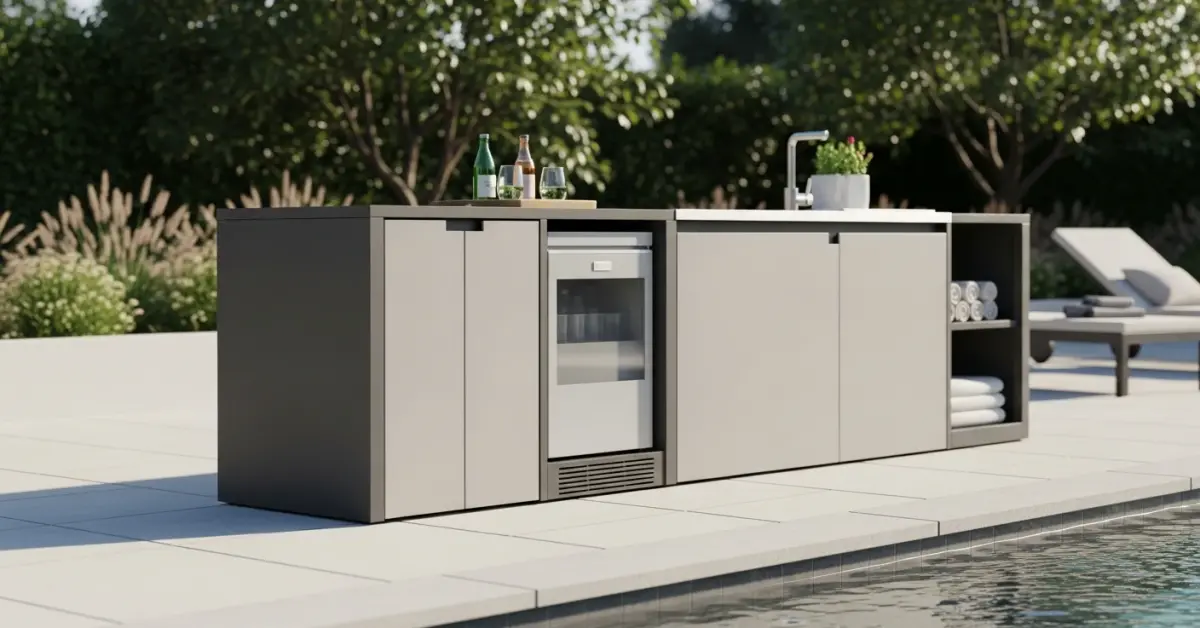
Executive Summary: A Specialist's Take on Modular Kitchens in Sarasota
From my work on projects across Sarasota County, the shift toward modular outdoor cabinets is driven by speed and
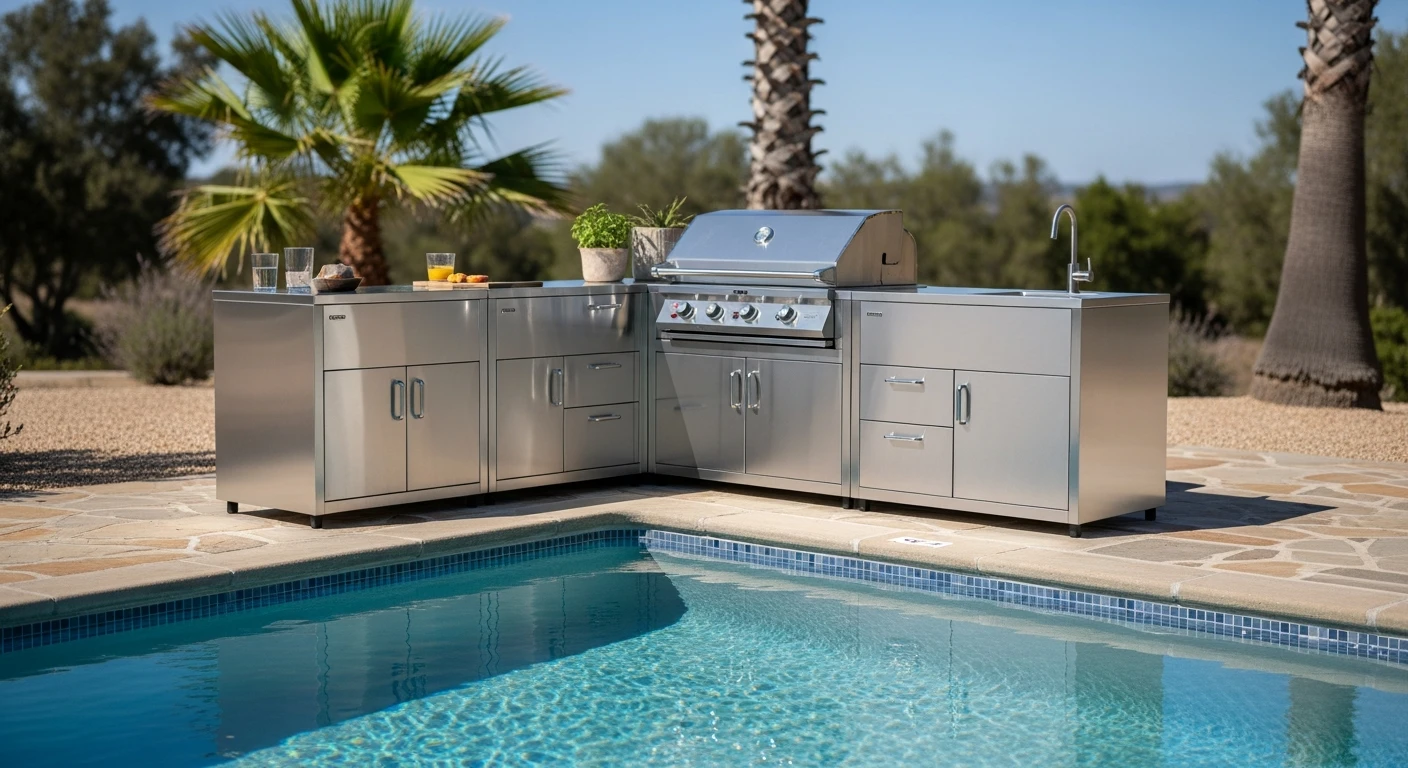
From my work on projects across Sarasota County, the shift toward modular outdoor cabinets is driven by speed and design precision, but success is not guaranteed. The core challenge is material degradation from our trifecta of sun, humidity, and salt. A modular system is only as strong as its weakest component, and many off-the-shelf units sold online are not engineered for the conditions we face in neighborhoods like Lido Key or even further inland in Lakewood Ranch. The most critical decision is specifying marine-grade materials from the start.
- Material is Everything: 316 marine-grade stainless steel and high-density polyethylene (HDPE) are non-negotiable for longevity. Standard 304 stainless steel will show surface rust within a year near the coast.
- HOA Pre-Approval is Mandatory: Most Sarasota planned communities, from Palmer Ranch to University Park, require prior approval for any visible outdoor structure. Modular systems with pre-defined finishes can streamline this, but you must submit spec sheets.
- Ventilation is a Code Requirement: Improperly vented modular outdoor grill islands are a fire hazard and a common reason for failed inspections in Sarasota. Every propane or natural gas appliance enclosure must have vents per NFPA code.
- Foundation Prep is Not Optional: Setting modular units directly on pavers without a solid, level concrete footer is a recipe for settling, which causes cabinet doors to misalign and countertops to crack.
The Planning Failures That Compromise Modular Systems
The biggest missteps with modular outdoor kitchens happen long before the first cabinet is unboxed. Homeowners are often sold on aesthetics and price, but they neglect the environmental and structural realities of our area. The result is a beautiful kitchen that starts to degrade within two seasons.
The Most Expensive Failure: Underestimating Salt Air Corrosion
A client with a beautiful home on Bird Key invested in a sleek, powder-coated steel modular kitchen. It looked fantastic for the first six months. By the second year, the powder coating began to bubble at the welds and corners—the first sign of rust underneath. The manufacturer's warranty was voided due to “environmental factors.” The lesson is that “outdoor-rated” does not mean “Sarasota-waterfront-rated.” We had to replace all the cabinet fronts, and the cost was nearly 40% of the initial project price. True marine-grade materials are an upfront investment, not an upgrade.
How a Modular Outdoor Kitchen Project Unfolds in Sarasota
A properly managed modular kitchen installation is a systematic process, far quicker than a custom build but just as dependent on proper planning. It involves design, verification, site preparation, and assembly, all framed by local regulations. The entire process, from final design to completion, can take as little as two to four weeks if planned correctly, compared to two to three months for a full custom masonry build.
Key Selection Criteria for Sarasota Homeowners
When you're evaluating systems, the brochure is less important than the technical specification sheet. Here is what I advise my clients to focus on:
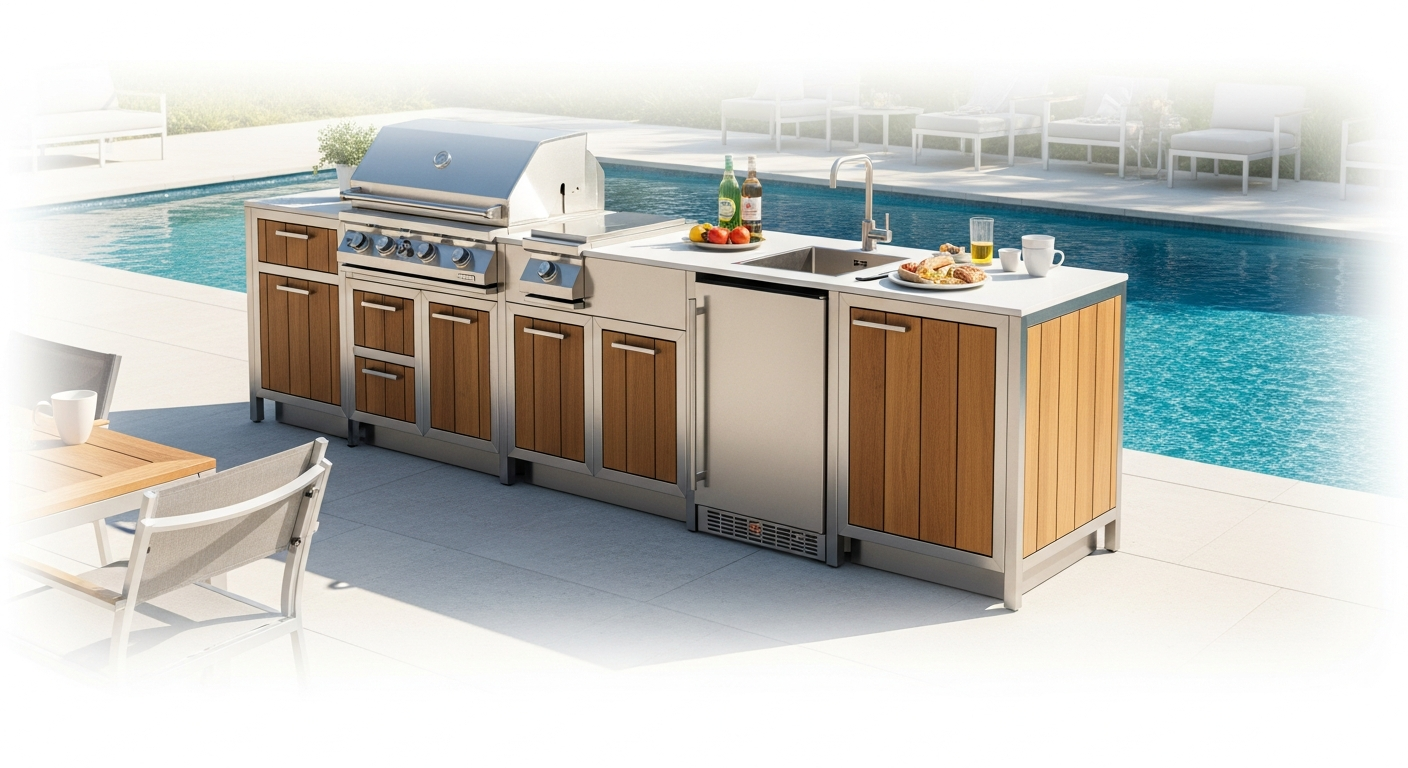
- Frame & Cabinet Material: Insist on 316 stainless steel or powder-coated aluminum frames. For cabinetry, look for HDPE or PVC composite panels that are impervious to moisture and will not warp or delaminate.
- Hardware Grade: All hinges, screws, and drawer slides must be 316 stainless steel. This is a small detail that causes major points of failure when overlooked.
- HOA Compliance Package: Does the supplier provide detailed drawings, material samples, and color codes needed for an architectural review board submission in communities like The Founders Club?
- Wind Load Considerations: For homes on the keys or in open areas, ensure the system can be securely anchored to a concrete slab to meet Florida wind load requirements. This may require specific engineering documents.
Comparing Modular Cabinets to Traditional Construction
Modular systems offer distinct advantages in speed and predictability, but they aren't the right fit for every project. A custom-built masonry island offers unlimited design freedom but comes with a different set of trade-offs, especially regarding timeline and potential for on-site complications.
| Factor | Modular Cabinet System | Custom Masonry/Stucco | Wood-Framed Island |
|---|---|---|---|
| Installation Time | 1-3 days (after site prep) | 4-8 weeks | 2-4 weeks |
| Cost Predictability | High (fixed product cost) | Medium (labor/material variables) | Low (prone to weather delays and material cost changes) |
| Moisture/Pest Resistance | Very High (with HDPE/316 SS) | High (if properly sealed) | Low (requires constant maintenance) |
| Design Flexibility | Medium (fixed unit sizes) | Very High (any shape/size) | High (but structurally limited) |
When a Modular System is the Wrong Choice
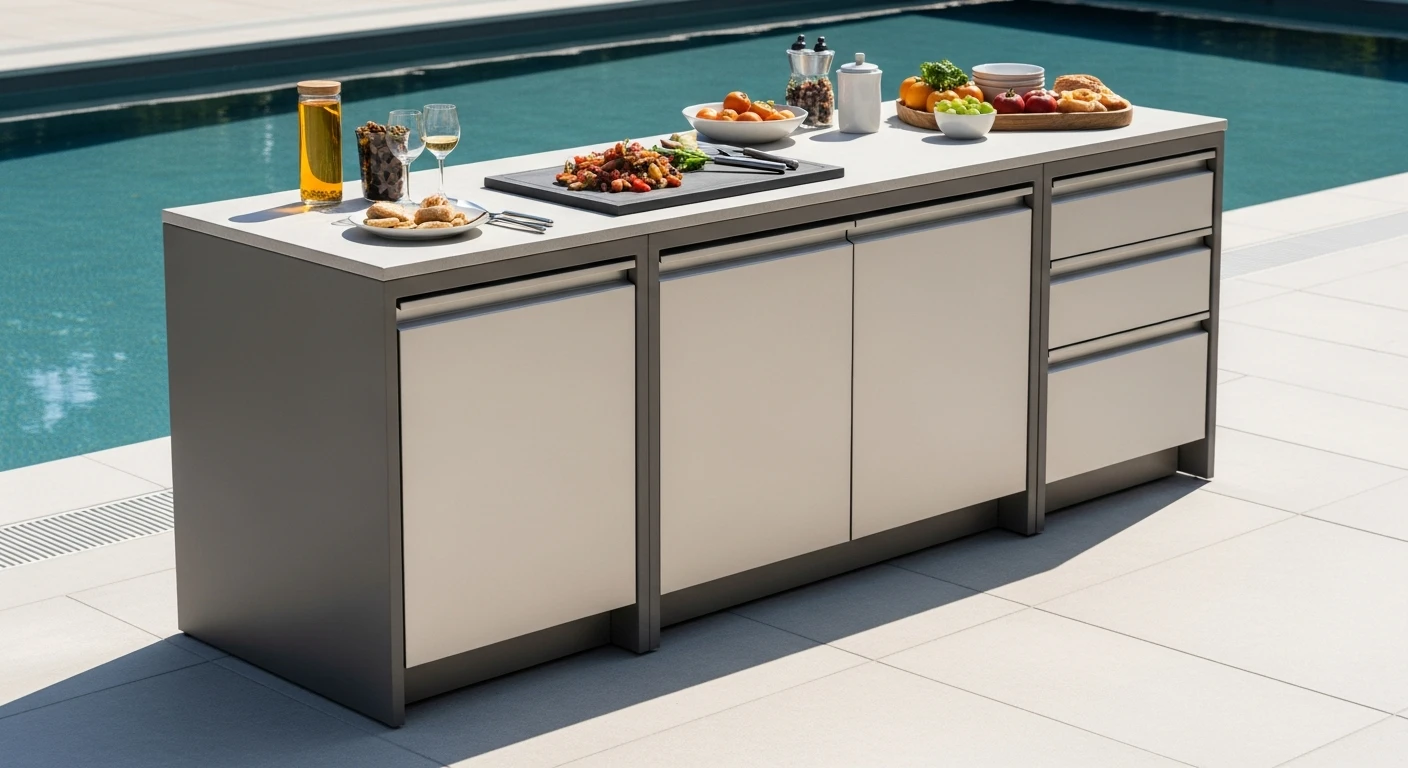
If your design requires complex curves, a unique footprint to fit an irregular space, or a specific finish to perfectly match existing stonework, a modular system will likely fall short. The inherent nature of pre-fabricated units means you are working with rectangles and fixed dimensions. In these cases, forcing a modular solution can look compromised, and a custom build, despite the longer timeline, is the better path forward.
Safe Hiring and Installation Checklist for Sarasota
Ensuring your project is built to last and complies with local codes is paramount. The contractor you choose is just as important as the cabinet system itself. Before signing any contract, verify these critical points.
- Verify Florida Contractor License: Any structural work, including pouring a concrete slab or running gas and electric lines, requires a licensed contractor. Verify their license on the Florida Department of Business and Professional Regulation (DBPR) website.
- Request a Certificate of Insurance: Ensure the contractor carries both general liability and worker's compensation insurance. Ask for the certificate to be sent directly from their insurance agent.
- Confirm They Handle Permitting: The contractor, not the homeowner, should be responsible for pulling any necessary permits from Sarasota County. A simple outdoor kitchen may not require a full building permit, but electrical and gas line work always does.
- Review the Site Preparation Plan: How will they create a level, stable foundation? A proper concrete footer is non-negotiable for preventing settling on our sandy soil.
- Discuss Appliance Ventilation in Detail: Ask specifically how they plan to vent the grill cabinet. They should be able to cite NFPA 54 standards for the size and placement of vents.
- Demand Marine-Grade Hardware: Explicitly state in the contract that all fasteners, hinges, and drawer pulls must be 316 stainless steel. Do not accept anything less.
Decisions That Determine the Longevity of Your Outdoor Kitchen
Two clients can buy the exact same modular kitchen system, and one will last three years while the other lasts fifteen. The difference comes down to a few key decisions made before and during installation. It’s about building for the environment you have, not the one you wish you had.
The Moment Most Homeowners Get It Wrong
The critical mistake happens during appliance selection. A homeowner will spend a premium on marine-grade cabinets and then purchase a grill or refrigerator with a lower-grade 304 stainless steel body to save money. The rust staining from that one appliance will drip down and permanently mar the entire setup. You must ensure every single component, especially the appliances that generate heat and condensation, is rated for a coastal environment. Mismatched material grades create a galvanic reaction that accelerates corrosion, completely undermining your investment in quality cabinets.
Practical Answers for Operating in Sarasota
Navigating the local requirements for an outdoor kitchen project can be frustrating. Here are the realities of getting things done in Sarasota County, based on projects I've personally managed.
Navigating Sarasota County Permitting for Gas Lines
Any project involving a new natural gas or propane line requires a permit from Sarasota County Planning and Development Services. The typical plan review for something this straightforward can take 7-10 business days. The contractor must be a licensed plumber or gas contractor. After installation, a county inspector must perform a pressure test on the line before it can be concealed or used. Expect this inspection to add at least a few days to your timeline.
Meeting HOA Architectural Review Board (ARB) Standards
HOAs in communities like Lakewood Ranch have specific aesthetic guidelines. When submitting your plan, include the modular cabinet manufacturer's spec sheet, color samples, countertop material, and a to-scale drawing showing placement on your property. Failure to get written ARB approval before work begins can result in fines, typically starting around $100 per day, and a stop-work order. It's the most common and easily avoidable delay I see.
Why a Simple Concrete Pad is Often Insufficient
Simply pouring a 4-inch concrete slab on top of the ground is not enough. Florida's building code requires footers for structures to prevent shifting and settling, especially in our sandy soil. For a modular kitchen island, this means the concrete pad it sits on should have a thickened edge or integrated footer around the perimeter. This provides the stability needed to support a heavy granite countertop and prevent cracks and misaligned cabinets down the road.