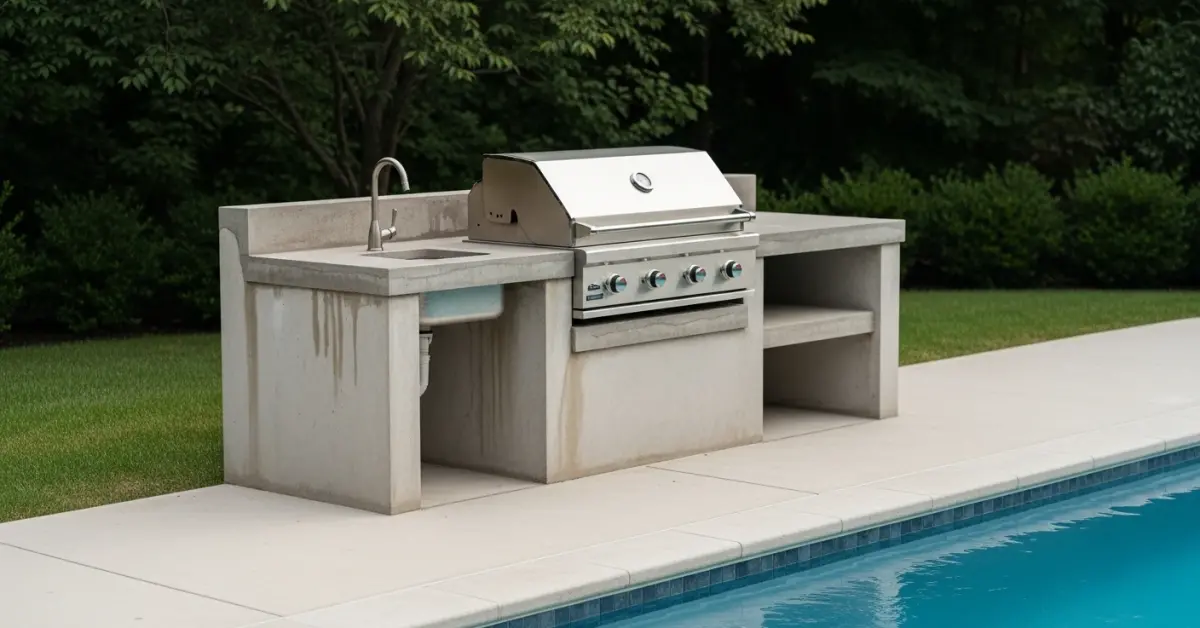
The Critical Path: Planning Your Natural Gas Outdoor Kitchen
From my years running gas lines and installing high-end outdoor kitchens from The Landings to Lakewood Ranch, the
From my years running gas lines and installing high-end outdoor kitchens from The Landings to Lakewood Ranch, the success of a natural gas setup hinges entirely on the infrastructure plan, not the appliance selection. Homeowners get fixated on the grill but forget the gas line is a permanent utility extension governed by strict safety codes. The most critical factor in Sarasota is accounting for our coastal environment and ensuring the work is performed by a properly licensed gas contractor, not just a general builder or landscaper.
- Licensing is Non-Negotiable: In Florida, only a state-licensed plumbing or mechanical contractor with a gas qualification can legally run and connect natural gas lines.
- Material Choice is Key: Our salty, humid air will corrode standard black iron pipe quickly. The project must specify coated gas pipe (like polyethylene underground) and 316-grade stainless steel for exposed components.
- Permitting is Mandatory: Any new gas line extension requires a permit from Sarasota County Planning and Development Services, which includes pressure tests and inspections.
- BTU Load Calculation: The total BTU output of all appliances (grill, side burners, fire pit) determines the required pipe diameter to ensure adequate gas flow and pressure.
Planning Failures That Derail Sarasota Outdoor Kitchen Projects
The most common and costly mistakes happen before a single trench is dug. Homeowners often design their dream outdoor luxury kitchen island with a landscaper or cabinet maker, only to discover the gas line requirements make the design unworkable or prohibitively expensive. The project gets delayed, budgets spiral, and the finished product is a compromise.
The Single Most Expensive Oversight: Ignoring the Gas Line Route
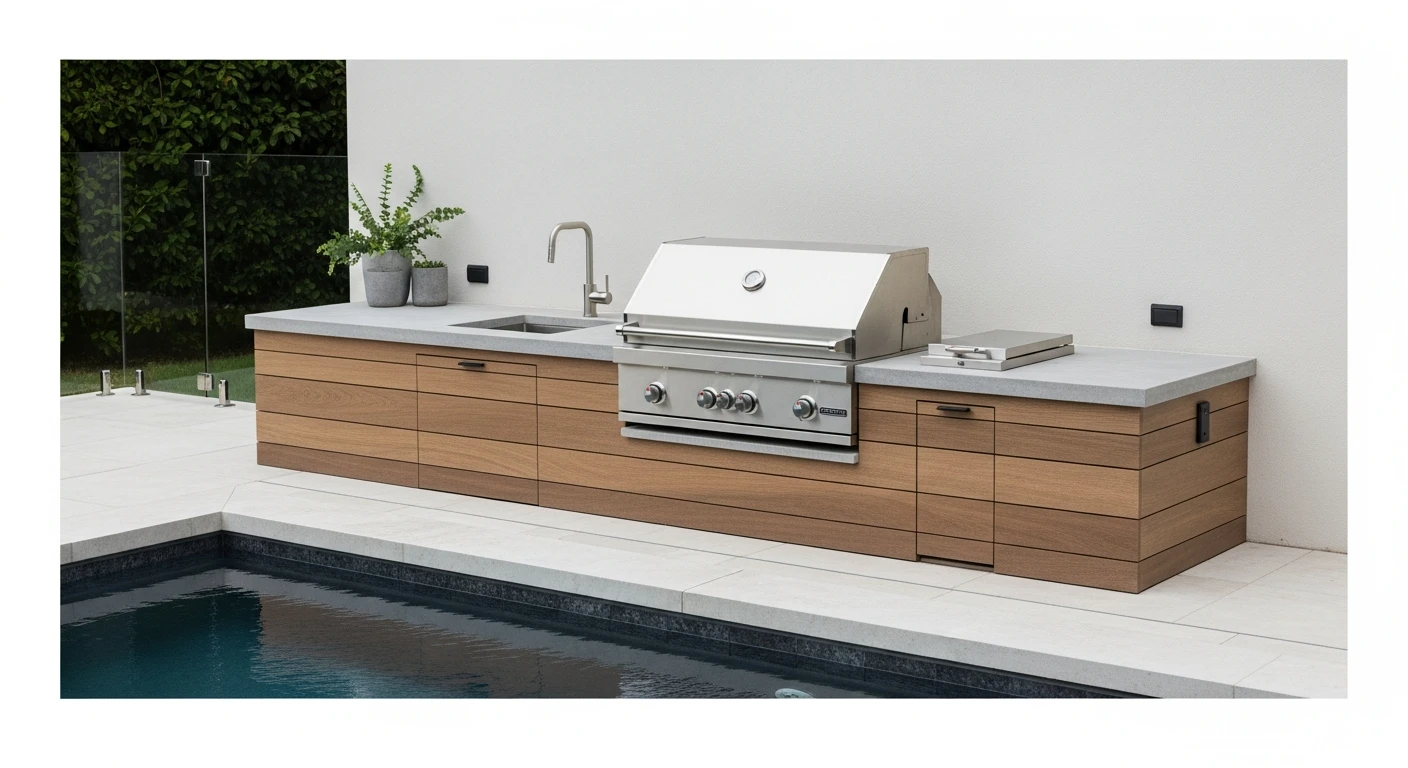
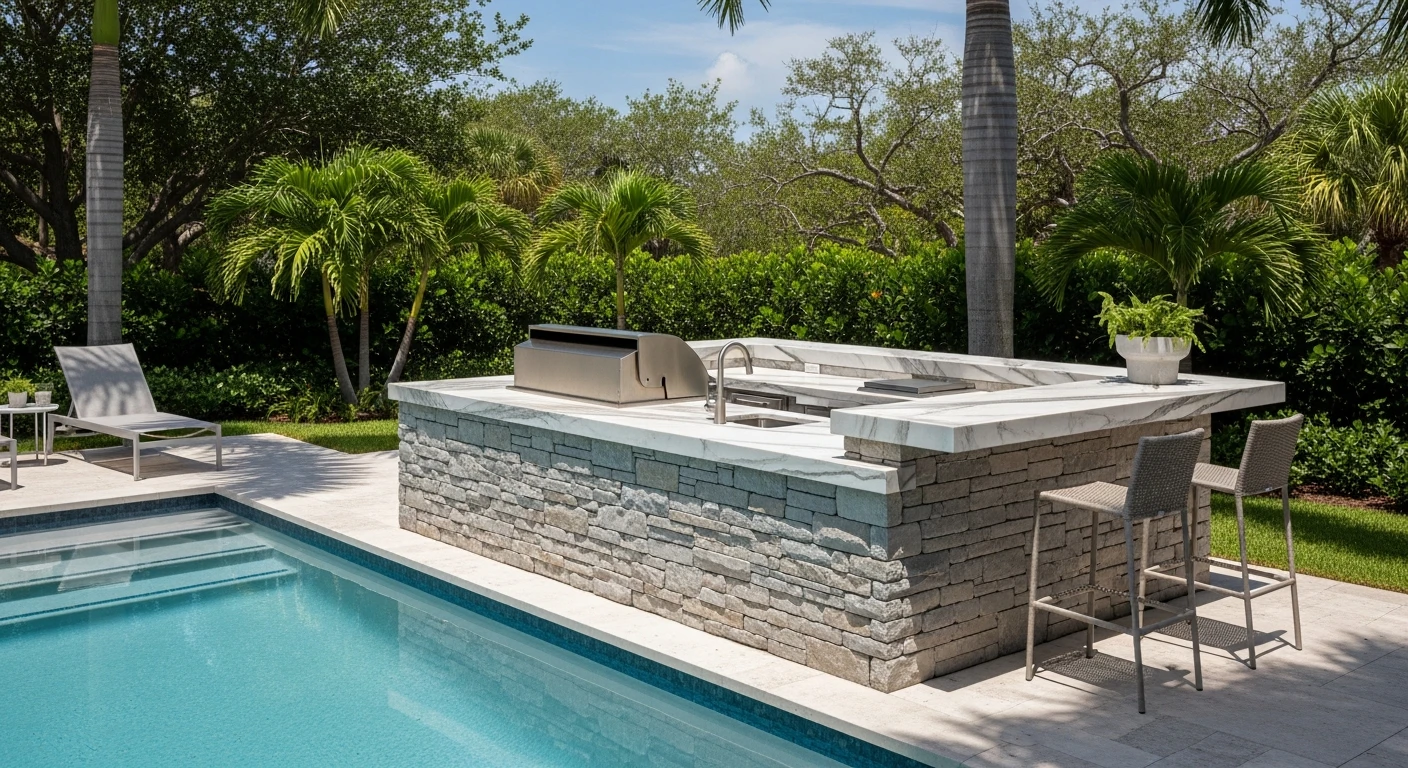
I was called into a project in a beautiful home near Siesta Key where the homeowner had already spent over $20,000 on a custom stone island and marble countertops. The problem? The island was built on a concrete patio slab 75 feet from the nearest gas meter, with a pool and mature landscaping in between. They assumed running the gas line would be simple. The cost to directionally bore under the pool deck and landscaping to run the gas line properly ended up being an unforeseen $8,000 expense. This completely wrecked their budget and could have been avoided by consulting a gas professional during the initial design phase to plan the most efficient and cost-effective route.
The Installation Process in Practice for Sarasota Residents
Bringing natural gas to your outdoor kitchen is a regulated construction project. It starts with a detailed plan that calculates the total British Thermal Unit (BTU) load of your chosen appliances—from the built in natural gas outdoor grills to side burners and fire features. This calculation dictates the diameter of the new gas pipe needed to maintain proper pressure and performance.
Key Steps and Local Considerations
- Contractor Verification: The first step is confirming your contractor holds a valid Florida license for gas piping. You can verify this on the Florida Department of Business and Professional Regulation (DBPR) website.
- Permit Application: Your licensed contractor will submit plans to Sarasota County. This typically includes a site plan showing the gas line route from the meter to the outdoor kitchen. Permit fees in Sarasota County for this type of work generally range from $150 to $400, depending on the project's scope.
- Trenching and Installation: The gas line is run underground, typically at a depth of 18 inches. This is the most disruptive phase and must be coordinated with any other hardscape or electrical work.
- County Inspections: An inspector from the county must verify the installation before the trench is backfilled. This includes a pressure test to ensure there are zero leaks in the new line. A failed inspection means delays and added costs.
- Final Connection and Testing: Once the line passes inspection, the final connections are made to your appliances, which are then tested for proper ignition and function.
Comparing Natural Gas to Propane Tanks and Electric Grills
For a permanent, high-end outdoor kitchen, the fuel source is a foundational decision. While propane tanks offer portability and electric grills provide simplicity, natural gas delivers unmatched convenience and performance for a built-in setup. The upfront investment is higher, but the long-term benefits are substantial for homeowners who entertain frequently.
| Feature | Natural Gas | Propane Tank | Electric Grill |
|---|---|---|---|
| Upfront Cost | High (line installation) | Low (tank purchase) | Medium (requires dedicated circuit) |
| Operating Cost | Very Low | High (tank refills) | Moderate (electricity rates) |
| Convenience | Excellent (unlimited fuel) | Poor (tanks run out) | Good (plug and play) |
| Performance | Excellent (high, consistent heat) | Good (heat can vary with tank level) | Fair (lower max temperature) |
| Weather Resilience | Excellent (underground line) | Good (tank must be secured) | Poor (water and electricity risk) |
When Natural Gas Is the Wrong Choice
Despite its advantages, a natural gas line isn't always the right call. If your property layout makes the gas line run excessively long or complex—requiring boring under significant hardscaping or a pool—the installation cost can become unjustifiable. In these specific cases, a hard-piped large-capacity propane system, fed from a permanent, refillable 100-gallon tank, can provide similar convenience without the extreme upfront cost of a difficult natural gas installation. It's a practical trade-off I've recommended on several waterfront properties where the gas meter was simply too far from the desired lanai location.
A Safe Hiring Checklist for Your Gas Kitchen Project
Choosing the right professional is the single most important factor for a safe and functional natural gas outdoor kitchen. A poorly installed gas line is not just an inconvenience; it's a serious hazard. Use this checklist to vet potential contractors in the Sarasota area.
- Verify their State of Florida plumbing or mechanical contractor license is active and includes a gas qualification.
- Request proof of liability and workers' compensation insurance specific to gas line work.
- Insist on a written contract that explicitly states they will pull a permit from Sarasota County for the work.
- Ask for a clear explanation of the materials they plan to use, specifically questioning how they will mitigate corrosion from salt air.
- Confirm that the quote includes the cost of the permit, all inspections, and pressure testing.
- Ask for local references for similar natural gas bbq island projects they have completed in the last year.
- Ensure the plan includes a dedicated shut-off valve for the outdoor kitchen that is easily accessible.
Decisions That Define the Final Outcome
The difference between a seamless, luxury experience and a frustrating money pit comes down to a few key decisions made at the very beginning. The most successful projects I've worked on shared one common trait: the homeowner involved a licensed gas professional during the initial design phase, alongside their landscape architect or builder.
The Moment Most Homeowners Get It Wrong
The critical mistake is finalizing the location and design of the natural gas outdoor kitchen island before understanding the gas line logistics. The ideal location for your kitchen should be a balance between your aesthetic vision and the most practical, cost-effective route for the gas line. By mapping the gas line path first, you can often save thousands of dollars and avoid major design compromises. For example, positioning the island closer to the gas meter might only shift the layout by a few feet but could cut the installation cost in half by avoiding the need to trench through expensive paver patios or around a pool cage.
Practical Answers About Operating in Sarasota
How do Sarasota's hurricane codes affect my outdoor kitchen?
While the gas line itself is underground and safe, any permanent structure like a kitchen island or pergola must meet Florida Building Code requirements for wind load. This means the structure must be properly anchored to the foundation. Furthermore, all appliances, especially heavy built-in grills, should be securely fastened within the island structure to prevent them from becoming projectiles in a major storm.
What are the HOA rules for outdoor kitchens in communities like Palmer Ranch?
Most master-planned communities in Sarasota, like Palmer Ranch or Lakewood Ranch, have strict architectural review committees (ARCs). You must submit your complete outdoor kitchen plan, including materials, colors, and site placement, for approval before any work begins. They often have specific requirements for setbacks from property lines and may mandate that the visible materials (like stone or stucco) match your home's existing exterior.
Does my gas line installation need a separate inspection from the rest of the project?
Yes, absolutely. The gas piping is considered a critical life-safety system. Sarasota County requires at least two inspections for this work: a "rough-in" inspection of the pipe in the open trench (including the pressure test) before it's covered, and a "final" inspection after all appliances are connected and the system is operational. This is separate from any electrical or building inspections for the island structure itself.