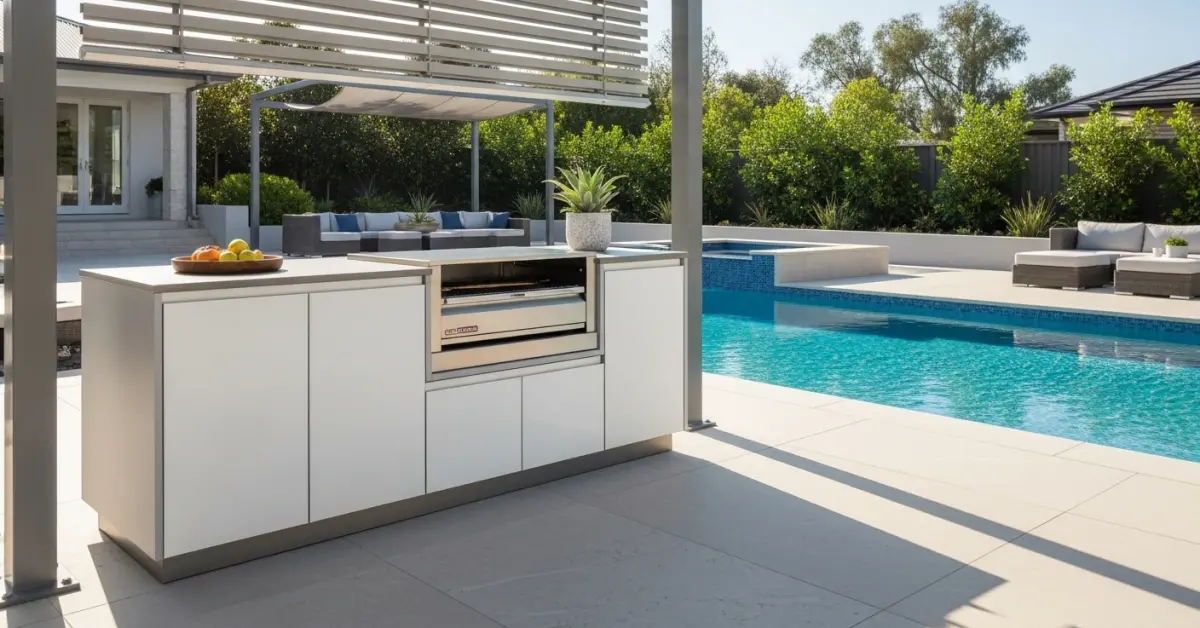
A Practical Summary of Outdoor Cabinet Selection in Sarasota
From my direct experience building and repairing outdoor kitchens in Sarasota County, the primary mistake homeowners
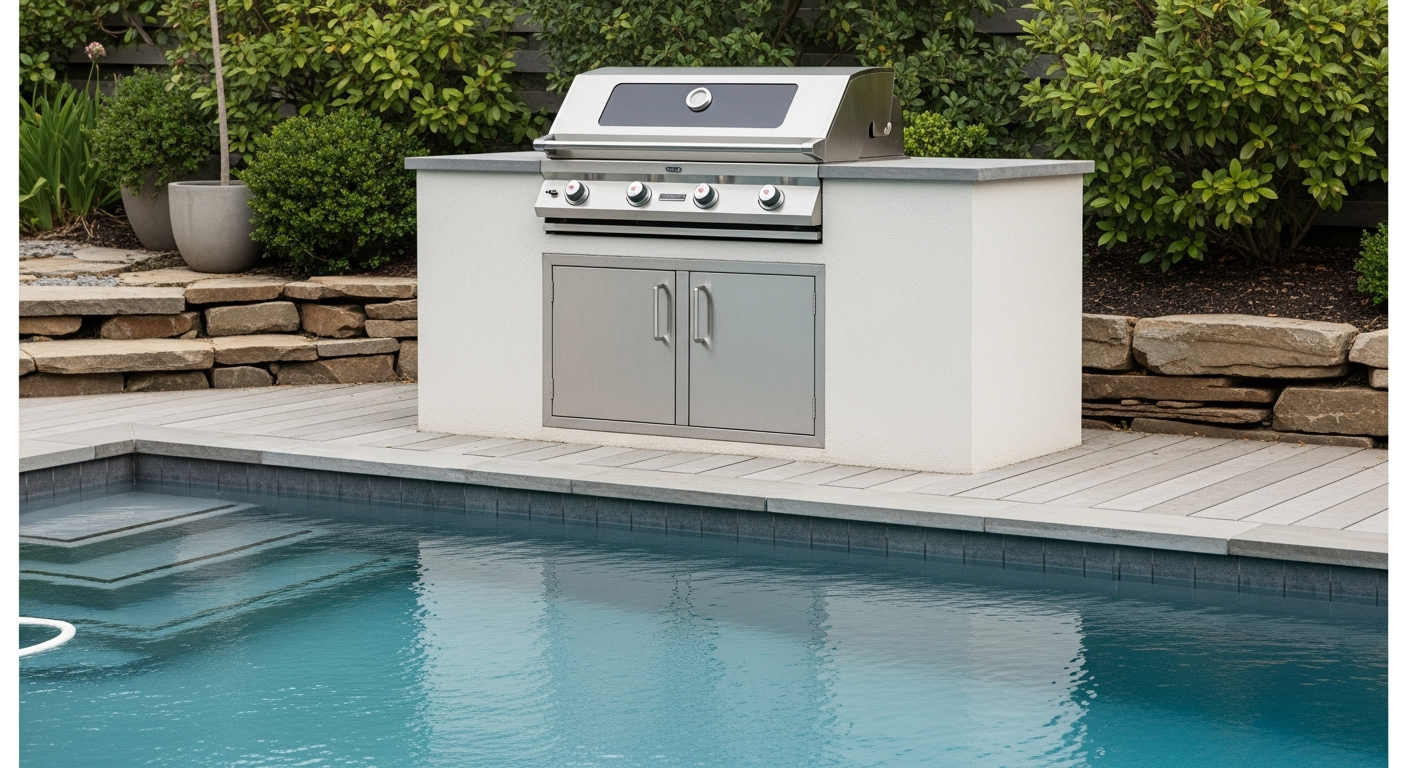
From my direct experience building and repairing outdoor kitchens in Sarasota County, the primary mistake homeowners make is choosing cabinets based on indoor aesthetics or generic 'weather-proof' labels. Our environment is uniquely aggressive due to the combination of high salinity, intense UV radiation, and near-constant humidity. The wrong material choice doesn't just look bad; it fails structurally, creating safety hazards with gas lines and heavy grills. A successful project here demands a material-first, not a style-first, approach.
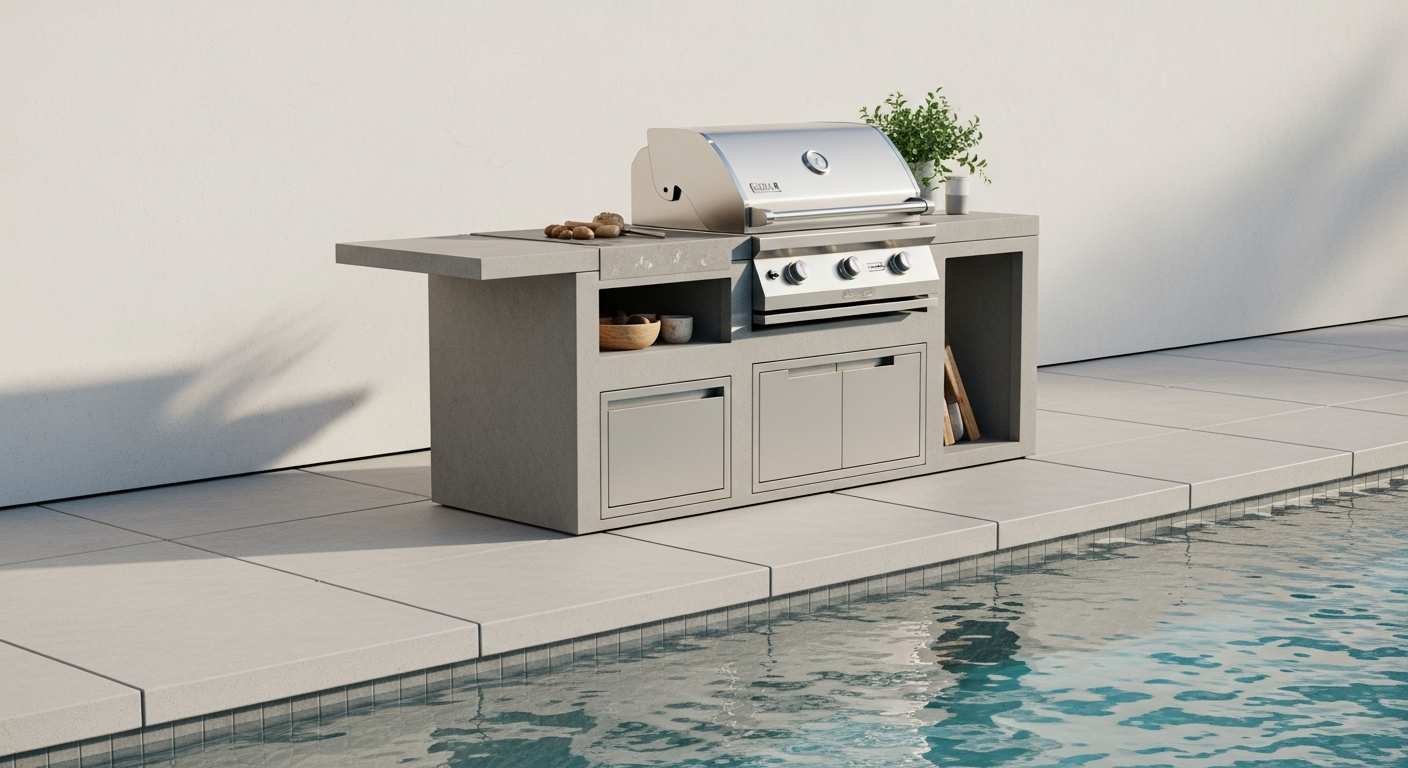
- Material Performance: Marine-grade HDPE and certain 316-grade stainless steel configurations are the only materials I've consistently seen withstand the coastal environment long-term.
- Code & Permitting: Any outdoor kitchen project involving new gas or electrical lines requires a permit from Sarasota County, and cabinet installation must meet Florida Building Code wind load requirements.
- HOA Compliance: Architectural Review Boards, especially in communities like Lakewood Ranch or The Isles, have specific covenants on materials and colors for exterior bbq cabinets that must be addressed before purchase.
- Longevity vs. Cost: The initial cost for true marine-grade cabinetry can be 30-50% higher than powder-coated steel or wood-look composites, but the latter often require replacement within 5-7 years, negating any initial savings.
The Planning Failures That Lead to Premature Cabinet Replacement
The most common failures I see trace back to the planning stage, long before a single cabinet is ordered. Homeowners often focus on the grill and countertops, treating the cabinets as simple boxes to hold them. In Sarasota, the cabinets are the structural and environmental shield for the entire installation, and getting this wrong is a costly error.
The Most Expensive Misconception: Confusing 'Weather-Resistant' with 'Sarasota-Proof'
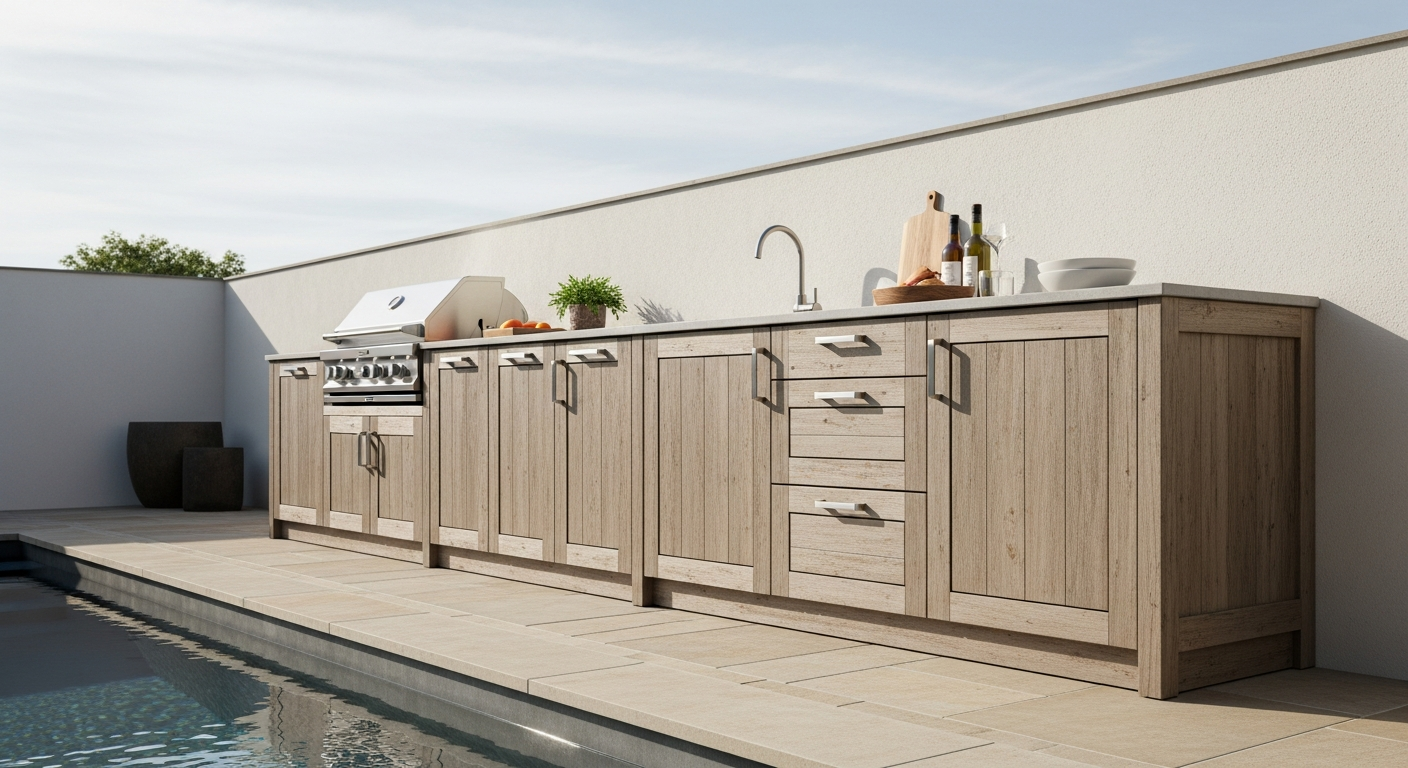
The most expensive mistake is believing a 'weather-resistant' label from a big-box store applies to our coastal reality. I was called to a project on Longboat Key where a homeowner had installed a beautiful set of outdoor kitchen modules with sealed cypress doors. Within three years, the relentless sun had bleached and cracked the finish, and the humidity had caused the doors to swell and warp so badly they wouldn't close. The 'resistance' was designed for a generic suburb, not a barrier island environment. The client had to pay for a complete tear-out and replacement, effectively paying for their outdoor kitchen twice.
The Real Process for Installing Outdoor Kitchen Cabinets Here
Installing outdoor BBQ cabinets in Sarasota isn't just about assembly. It’s a multi-step construction process involving site prep, utility integration, and compliance with local codes. The cabinet installation itself is often the fastest part of the project, but it's entirely dependent on the foundational work being done correctly.
Key Selection Criteria for Sarasota Homeowners
When you're evaluating options, your checklist needs to be specific to our area. A generic online guide won't protect your investment.
- Material Certification: Does the manufacturer explicitly warranty against rust, delamination, and fading in a coastal salt-air environment? Ask for the technical data sheet for the material, not just the marketing brochure.
- HOA Pre-Approval: Have you submitted material samples and design renderings to your HOA's Architectural Review Board? Getting this approval in writing from communities like Palmer Ranch or University Park is a non-negotiable first step.
- Wind Load Engineering: Can the installer demonstrate how the cabinet modules will be anchored to meet Florida's hurricane code requirements? Simply placing them on a lanai is not sufficient; they must be structurally secured.
- Serviceability: How easily can you access plumbing, gas, and electrical lines behind the cabinets for service? I've seen fully enclosed designs that require massive deconstruction just to fix a leaking water line.
Comparing Cabinet Materials for the Sarasota Climate
Choosing the right material is the single most important decision. A side-by-side comparison shows why certain options that are popular elsewhere are poor choices for our region.
| Material | Salt & Humidity Resistance | UV & Heat Stability | Typical Lifespan (Sarasota) |
|---|---|---|---|
| Marine-Grade HDPE (High-Density Polyethylene) | Excellent (Inert) | Excellent (UV Inhibitors) | 20+ years |
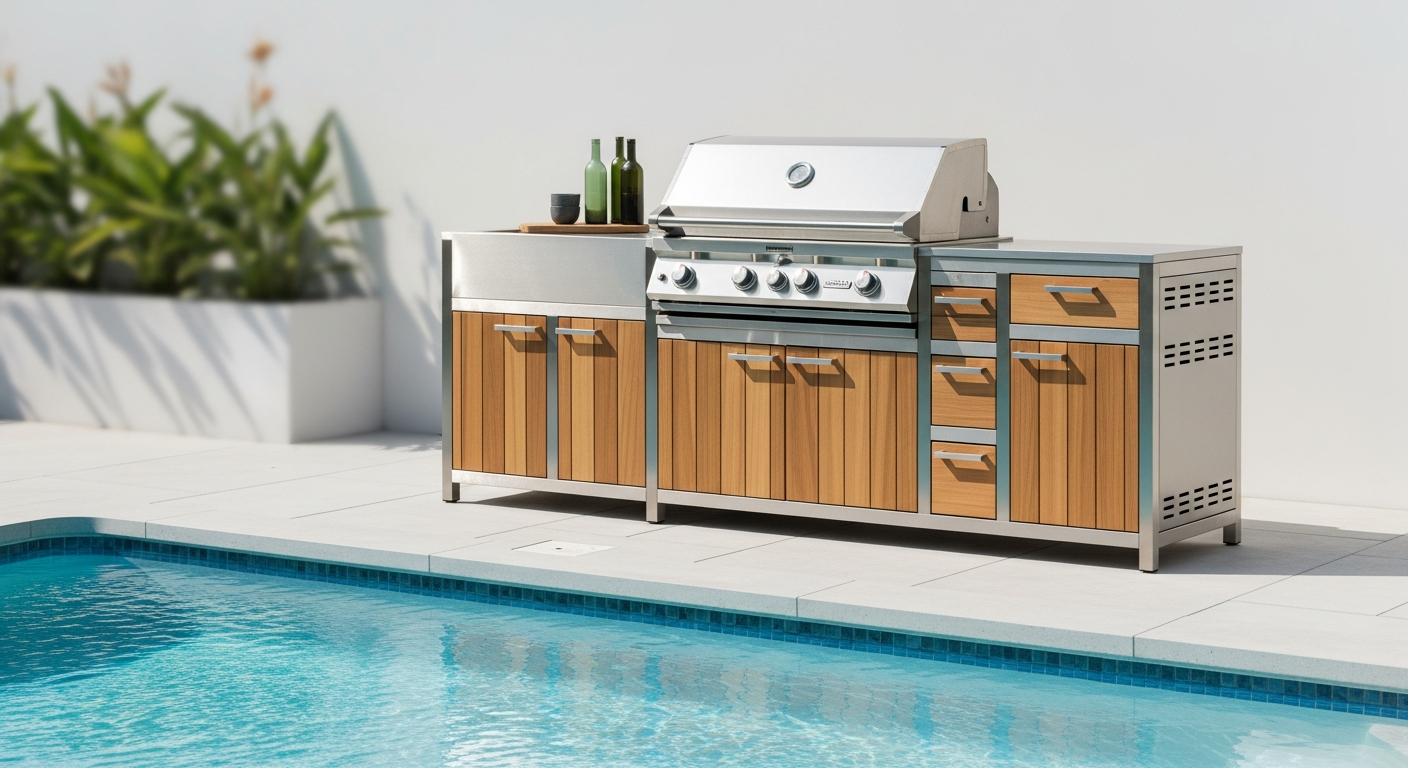
| 316 Stainless Steel | Good (Requires regular cleaning) | Excellent | 15-20 years |
| Powder-Coated Steel / Galvanized Steel | Poor (Scratches lead to rapid rust) | Fair (Can fade/chalk) | 3-7 years |
| Wood (Teak, Cypress) | Fair (Requires constant sealing) | Poor (Warps, cracks, discolors) | 5-10 years (with high maintenance) |
When High-End Cabinets Are NOT the Right Choice
There are situations where investing in premium, marine-grade cabinets is overkill. If you live far inland east of I-75 where salt air is negligible, and your outdoor kitchen is fully protected from rain and direct sun under a deep, covered lanai, you might get acceptable performance from a lower-cost, well-maintained powder-coated system. However, this is a trade-off: you are accepting a shorter lifespan and higher maintenance in exchange for lower upfront cost.
A Safe Hiring and Purchasing Checklist
Verifying your installer and product is crucial. The market has many companies selling 'outdoor' products that aren't truly designed for our corrosive environment. Use this checklist to protect yourself.
- Verify Florida Contractor License: Ensure the installer holds a valid, current license with the Florida Department of Business and Professional Regulation (DBPR). Ask for their license number and check it online.
- Request a Certificate of Insurance: The contractor must provide proof of both general liability and worker's compensation insurance. Without it, you are liable for any accidents on your property.
- Confirm They Handle Permitting: The contractor, not you, should be responsible for pulling the necessary permits from the Sarasota County Planning and Development Services. This ensures they are accountable for meeting code.
- Review the Material Warranty: Read the fine print. Does the warranty have a coastal exclusion? A warranty that is voided by exposure to salt spray is useless in Sarasota.
- Check Past Projects in Coastal Areas: Ask for references for projects located west of Tamiami Trail or on the Keys. Speak to those homeowners about how the cabinets have performed after several years.
- Get a Detailed Scope of Work: The contract should specify the exact materials (e.g., '316 stainless steel,' not just 'stainless steel'), anchoring methods, and site cleanup procedures.
Decisions That Define a Successful Outdoor Kitchen Project
Over the years, I've seen that successful projects are defined by a few key decisions made early on. It's less about the brand of the grill and more about the integrity of the structure that holds it.
The Moment Most Homeowners Get It Wrong
The critical error happens when a homeowner falls in love with a design online or in a catalog and tries to force it into their Sarasota backyard. They'll find a contractor willing to build it, but that contractor isn't accounting for the material's inevitable failure. The right approach is to select the material first, based on your specific location's exposure, and then design within the possibilities of that material. For example, if you're on Siesta Key, you start with the assumption that you need HDPE or 316 steel, and then you find the style that works for you, not the other way around.
Practical Answers for Building in Sarasota
Navigating the local requirements is a key part of my job. Understanding these specifics avoids delays and ensures the final product is safe, legal, and durable.
Navigating the Sarasota County Permitting Process
Any outdoor kitchen that includes new permanent electrical outlets, hard-piped gas lines, or plumbing requires a permit from Sarasota County. The typical process involves submitting engineered plans for the utility connections and the structure's anchoring. Plan review can take 4-6 weeks, and you cannot begin work until the permit is issued. A simple cabinet for outdoor grill setup with a propane tank might not need a permit, but any integrated system absolutely does.
Meeting HOA Architectural Review Board (ARB) Standards
In communities governed by an HOA, the ARB has final say. They often have stricter rules than the county on aesthetics. For example, some HOAs in The Meadows or Prestancia may prohibit unfinished metal finishes or require specific colors to match the home's exterior trim. Submitting your plans, including material samples and color swatches, early in the process is mandatory to avoid a costly order that gets rejected.
Understanding Florida's Contractor Licensing for Outdoor Kitchens
In Florida, a simple handyman cannot legally run gas lines or high-voltage electrical wiring. A licensed General Contractor, Residential Contractor, or a specialty licensed plumber or electrician must perform and permit that work. When you hire an 'outdoor kitchen company,' you must verify they either hold these licenses themselves or are subcontracting that specific work to licensed professionals. This is a critical safety and liability issue.