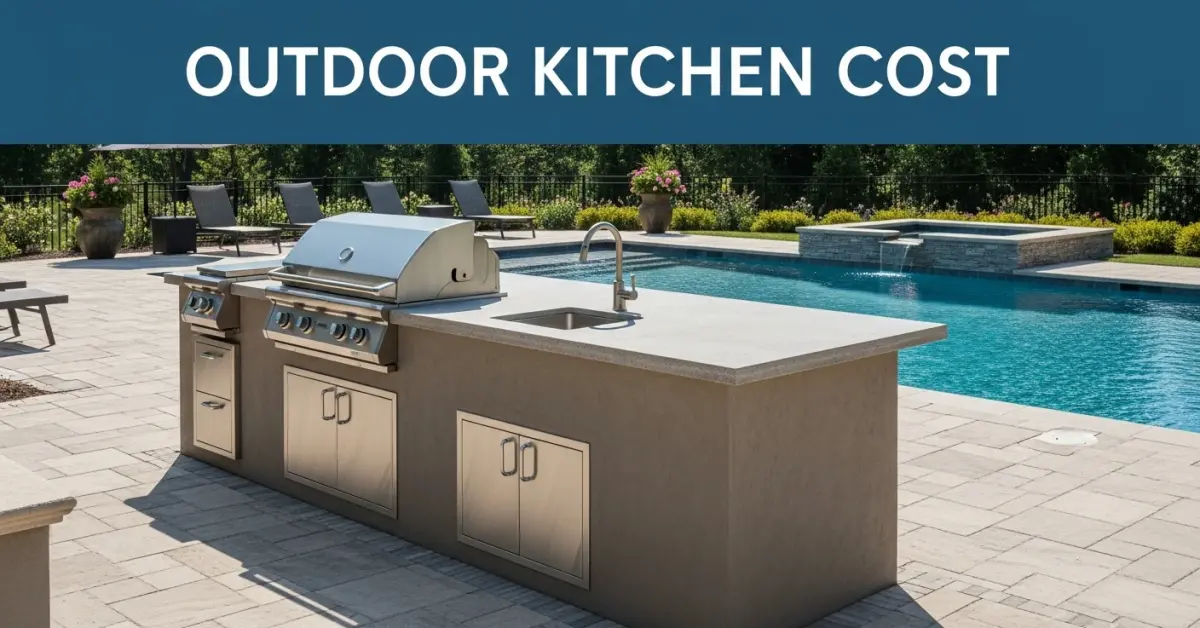
Executive Summary: Decoding Outdoor Kitchen Budgets in Sarasota
From my direct experience building outdoor kitchens across Sarasota County, the final price tag is rarely determined by
From my direct experience building outdoor kitchens across Sarasota County, the final price tag is rarely determined by the grill you choose. The most significant cost influencers are the unseen structural and material decisions dictated by our coastal environment. A project that seems like a straightforward $25,000 build can quickly escalate to over $50,000 due to underestimations in site prep, utility runs, and the selection of materials that can actually withstand the humidity and salt air. The key is understanding that the structure supporting the appliances is where budgets are made or broken.
- Base Cost Reality: A functional, well-built 10-linear-foot outdoor kitchen in Sarasota using durable, weather-resistant materials and mid-range appliances realistically starts in the $18,000 - $25,000 range, including professional installation and permitting.
- Premium Project Scope: High-end projects in areas like Siesta Key or Longboat Key, featuring premium appliances, extensive granite or quartzite countertops, pergolas, and complex utility runs, frequently range from $60,000 to over $100,000.
- Permitting Timeframe: Sarasota County permit applications for projects involving new gas and electrical lines can take 4-6 weeks for approval, a critical timeline to factor into your construction schedule.
- Material Mandate: Due to the salt air, 316 marine-grade stainless steel for all components (doors, drawers, appliances) is not an upgrade; it is a necessity to prevent premature rusting and is a significant cost driver compared to the standard 304 grade.
The Planning Failures That Inflate Your Final Invoice
The most common budget overruns I see are rooted in early-stage planning, long before a contractor is even on site. Homeowners get excited about appliance models and countertop colors but overlook the foundational elements that truly dictate the cost and longevity of an outdoor kitchen in our specific climate.
The Most Expensive Mistake: Underestimating Utility Runs
I worked with a client in a beautiful home east of I-75 who had a perfect spot for their kitchen on a paver patio. The initial quotes they got were based on the structure itself. The problem was, the gas meter was on the opposite side of the house, and the electrical panel was in the garage. The cost to trench under established landscaping, bore under the driveway, and run 80 feet of gas and electrical lines added nearly $9,000 to the project—a figure that was a complete shock and nearly derailed the entire build. Always map your utility sources first; the distance and complexity of running gas, water, and electricity can easily become the single largest line item after the main structure.
How an Outdoor Kitchen is Built in Sarasota: The Real Process
Building an outdoor kitchen here is not a simple weekend project; it's a coordinated construction effort involving multiple trades and regulatory checkpoints. The process follows a strict sequence to ensure compliance with Florida Building Codes and Sarasota County ordinances, which are rigorously enforced.
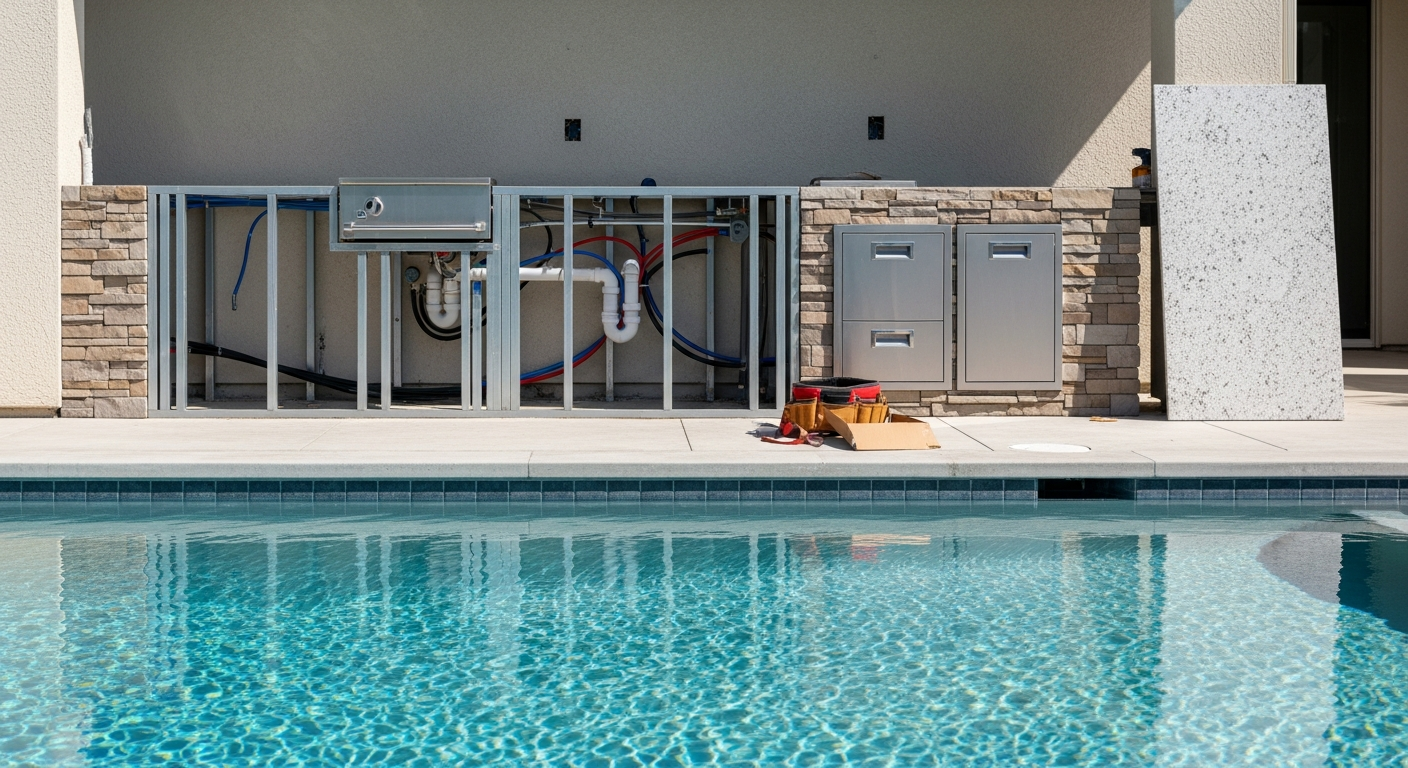
First, a detailed plan is drafted, specifying materials, appliance locations, and utility connections. This plan is submitted to the Sarasota County Planning and Development Services for permit approval. Once the permit is issued, site preparation begins, followed by the framing of the cabinet structure. After the frame is inspected, licensed plumbers and electricians run the necessary lines. Only then are the exterior finishes, countertops, and appliances installed, followed by a final inspection to close out the permit.
Contractor Selection Criteria for a Sarasota Project
- Verifiable GC License: Ensure the contractor holds a valid Certified General Contractor (GC) or Residential Contractor (RC) license from the Florida Department of Business and Professional Regulation (DBPR). A handyman or a cabinet company without this license cannot legally manage the plumbing and electrical trades.
- Experience with Coastal Materials: Ask for a portfolio of projects specifically in coastal areas like Lido Key or Casey Key. Inquire about their preferred stainless steel grade (it must be 316) and their experience with non-porous, salt-resistant materials like marine-grade polymer cabinetry or poured concrete.
- In-House vs. Subcontracted Trades: Clarify if they have their own licensed plumbers and electricians or if they subcontract. A team that works together regularly is far more efficient than one coordinating unfamiliar subcontractors, which prevents costly delays.
- HOA Navigation: If you live in a community like Lakewood Ranch or Palmer Ranch, your contractor must have experience submitting plans to Architectural Review Committees (ARCs). Ask for examples of approved submissions they’ve handled.
Comparing Outdoor Kitchens to Alternatives
A permanent outdoor kitchen is a significant investment. It's crucial to weigh its value against other options based on your lifestyle, property, and budget. For many Sarasota homeowners who entertain frequently and value convenience, the integrated design is unmatched. For others, a more flexible setup might be more practical.
When a Built-In Kitchen Is the Wrong Choice
A fully integrated, permanent outdoor kitchen is not the right fit if you are uncertain about your long-term plans for the property. The high upfront cost is difficult to recoup if you sell within a few years. Furthermore, if your outdoor space is limited or you prefer reconfiguring your patio layout for different events, the fixed footprint of a built-in kitchen can become a frustrating limitation. In these cases, a high-end portable grill cart and modular outdoor furniture offer far more flexibility at a fraction of the cost.
| Feature | Permanent Outdoor Kitchen | High-End Grill Island (Prefab) | Portable Grill & Prep Cart |
|---|---|---|---|
| Typical Cost Range | $18,000 - $100,000+ | $5,000 - $15,000 | $1,500 - $4,000 |
| Property Value Impact | High potential ROI | Minimal | None (personal property) |
| Customization | Fully customizable | Limited options | None |
| Permitting Required | Yes (for gas/electrical) | Typically no (if self-contained) | No |
| Durability in FL Climate | Very high if built correctly | Moderate to high | Low to moderate |
A Safe Hiring Checklist for Your Sarasota Project
Hiring the right team is the single most important factor for a successful project. A low bid from an unqualified installer can lead to failed inspections, premature material decay, and safety hazards. My checklist focuses on weeding out unqualified candidates from the start.
- Verify their state license is active and without complaints on the DBPR portal. The license number should be on their business card and contract.
- Confirm they carry General Liability and Workers' Compensation insurance. Ask for the certificate of insurance and call the provider to ensure the policy is current.
- Check their past permits with the Sarasota County permit search tool. This shows they have experience navigating the local system and closing out projects successfully.
- Request at least three local references for projects completed within the last 18 months and actually call them.
- Ensure the contract includes a detailed scope of work, a payment schedule tied to project milestones, and a clear warranty on materials and labor.
- Insist on a lien waiver from the contractor and all major subcontractors upon final payment. This protects you from claims if they fail to pay their suppliers.
Decisions That Determine the Final Outcome
Two clients can start with the same budget and vision, yet one ends up with a stunning, durable outdoor kitchen while the other faces a series of costly change orders and disappointments. The difference lies in a few key decisions made at the very beginning of the process.
The most critical decision is prioritizing the structural integrity and material science over the aesthetic finishes. It's tempting to allocate more of the budget to a top-of-the-line grill or exotic granite, but that's a mistake. A weatherproof, properly ventilated, and structurally sound frame made of welded aluminum or concrete block is non-negotiable. Compromising here to save a few thousand dollars will lead to cracks, rust, and decay within a few years in our humid, salty air.
The Moment Most Homeowners Get It Wrong
The critical error happens during the design phase when the layout is finalized without considering airflow and utility access. I’ve seen beautiful designs with refrigerators packed tightly next to a grill with no ventilation, causing the fridge to constantly overheat and fail. Another common issue is sealing up the structure without providing adequate access panels for gas and water shut-off valves. Your design must prioritize function and safety over pure aesthetics. Insist that your designer or contractor explains the ventilation plan for every appliance and shows you exactly where the service access points will be before you approve the final drawings.
Practical Answers for Building in Sarasota
Navigating the local regulations is often the most confusing part of the process for homeowners. Understanding these specifics avoids delays and ensures your project is built to last and fully compliant with local codes.
Do I Need a Permit for an Outdoor Kitchen in Sarasota?
Yes, in almost all cases. A permit from Sarasota County is required if you are running new electrical wiring for outlets and lighting, or a new gas line for a grill or side burner. Even if you are using a propane tank, a permit may be required for the low-voltage electrical work for lighting or an outdoor refrigerator. Attempting to bypass this process is a serious mistake that can lead to fines and trouble when you sell your home.
What Are the HOA Requirements in Communities like Lakewood Ranch?
Most master-planned communities in the Sarasota area have a strict Architectural Review Committee (ARC) or Board (ARB). You must submit your complete outdoor kitchen plan, including materials, colors, and placement on your property, for approval before any work begins. They often have specific rules about setbacks from property lines and may restrict certain materials or structure heights to maintain community aesthetics. Your contractor should handle this submission process.
How Do Hurricane Codes Affect My Outdoor Kitchen Design?
Florida Building Code, particularly the High-Velocity Hurricane Zone (HVHZ) provisions that influence our local codes, impacts outdoor structures. The kitchen's frame must be securely anchored to the concrete slab, and any overhead elements like a pergola must meet specific wind-load requirements. This is not an area for shortcuts; a city or county inspector will verify these connections are made to code before approving the final inspection.