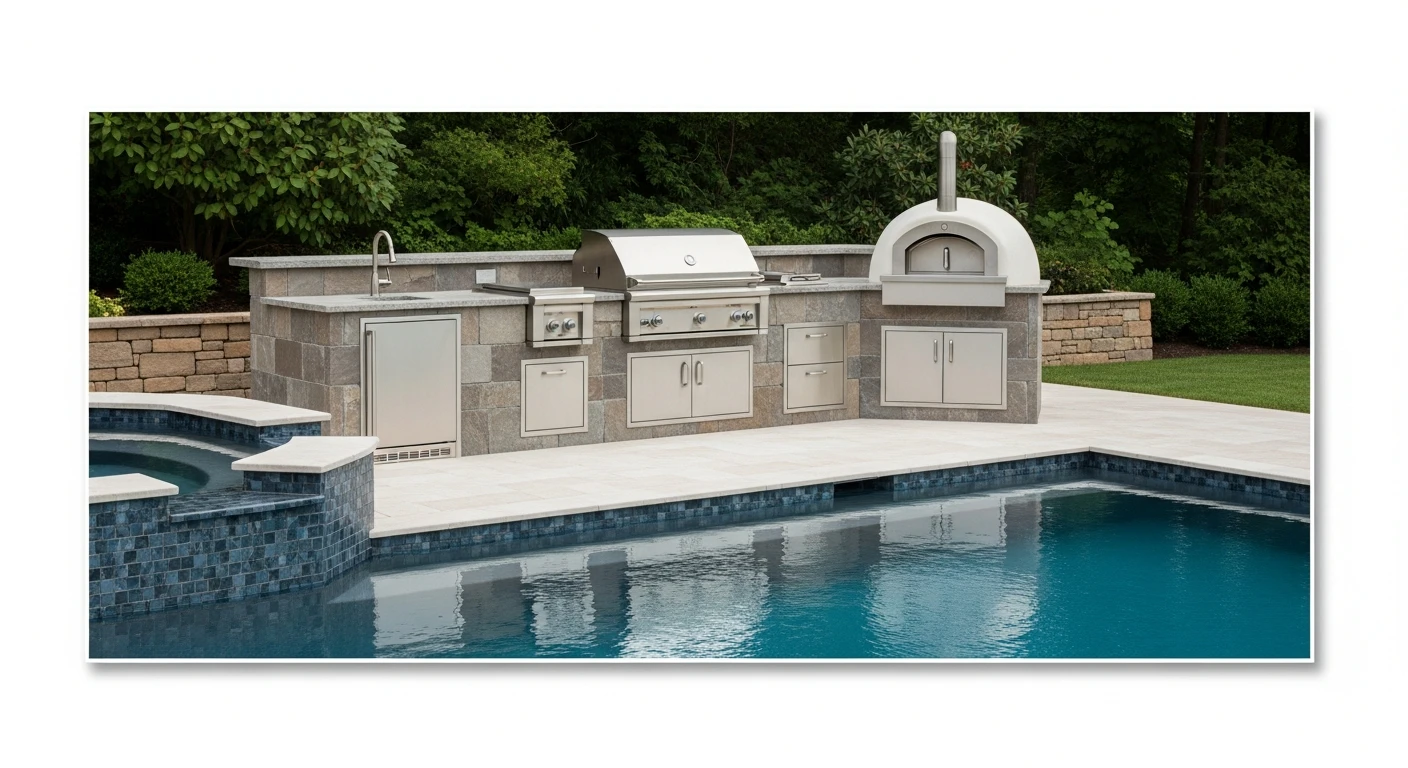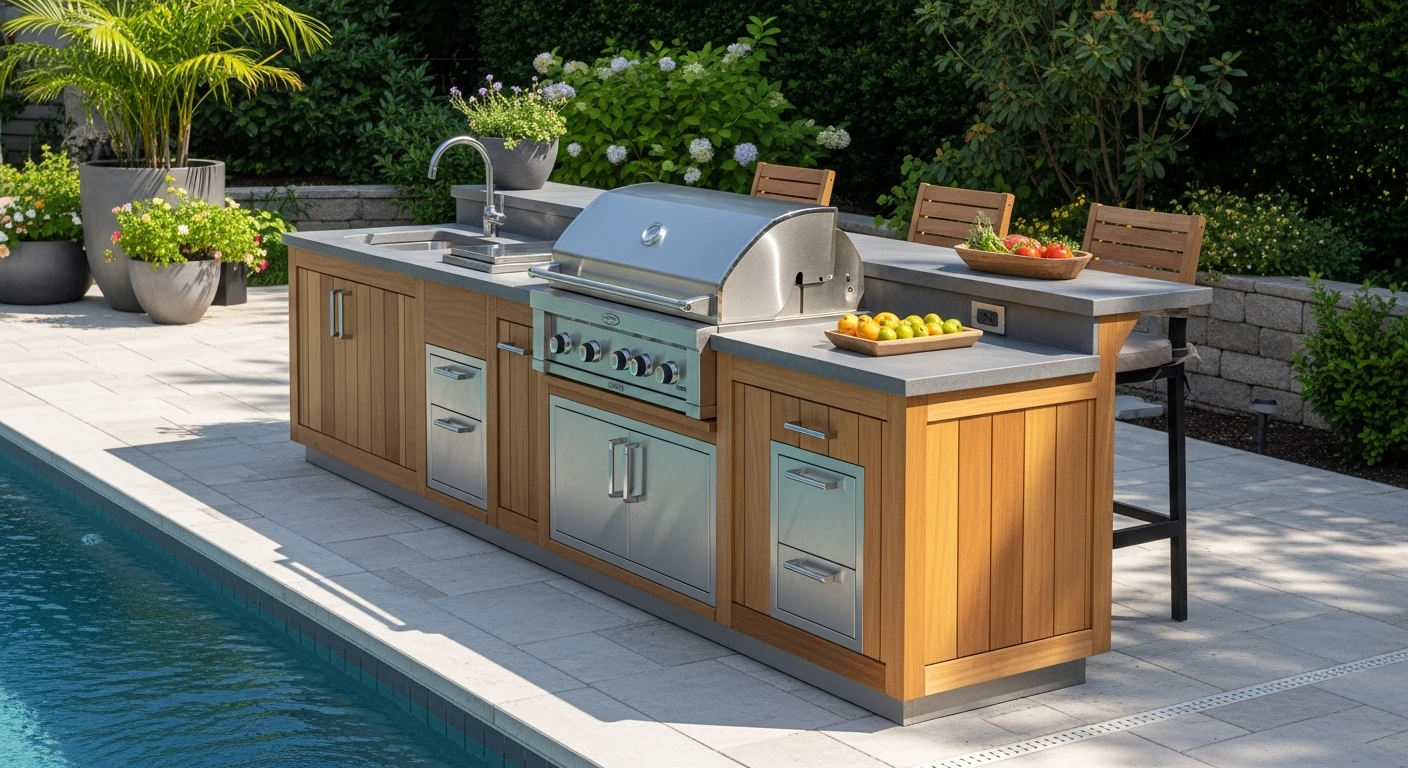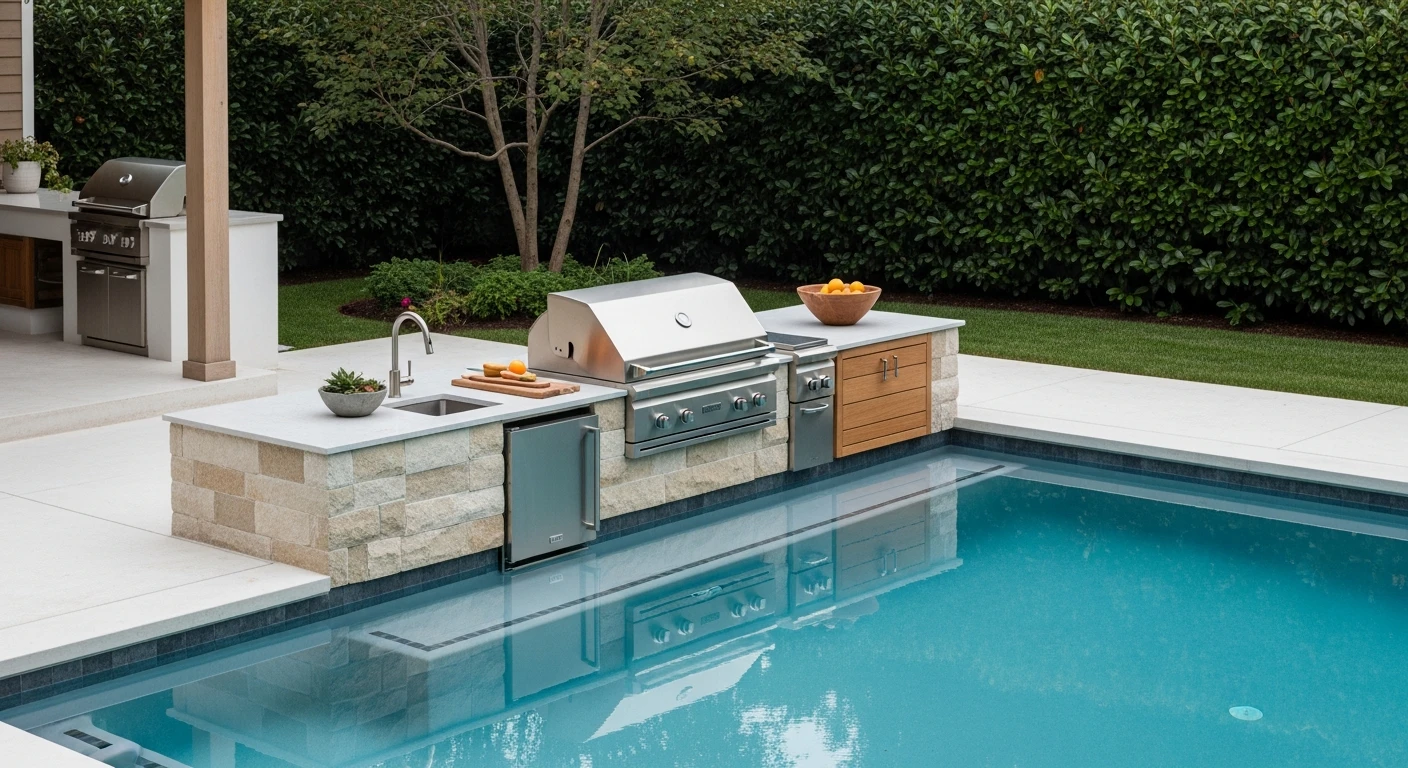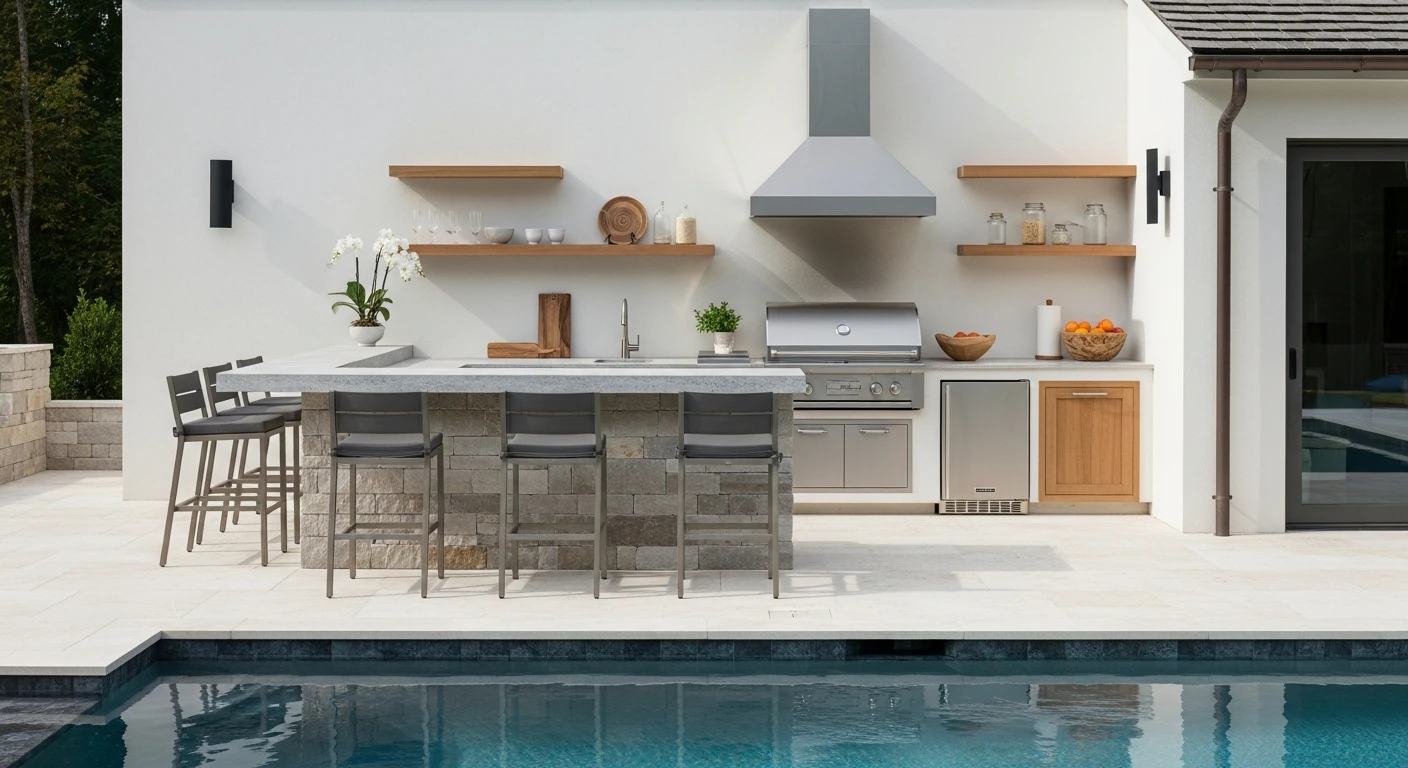
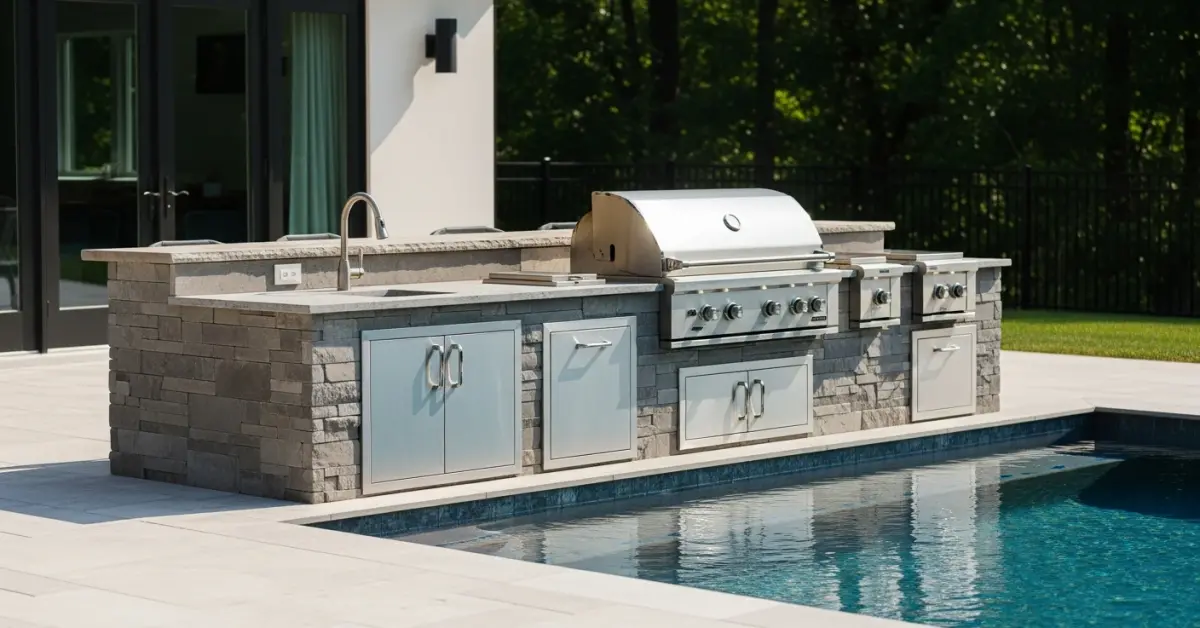
The biggest misconception I see in Sarasota is that an outdoor kitchen is just an indoor kitchen moved outside. This thinking leads to catastrophic failures within 24 months. The salt air from the Gulf, the intense UV radiation, and the torrential summer rains create a uniquely hostile environment. A true outdoor kitchen designer here isn't just arranging appliances; they are engineering a small, highly durable structure to resist constant environmental assault while complying with some of the strictest building codes in the country.
Executive Summary for Sarasota Homeowners
My role as a designer in this market is fundamentally about risk mitigation. We are building for longevity against
My role as a designer in this market is fundamentally about risk mitigation. We are building for longevity against coastal corrosion, hurricane-force winds, and intense humidity. The beautiful finishes and high-end grills are secondary to the structural and material science that makes them last. An improperly specified project, especially in areas like Bird Key or Longboat Key, will not only fail aesthetically but can also violate local building codes, creating liability issues.
- Material Specification is Primary: Success is dictated by choosing materials rated for a marine environment. This includes 316L stainless steel, non-porous countertops like sintered stone, and polymer or concrete-based cabinetry.
- Ventilation is Non-Negotiable: A grill hood isn't just for smoke. Proper ventilation, including under-cabinet vents, is crucial to prevent moisture and gas buildup, which accelerates corrosion and mold growth in our humid climate.
- Code Compliance is Complex: Projects require permits from Sarasota County and must adhere to Florida Building Code wind load requirements, which often means reinforced structures and specific anchoring techniques.
- HOA Architectural Review is a Key Hurdle: Most high-end communities, from Lakewood Ranch to The Oaks, have strict architectural review committees (ARCs) that dictate everything from countertop materials to the visibility of the structure.
The Planning Failures That Haunt Sarasota Outdoor Kitchens
The most common failures I'm called in to fix stem from decisions made long before a single paver is laid. Homeowners, and even some general contractors, underestimate the brutal specifics of our coastal environment. They focus on the layout and appliance brands, completely missing the foundational elements that prevent a rapid decline.
The Most Expensive Mistake: Ignoring Material Grade
The single costliest error is selecting standard “outdoor-rated” 304 stainless steel instead of marine-grade 316L. A client in a waterfront home on Siesta Key installed a beautiful, high-end 304-grade grill and cabinet set. Within 18 months, tea staining and pitting (a form of localized corrosion) were visible everywhere. The manufacturer's warranty was void because the product wasn't rated for a direct saltwater environment. The entire suite of appliances and doors, a five-figure investment, had to be replaced because the initial material specification was wrong for the location by just a few hundred feet.
The Design and Build Process in Practice
A properly executed project follows a strict, multi-stage process that integrates design, engineering, and regulatory compliance from day one. It begins not with a sketch, but with a site analysis to understand sun exposure, prevailing winds, and proximity to saltwater. This data informs every subsequent decision, from appliance placement to structural requirements.
Selection Criteria for a Sarasota Designer
When vetting a designer or firm, your questions should be pointed and specific to our local challenges. Generic portfolios are meaningless if they don't show work that has survived our climate.
- Does their portfolio include projects in waterfront or near-water communities like Casey Key, and can they provide references from those clients?
- Can they articulate the specific differences between 304 and 316L stainless steel and explain where each is appropriate?
- Do they manage the entire permitting process with Sarasota County, including engineered drawings for wind load and utility connections?
- How do they approach designing for HOA compliance, particularly with the stringent aesthetic rules in communities like The Founders Club or Prestancia?
Comparing a Specialized Designer to Alternatives
Choosing the right professional path is critical. Many homeowners assume a landscaper or general contractor can handle the job, but this often leads to the material and code violations I've mentioned. A specialized designer operates at the intersection of architecture, material science, and local code.
When a Full-Service Designer is Not the Right Choice
I'll be direct: if your project is a simple roll-in grill on an existing patio with no permanent utility connections, hiring a dedicated outdoor kitchen designer is overkill. That's a straightforward appliance purchase. Our value is in the design and construction of permanent, integrated structures that require building permits, complex utility runs (gas, electric, water), and must withstand hurricane-level forces. For a basic setup, you do not need to incur design fees and engineering costs.
| Indicator | Specialized Outdoor Kitchen Designer | General Contractor | Landscape Architect / Designer |
|---|---|---|---|
| Material Expertise | Expert in marine-grade alloys, polymers, and non-porous surfaces for coastal conditions. | Varies; often defaults to standard building materials, may lack specific corrosion knowledge. | Strong on hardscapes (pavers, stone) but typically weak on appliance and cabinetry materials. |
| Sarasota Code & Permitting | Deep experience with local wind load requirements, utility codes, and the county permitting portal. | Experienced with general permits, but may need to consult specialists for outdoor kitchen specifics. | Typically does not handle building permits; focuses on landscape and drainage plans. |
| Cost Structure | Higher initial design fees but mitigates costly long-term failures and material replacements. | Often lower upfront design cost, but risks are higher for change orders or future repairs. | Fees are for overall landscape plan; outdoor kitchen is a component, not the core specialty. |
Safe Hiring and Vetting Checklist
Protecting your investment starts with a rigorous vetting process. In Florida, the contracting world has its share of unqualified players, and a slick website is no substitute for proven, local experience. Every item on this list is a non-negotiable checkpoint.
- Verify their Florida Contractor's License: Use the Florida Department of Business and Professional Regulation (DBPR) portal to confirm their license is active and without complaints. Ask for their specific license number (e.g., Certified General Contractor - CGC, or a specialty license).
- Request a Certificate of Insurance: They must provide proof of both General Liability and Worker's Compensation insurance. Without it, any accident on your property becomes your financial liability.
- Ask for Local Engineering Contacts: A serious firm will have an established relationship with a local structural engineer who signs off on plans to meet Sarasota County's wind code (often 160+ MPH exposure).
- Demand a List of Recent, Local Projects: Don't just look at photos. Ask for addresses of 3-5 projects completed in the last two years within Sarasota County that you can drive by.
- Review Their Standard Contract: The contract should clearly detail the scope of work, material specifications (down to the grade of steel), payment schedule, and process for handling change orders. Vague contracts are a major red flag.
- Discuss Their HOA Submittal Process: They should have a clear, documented process for preparing and submitting plans to Architectural Review Committees, as this is often a major source of delays.
Decisions That Define a Successful Outcome
Over the years, I've seen that the success of a high-end outdoor kitchen project hinges on a few key decisions made by the homeowner at the very beginning. It's less about choosing the grill and more about establishing the right project framework.
The Moment Most Homeowners Get It Wrong
The critical mistake happens when the conversation starts with “how much does it cost per square foot?” That question is irrelevant for a custom, engineered structure. The right starting point is defining the performance standard. Are you building a structure to last 5 years or 20 years in Sarasota's coastal air? The answer to that question dictates the materials, the construction methods, and ultimately, the budget. Starting with budget forces compromises on the very things—marine-grade materials, proper engineering—that prevent catastrophic failure.
Practical Answers About Operating in Sarasota
Navigating the local bureaucracy is a key part of the job. These are not just administrative steps; they are critical protections for the homeowner and the integrity of the structure. Understanding them demystifies the process and sets realistic expectations for timelines.
Navigating the Sarasota County Permitting Process
Any outdoor kitchen with permanent gas or electrical lines requires a building permit from Sarasota County Planning and Development Services. The process involves submitting engineered plans showing the foundation, structure, and utility connections. A typical permit review for a project of this nature can take 4-8 weeks, a timeline that must be factored into any construction schedule. Fees can range from $500 to over $2,000 depending on the project's valuation.
Meeting HOA Architectural Review Board (ARB) Requirements
In communities like Palmer Ranch or Lakewood Ranch, the ARB's approval is often more difficult to secure than the county permit. They regulate materials, colors, rooflines, and even the visibility of the kitchen from neighboring properties. A successful submission requires detailed renderings, material samples, and a site plan. A denial can force a complete redesign, adding weeks or months to the project.
Understanding Florida's Lien Law and Your Protection
Florida has specific construction lien laws to protect contractors and suppliers. As a homeowner, you must protect yourself by ensuring your designer/builder provides you with a “Release of Lien” from all subcontractors and material suppliers upon final payment. Without these releases, a supplier who wasn't paid by your builder could legally place a lien on your property. This is a critical final step in the payment process.