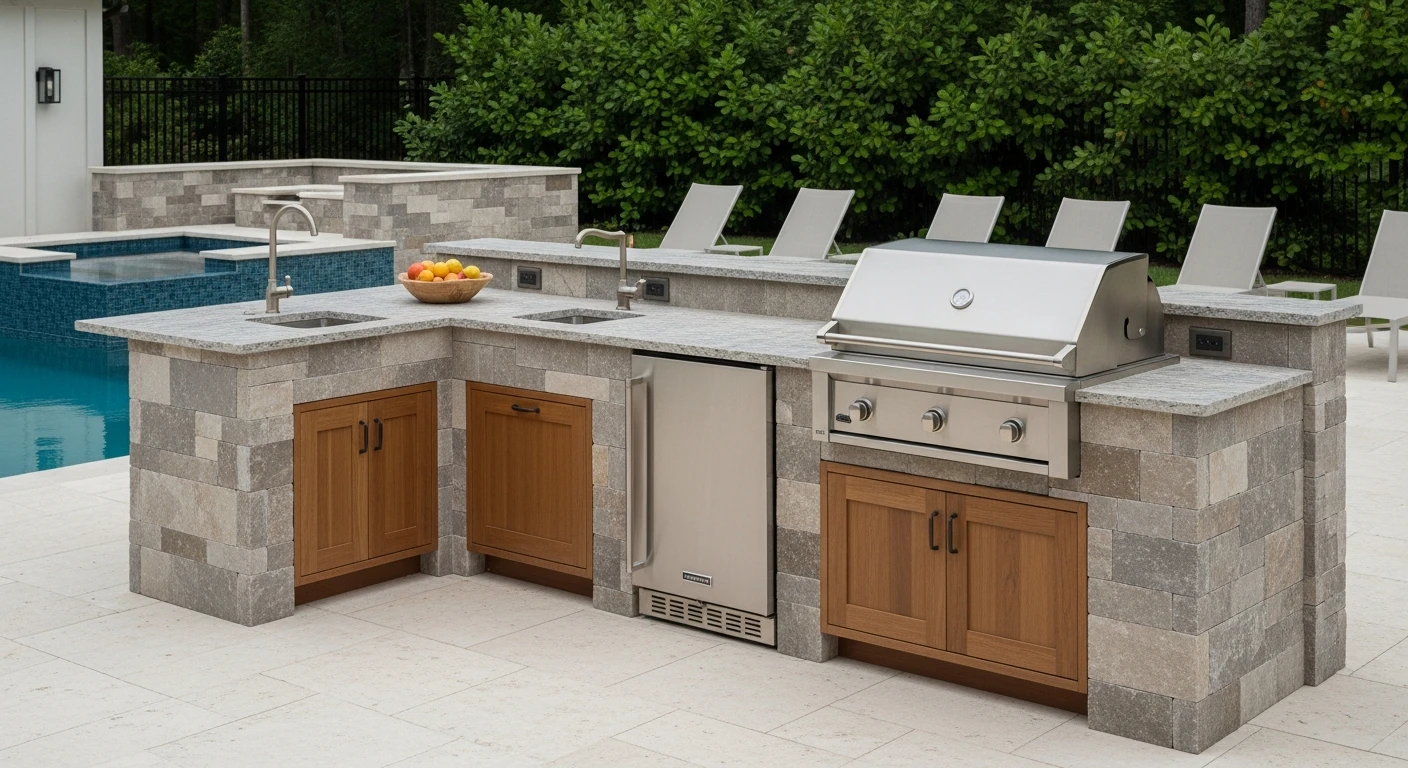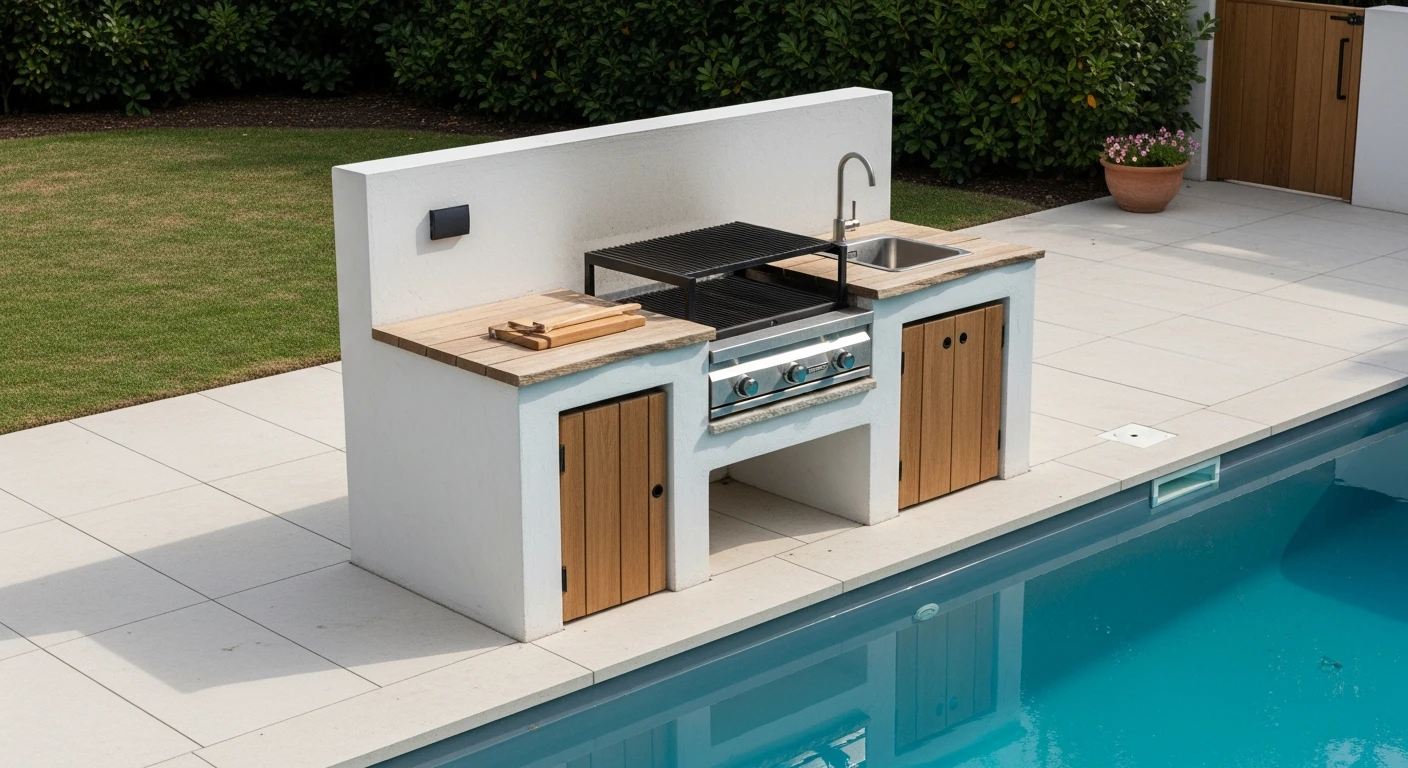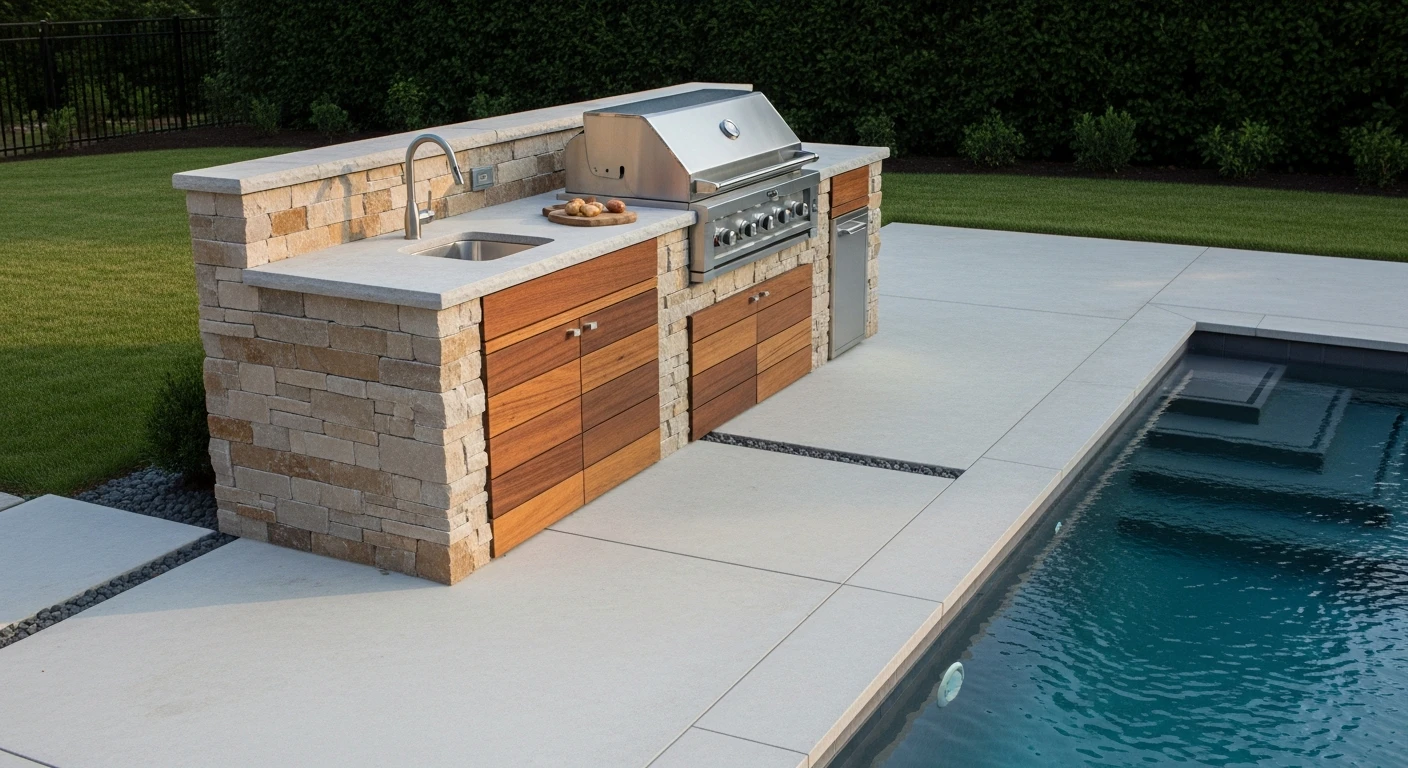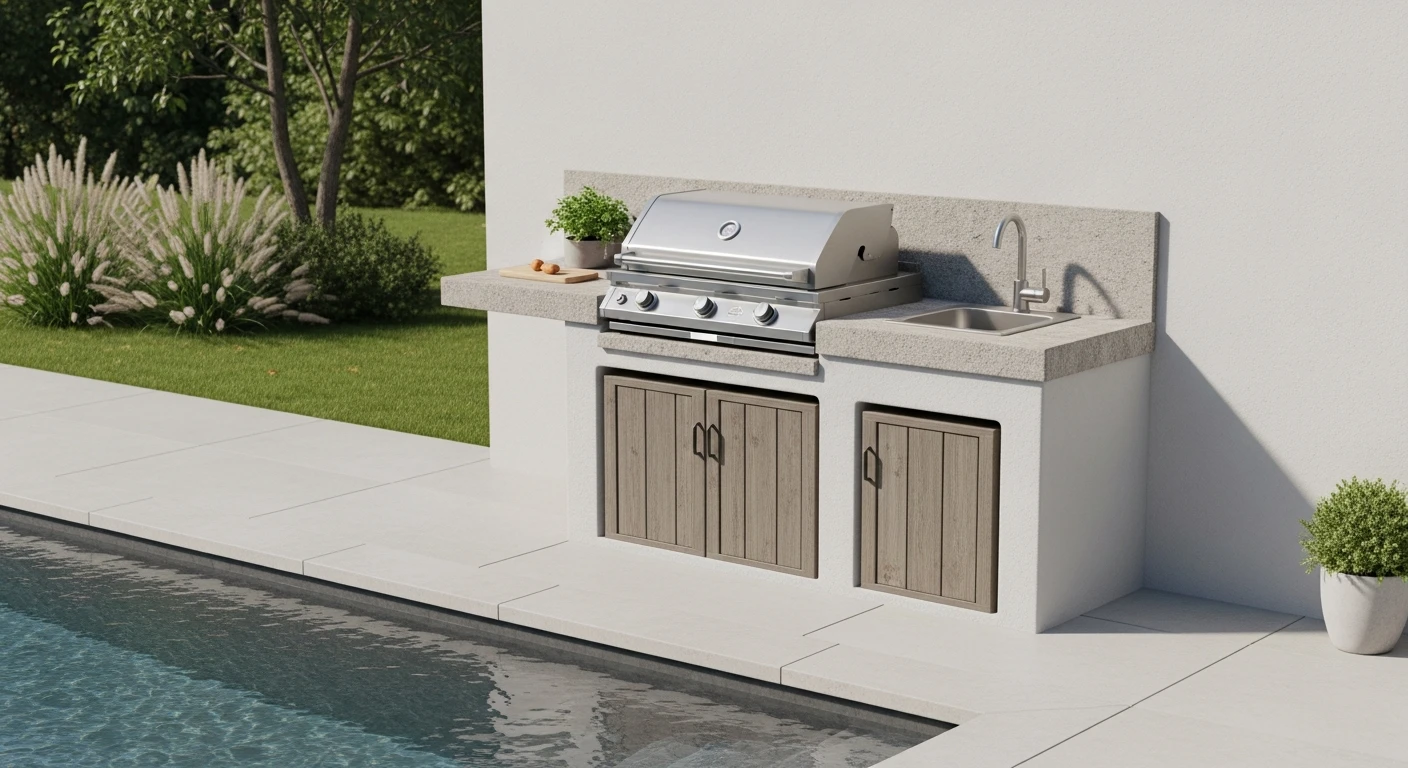
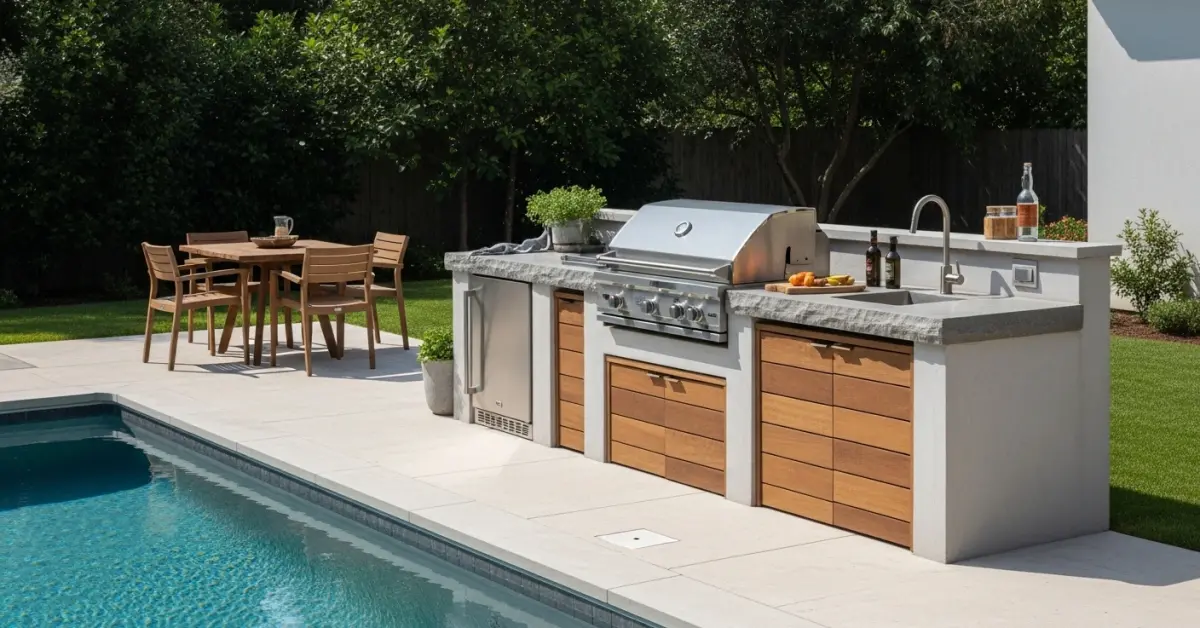
Building a Resilient Sarasota Outdoor Kitchen: An Executive Summary
From my years designing and building outdoor living spaces from Lakewood Ranch to Siesta Key, the most successful
From my years designing and building outdoor living spaces from Lakewood Ranch to Siesta Key, the most successful projects prioritize resilience over initial aesthetics. An outdoor kitchen here is a permanent structure exposed to some of the harshest coastal conditions in the country. The core challenge isn't finding ideas; it's executing them with materials and methods that won't degrade from salt spray, relentless humidity, and UV exposure. Simply replicating an indoor kitchen design outdoors is a recipe for rapid failure.
- Material Science is Non-Negotiable: Standard 304 stainless steel will show surface rust here; marine-grade 316L is the minimum for longevity.
- Code Compliance is Complex: Any covered kitchen requires specific ventilation and electrical work (GFCI outlets) that falls under Sarasota County permit jurisdiction.
- Foundation and Framing Matter Most: A concrete block or aluminum frame structure will outlast wood-framed alternatives that are susceptible to moisture and termites.
- Appliance Selection is Critical: Choose brands with a proven track record in coastal environments and robust warranties that cover corrosion.
The Planning Failures That Lead to a Teardown in 5 Years
I've been called in to assess failing outdoor kitchens that are only a few years old, and the root cause is almost always a decision made before a single block was laid. Homeowners, and sometimes even inexperienced contractors, focus on the visible elements like granite and shiny appliances while ignoring the invisible structure that has to withstand our climate.
The Most Expensive Mistake: Ignoring Salt and Humidity
The single most costly error is treating an outdoor kitchen as a simple cabinet installation. A client in a waterfront home on Lido Key had a beautiful kitchen built with a powder-coated steel frame and what they were told were “outdoor-rated” appliances. Within 18 months, rust was bleeding through the stucco finish from the frame's fasteners, and the 304-grade stainless steel grill hood was pitted. The humidity had compromised the internal electronics of the refrigerator. The entire six-figure project was compromised because the material specifications were not suitable for a direct coastal exposure environment. The required outdoor kitchen remodeling was nearly a complete rebuild.
The Real Process: From Design to Final Inspection in Sarasota County
Building a permanent outdoor kitchen is not a weekend project; it's a construction project that requires permits, inspections, and licensed trades. The process is methodical and designed to ensure safety and structural integrity, especially in a region prone to hurricanes.
Key Steps for Sarasota Homeowners
The path to a finished, compliant project involves navigating several local requirements. Homeowners who try to bypass these steps often face stop-work orders or issues during a future home sale.
- HOA Architectural Review: Before you even approach the county, communities like The Founders Club or University Park require detailed plans—materials, colors, layout—to be approved by their Architectural Review Committee (ARC). This can add 4-6 weeks to your timeline.
- Permit Application: A licensed contractor must submit structural, electrical, and plumbing plans to the Sarasota County Planning and Development Services. For a typical kitchen, expect the permit review process to take 30-45 days. This is a real number that impacts project start dates.
- Footing and Block Inspection: The first inspection after the permit is issued. The county inspector verifies that the concrete footing and blockwork for the base structure are built according to the approved plans and local code.
- Utility Rough-In Inspections: Licensed electricians and plumbers will run their lines. Inspectors must sign off on this work before any walls or countertops are closed up. This includes verifying GFCI protection and proper gas line installation.
- Final Inspection: Once all work is complete, a final inspection ensures the entire project is safe, compliant, and matches the submitted plans.
Comparing Outdoor Kitchen Structures
The foundation and framing of your kitchen are the most critical decisions. While options vary in cost and appearance, their performance in our humid, salt-laden air is drastically different. This is a decision that has a 15-year impact on the project's viability.
| Framework Material | Upfront Cost | Longevity in Sarasota | Primary Weakness |
|---|---|---|---|
| Pressure-Treated Wood | Low | Poor (3-7 years) | Rot, termites, and warping from moisture. Not ideal for masonry veneer. |
| Welded Aluminum Tube | High | Excellent (20+ years) | Requires skilled fabrication; higher labor cost. Must be marine-grade alloy. |
| Concrete Block (CMU) | Moderate | Exceptional (Lifetime) | Less design flexibility for complex curves; requires a solid concrete footing. |
When a Full Outdoor Kitchen Isn't the Right Choice
A permanent, built-in kitchen is a significant investment. If you are uncertain about your long-term plans for the property or have a smaller patio space, it might not be the best fit. In these cases, a high-quality freestanding grill, a modular island on casters, and durable outdoor furniture can provide excellent functionality without the cost, permanence, and permitting requirements of a built-in structure. It's a trade-off between ultimate convenience and flexibility.
A Safe Hiring Checklist for Your Project
Hiring the right team is the most important factor for success. The slickest brochure or lowest bid means nothing if the contractor isn't properly licensed, insured, and experienced with the specific demands of building in our coastal county.
- Verify their license on the Florida Department of Business and Professional Regulation (DBPR) portal. They should have a Certified General Contractor (CGC) or Building Contractor (CBC) license for structural work.
- Ask for proof of both General Liability and Worker's Compensation insurance. Without the latter, you could be liable for injuries on your property.
- Request addresses of at least three completed projects in Sarasota County that are over three years old. This allows you to see how their work holds up to the elements.
- Ensure the contract specifies the exact grade of stainless steel (e.g., “316L Marine Grade”) for all appliances, doors, and hardware. “Stainless steel” is not a sufficient specification.
- Confirm they will be pulling a permit. A contractor suggesting you can skip the permit for anything involving gas, permanent electrical, or a roof structure is a major red flag.
- Discuss the plan for stormwater management. The addition of a large, non-permeable patio and roof structure can affect drainage on your property, an issue the county is increasingly focused on.
Decisions That Define the Long-Term Outcome
Two clients can spend the same amount of money on an outdoor kitchen and have vastly different results five years later. The difference lies in a few key decisions made at the outset, often before the design is even finalized. These choices are about function and durability, not just style.
The Moment Most Homeowners Get It Wrong
The critical mistake happens during the appliance and material selection phase. Homeowners get captivated by a grill's BTU rating or a countertop's pattern, influenced by what they see in magazines or showrooms designed for less harsh climates. The most important decision is to allocate a disproportionate amount of the budget to what you can't see: the framing, the fasteners, the waterproofing membrane behind the veneer, and the grade of the metal. I advise clients to build the best possible “box”—a waterproof, non-corrosive, structurally sound frame—and then fit the best appliances and finishes their remaining budget allows. A high-end grill set in a failing structure is a total loss.
Practical Answers for Building in Sarasota
Navigating the local rules and environment is key to a smooth project. These are the real-world operational questions that come up on nearly every job I manage in the area.
What Triggers a Permit Requirement with Sarasota County?
A permit is generally required if your outdoor kitchen project includes any new electrical wiring, plumbing or gas lines, or any type of permanent roof structure. A simple grill on a patio doesn't need one, but the moment you hard-pipe a gas line, run a new electrical circuit for a fridge, or build a pergola over the top, you have crossed the threshold into permitted work.
How Do I Choose Weather-Resistant Cabinetry?
Traditional wood or MDF cabinets will not survive. The best options for our climate are high-density polyethylene (HDPE) cabinetry, often sold under brand names like NatureKast or WeatherStrong, or 316L stainless steel cabinet systems. HDPE is a marine-grade polymer that is impervious to water, won't swell or delaminate, and is easy to clean. It's the standard for outdoor durability.
Are Ventilation Hoods Required?
Yes, if your grill is located under any combustible covered structure, like a wood-framed lanai roof or pergola. The Florida Building Code is very clear on this. An outdoor-rated ventilation hood is mandatory to safely exhaust heat and grease away from the structure. Installing a high-output grill under a roof without proper ventilation is a significant fire hazard and will not pass a final inspection.