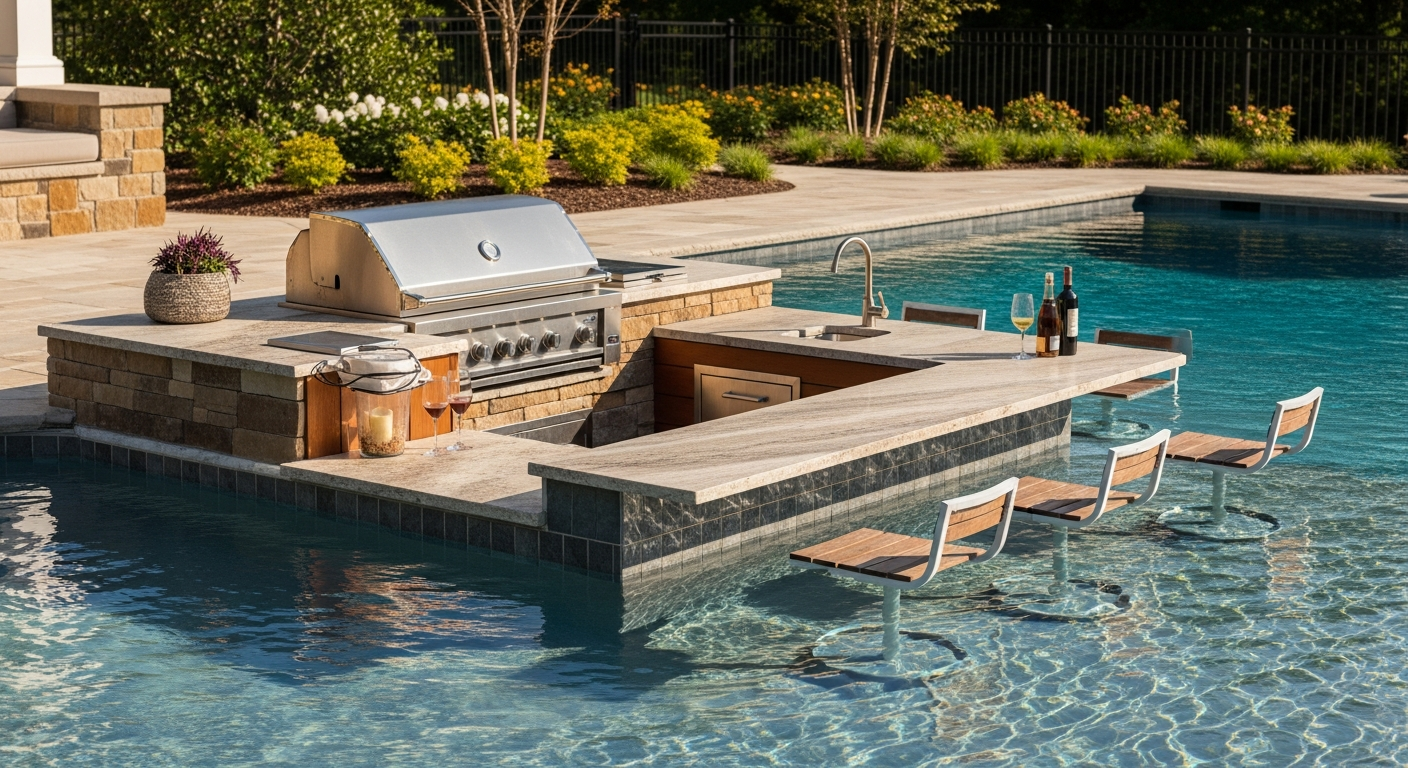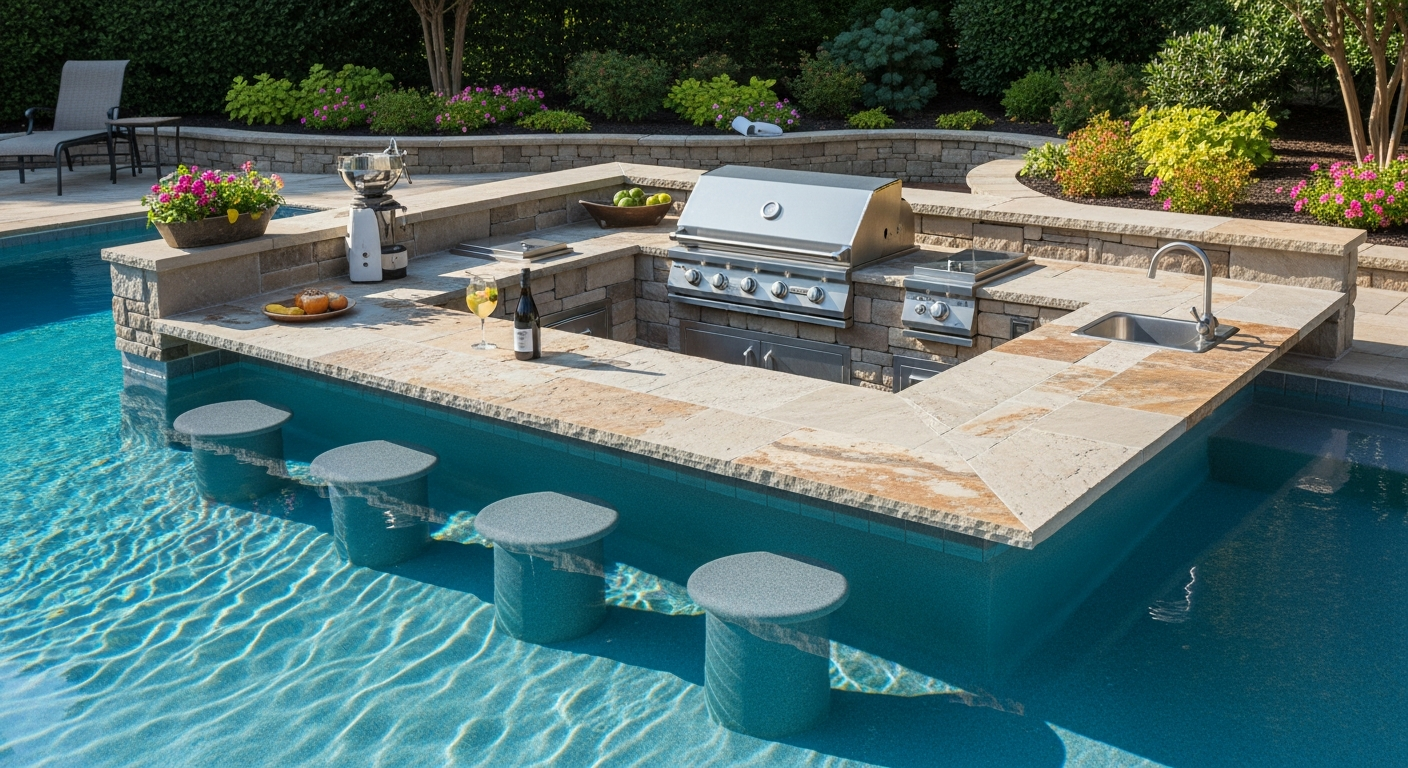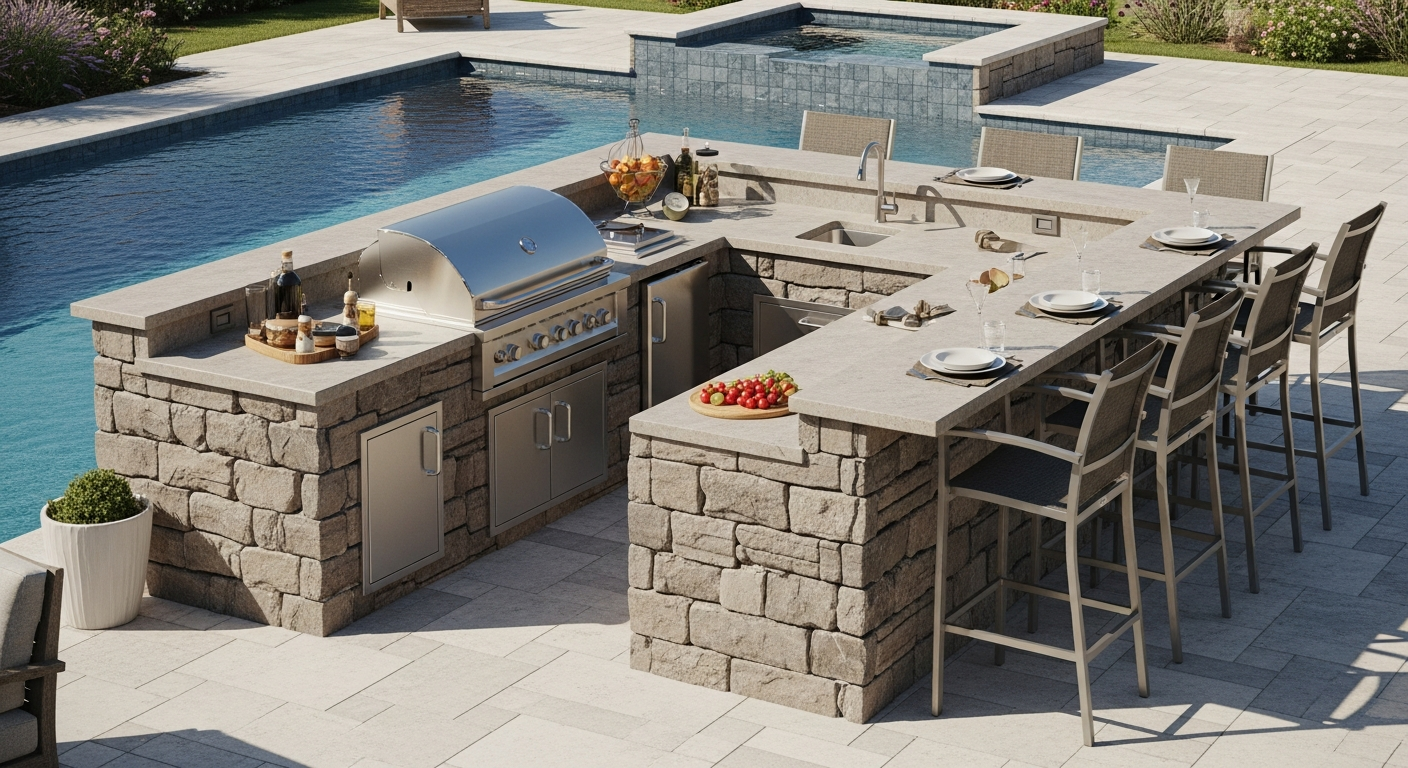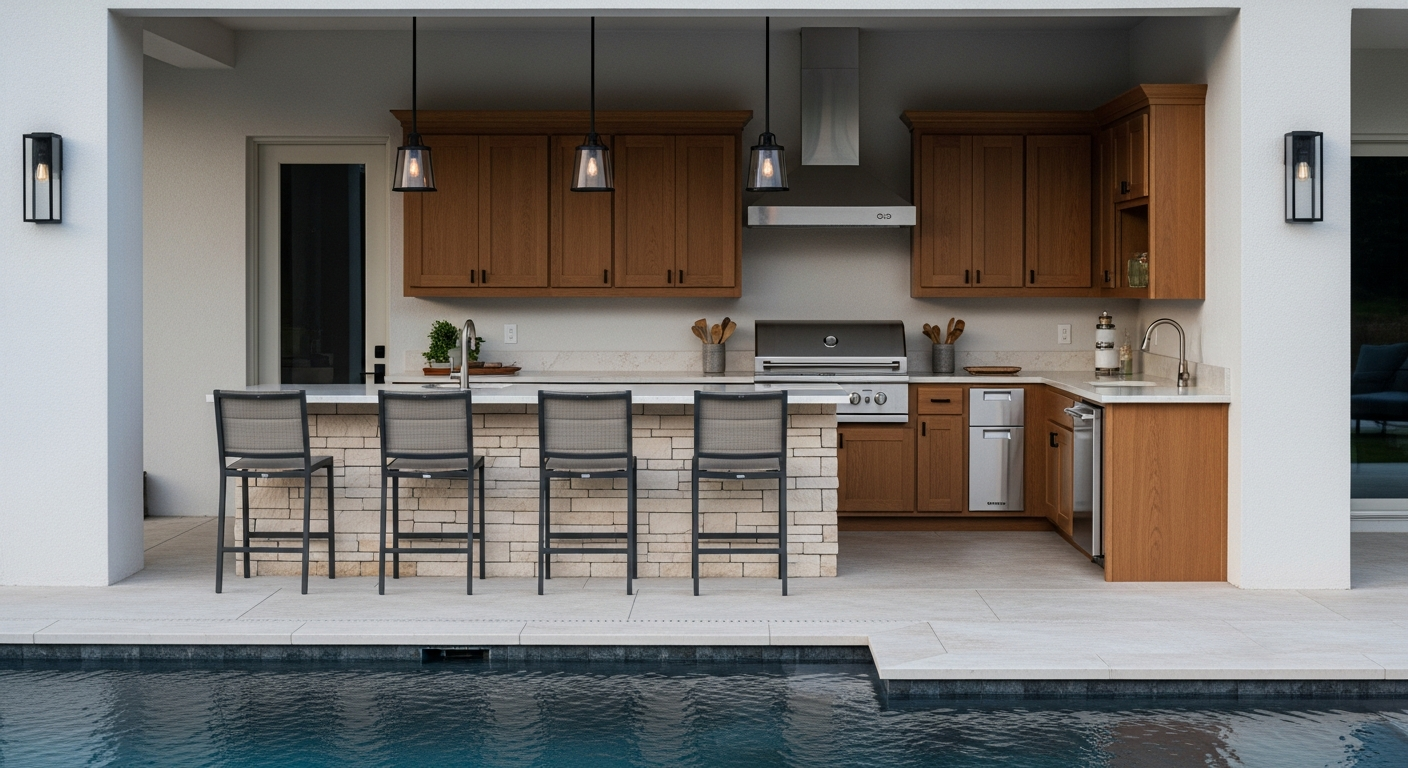
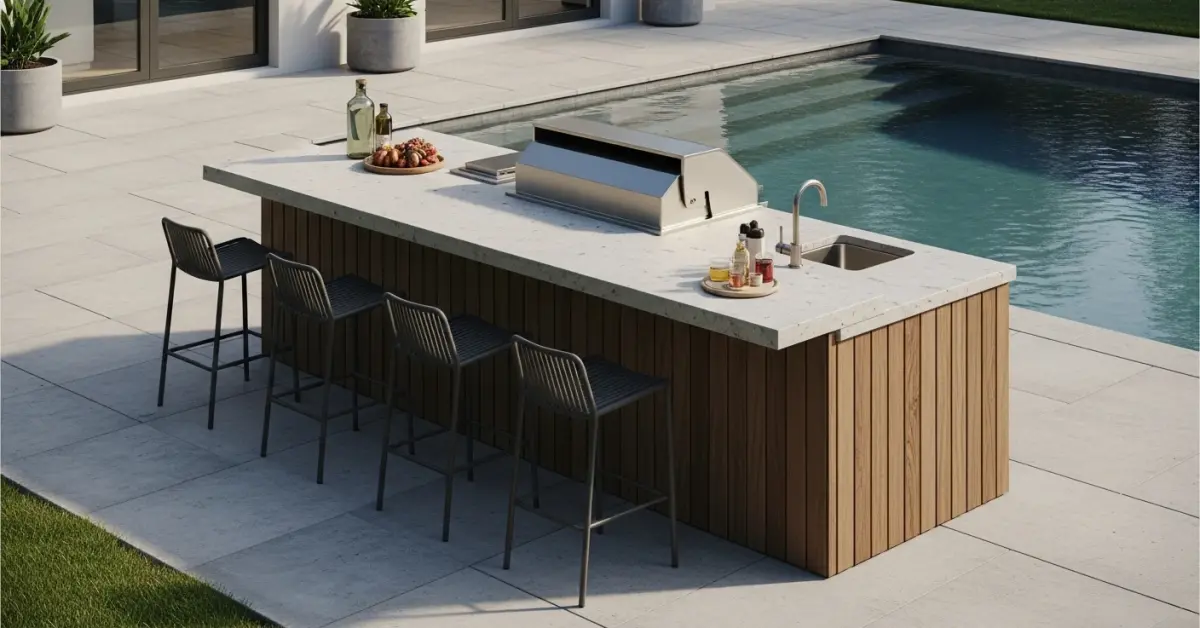
The Anatomy of a High-Performing Sarasota Outdoor Kitchen Island
In my 15 years building outdoor living spaces here, the most successful outdoor kitchen islands with bars in Sarasota
In my 15 years building outdoor living spaces here, the most successful outdoor kitchen islands with bars in Sarasota are not defined by the brand of the grill, but by their resilience to our coastal climate. The real value lies in specifying materials that resist humidity, salt air, and UV degradation from the start. A beautiful design that rusts or delaminates in two years is a failure, and I've replaced far too many of them in neighborhoods from Lakewood Ranch to Siesta Key. The key is to think of it as marine construction for your backyard.
- Material Priority: 316 marine-grade stainless steel for all hardware and appliances is non-negotiable west of I-75.
- Structural Core: The island's frame must be welded aluminum or concrete block, not wood or steel studs which will inevitably fail.
- Countertop Selection: Granite and Dekton are superior to quartz, which can yellow under intense, direct Florida sun.
- Functional Layout: The bar and grill areas must have distinct zones to prevent guests from interfering with the cooking workflow.
Planning Failures That Compromise Your Outdoor Bar Island
The most common mistake I see is underestimating the impact of Sarasota's humidity and salt air on materials. Homeowners often focus on the layout and appliance selection, assuming standard outdoor-rated products are sufficient. They are not. Using 304-grade stainless steel, for example, will result in tea-staining and pitting within a couple of years, especially on the keys or in waterfront properties near Sarasota Bay.
The Under-Engineered Foundation Mistake
The costliest error is building the island on an inadequate paver or concrete slab base. I was called to a project in The Landings where a beautiful, granite-topped outdoor kitchen bar island had developed a hairline crack straight through the countertop. The cause wasn't the granite; the paver patio underneath had settled unevenly. The fix required dismantling the entire island, pouring a proper reinforced concrete footing, and then rebuilding it, effectively doubling the labor cost and forcing the replacement of the expensive, now-cracked countertop. A proper footing, which adds maybe $800 to an initial build, would have prevented a $10,000 repair.
The Construction Process in Practice for Sarasota County
Building an outdoor kitchen island involves more than just assembly; it requires permits and inspections, especially when gas and electrical lines are involved. In Sarasota County, any project with new utility lines requires a licensed contractor to pull a permit, which can take anywhere from 4 to 8 weeks for approval depending on the backlog at the planning department. This timeline is a frequent source of frustration for homeowners aiming for a pre-summer completion.
Key Selection Criteria for a Sarasota Project
- Verify the contractor's license is active on the Florida Department of Business and Professional Regulation (DBPR) website and that they carry specific liability insurance for outdoor construction.
- Request a portfolio of projects completed in coastal environments like Longboat Key or Casey Key, and ask specifically about the materials used for the cabinet structure and hardware.
- Ensure the proposal explicitly states the use of 316-grade stainless steel for any metallic components if you live anywhere near saltwater.
- Confirm their process for securing HOA architectural review board approval, a common requirement in communities like Palmer Ranch which often have strict guidelines on finishes and placement.
Comparing a Custom Island to Pre-Fab and Modular Kits
Homeowners often weigh the cost of a fully custom-built island against seemingly cheaper pre-fabricated options. While the upfront cost of a pre-fab kit is lower, the long-term performance in our specific climate is where the value proposition breaks down. I've found that the hardware and internal frames of many kits are not suited for our environment.
| Feature | Custom-Built Masonry/Aluminum Island | Pre-Fabricated/RTA (Ready-to-Assemble) Kit | Modular Outdoor Cabinets |
|---|---|---|---|
| Climate Resistance | Excellent (with proper materials like 316 SS, concrete block, marine polymer) | Poor to Fair (Often uses lower-grade steel and less durable frames) | Good (If selecting high-end marine-grade polymer or 316 SS models) |
| Design Flexibility | Unlimited; conforms to any space, appliance, or finish | Limited; fixed sizes and layouts | Moderate; can be configured but limited by module dimensions |
| Long-Term Cost | Higher upfront, but lower lifetime cost due to durability | Lower upfront, but high risk of replacement/repair costs in 3-5 years | High upfront, with good durability if specified correctly |
| Resale Value Impact | High; seen as a permanent, valuable home addition | Low; often perceived as a temporary or lower-quality feature | Moderate to High |
When a Custom Island is Overkill
A fully custom, masonry-built island is not always the right answer. If you are in a non-coastal area with a smaller lanai, have a limited budget, and don't require extensive utility runs, a high-quality modular system using marine-grade polymer cabinets can be a more practical and cost-effective solution. The trade-off is less design freedom, but you gain installation speed and potentially lower cost without sacrificing all-weather durability if you choose the right brand.
Safe Hiring Checklist for Your Outdoor Kitchen Project
Hiring the right team is the most critical step. A slick salesperson can sell a beautiful design, but it's the build quality that determines whether you'll be happy in five years. I've seen far too many projects where the contractor cut corners on unseen elements like waterproofing behind the finish or using the wrong fasteners.
- License & Insurance Verification: Ask for a copy of their state license (a Certified General, Building, or Residential Contractor license is required for structural work with utilities) and a certificate of insurance naming you as an additional insured.
- Sarasota County Permit History: Check the contractor's permit history on the Sarasota County permitting portal. A history of successfully closed permits is a strong indicator of competence and familiarity with local codes.
- HOA Compliance Plan: For communities like Lakewood Ranch, ask for their specific plan to submit materials and drawings to the architectural review committee. An experienced contractor will have this process streamlined.
- Material Specification Sheet: Demand a detailed list of every material being used, from the type of concrete board to the grade of stainless steel for screws and hinges. This is where corners are often cut.
- Warranty Details in Writing: Get a clear written warranty that covers not just the appliances (which have their own manufacturer warranties) but the structural integrity and workmanship of the island itself.
Decisions That Define the Longevity of Your Investment
The success of your outdoor kitchen island hinges on a few key decisions made before a single block is laid. The most important is prioritizing the structural and material integrity over cosmetic finishes. A client can always upgrade a faucet, but you cannot retroactively change the grade of steel in your cabinet doors or the type of frame holding up your granite.
The Moment Homeowners Get It Wrong
The critical mistake often happens during the countertop selection. A homeowner will fall in love with a particular look—often a brilliant outdoor kitchen white quartz—without understanding its limitations in our environment. I strongly advise clients against using most quartz products for surfaces with direct, prolonged sun exposure. The resins used to bind the quartz can yellow and degrade under Florida's intense UV rays. Choosing a natural stone like granite or a UV-stable sintered stone like Dekton is a far safer, more durable choice for a Sarasota backyard, even if it means compromising on a specific shade of pure white.
Practical Answers for Building in Sarasota
Navigating the local requirements is a key part of my job. The process here is straightforward but unforgiving if you miss a step. Understanding these local specifics prevents delays and ensures the final product is safe and compliant.
How are Utility Hookups Handled in Sarasota County?
Any new natural gas or propane line for a grill, or a new electrical circuit for a refrigerator and outlets, requires a permit pulled by a licensed plumber or electrician. The work must be inspected by a county official before any finishing materials (like stucco or stone veneer) can be applied. Attempting to do this without a permit can result in a stop-work order and fines, which I've seen happen when homeowners try to use a handyman instead of a licensed contractor.
What are Common HOA Restrictions on Outdoor Kitchens?
In planned communities, HOAs typically regulate the location, size, and exterior finishes of any permanent outdoor structure. For example, many HOAs in Palmer Ranch require that the stone or stucco finish on an outdoor kitchen island matches the primary residence exactly. They may also have setback requirements, dictating how close the island can be to the property line or pool cage. Submitting a detailed plan for approval before work begins is mandatory.
Does a Grill Island with Bar Need a Special Foundation?
Yes. A permanent grill island with bar, especially one with a heavy stone top, cannot be built directly on top of pavers or a thin 4-inch patio slab. Per Florida Building Code, it requires a monolithic concrete footing to prevent shifting, settling, and cracking. This foundation must be inspected for proper depth and reinforcement before the structure of the island is built on top of it. This is a critical code compliance step that protects the structural integrity of your investment.