As a specialist designing and building outdoor living spaces here for over 15 years, I can state definitively that
As a specialist designing and building outdoor living spaces here for over 15 years, I can state definitively that outdoor kitchen storage in Sarasota fails for one primary reason: material mismatch. We treat our outdoor kitchens like indoor ones, but the Sarasota environment—a combination of intense humidity, salt-laden air, and tropical storm-force rain—is uniquely corrosive. The key isn't just sealed cabinets; it's a system of marine-grade materials, engineered ventilation, and strategic placement that anticipates moisture, rather than just reacting to it.
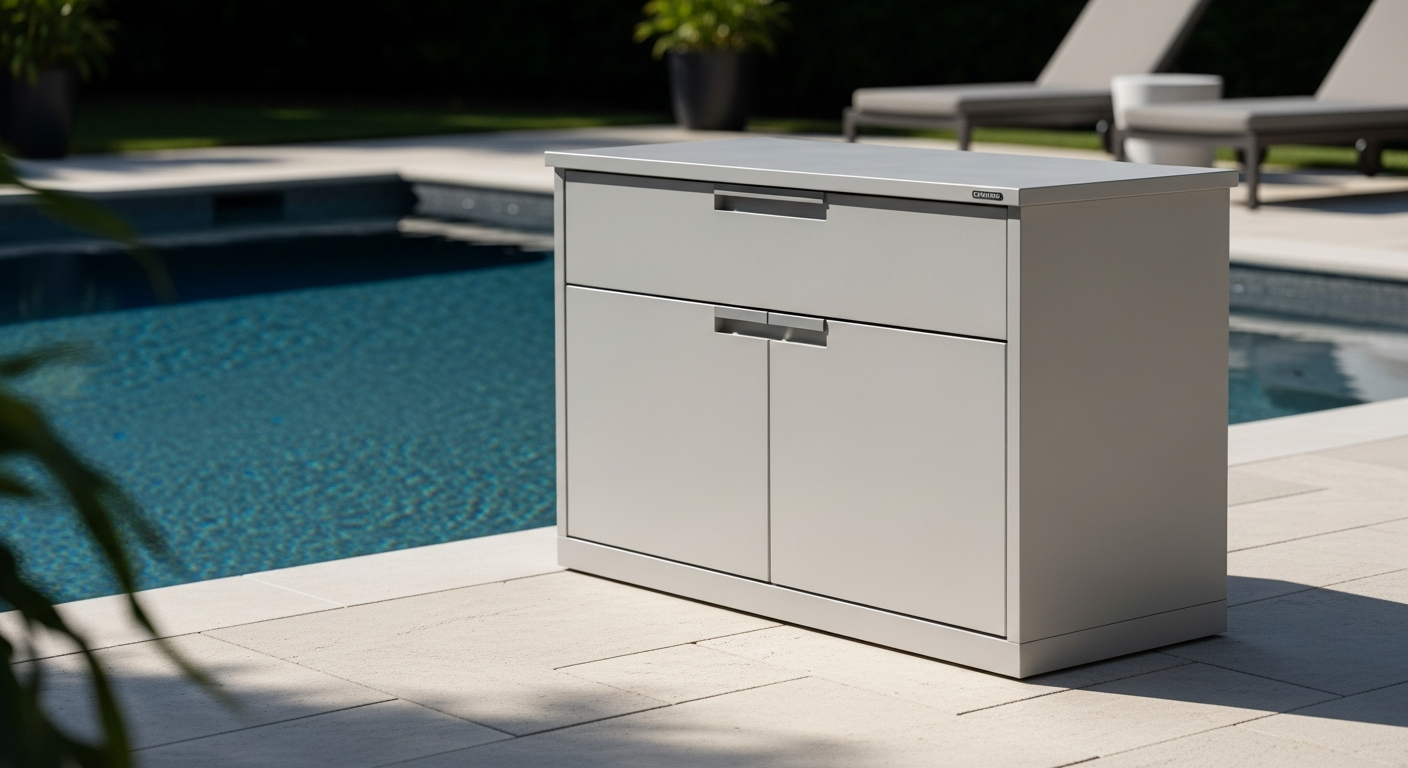
- Material Priority: Marine-grade 316 stainless steel or high-density polyethylene (HDPE) polymer are the only reliable long-term choices. 304 stainless steel, common in many 'outdoor-rated' products, will show surface rust here, often within 12-18 months.
- Ventilation is Non-Negotiable: Sealed cabinets trap humid air, creating a perfect environment for mildew on everything from utensils to linens. Vented backs or toe-kicks are critical for air circulation.
- Gasket Quality Matters: The seal on cabinet doors determines whether wind-driven rain from a summer squall soaks your contents. I look for thick, automotive-grade gaskets.
- Pest Infiltration: Unsealed cabinets and drawers are an open invitation for pests. Proper sealing isn't just for weather; it’s your first line of defense against insects and rodents.
The Design Flaws That Lead to Storage Failure
The most common mistakes I see are not in the layout but in the fundamental understanding of our local climate. Homeowners invest heavily in premium grills and countertops, only to have the structure underneath degrade. The core failure is designing for aesthetics first and environment second, which is a recipe for costly repairs in Sarasota.
Ignoring the impact of direct sun is another frequent oversight. Dark-colored polymer cabinets can warp under the intense UV exposure we get year-round. Similarly, placing an outdoor kitchen pantry or cabinet for grilling supplies where it gets drenched by sprinkler systems guarantees water intrusion and premature failure of hinges and drawer slides.
The Most Expensive Oversight: Ignoring Salt Air Corrosion
The single most expensive mistake is using standard 'outdoor-grade' hardware and fasteners on a project anywhere near the water, which in Sarasota County, is almost everywhere. I was called to a beautiful home on Lido Key where the client's two-year-old outdoor kitchen cabinets were literally falling apart. The polymer boxes were fine, but the installer used lower-grade stainless steel hinges, screws, and drawer slides. The salt spray had completely corroded them. The cost to fix it was nearly 40% of the original installation price because every component had to be removed and replaced with marine-grade 316L hardware. It's a detail that adds maybe 5-10% to the upfront cost but prevents a catastrophic failure down the line.
How a Resilient Storage System is Built in Practice
A properly executed outdoor storage project follows a strict process that accounts for Sarasota's environmental challenges from day one. It begins with a site assessment to evaluate exposure to sun, rain, and salt air. We then move to material specification, where choices are made not just on looks but on long-term performance ratings for UV stability and corrosion resistance.
The actual build involves techniques not common in indoor cabinetry. All penetrations for utilities are sealed with marine-grade silicone. Cabinet boxes are often elevated slightly off the concrete slab on polymer feet to prevent moisture wicking up from the ground, a common issue on lanais. Finally, the installation must pass a simple but effective 'hose test' to check for leaks around doors and drawers before the job is considered complete.
Selection Criteria for Sarasota Homeowners
- Check the Steel Grade: If choosing stainless steel, demand proof it is 316-grade, not 304. Ask to see the manufacturer's spec sheet.
- Ask About UV Inhibitors: For polymer or composite cabinets, verify that the material contains built-in UV inhibitors to prevent fading and chalking under the Florida sun.
- Examine the Warranty's Fine Print: Many warranties have exclusions for 'coastal areas' or corrosion. A lifetime warranty with a coastal exclusion is useless in Sarasota.
- Confirm HOA Approval: Before signing any contract, ensure the proposed materials and colors are approved by your specific HOA, especially in communities like Lakewood Ranch or The Founders Club.
Comparing Outdoor Storage Material Options
Choosing the right material is the most critical decision you'll make. It dictates not only the look and cost but, more importantly, the lifespan and maintenance requirements of your outdoor kitchen. In our climate, the wrong choice becomes a source of constant frustration.
| Material | Corrosion Resistance | Maintenance Level | Typical Lifespan (Sarasota) |
|---|---|---|---|
| HDPE / Marine-Grade Polymer | Excellent (Impervious) | Very Low | 20+ years |
| 316 Marine-Grade Stainless Steel | Excellent | Low (Requires cleaning) | 15-20 years |
| 304 Stainless Steel | Fair (Prone to rust spotting) | Moderate | 5-10 years |
| Powder-Coated Steel/Aluminum | Poor (Scratches lead to corrosion) | High | 3-7 years |
When High-End Storage is Not the Right Choice
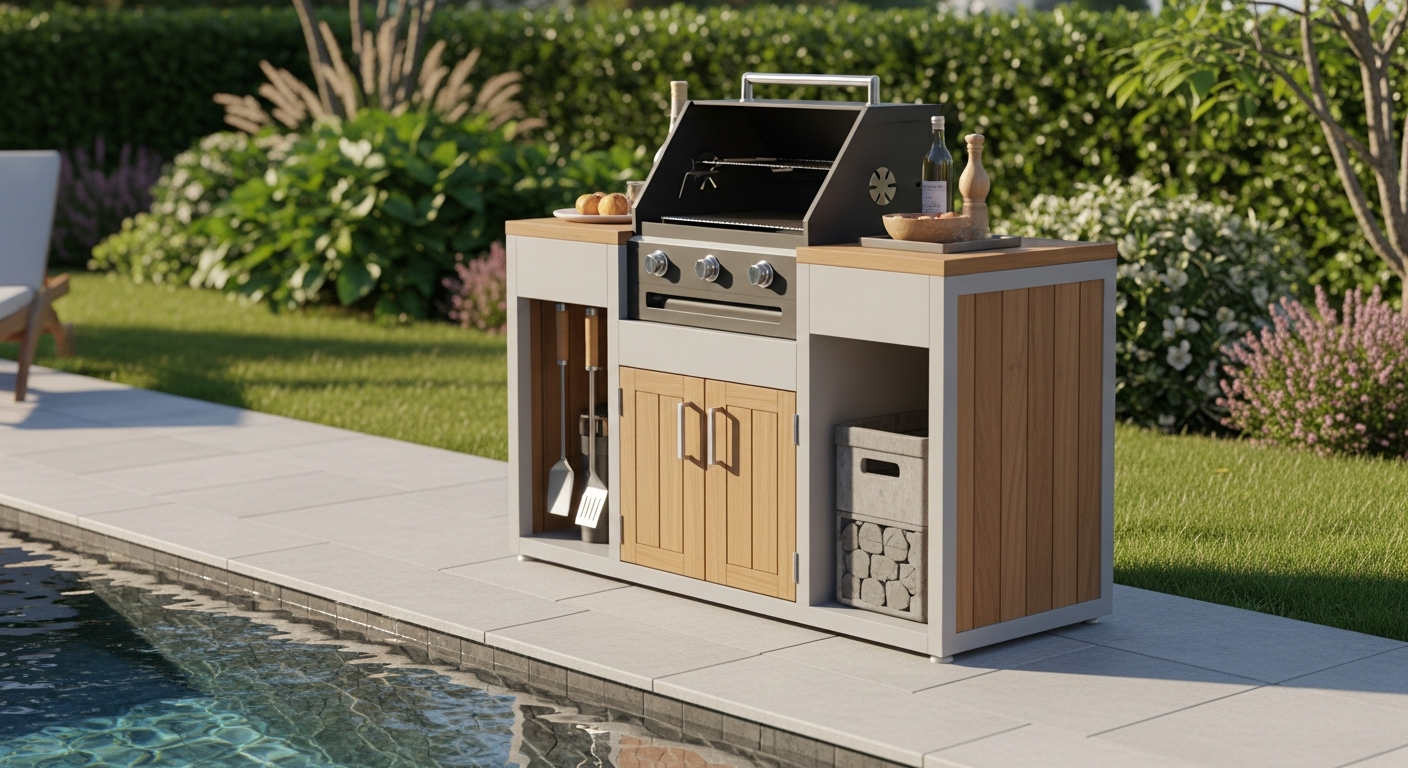
There are situations where investing in a full, built-in polymer or stainless steel cabinet system is overkill. If your outdoor kitchen is in a well-protected lanai with minimal exposure to direct rain and sun, and you are diligent about cleaning, you might get by with a more modest setup. For example, a high-quality, freestanding outdoor kitchen cart with storage, covered when not in use, can be a practical and cost-effective solution for a casual grilling area. The trade-off is convenience and aesthetics for a lower initial investment.
A Safe Hiring and Installation Checklist
Vetting your installer is as important as choosing the right materials. A great product installed poorly will fail. I've seen expensive cabinets ruined by installers who didn't use the correct fasteners or failed to properly level the units, causing doors to bind and seals to fail over time.
- Verify the contractor holds a valid and current license with the Florida Department of Business and Professional Regulation (DBPR). A handyman is not qualified for this work.
- Request proof of liability and workers' compensation insurance. Never allow uninsured workers on your property.
- Ask for a portfolio of local projects, specifically ones that are at least 3-5 years old, to see how their work holds up in our climate.
- Confirm they will handle any necessary permits with Sarasota County. While many storage installations don't require one, any associated electrical or plumbing work absolutely does.
- Ensure the contract specifies the exact grade of all materials, including hardware like hinges, screws, and drawer slides (e.g., "316 stainless steel fasteners").
- Discuss the plan for ventilation. If the contractor doesn't have a clear strategy for preventing mildew, they don't understand the local environment.
Decisions That Determine the Longevity of Your Investment
The success of your outdoor storage comes down to a few key decisions made at the planning stage. The first is accepting that what works in other parts of the country will not work here. You must prioritize durability over trendy aesthetics that aren't engineered for a subtropical, coastal climate.
Another critical decision is integration. How will the storage function with your appliances? An outdoor food storage area needs to be completely sealed from pests. A cabinet for grilling supplies near a gas grill requires specific ventilation clearances mandated by both the grill manufacturer and local fire codes. Thinking through these functional relationships prevents major usability and safety issues later.
The Moment Most Homeowners Get it Wrong
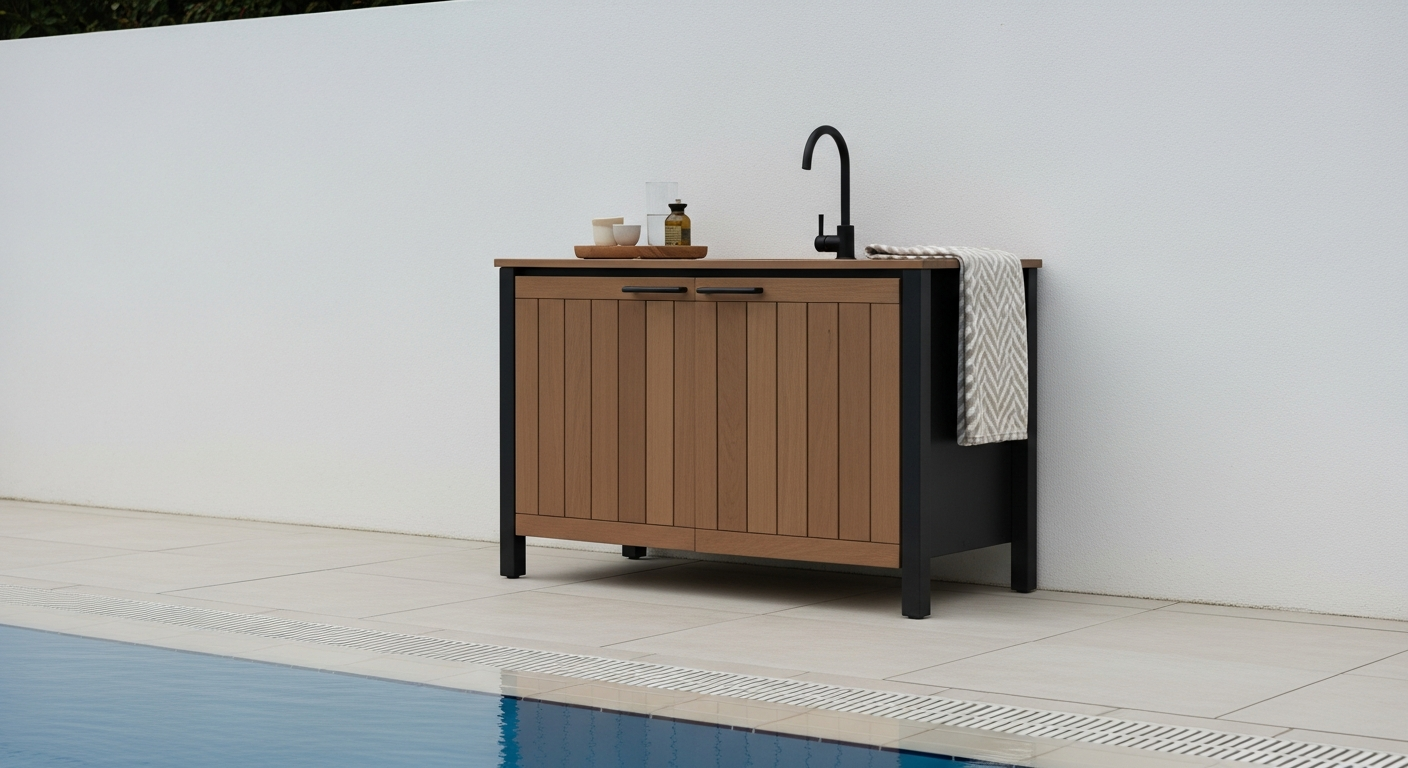
The critical mistake happens during the material selection phase, when a homeowner falls in love with a look without understanding its physical limitations. I often see clients bring photos of beautiful wood or powder-coated metal kitchens they saw online. They get emotionally invested in that aesthetic. My job is to explain that while we can achieve a similar look, we must use different materials. The key is to separate the desired 'look' from the required 'material'. We can find a marine-grade polymer in a color and texture that mimics wood, but it will perform for decades, whereas real wood would rot and warp in a few years.
Practical Answers for Building in Sarasota
Navigating the specifics of a build in Sarasota County involves more than just design. You have to account for local regulations, environmental factors, and the realities of construction in our area.
What Are the Permit Requirements for Outdoor Kitchens?
In Sarasota County, standalone cabinets or an outdoor kitchen cart with storage typically do not require a permit. However, the moment you introduce plumbing (a sink), electrical (a refrigerator or outlets), or a permanent gas line, you trigger the need for permits. The permit fee for this type of work can range from approximately $150 to $500, depending on the scope. A licensed contractor is required to pull these permits.
How Do HOAs in Sarasota Regulate Outdoor Kitchens?
Homeowner Associations, particularly in master-planned communities, have strict architectural review processes. They often regulate the location, size, color, and materials of any permanent outdoor structure, including kitchens. Before any work begins, you must submit a detailed plan to your HOA's architectural review committee for approval. Failure to do so can result in fines and a demand to remove the unapproved structure.
Addressing Pest Control in Outdoor Storage Design
Pest control is a design requirement, not an afterthought. In Florida, insects and rodents will exploit any opening. All cabinets, especially those intended for outdoor food storage or trash, must have tight-fitting doors with high-quality gaskets. We design systems with fully enclosed cabinet boxes and ensure there are no gaps between the cabinets and the countertop or backsplash, sealing every seam to create a barrier against pests.