As a specialist who has designed and installed outdoor living spaces across Sarasota for over 15 years, I've seen
As a specialist who has designed and installed outdoor living spaces across Sarasota for over 15 years, I've seen firsthand how teak performs in our unique coastal environment. The allure is undeniable, but the reality is that teak's success here hinges entirely on the grade of the wood, the construction method, and a non-negotiable maintenance regimen. A 'set it and forget it' approach, often marketed with teak, is a recipe for disappointment in a place with this much humidity, salt spray, and intense sun. The most critical factor is not the teak itself, but how it's integrated and protected from the outset.
- Grade A Teak is Non-Negotiable: Anything less (Grades B or C) lacks the natural oil content to resist moisture and will degrade rapidly in Sarasota's climate.
- Sealing is Mandatory, Not Optional: Unsealed teak will turn a silvery-gray, which some desire, but it also becomes more susceptible to mildew and staining from cooking grease.
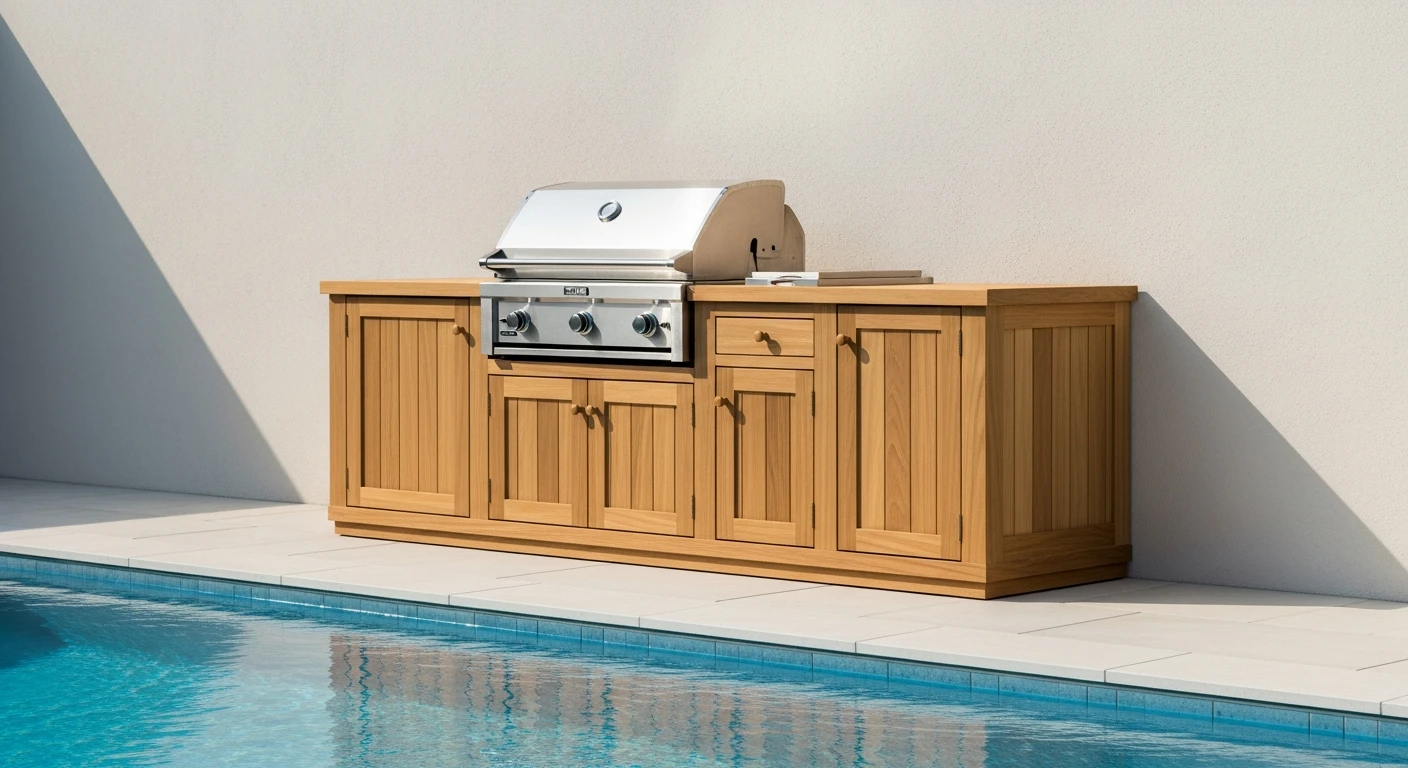
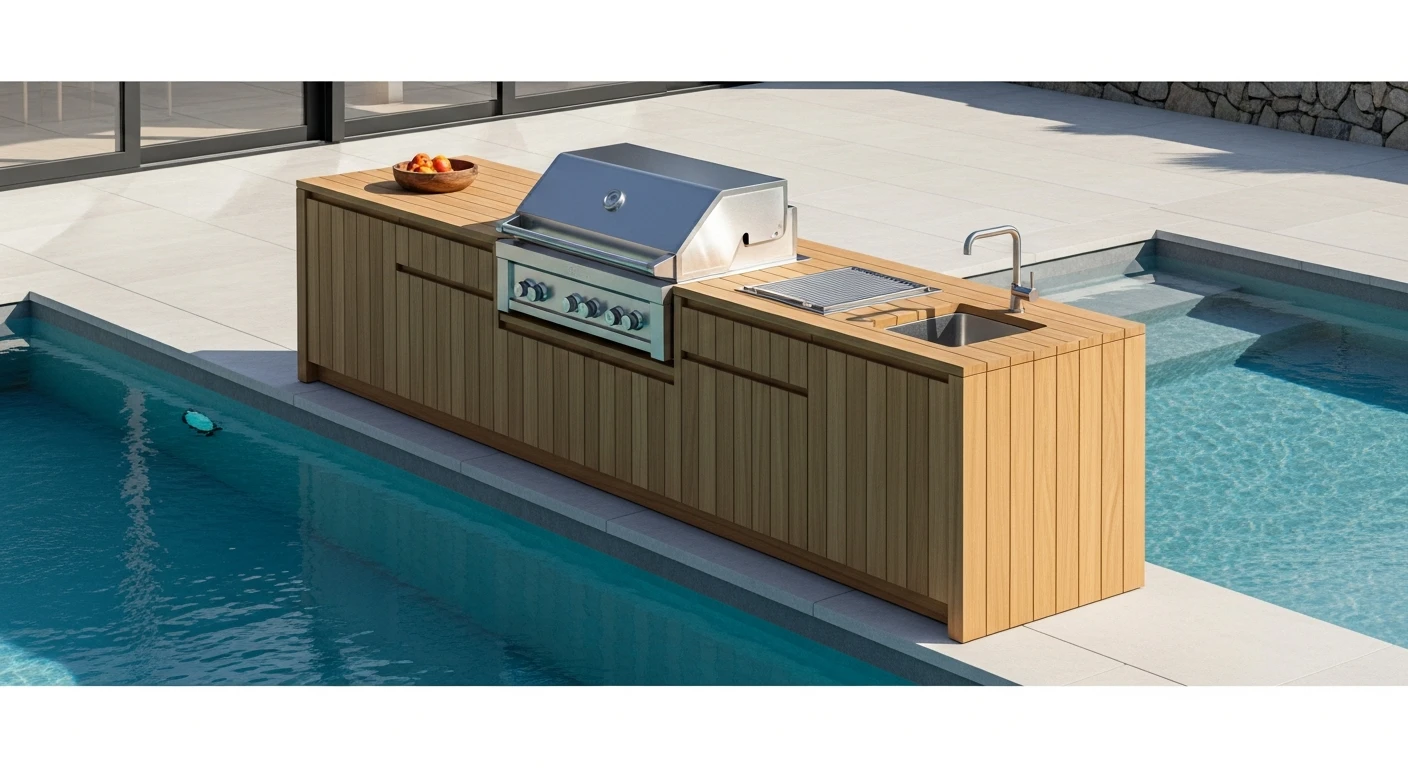
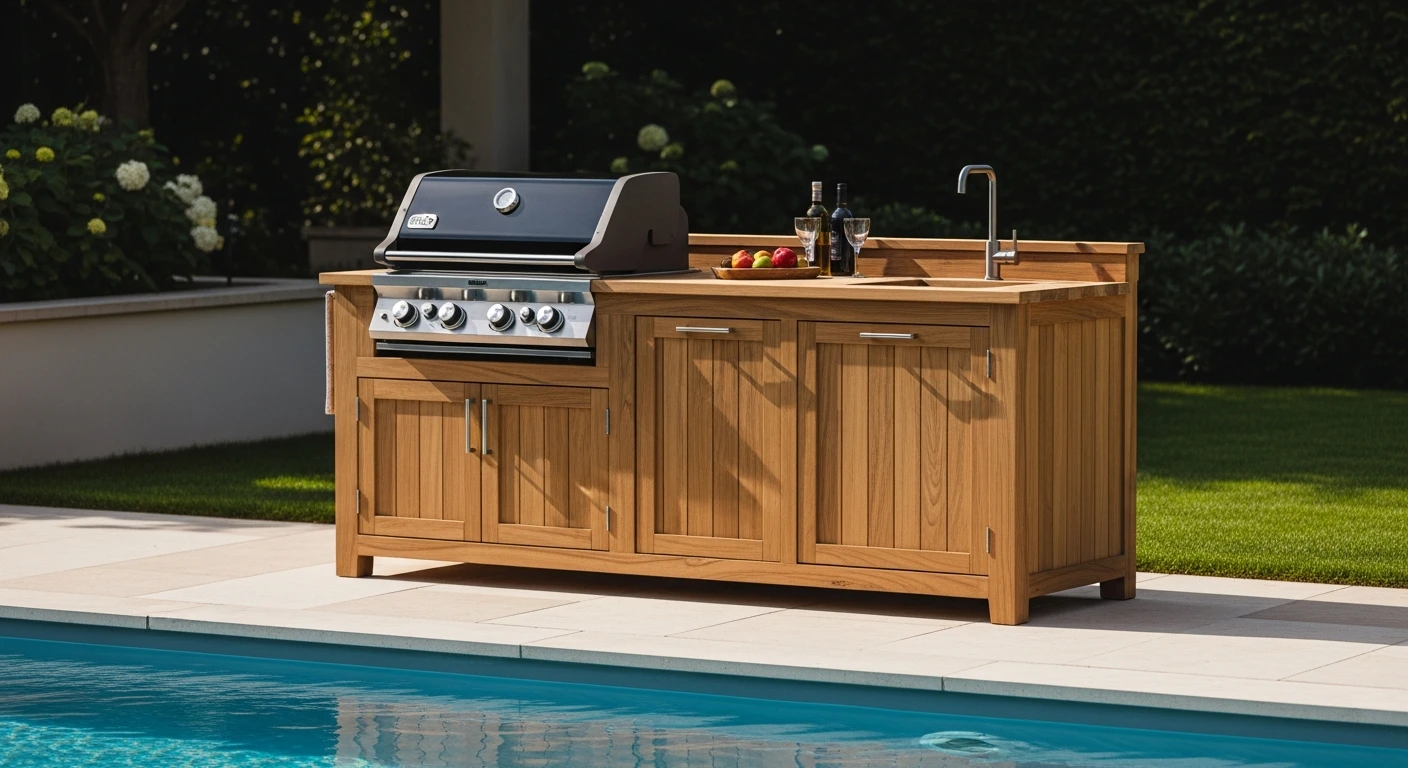
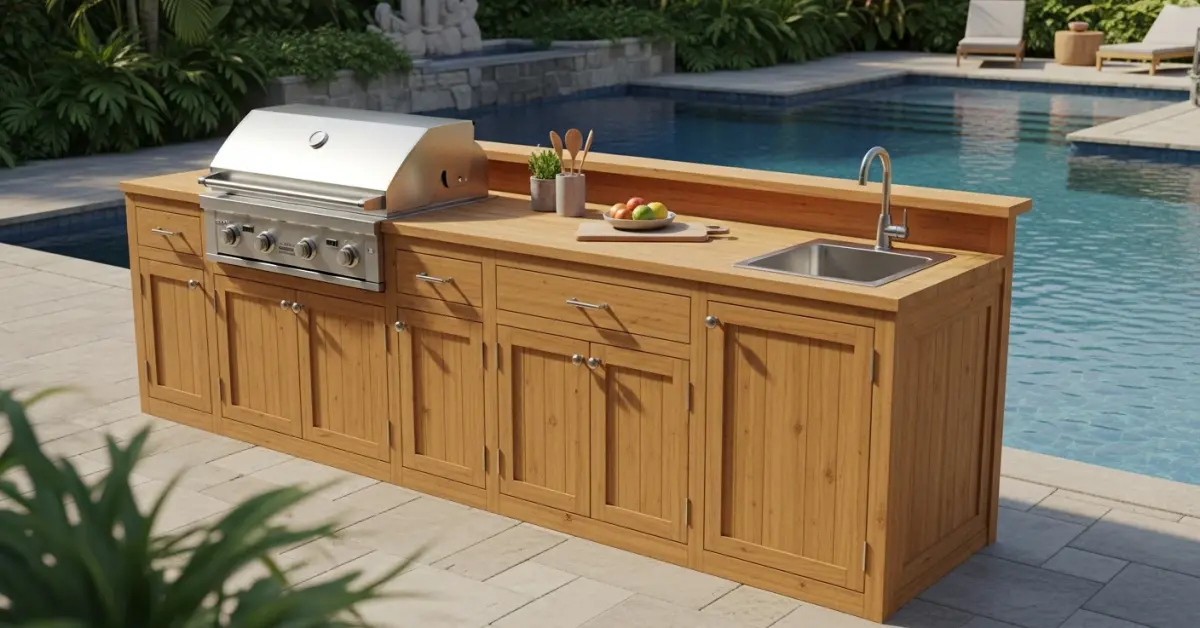
- Prefabricated Design Matters: Look for prefab BBQ islands where teak is used as an accent or door front, not as the primary structural countertop material, to minimize direct exposure.
- Installation Details are Crucial: Proper ventilation and avoiding direct ground contact are essential to prevent moisture trapping and rot, a common issue I see in lanais around the area.
The Critical Misconceptions About Teak in a Coastal Florida Climate
The biggest mistake I see homeowners make in Sarasota is equating teak's water-resistant reputation from the marine world with maintenance-free performance in a stationary outdoor kitchen. A boat deck is constantly washed down; an outdoor kitchen cabinet collects grease, pollen, and ambient moisture. This fundamental misunderstanding leads to costly and preventable degradation.
The belief that teak oil is a one-time application is another major pitfall. In our high-UV environment, oils and sealers break down much faster. A project I consulted on in a Siesta Key home had a beautiful custom teak island that was left untreated. Within 18 months, it wasn't just gray; it had developed black mildew spots that required aggressive sanding and chemical treatment to remove, effectively erasing the initial savings from skipping the professional sealing process.
The True Cost of a 'Weathered' Teak Look
Choosing to let teak weather to a natural silver-gray patina is a valid aesthetic choice, but homeowners must understand the trade-off. This weathered surface is more porous and susceptible to staining from food, wine, and grill splatter. The real cost is not in the initial purchase but in the deep cleaning and potential restoration required to remove stains that penetrate the unsealed wood. I advise clients that if they can't commit to sealing, they should avoid using teak as the primary food-prep or countertop surface.
Prefabricated Teak Kitchens vs. Custom Builds in Sarasota
A prefabricated outdoor kitchen offers a streamlined installation process, often at a lower initial cost than a full custom build. However, the quality of both the teak and the underlying structure is paramount. Many prefab outdoor kitchen islands use a veneer or lower-grade teak over a frame that may not be suited for our humidity, leading to warping or delamination.
A true custom build allows for the selection of certified Grade A, kiln-dried teak and construction techniques, like marine-grade epoxies and stainless steel fasteners, that are designed for this environment. The permit process with Sarasota County for a custom build involving gas and electrical is more intensive, with plan reviews potentially taking 4-6 weeks, but it ensures the structure is sound. The advantage of a well-designed prefabricated outdoor kitchen is that it often comes as a self-contained appliance unit, simplifying the permitting to just the utility hookups.
Criteria for Selecting a Prefab BBQ Island in This Market
- Frame Material: Insist on a welded aluminum or stainless steel frame. Powder-coated steel will eventually rust in our salt air.
- Component Brands: Ensure the grill, fridge, and other components are from reputable brands rated for outdoor use, as service calls for integrated appliances are complex.
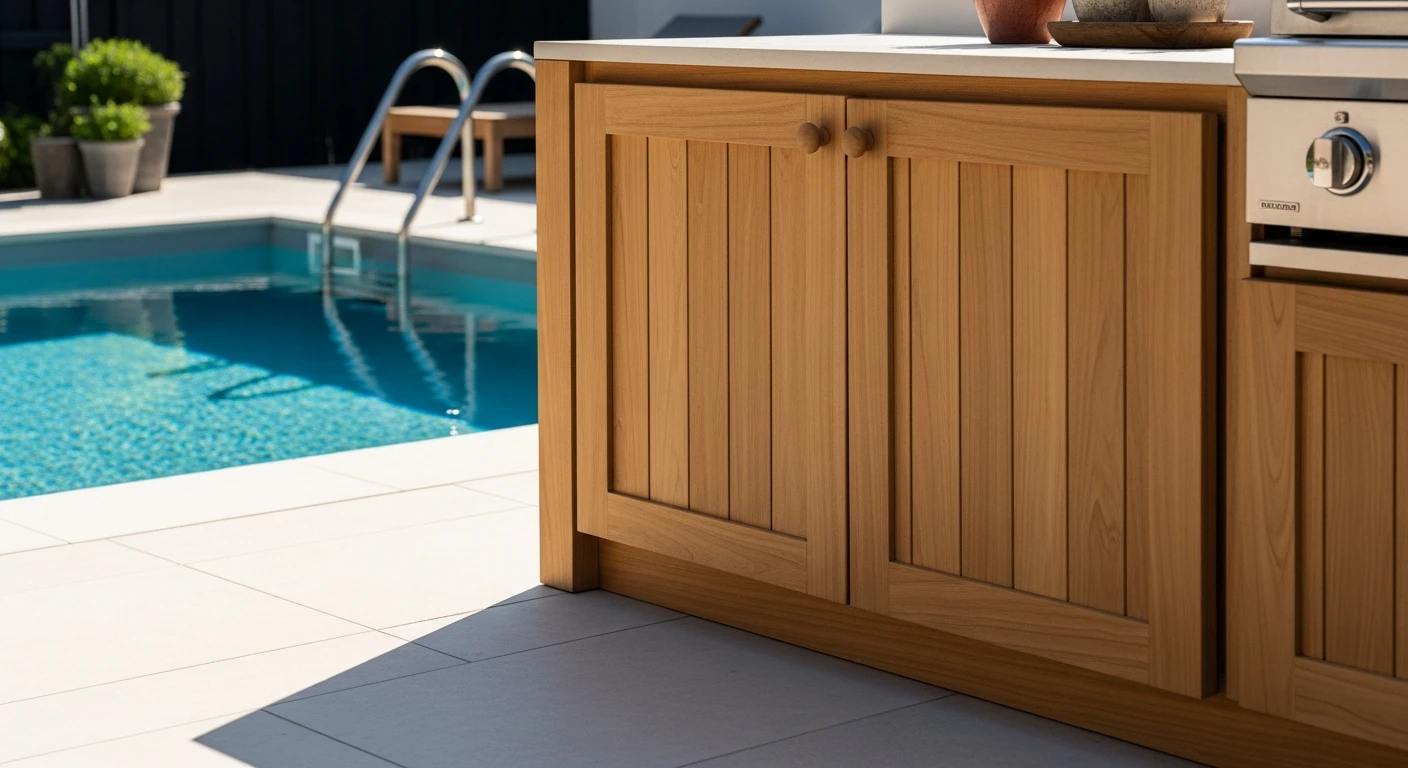
- Teak Integration: Look for designs where teak is used for cabinet doors or accents, not for the countertop. A granite, quartzite, or concrete countertop is far more practical.
- Ventilation: The unit must have proper ventilation panels for gas appliances, a requirement under the Florida Building Code that is sometimes overlooked in cheaper online models.
The Unseen Enemy: Humidity and Ground Contact
The most relentless threat to any outdoor wood project in Sarasota isn't the rain or the sun; it's the constant, year-round humidity. When a teak kitchen component, especially a prefabricated outdoor grill island, is placed directly on a paver patio or concrete lanai slab, it traps moisture underneath. This creates a perfect environment for mildew and eventually wood rot, even in a durable wood like teak.
I've had to repair several installations where the base of the teak cabinets wicked moisture, causing the wood to swell and the finish to fail. The solution is ensuring the structure is raised on non-corrosive, adjustable legs (like stainless steel or high-density composite) to allow for airflow and drainage. This small detail is the single most important factor for longevity and is often missing from budget-friendly prefab units.
Comparing Teak with Other High-End Outdoor Kitchen Materials
| Material | Upfront Cost | Maintenance Demand (Sarasota Climate) | Heat & UV Resistance |
|---|---|---|---|
| Grade A Teak | Very High | High (Annual Sealing Required) | Good (Color Fades) |
| Marine-Grade Polymer (HDPE) | High | Very Low (Cleaning Only) | Excellent |
| Powder-Coated Stainless Steel | High | Low (Risk of Scratching/Chipping) | Excellent |
When Teak is the Wrong Choice for Your Project
Despite its beauty, teak is not the right fit for every situation. If your outdoor kitchen will be in full, direct sun with no overhead cover from a lanai or roof, the maintenance cycle will be intense. The UV rays will break down sealers in as little as six to nine months. For these high-exposure locations, I strongly recommend marine-grade polymers or powder-coated stainless steel, which offer superior durability and color stability with a fraction of the upkeep.
Hiring a Contractor: A Vetting Checklist for Sarasota
Finding the right team to build or install your teak kitchen is crucial. The craftsmanship required for weather-resistant joinery and finishing is a specialized skill. A general contractor may not have the specific experience with high-end exterior woodwork.
- Verify Florida Contractor License: Check the Florida Department of Business and Professional Regulation (DBPR) portal to ensure their license (CGC, CBC, or a specialty license) is active and free of complaints.
- Ask for a Portfolio of Local, Aged Projects: Don't just look at brand-new installations. Ask to see photos of teak projects they completed in Sarasota 3-5 years ago to see how their work holds up.
- Confirm Liability and Workers' Comp Insurance: A Certificate of Insurance is mandatory. Without it, you are liable for any accidents on your property.
- Inquire About Their Teak Sourcing: A knowledgeable builder will be able to tell you the source and grade of their teak and why they chose it. Vague answers are a red flag.
- Review the Maintenance Plan: A professional will provide you with a detailed, written maintenance schedule and product recommendation as part of the project handover.
The Decision That Defines Your Kitchen's Lifespan
The single most important decision is made before a single piece of wood is ordered: choosing between an authentic, high-maintenance material like teak and a high-performance, lower-maintenance alternative. Many clients are initially sold on the aesthetic of teak without fully comprehending the commitment it requires in our specific climate.
I had a client in Lakewood Ranch who was adamant about an all-teak kitchen. We spent considerable time discussing the required annual maintenance, which involved light sanding and re-sealing at a cost of roughly $800-$1,200 per year. After seeing a 3-year-old HDPE kitchen we installed on Bird Key that looked brand new, they pivoted. They realized their priority was enjoying the space, not maintaining it. This honest assessment of lifestyle versus aesthetics is key.
The Moment Homeowners Make the Critical Error
The mistake happens during the design phase, when homeowners fall in love with an image from a magazine or website that was likely shot in a dry, temperate climate like California. They anchor their decision on this ideal image without translating it to the reality of a Sarasota summer, where humidity sits at 80% and the sun is relentless. The right approach is to start with the environment and your tolerance for maintenance, and then select the material that fits those parameters.
Navigating Local Regulations and Practicalities in Sarasota
Permitting for Prefab vs. Custom Outdoor Kitchens
In Sarasota County, any outdoor kitchen involving permanent gas, electrical, or plumbing lines requires a permit. A prefabricated outdoor kitchen island that simply plugs into an existing outdoor-rated outlet may not, but adding a natural gas line to it absolutely will. A full custom build is treated like a small construction project and requires detailed plans submitted to the Sarasota County Planning and Development Services for review, which includes ensuring compliance with wind load and electrical codes.
HOA Architectural Review in Communities like Palmer Ranch
Homeowners Associations, especially in master-planned communities, have strict architectural review committees. You must submit your plans, including materials, colors, and placement, for approval before any work begins. They often have specific rules about visible structures and may have a pre-approved palette of materials. Attempting to install even a prefab BBQ island without prior HOA approval can result in fines and a demand to remove the structure.
The Importance of a Licensed Gas Contractor
Under Florida law, only a licensed plumber or a certified gas contractor can legally run and connect a natural gas or propane line. This is not a task for a general handyman. An improper connection is a serious fire hazard. When getting quotes, ensure the proposal explicitly states that a licensed gas professional will perform this portion of the work and that the cost for the required pressure test and inspection is included.