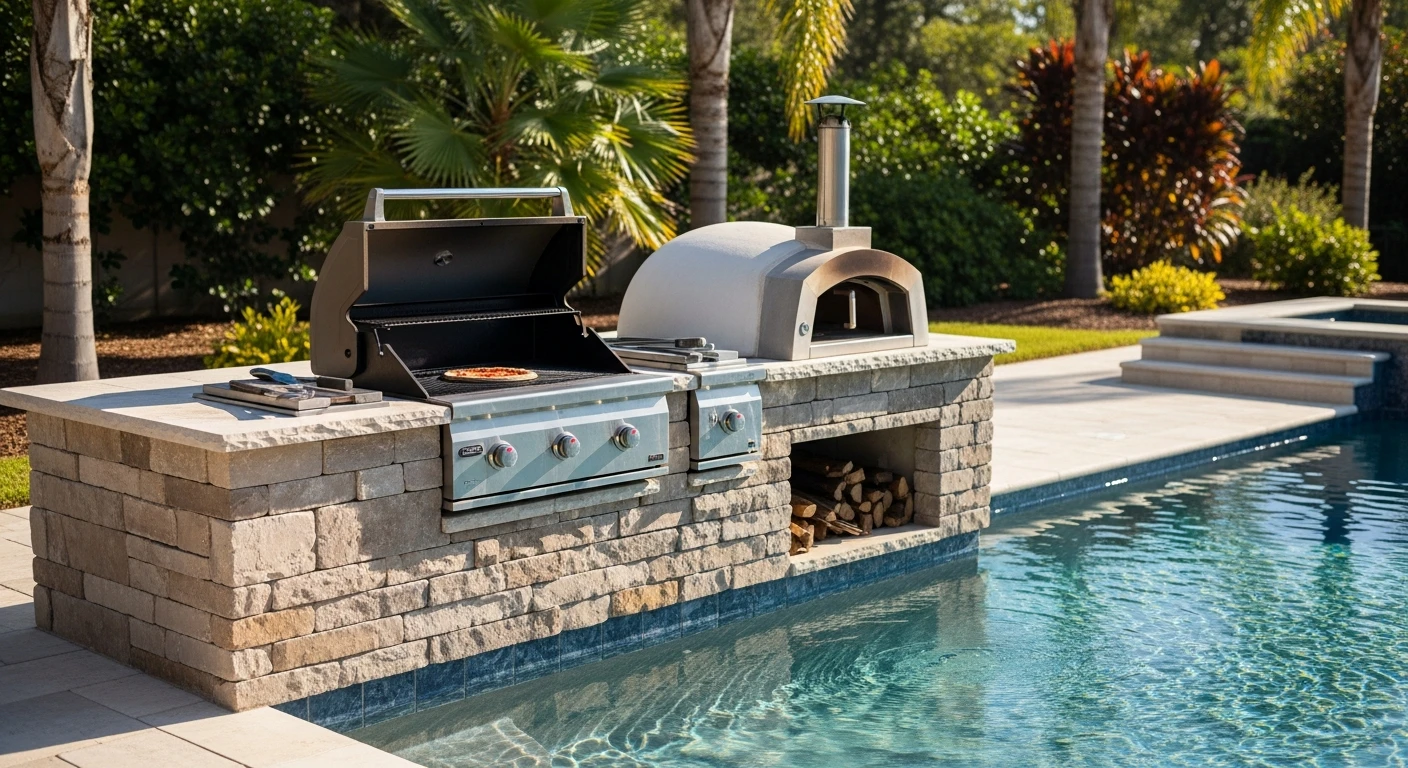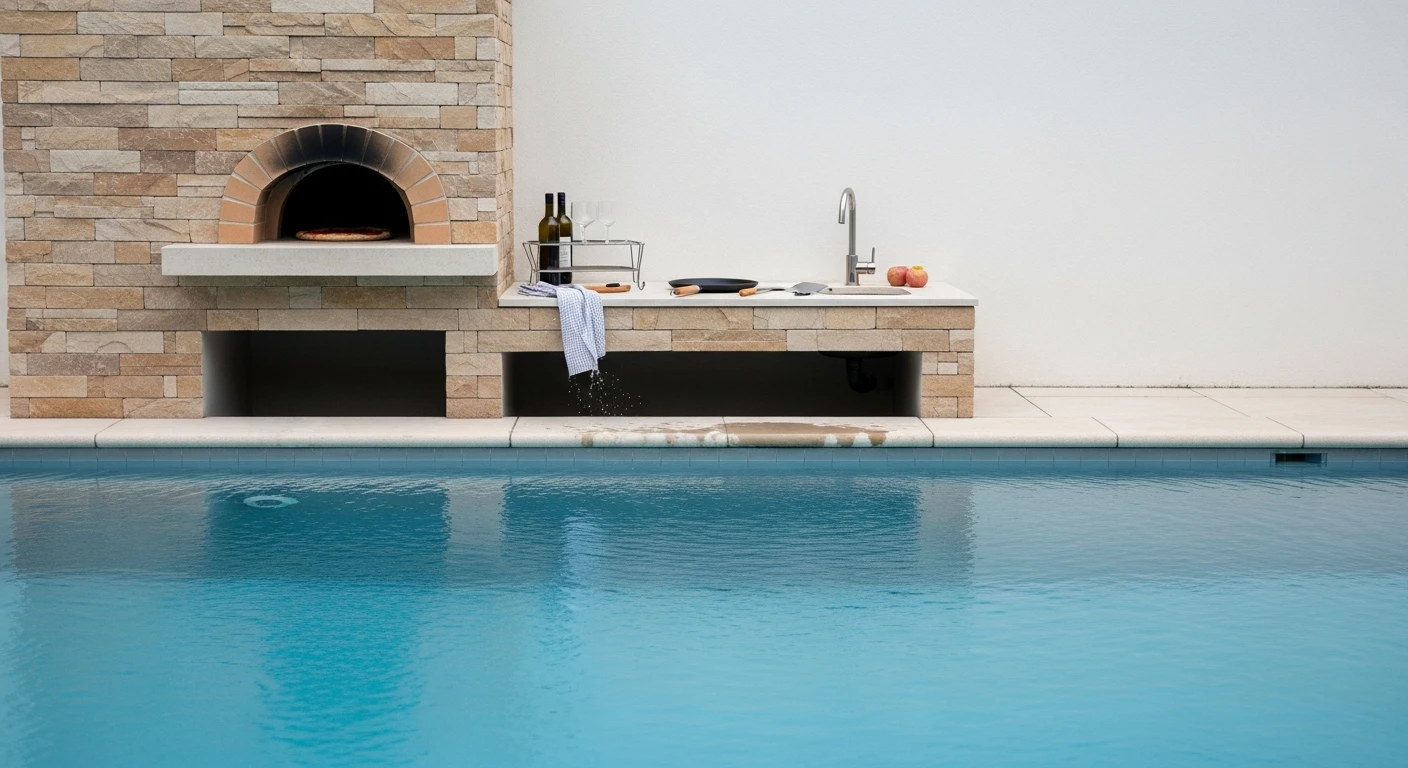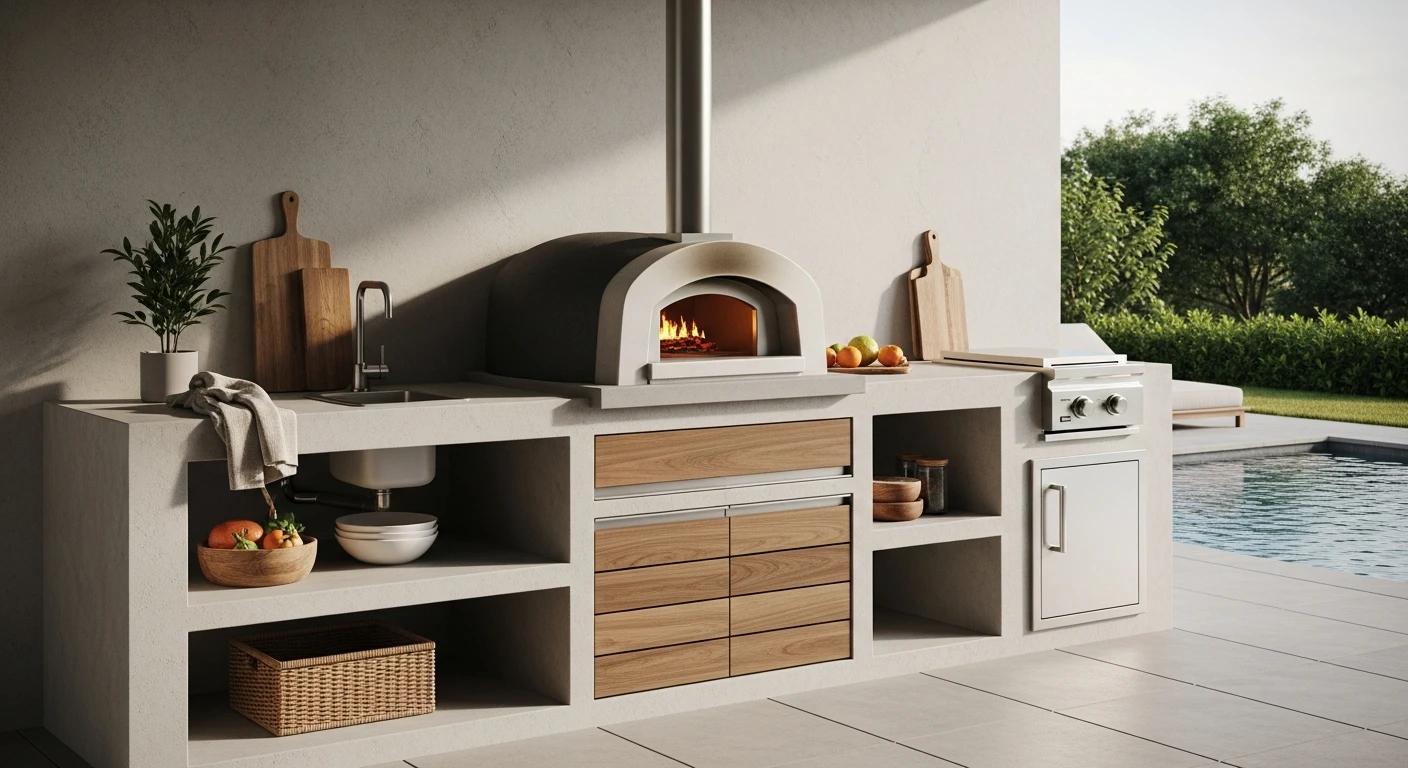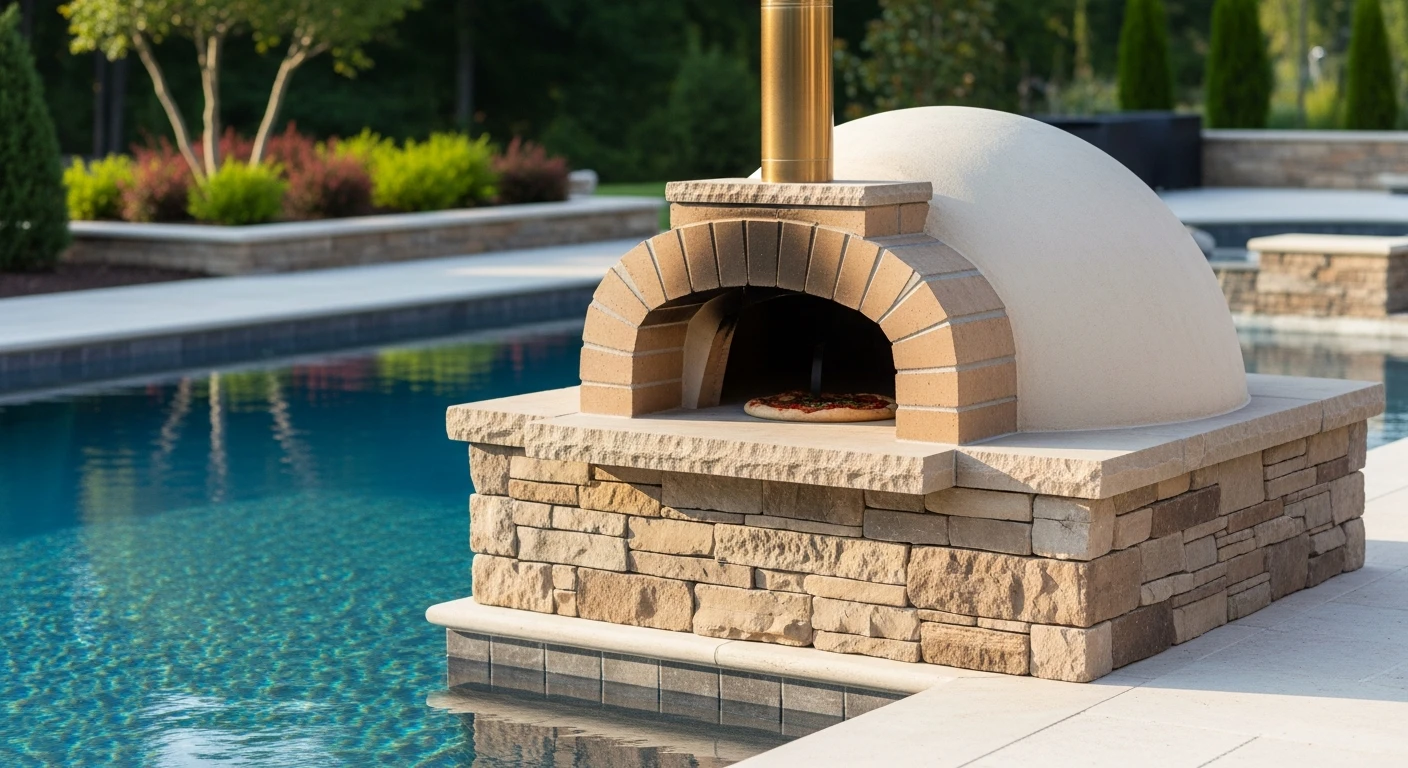
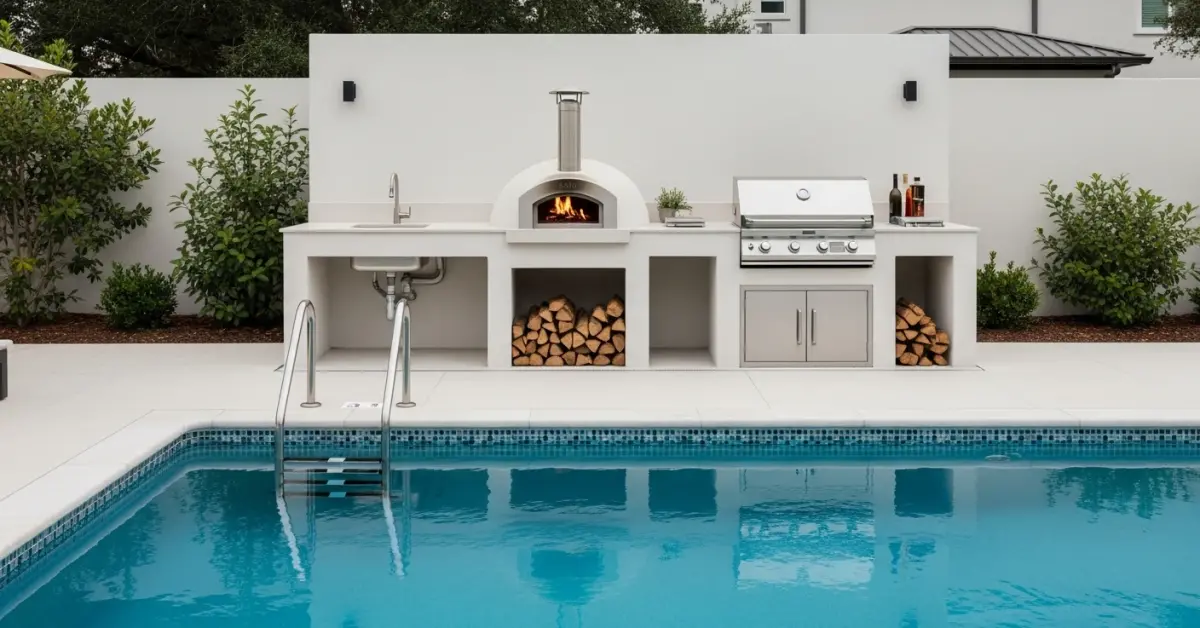
Executive Summary: The Sarasota Approach to Integrated Outdoor Cooking
In my 15 years building high-end outdoor kitchens, the projects in Sarasota that succeed long-term all share a common
In my 15 years building high-end outdoor kitchens, the projects in Sarasota that succeed long-term all share a common trait: they are designed for our specific coastal environment, not just for aesthetics. Integrating a high-temperature pizza oven with a gas grill introduces competing demands for ventilation, countertop durability, and utility placement. The key is treating the kitchen as a system engineered to resist salt air, humidity, and intense UV exposure, which is a fundamentally different challenge than building the same setup in an inland city.
- Material Longevity: Non-porous materials like Dekton or properly sealed high-grade granite are essential to prevent staining and thermal shock from the pizza oven.
- Appliance Grade: 316 marine-grade stainless steel is the only viable long-term choice for hardware and appliances, especially west of US-41. Standard 304 stainless will show surface rust within two seasons.
- Ventilation Engineering: A standard vent hood is insufficient. The design must account for Sarasota's prevailing breezes to prevent smoke from engulfing the seating area.
- Utility Planning: Gas line sizing must accommodate the simultaneous high-BTU draw of a professional grill and a gas-fired pizza oven, a detail often missed in initial quotes.
The Planning Failures That Drive Up Costs in Sarasota
The most common missteps I see in Sarasota projects happen long before the first paver is laid. Homeowners focus on the layout and appliance models, underestimating the technical challenges our climate presents. The assumption that an outdoor kitchen is just an indoor kitchen moved outside leads to expensive, premature failures.
The Ventilation Miscalculation: Smoke, Soot, and Unhappy Guests
The biggest failure is under-specifying the ventilation system. A wood-fired pizza oven produces intense, particle-heavy smoke that behaves differently than grill smoke. In a typical lanai or covered patio, especially in neighborhoods like The Lake Club where outdoor spaces are expansive but semi-enclosed, inadequate ventilation creates a permanent layer of soot on ceilings and furniture. The critical error is failing to model the airflow based on the property's orientation to prevailing coastal breezes. I was called to a project on Siesta Key where a beautiful travertine ceiling was permanently stained because the vent hood was powerful but positioned incorrectly; it fought the sea breeze instead of working with it, creating a smoke vortex right over the dining table.
The Construction Process in Practice
Building an integrated outdoor kitchen in Sarasota County is a multi-stage process governed by specific building codes and, often, stringent HOA rules. It's not a simple weekend project; it's a structural addition that requires permits, inspections, and licensed trades for gas and electrical work.
Key Milestones for a Sarasota Homeowner
- HOA Architectural Review: Before any plans are submitted to the county, they must be approved by your HOA's architectural review committee. In communities like Palmer Ranch or Lakewood Ranch, this can take 30-60 days and often includes specific restrictions on materials and exterior finishes.
- Permit Submission: Your contractor will submit structural, electrical, and plumbing/gas plans to the Sarasota County Planning and Development Services. This process typically takes 4-6 weeks for approval, assuming no revisions are required.
- Footing and Utility Inspections: The initial construction involves pouring a concrete footing and running underground gas and electrical lines. These must be inspected by the county before they are covered.
- Final Inspection: Once the structure is complete and all appliances are installed and connected, a final inspection is required to close the permit. This verifies that all work meets the Florida Building Code, including proper gas line connections and GFCI protection for all outdoor outlets.
Comparing an Integrated Kitchen to Simpler Alternatives
A fully integrated outdoor kitchen with a pizza oven and grill is a significant investment. It's crucial to weigh this against more straightforward, less permanent options to ensure it aligns with your lifestyle and budget.
| Feature | Integrated Kitchen with Pizza Oven & Grill | High-End Freestanding Grill & Pizza Oven Cart | Basic Built-in Grill Island (No Pizza Oven) |
|---|---|---|---|
| Upfront Cost | $30,000 - $80,000+ | $8,000 - $20,000 | $10,000 - $25,000 |
| Durability in Salt Air | High (with marine-grade materials) | Low to Medium (casters, frames, and covers are failure points) | Medium to High (dependent on frame and finish materials) |
| Resale Value Impact | Significant positive impact | Minimal (considered personal property) | Moderate positive impact |
| HOA Compliance | Requires formal architectural review | Typically no approval needed | Often requires approval, but simpler than a full kitchen |
When a Full Outdoor Kitchen is the Wrong Choice
An integrated kitchen is not the right fit for everyone. If you entertain infrequently or plan to move within the next three to five years, the return on investment is questionable. The maintenance commitment is also higher. For these homeowners, a high-quality freestanding grill from a brand like Weber or Napoleon paired with a portable pizza oven like an Ooni offers 80% of the functionality at a fraction of the cost and with zero permanent commitment. It's a pragmatic choice I often recommend to clients who are unsure about their long-term plans.
A Safe Hiring Checklist for Your Sarasota Project
Choosing the right contractor is the single most important decision you will make. The difference between a lasting investment and a failing one often comes down to the builder's local experience and attention to detail.
- Verify Florida State License: Use the Florida Department of Business and Professional Regulation (DBPR) portal to confirm your contractor holds a valid Certified General (CGC), Building (CBC), or Residential (CRC) license. A handyman or landscape company cannot legally pull the necessary permits for this type of structural work.
- Request Proof of Insurance: The contractor must carry both General Liability and Workers' Compensation insurance. Ask for the certificates and verify they are current.
- Ask for Local References: Specifically ask for addresses of projects completed in coastal areas like Lido Key or Casey Key. Go see them. Look for signs of rust on stainless steel doors, cracks in countertops, or soot staining.
- Review the Materials Specification Sheet: The contract should explicitly state the grade of stainless steel (316 is the target), the type and thickness of the countertop material, and the brand of all components. Vague terms like “high-quality granite” are a red flag.
- Confirm Who Handles HOA Submissions: An experienced local contractor will manage the entire HOA approval process. If they ask you to handle it, it suggests they are unfamiliar with the specific requirements of Sarasota's planned communities.
- Inquire About Hurricane Wind Load Compliance: Any permanent structure, including the housing for a vent hood or a pergola over the kitchen, must comply with Florida's wind load requirements. The contractor should be able to explain how their design meets these codes.
Decisions That Ultimately Determine the Outcome
After overseeing dozens of these projects, I've seen that success hinges on a few key decisions made early in the process. It's less about the brand of grill you choose and more about the foundational choices that are impossible to change later.
The Moment Homeowners Get It Wrong: Prioritizing Appliances Over Structure
The most common mistake is falling in love with a specific grill or pizza oven and trying to design the kitchen around it, often forcing compromises on more critical elements. A client in Osprey was adamant about a specific Italian wood-fired oven that was extremely heavy. Their initial contractor planned a standard concrete block base. I explained that on our sandy soil, that weight required a monolithic, steel-reinforced footing to prevent cracking and settling. The right approach is to finalize the structural plan and material choices first, then select appliances that fit the engineered design. This ensures the foundation, countertop, and ventilation system are built for longevity, not just to accommodate a trendy appliance.
Practical Answers for Building in Sarasota
Navigating the local regulations and environmental factors is essential for a smooth project. Here are answers to common questions that are specific to building an outdoor kitchen in this area.
How Does Sarasota County Permitting Handle Vent Hoods?
Sarasota County treats any permanently installed vent hood as part of the structure. This means it must be rated to withstand hurricane-force winds (the specific requirement depends on your exact location and exposure category). The mounting and ducting must be detailed in the permit application and will be inspected. Simply buying a residential-grade hood and screwing it to the wall will not pass inspection.
What Are Common HOA Restrictions in Planned Communities?
In communities like Lakewood Ranch or The Founders Club, HOAs have strict architectural guidelines. Common restrictions for outdoor kitchens include mandating that the exterior finish (stucco, stone) matches the main house exactly, prohibiting certain countertop colors, and dictating the location and visibility of the structure from the street or golf course. These rules are non-negotiable and must be incorporated into the design from day one.
Why is Electrical Work So Critical for an Outdoor Kitchen?
The Florida Building Code requires Ground Fault Circuit Interrupter (GFCI) protection for all outdoor outlets to prevent electrical shock in a wet environment. For an outdoor kitchen, this applies to the refrigerator, rotisserie motor, lighting, and any convenience outlets. Furthermore, all wiring must be rated for outdoor/underground use, and conduits must be properly sealed to prevent water intrusion. This is not a DIY-friendly task; it requires a licensed electrician who understands outdoor code requirements to pass inspection and ensure safety.