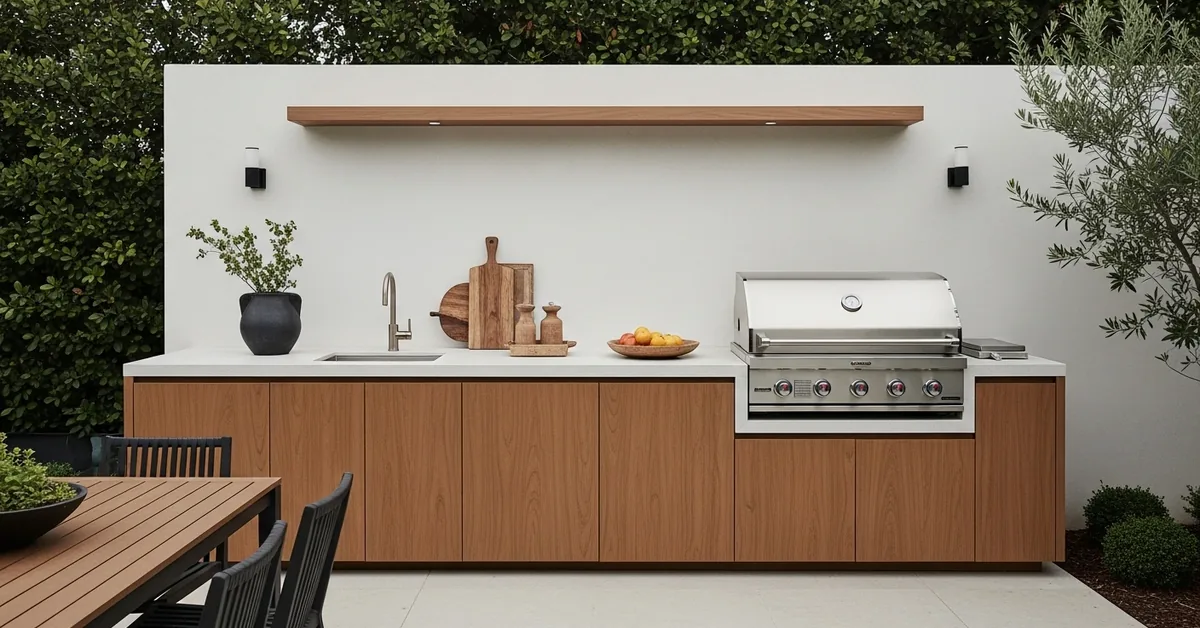
An Expert's Summary on Building Outdoor Kitchens in Sarasota
In my 15 years designing and building outdoor living spaces in Florida, I've learned that a successful Sarasota project
In my 15 years designing and building outdoor living spaces in Florida, I've learned that a successful Sarasota project is defined by its resistance to our specific environmental pressures: intense UV exposure, high humidity, and salt spray. The most common failure I see is not a design flaw but a material specification error—choosing standard outdoor-grade materials that simply degrade within a few years in our coastal climate. A true outdoor living kitchen here is an extension of the home, which means it must be built to the same, if not higher, standards of durability.
- The most critical material decision is specifying 316L (marine-grade) stainless steel for all appliances and hardware to prevent rust and corrosion.
- Any covered structure must be engineered to meet or exceed Sarasota County's wind load requirements, which can add 15-20% to the structural costs compared to inland Florida projects.
- Permitting through the Sarasota County Planning and Development Services for projects involving new gas lines, electrical, and plumbing typically adds a 4-6 week delay to the project timeline.
- Prefabricated or modular outdoor kitchens offer speed but often lack the long-term durability of custom-built masonry, which better withstands ground moisture and thermal expansion.
The Planning Failures That Drive Up Costs After the Contract Is Signed
The most significant post-contract cost increases I've witnessed stem from underestimating the site preparation and utility runs. Homeowners often focus on the kitchen's finishes—the granite, the grill, the refrigerator—but neglect the foundational work required to support them on Sarasota's sandy soil and connect them to the home's infrastructure.
Running new gas lines for a high-BTU grill, dedicated electrical circuits for refrigeration and lighting, and plumbing for a sink isn't a simple add-on. It often involves trenching across established landscaping, core drilling through the home's foundation, and navigating existing irrigation or pool lines. A budget that doesn't account for at least $3,500 - $6,000 for utility work on a standard project is unrealistic and a setup for a painful change order.
The Most Expensive Oversight: Ignoring HOA Architectural Guidelines
I worked with a client in a gated community off University Parkway who had a beautiful design for a covered outdoor kitchen. They signed the contract and we were ready to order materials. The problem? They hadn't submitted the plans to their HOA's Architectural Review Committee (ARC). The ARC rejected the proposed roofline and exterior stone, stating it didn't match the community's specified aesthetic. This forced a complete redesign, adding weeks of delay and thousands in architectural and material costs before a single shovel hit the ground. Always get written ARC approval before committing to any contractor.
The Practical Process: From Design to First Meal
Building a permanent outdoor kitchen is a construction project, not a furniture purchase. The process begins with a site evaluation to determine setbacks, utility access points, and sun exposure. From there, we move to a detailed design that integrates the homeowner's lifestyle needs with the structural and regulatory requirements of Sarasota County.
Once a design is finalized, the permitting process begins. This involves submitting engineered drawings to the county for review, covering structural, electrical, and plumbing/gas systems. After permits are issued, site work commences, followed by foundation and masonry, utility installation, cabinet and countertop setting, and finally, appliance installation and testing. Each key stage requires a county inspection before proceeding to the next.
Key Selection Criteria for Sarasota Homeowners
- Material Durability Over Aesthetics: Prioritize non-porous materials like marine-grade polymer or sealed concrete for cabinetry over wood, which will warp and rot in our humidity. For countertops, choose dense, non-porous stones like granite over marble, which can etch from acidic marinades and rain.
- Contractor Licensing Verification: Ensure your contractor holds a valid Certified Building Contractor (CBC) or Certified General Contractor (CGC) license from the Florida Department of Business and Professional Regulation (DBPR). A handyman or specialty cabinet installer cannot legally pull permits for a project involving structural, electrical, or plumbing work.
- Wind Load Engineering: If your project includes a roof or pergola, demand to see the wind load calculations in the engineering plans. A structure not built to withstand hurricane-force gusts is a liability, not an asset.
- Appliance Serviceability: Choose appliance brands that have authorized service technicians in the Sarasota-Bradenton area. An obscure, high-end online brand can become a useless metal box if no one local can repair it.
Comparing Approaches to Your Outdoor Kitchen Project
The decision between a fully custom-built kitchen, a modular system, or a simple prefabricated island comes down to budget, timeline, and long-term performance expectations. Each has distinct advantages and disadvantages in the Sarasota market.
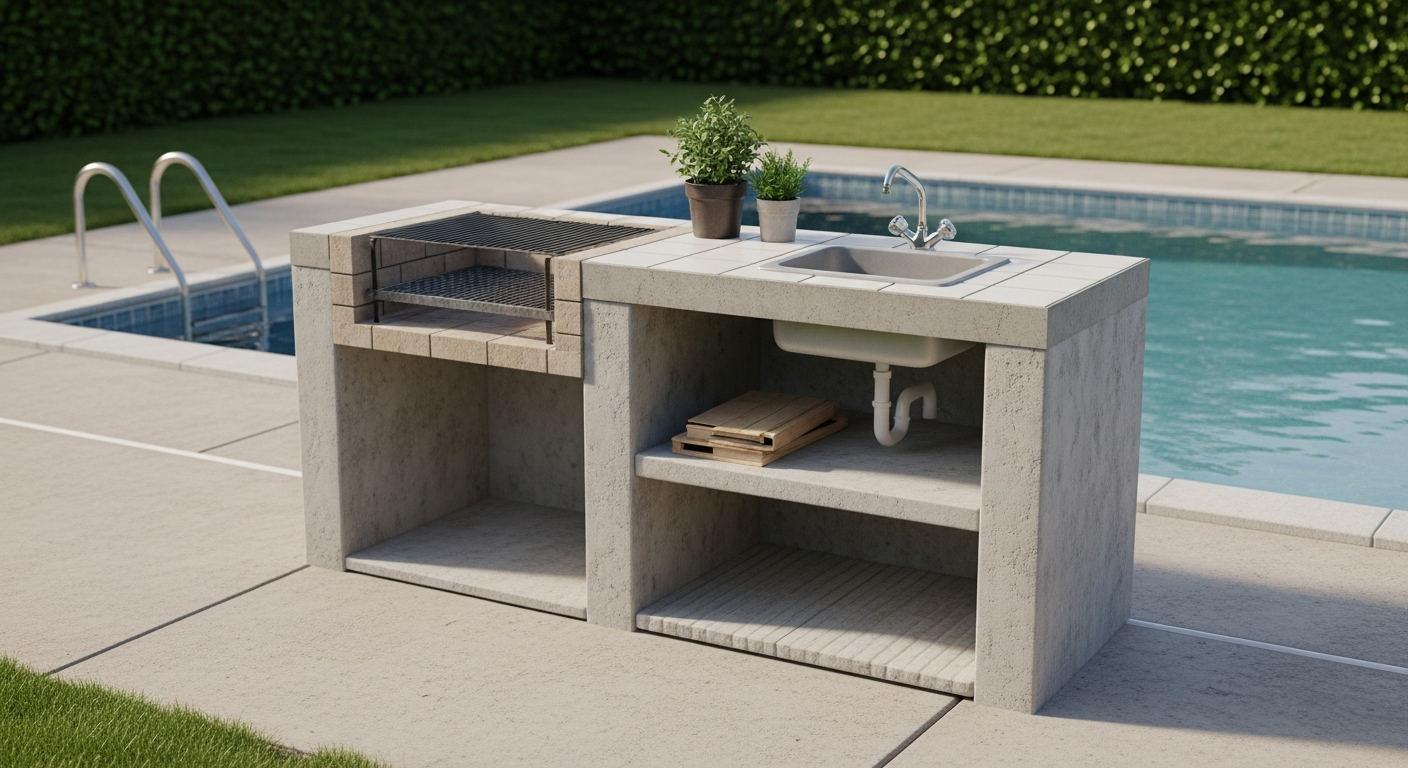
| Feature | Custom Masonry/Concrete Block | Modular System | Prefabricated BBQ Island |
|---|---|---|---|
| Durability in FL Climate | Excellent (highest resistance to moisture and pests) | Good (depends on frame material; aluminum is best) | Fair to Poor (often uses lower-grade steel and stucco) |
| Design Flexibility | Unlimited | High (many configurations and finishes) | Very Limited (fixed shapes and sizes) |
| HOA Approval Likelihood | Highest (can be tailored to match home exactly) | Moderate (finish options may be limited) | Lowest (can look like an afterthought) |
| Typical Project Timeline | 8-16 weeks | 4-8 weeks | 1-2 weeks |
When a Custom-Built Kitchen Is the Wrong Choice
Despite its durability, a fully custom-built outdoor kitchen is not the right fit for every situation. If you plan to sell your home within the next 2-3 years, you are unlikely to recoup the full investment. A high-end custom project's value is subjective and may not translate to a dollar-for-dollar increase in appraisal value. In this scenario, a more modest, high-quality modular bbq outdoor kitchen provides the desired functionality without the significant capital outlay, making it a smarter financial decision.
A Safe Hiring Checklist for Your Sarasota Project
Hiring the right team is the single most important factor for success. Over the years, I've seen homeowners get into trouble by skipping due diligence. Use this checklist as a non-negotiable minimum before signing any contract.
- Verify State License and Insurance: Use the DBPR portal to confirm the contractor's license is active and check for proof of general liability and worker's compensation insurance. Ask to be added as an additional insured on their policy.
- Check Sarasota County Permit History: You can search the Sarasota County permit portal online to see a contractor's history. A reputable builder will have a long list of successfully closed permits. A lack of history or a string of open/expired permits is a major red flag.
- Insist on a Detailed, Itemized Scope of Work: A contract that says "Build outdoor kitchen for $50,000" is worthless. It must detail every component: appliance model numbers, countertop material and thickness, footing specifications, and a clear payment schedule tied to project milestones.
- Confirm Who Is Pulling the Permits: The licensed contractor whose name is on the contract must be the one pulling the permits. If they ask you, the homeowner, to pull a permit, it means they are not properly licensed or insured to do the work.
- Discuss Hurricane Preparation: Ask the contractor what their plan is for securing the job site and materials if a tropical storm or hurricane watch is issued during construction. A professional will have a clear, established protocol.
The Decisions That Define a Project's Success or Failure
After overseeing dozens of these projects, I can pinpoint the decisions that lead to satisfaction versus regret. The most successful outcomes are achieved by clients who prioritize the 'unseen' infrastructure—the foundation, the waterproofing, the utility grading—as much as the visible finishes. They understand that the grill can be replaced, but a cracked foundation or a corroded frame is a catastrophic failure.
A client on Bird Key serves as a perfect example. They were deciding between two proposals for a large, covered outdoor kitchen. One was significantly cheaper but used a prefabricated steel frame system. The other, more expensive proposal, specified a concrete block base with a poured concrete countertop substrate. Despite the higher cost, they chose the masonry option. Five years later, after multiple tropical storms and constant exposure to the salt air from Sarasota Bay, their kitchen is pristine. A neighbor who chose the cheaper steel frame option is now dealing with rust bleed-through and stucco cracks.
The Moment Most Homeowners Get It Wrong
The critical mistake happens during the appliance selection phase. Homeowners get drawn to flashy features on grills and smokers without first verifying the material grade. They assume "stainless steel" is a single category, but it's not. Standard 304-grade stainless steel, common in many big-box store appliances, will show surface rust (tea staining) in Sarasota's salty air within a year. You must insist on 316L marine-grade stainless for all metal components, from the grill housing to the cabinet pulls. It's a non-negotiable requirement for longevity on the coast.
Practical Answers for Operating in Sarasota
Navigating the local regulations and environment is key to a smooth project. These are the questions that come up repeatedly on my job sites here in Sarasota County.
How are permits for gas lines handled?
Any new natural gas or propane line installation for an outdoor kitchen requires a permit and must be performed by a licensed mechanical or plumbing contractor. The process involves a pressure test inspection by a Sarasota County official before the line can be buried or concealed. This is a critical safety step to ensure there are no leaks; expect this inspection to be a firm checkpoint in your project timeline.
What are common HOA restrictions for covered kitchens?
Most HOAs in communities like Palmer Ranch or The Lake Club have specific covenants regarding "accessory structures." For a covered outdoor kitchen, this typically includes restrictions on roof pitch, roofing material (must match the main house), exterior color palettes, and maximum height. Furthermore, any new structure must respect property line setbacks, which can be stricter than the county's own requirements.
Do I need a licensed electrician for outdoor outlets?
Yes, absolutely. All outdoor electrical work, including outlets for refrigerators, lighting, and rotisseries, must be performed by a licensed electrical contractor and permitted. Florida Building Code requires all outdoor outlets to be GFCI (Ground Fault Circuit Interrupter) protected and installed in weatherproof enclosures. This is not a DIY job; improper wiring in a wet environment is an extreme safety hazard.