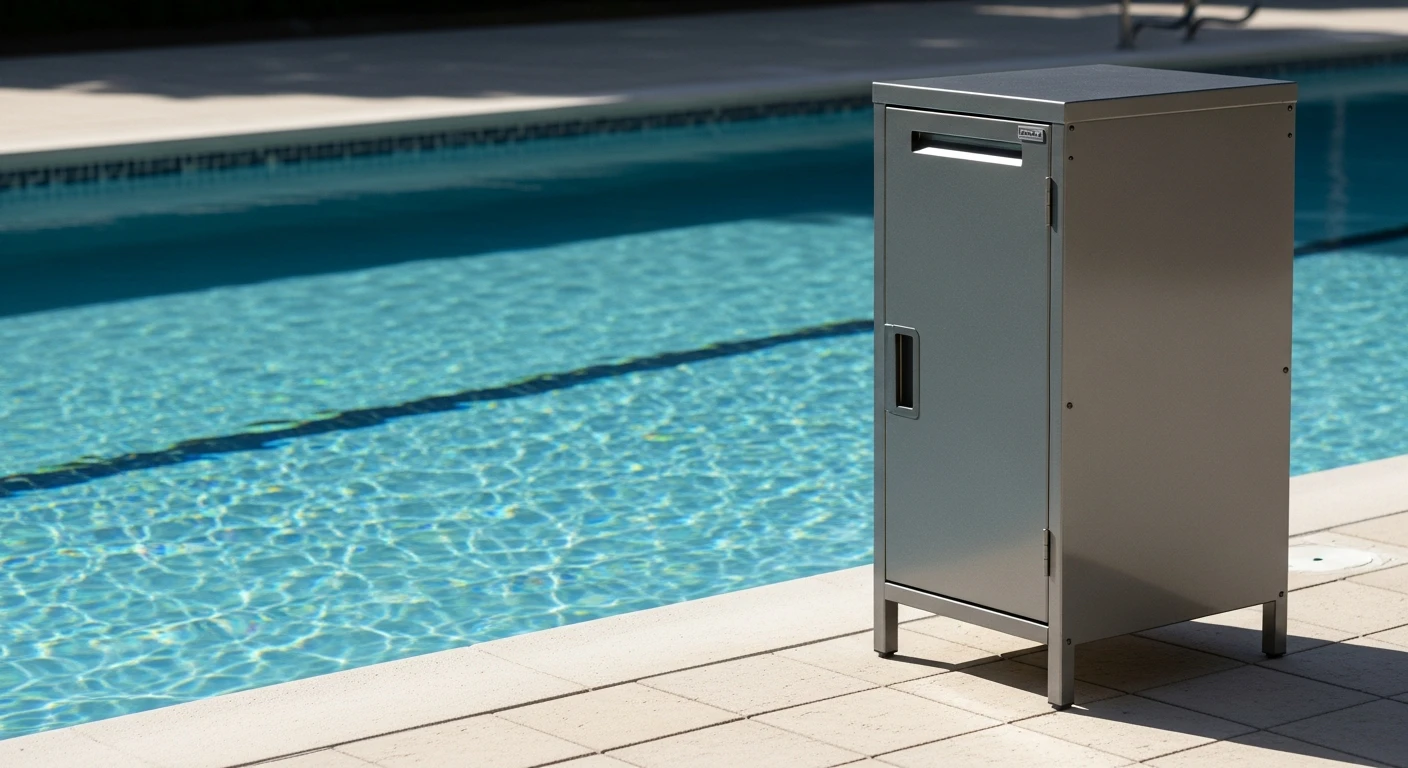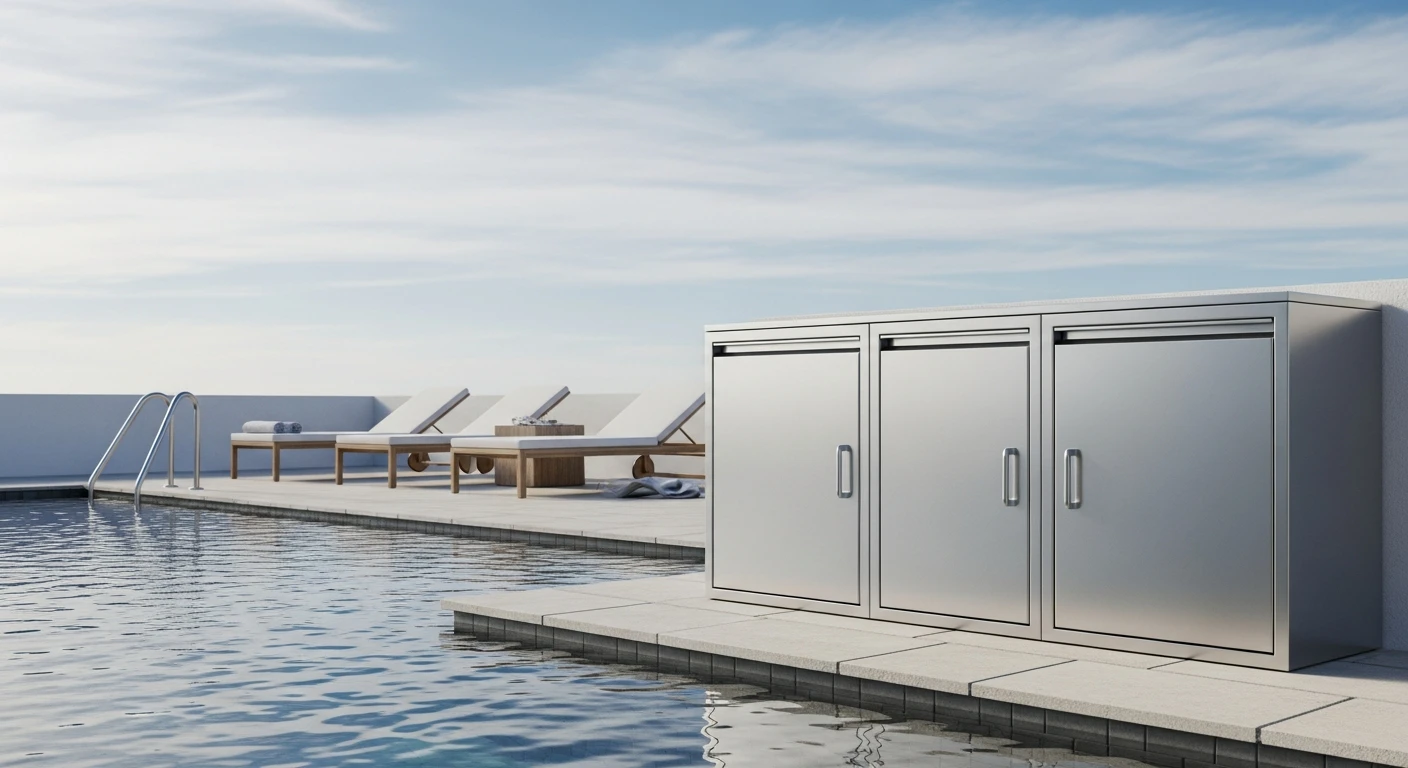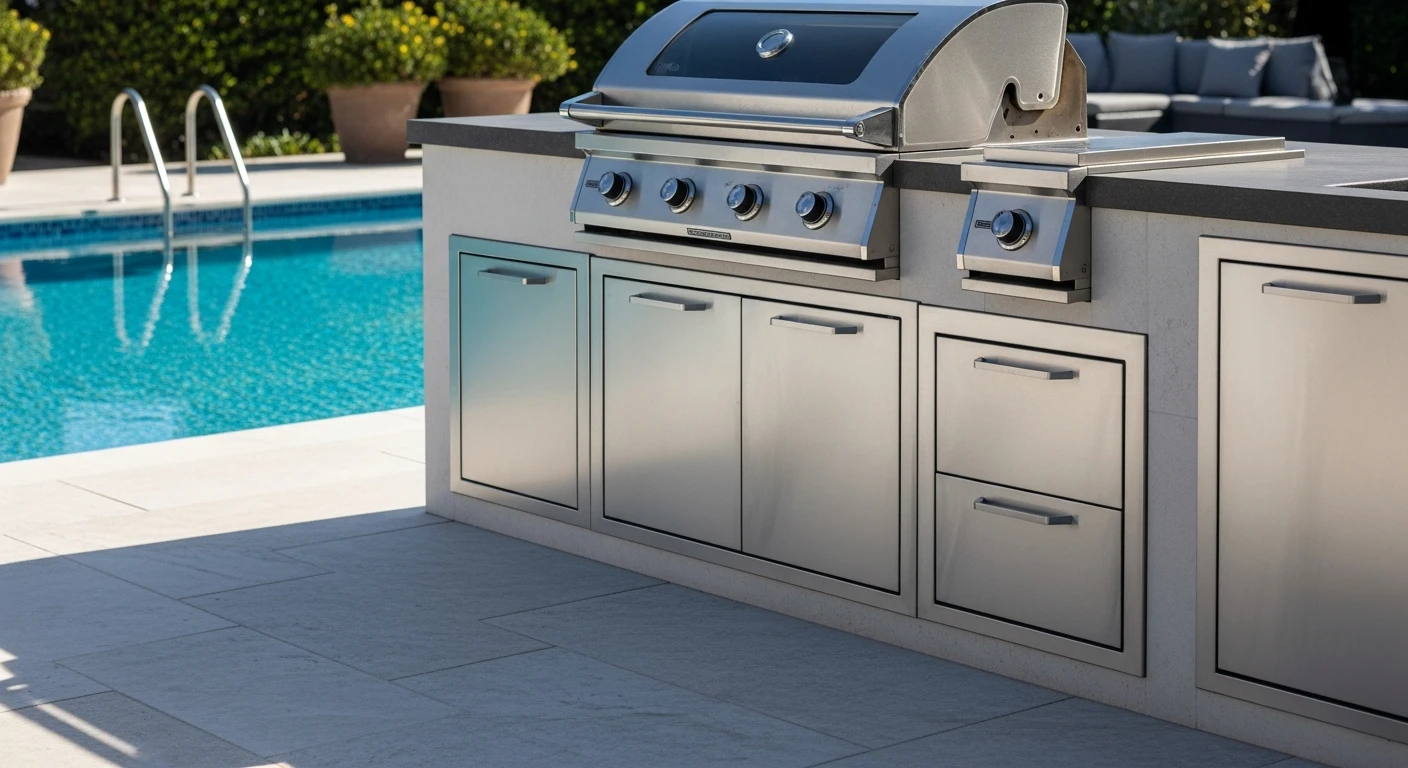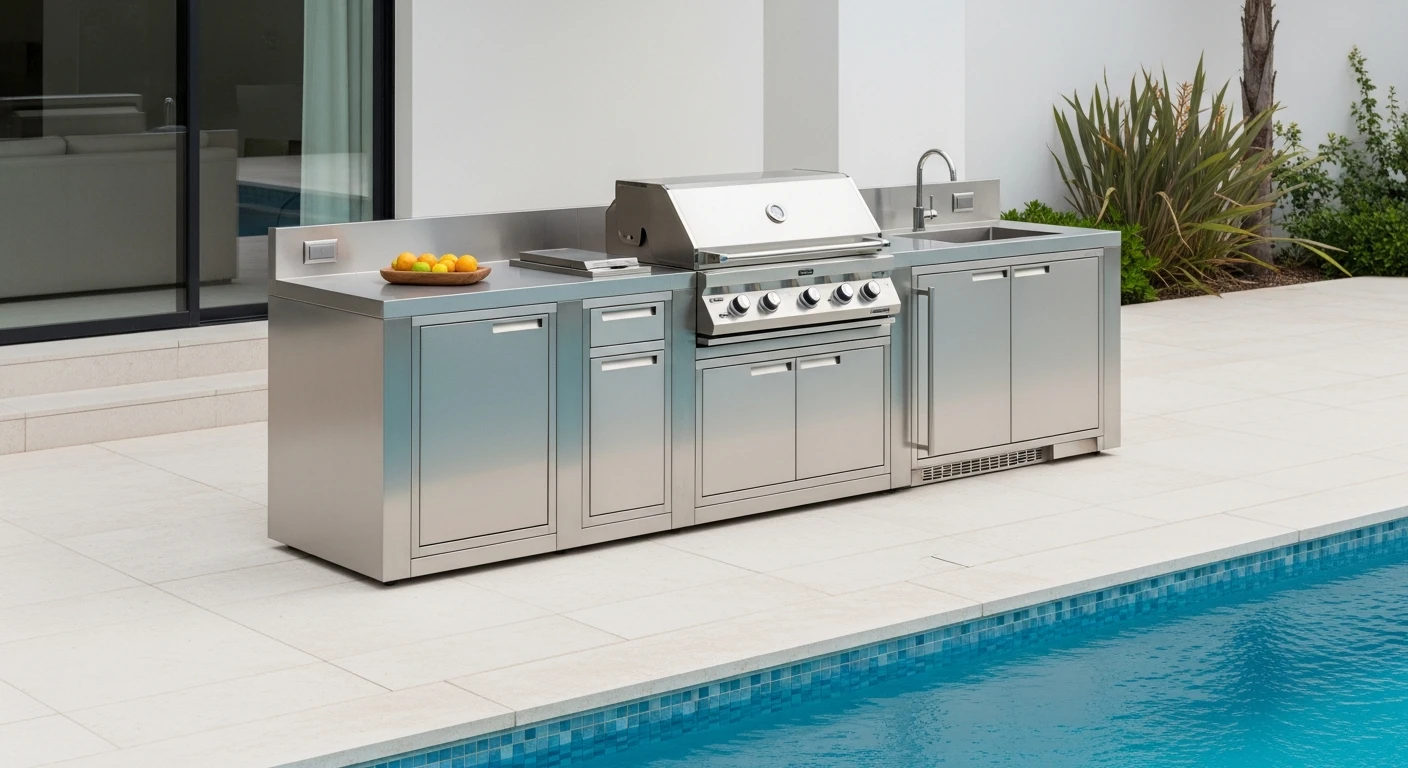
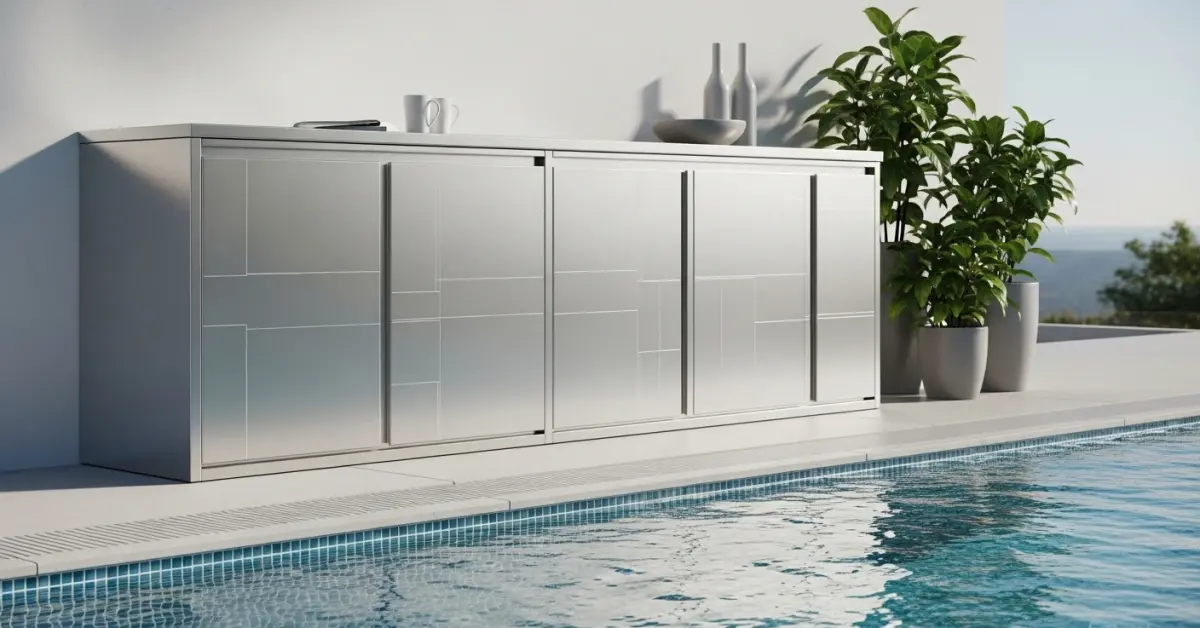
Many Sarasota homeowners invest in an outdoor kitchen envisioning a permanent, beautiful addition to their lanai, only to watch it start showing rust spots and corrosion within two seasons. The issue isn't the concept; it's the material choice. In a high-salt, high-humidity environment like ours, not all stainless steel is created equal, and the standard builder-grade options often sold in big-box stores are simply not designed to withstand the constant assault from our coastal air.
A Specialist's View on Stainless Steel Cabinets for Sarasota Homes
From my years designing and installing outdoor kitchens from Bird Key to The Meadows, the primary failure I see is
From my years designing and installing outdoor kitchens from Bird Key to The Meadows, the primary failure I see is corrosion due to improper material specification. Homeowners are sold on the “stainless steel” label without understanding that the grade and finish are what truly matter in our climate. The salty air that drifts inland from the Gulf is relentlessly corrosive, and a standard 304-grade stainless steel cabinet system, while durable inland, will begin to show pitting and surface rust here without meticulous, constant maintenance. The correct approach for a long-term investment in Sarasota requires a specific material and installation strategy.
- Material Grade is Non-Negotiable: For any home within five miles of the coast, I strongly recommend 316-grade (marine-grade) stainless steel. It contains molybdenum, which provides superior resistance to chloride corrosion from salt spray.
- Finish and Welds Matter: Look for cabinets with a #4 brushed finish and passivated welds. Passivation is a chemical process that removes free iron from the surface, which is a primary catalyst for rust.
- Hardware is a Weak Point: The hinges, handles, and drawer slides must also be 316-grade stainless steel. A 304-grade cabinet with 304-grade hardware will fail at the hardware first.
- Installation Affects Longevity: Proper installation includes using non-ferrous fasteners and isolating the cabinets from dissimilar metals (like galvanized steel) to prevent galvanic corrosion.
The Planning Failures That Lead to Corroded Outdoor Kitchens
The most common mistake is focusing entirely on appliance brands and countertop materials while treating the cabinets as an afterthought. Homeowners will spend a fortune on a high-end grill but house it in cabinets that are destined to fail in our environment. This oversight creates a ticking clock for rust and structural integrity issues.
The Most Expensive Miscalculation: Assuming All “Outdoor-Rated” Steel is a Match for Sarasota
I was called to a project in a beautiful home on Siesta Key less than three years after a full outdoor kitchen was installed. The homeowner had purchased a high-end, nationally recognized brand of 304-grade stainless steel outdoor kitchen units. They looked fantastic initially. But the constant exposure to the salty air, combined with the humidity trapped under the lanai, had caused tea staining and pitting across all the doors and frames. The hinges were seizing up from corrosion. The cost to replace them was nearly 70% of the original project cost because the countertops had to be removed and re-fabricated to fit new cabinets. The failure wasn't in the product's quality, but in its application in our specific coastal microclimate.
The Practical Process: From Design to Installation in Sarasota County
A successful outdoor stainless steel kitchen project follows a clear, structured process that accounts for local conditions from the very start. It begins with a site evaluation to assess exposure to salt spray, sun, and rain, which dictates material specifications. This isn't just about picking a layout; it's about engineering a durable outdoor asset.
Selection Criteria for Sarasota Homeowners
When you're evaluating options, the conversation needs to go beyond aesthetics. Here are the questions I guide my clients to ask, tailored specifically for our area:
- Is this 304 or 316-grade stainless steel? Can you provide the material specification sheet?
- Are the welds passivated? This is a critical step for preventing rust at the seams, which are the most vulnerable points.
- What grade of stainless steel is used for the drawer slides, hinges, and leveling feet? These are the first components to fail.
- What is your warranty against corrosion specifically for a coastal installation in zip codes like 34242 (Siesta Key) or 34236 (Lido Key)?
- How are the cabinets isolated from the concrete slab and any surrounding masonry to prevent galvanic corrosion?
Comparing Stainless Steel with Alternative Outdoor Cabinet Materials
Stainless steel is an excellent choice, but it's not the only one. Homeowners in Sarasota often consider marine-grade polymer (HDPE) or powder-coated aluminum. Understanding the trade-offs is crucial for making an informed decision that aligns with your budget, aesthetic, and tolerance for maintenance.
| Feature | 316 Stainless Steel | Marine-Grade Polymer (HDPE) | Powder-Coated Aluminum |
|---|---|---|---|
| Salt Air Resistance | Excellent (if maintained) | Impervious | Good (if coating is intact) |
| UV Resistance | Excellent (no fading) | Good (with UV inhibitors) | Fair (can fade/chalk over time) |
| Maintenance Level | Moderate (requires regular cleaning/passivating) | Very Low | Low (inspect for scratches/chips) |
| Heat Resistance | Excellent | Poor (cannot be near grill) | Good |
| Initial Cost | High | Moderate-High | Moderate |
When Stainless Steel Isn't the Right Choice
Despite its durability, stainless steel is not the best fit for every situation. If your outdoor kitchen is in a location with direct, unrelenting afternoon sun and you prefer a darker color, the steel will become dangerously hot to the touch. In these specific cases, particularly in west-facing lanais in neighborhoods like Lakewood Ranch, a high-quality marine-grade polymer cabinet in a lighter color might be a more practical, albeit less sleek, option. It's a trade-off between aesthetics and daily usability.
Safe Hiring Checklist for Your Cabinet Installation
Hiring the right installer is as important as choosing the right material. A beautiful set of 316-grade stainless steel patio cabinets can be ruined by improper installation techniques. The Sarasota market has many contractors, but not all understand the nuances of working with these materials in a coastal setting.
- Verify Florida Contractor License: Ensure the contractor holds a valid, current license with the Florida Department of Business and Professional Regulation (DBPR). A handyman cannot legally perform structural installations.
- Request Proof of Insurance: Ask for a Certificate of Insurance showing both General Liability and Worker's Compensation. Do not proceed without it.
- Ask for Local, Verifiable References: Specifically ask for projects completed in coastal Sarasota areas (e.g., Longboat Key, Casey Key) that are at least two years old. This lets you see how their work holds up.
- Review the Fastener Specification: Ask them what type of screws and bolts they use. If the answer isn't “316 stainless steel fasteners,” it's a major red flag. Using cheaper fasteners will cause rust streaks running down your new cabinets.
- Confirm HOA Approval Process: If you live in an HOA community like Palmer Ranch or The Founders Club, the contractor should be familiar with the architectural review board (ARB) submission process and requirements for outdoor structures.
- Check Permit Requirements: Depending on the scope (e.g., running new gas or electrical lines), your project will require a permit from Sarasota County. A qualified contractor handles this process seamlessly. The typical permit review for such projects can take 2-4 weeks.
Decisions That Determine the Outcome of Your Project
The success of your outdoor kitchen hinges on a few key decisions made at the very beginning. The most critical one is prioritizing material science over brand names or superficial design elements. It's a technical decision that has long-term financial and aesthetic consequences.
The Exact Moment Most Homeowners Get It Wrong
The critical mistake happens during the design phase, when the budget is allocated. I've seen clients allocate $15,000 for a grill and refrigerator but only $5,000 for the entire cabinet structure that has to support them and endure the weather. The most effective strategy is to allocate your budget starting with the structure—the cabinets—first. Choose the best possible material for your location (316-grade steel near the water) and then select appliances that fit the remaining budget. A mid-range grill in a corrosion-proof cabinet will provide a far better long-term experience than a top-tier grill in a cabinet that rusts out from underneath it.
Practical Answers About Operating in Sarasota
Navigating the local requirements and environmental factors is key to a smooth project. These are not generic considerations; they are specific to building and maintaining outdoor structures in our county.
How does Sarasota's Climate Affect Stainless Steel Maintenance?
In Sarasota, “stainless” does not mean “maintenance-free.” The combination of salt in the air and high humidity creates a film on the steel that, if not cleaned, will trap chlorides and lead to tea staining or pitting. I recommend a quarterly cleaning with a pH-neutral cleaner and a microfiber cloth, followed by an application of a stainless steel protectant or wax, especially for stainless outdoor kitchen cabinets exposed directly to the elements.
What Are the HOA Rules for Outdoor Kitchens in Gated Communities?
Most master-planned communities in the Sarasota area, such as University Park or Prestancia, have strict architectural guidelines for any exterior modifications. You will typically need to submit a plan showing the location, materials, and colors of your outdoor kitchen to the Architectural Review Committee (ARC) for approval before any work begins. Failure to do so can result in fines and a stop-work order. A contractor experienced in these communities will know how to prepare and submit these documents correctly.
Do I Need a Permit for Just Installing Cabinets?
If you are only installing steel outdoor kitchen cabinets with no new utility connections, you generally do not need a permit from Sarasota County. However, the moment you add a sink (plumbing), a built-in grill (gas line), or outdoor outlets (electrical), a permit is absolutely required. Attempting to do this work without a permit is a serious code violation that can create major problems when you sell your home. A licensed contractor will pull the necessary permits as part of their scope of work.