Why Prefab Kitchens Are a Strategic Choice in Sarasota's Climate
From my perspective installing outdoor living features from Siesta Key to Lakewood Ranch, the move toward high-quality
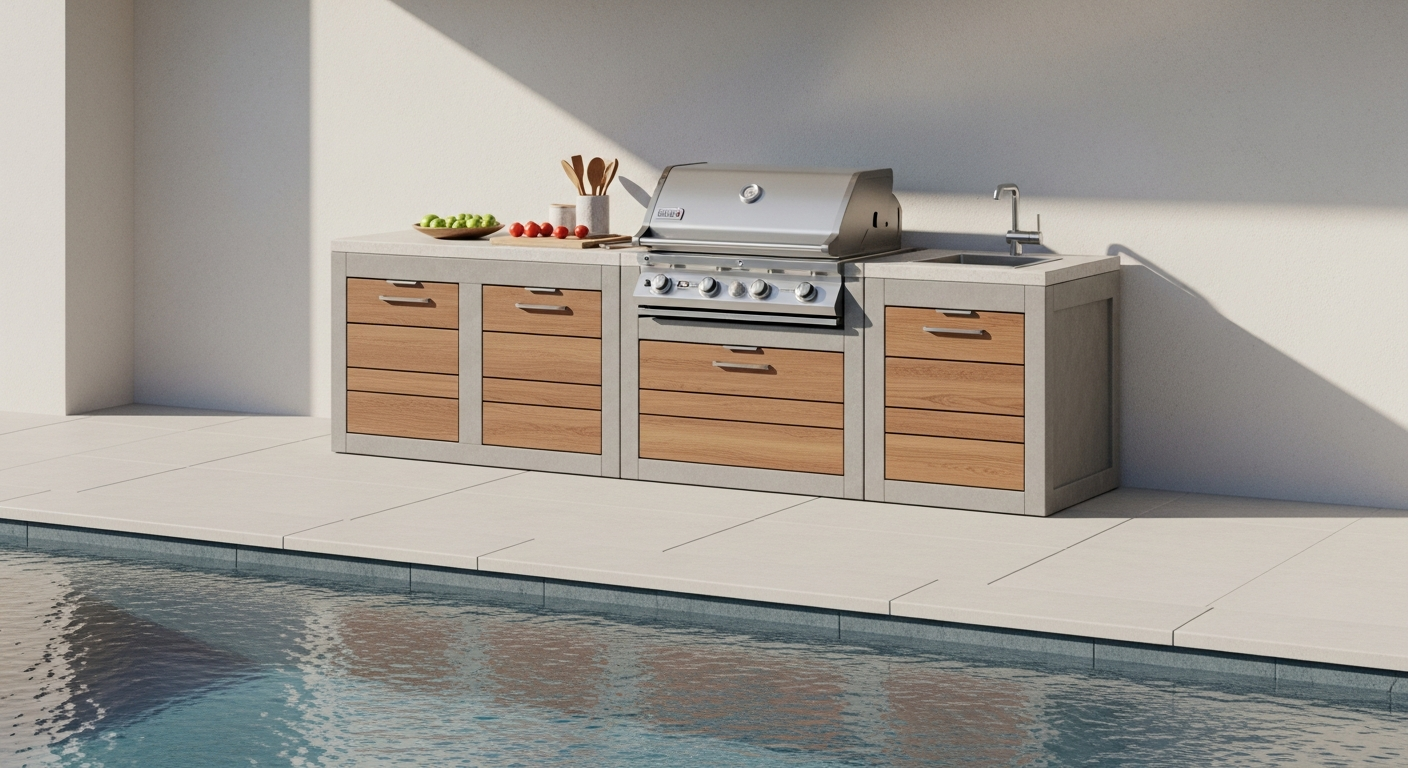
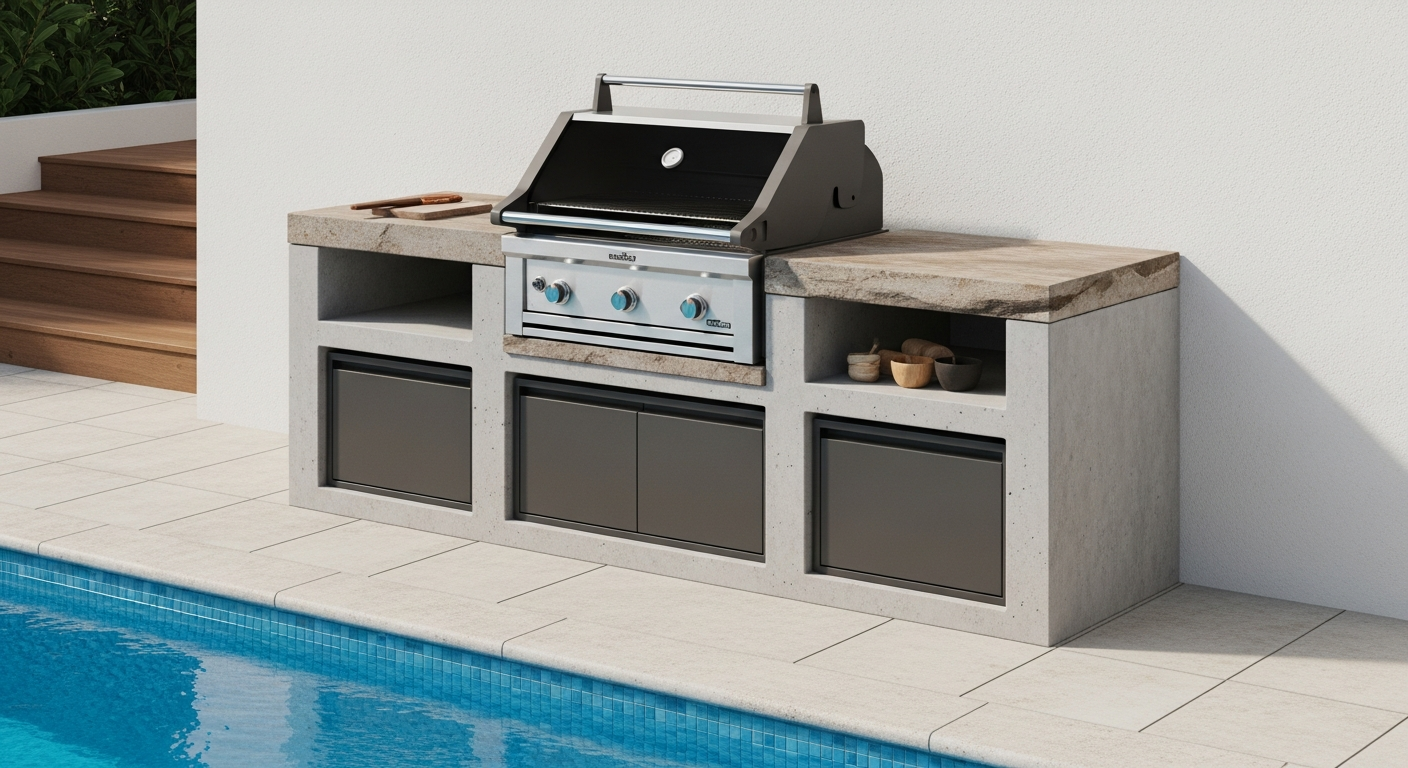
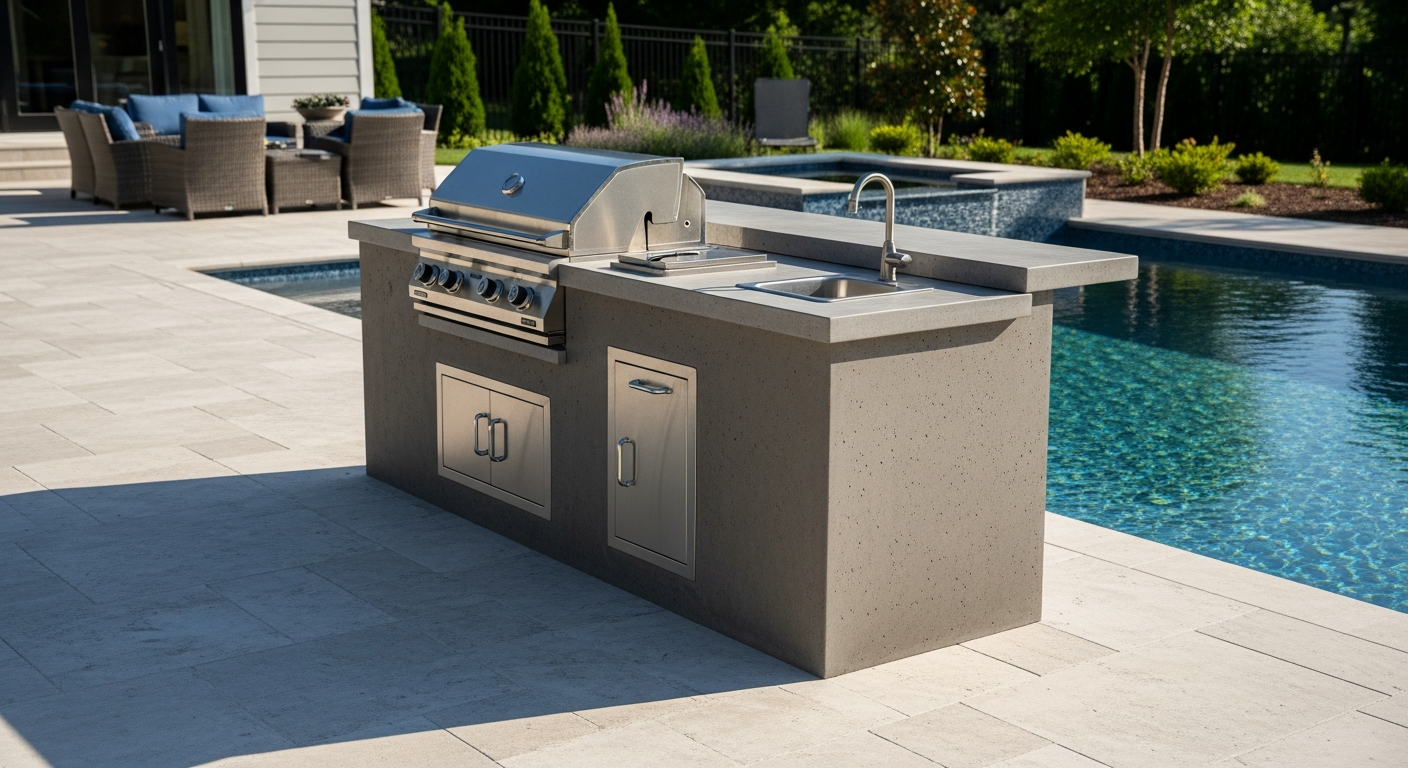
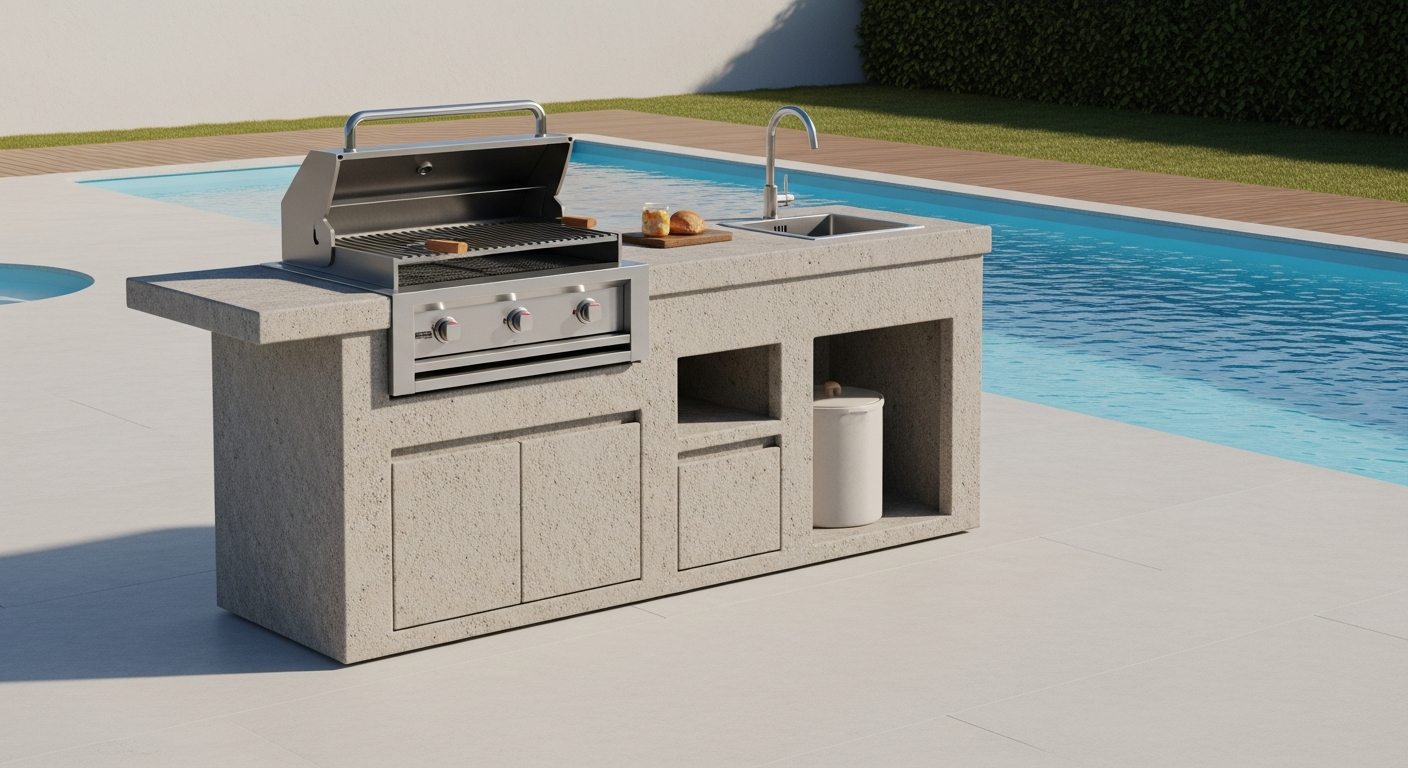
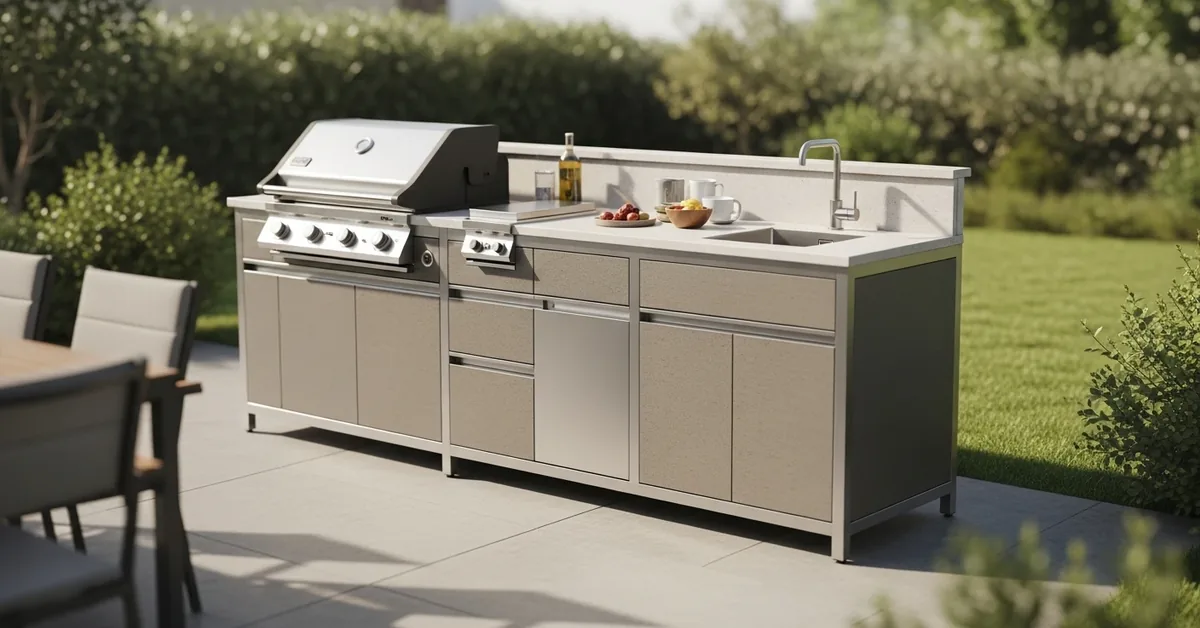
From my perspective installing outdoor living features from Siesta Key to Lakewood Ranch, the move toward high-quality prefabricated outdoor kitchens is a direct response to the failures of traditional block and stucco construction in our coastal environment. I've seen too many custom-built islands develop hairline cracks and rust stains within three years due to the relentless humidity and salt spray. A well-engineered prefab system, however, uses non-porous, corrosion-resistant materials designed for marine applications, offering a durability that site-built methods struggle to match without exorbitant cost.
- Prefabricated units are engineered off-site, ensuring precise fits and finishes impossible to guarantee with on-site masonry.
- The primary materials are often glass-fiber reinforced concrete (GFRC) or marine-grade polymers, which do not spall or crack from moisture intrusion.
- Electrical and gas lines are integrated into a controlled factory environment, reducing on-site installation errors and inspection failures.
- Many high-end systems are rated for high-wind zones, a critical and often overlooked factor for Sarasota County compliance.
Planning Failures That Compromise a Sarasota Outdoor Kitchen Project
The most common misstep is underestimating the logistical requirements for delivery and placement. Homeowners get excited about the design and the appliances but fail to consider how a 1,500-pound, fully assembled island will get from the street to their lanai. This isn't a simple delivery; it often requires a crane or specialized forklift, especially in neighborhoods with tight access like those found west of the Trail.
The Most Expensive Failure: Ignoring HOA Architectural Guidelines
I was involved in a project in a golf community where the client ordered a beautiful, modern prefab island with a dark gray finish. They loved it, but they never submitted the color and material specifications to their HOA's Architectural Review Board (ARB). The unit was delivered and installed, and a week later they received a notice of violation. The community guidelines required an earth-tone color palette. The cost to resolve this—crane rental to remove the unit, shipping it back for refinishing, and crane rental to reinstall it—added nearly 40% to the total project cost. This is a purely avoidable expense born from a simple process oversight.
The Installation Process in Practice for Sarasota County
A successful prefab kitchen installation is less about construction and more about precision logistics. Once a design is finalized, the unit is fabricated, which can take 6 to 12 weeks. During this time, we handle the on-site prep, which includes running utility lines (gas, electric, water) to the exact location specified in the manufacturer's plan and pouring a concrete pad if one doesn't exist. The critical day is delivery. We coordinate the crane or forklift, uncrate the unit, and carefully set it in place. The final step is connecting the utilities and testing all appliances, which is typically completed in a single day.
Selection Criteria for Sarasota Homeowners
- Material Composition: Prioritize 304 or 316-grade stainless steel for all metal components, including fasteners. Anything less will show rust within a year. Verify the countertop material is non-porous and UV-stable.
- Wind Load Certification: Ask the manufacturer for documentation on wind load ratings. This is non-negotiable for obtaining permits in Sarasota County, especially for homes in coastal high-hazard areas.
- HOA Pre-Approval Packet: A reputable manufacturer should be able to provide a comprehensive packet with material samples, color codes, and technical drawings specifically for ARB submission.
- Appliance Serviceability: Ensure the design allows for individual appliances to be removed and serviced without deconstructing the entire island. This is a common flaw in cheaper prefab bbq islands.
Comparing Prefabricated Kitchens to Custom-Built Options
| Factor | Prefabricated Outdoor Kitchen | Custom-Built (Block & Stucco) | DIY Kit |
|---|---|---|---|
| Installation Time | 1-2 days on-site | 3-6 weeks on-site | 1-2 weeks (homeowner labor) |
| Durability in Salt Air | Excellent (with marine-grade materials) | Fair (prone to cracking, rust bleed) | Poor to Fair (depends on components) |
| HOA Approval Ease | High (standardized specs) | Moderate (requires detailed plans) | Low (often lacks professional plans) |
| Cost Predictability | Fixed price upon order | Subject to material/labor overruns | Variable based on skill/mistakes |
When a Prefab Kitchen Is Not the Right Choice
A prefabricated system is a poor choice if your space has highly irregular dimensions or significant grade changes. While manufacturers offer modular outdoor kitchens with various components, they are based on standardized footprints. If your lanai has a unique curve or requires a multi-level design integrated into existing hardscaping, a custom build is almost always the more effective, albeit slower and more expensive, solution. Forcing a prefab unit into a space it wasn't designed for leads to awkward gaps and a disjointed aesthetic.
Safe Hiring and Purchase Checklist
- Verify Florida Contractor License: Any installer connecting gas or electrical lines must hold the appropriate state license (e.g., Certified General, Residential, or a specialty license). Verify their number on the Florida Department of Business and Professional Regulation (DBPR) website.
- Request a Certificate of Insurance: The installer must have both general liability and worker's compensation insurance. Ask for the certificate to be sent directly from their insurance agent to you.
- Confirm Who Pulls the Permit: The licensed contractor, not the homeowner, should be responsible for pulling the required permits from the Sarasota County Planning and Development Services. Typical permit fees for this type of work can range from $200 to $500.
- Get a Detailed Scope of Work: The contract must explicitly state who is responsible for site prep, utility runs, crane coordination, installation, and debris removal.
- Review the Manufacturer's Warranty: Pay close attention to exclusions, especially those related to cosmetic issues in a coastal environment. A lifetime structural warranty is the standard for high-quality GFRC or polymer frames.
- Ask for Local References: Speak to at least two previous clients in the Sarasota or Bradenton area who have had a similar unit installed for more than a year.
Decisions That Determine the Final Outcome
The single most important decision is choosing the manufacturer and local dealer/installer as a single entity. I've seen homeowners try to save money by buying a unit online from a national distributor and then hiring a separate local contractor to install it. This almost always ends in finger-pointing when a problem arises. The manufacturer blames the installer for improper site prep, and the installer blames the manufacturer for a defective product. When you work with an authorized local dealer who both sells and installs the product, you have a single point of accountability for the entire project, from design to final utility connection.
The Moment Most Homeowners Get It Wrong
The mistake happens during the appliance selection. Homeowners get fixated on a specific brand of high-end grill without considering how it integrates into a prefabricated system. They fail to understand that prefab outdoor grill islands are engineered around specific appliance cutout dimensions and venting requirements. Forcing a non-standard grill into a system voids the island's structural warranty and can create a serious safety hazard from improper heat ventilation. The correct approach is to select from the range of appliances certified and offered by the island manufacturer. This ensures a perfect fit, proper safety, and a unified warranty.
Practical Answers About Operating in Sarasota
How do you handle permits for a prefab island in Sarasota County?
A permit is almost always required if you are running new gas or electrical lines. The process involves submitting the manufacturer's technical specifications, a site plan showing the island's location and utility connections, and the licensed contractor's information to the Sarasota County portal. The plans must demonstrate compliance with the Florida Building Code, particularly regarding clearances from combustible structures. Inspections for the utility rough-in and the final connection will be required.
What are typical HOA restrictions for these kitchens in communities like Palmer Ranch?
In communities like Palmer Ranch or The Founders Club, HOA restrictions focus on aesthetics and location. Common rules include limitations on visible propane tanks (requiring a hard line for natural gas), mandates for specific color palettes that match the home's exterior trim, and regulations on the island's placement relative to property lines and lanai screens. All specifications, including countertop material and appliance finish, must be submitted to the ARB for approval before ordering the unit.
How do I protect the kitchen from hurricane season?
Protection is twofold: structural and superficial. Structurally, ensure the unit is heavy enough or anchored to the concrete slab as per engineering specs to meet wind load requirements. Superficial protection involves clearing the countertops of all loose items, shutting off the gas line at the source, turning off the dedicated electrical breaker, and using a high-quality, fitted cover secured with straps to protect the appliances and surfaces from wind-driven rain and debris.