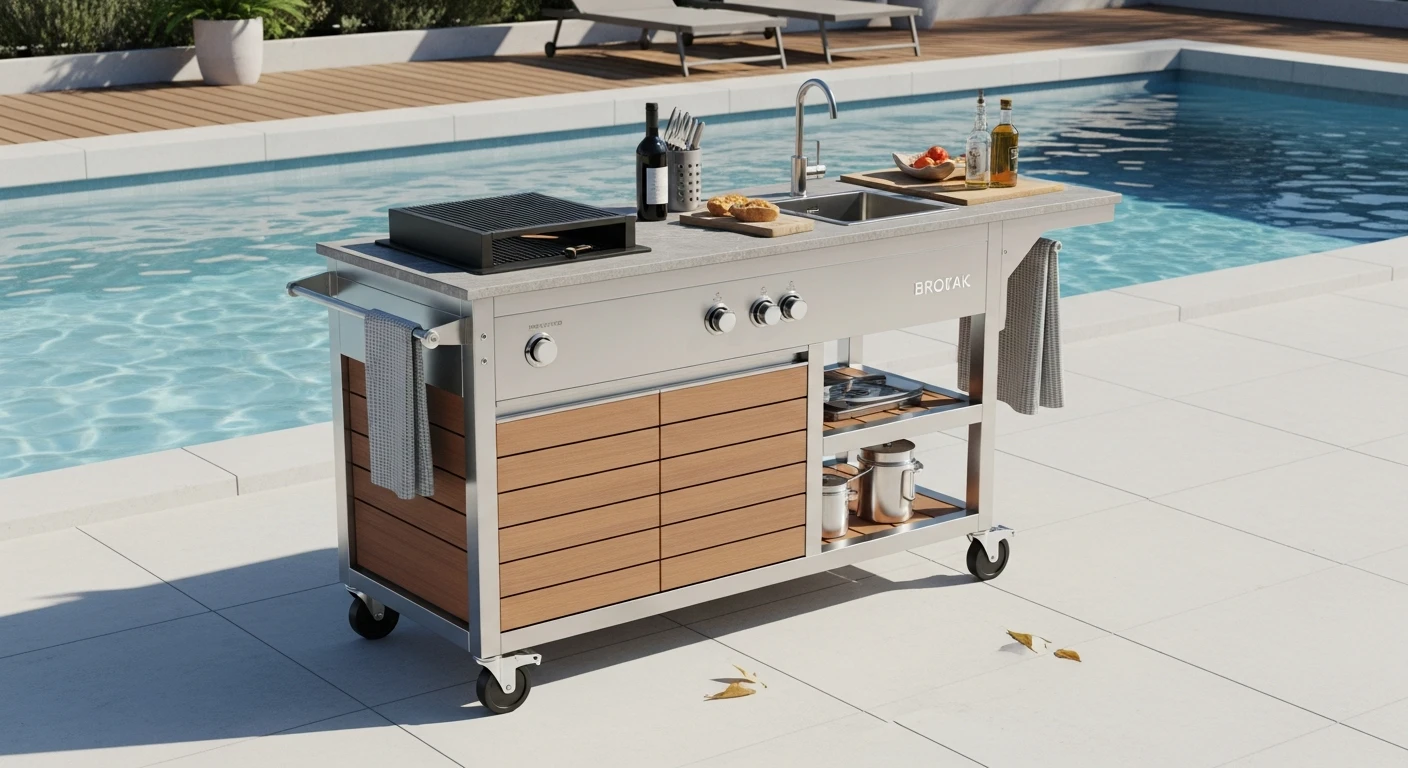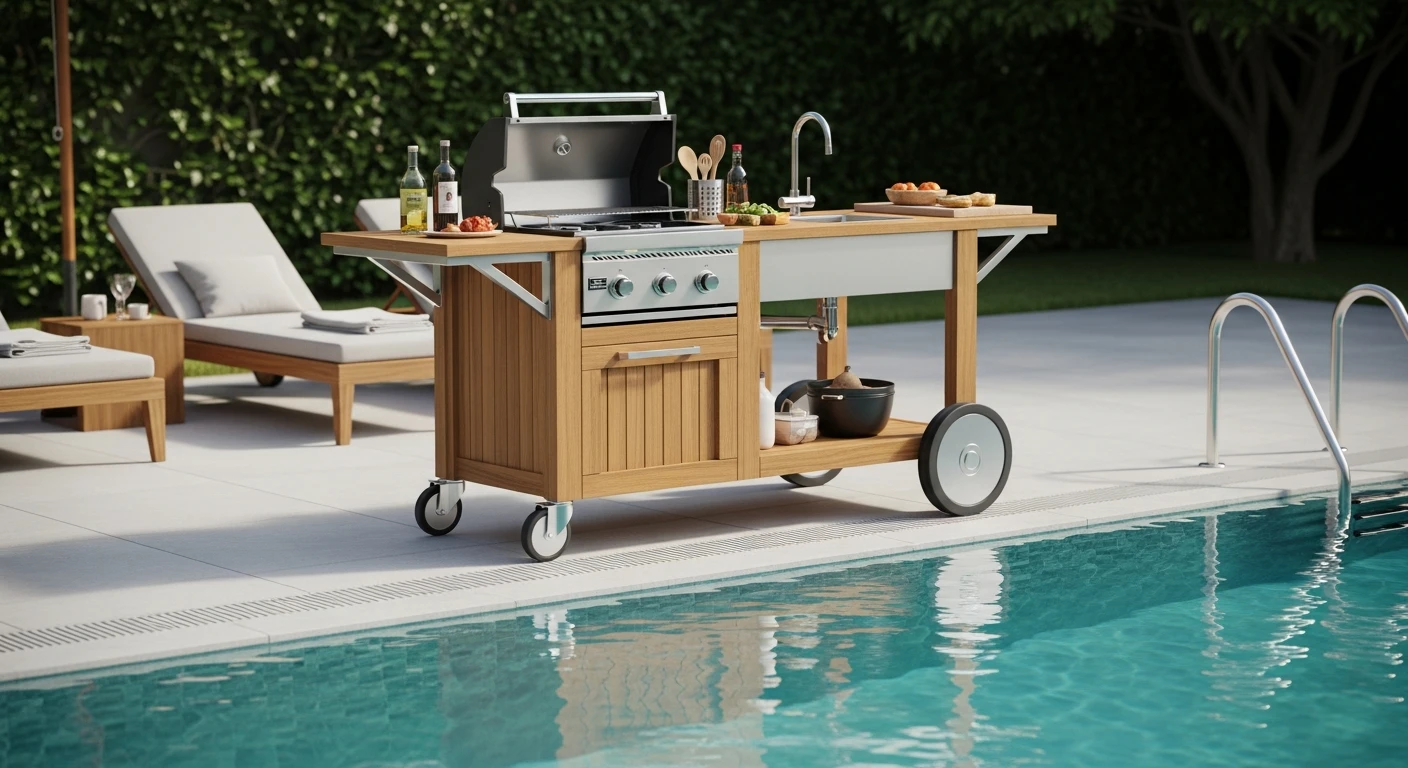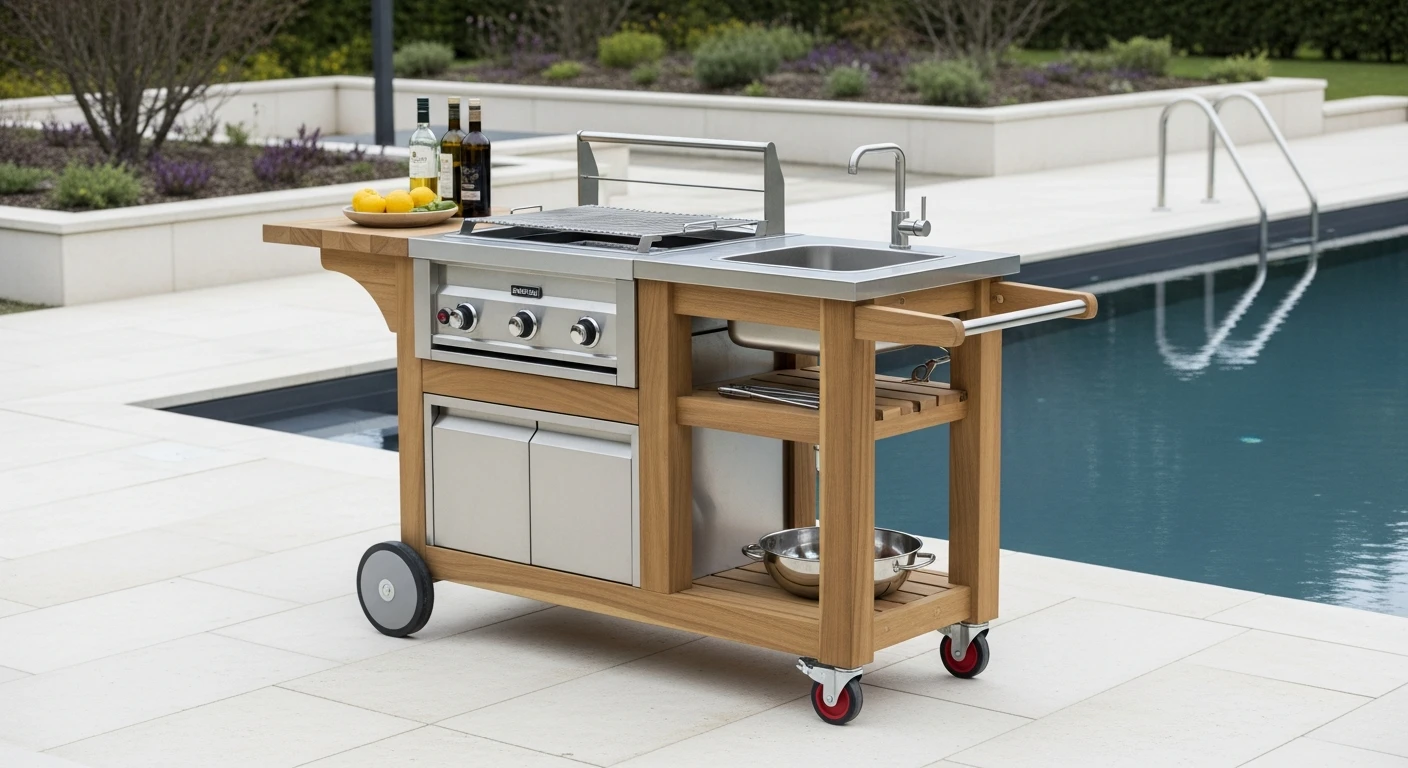
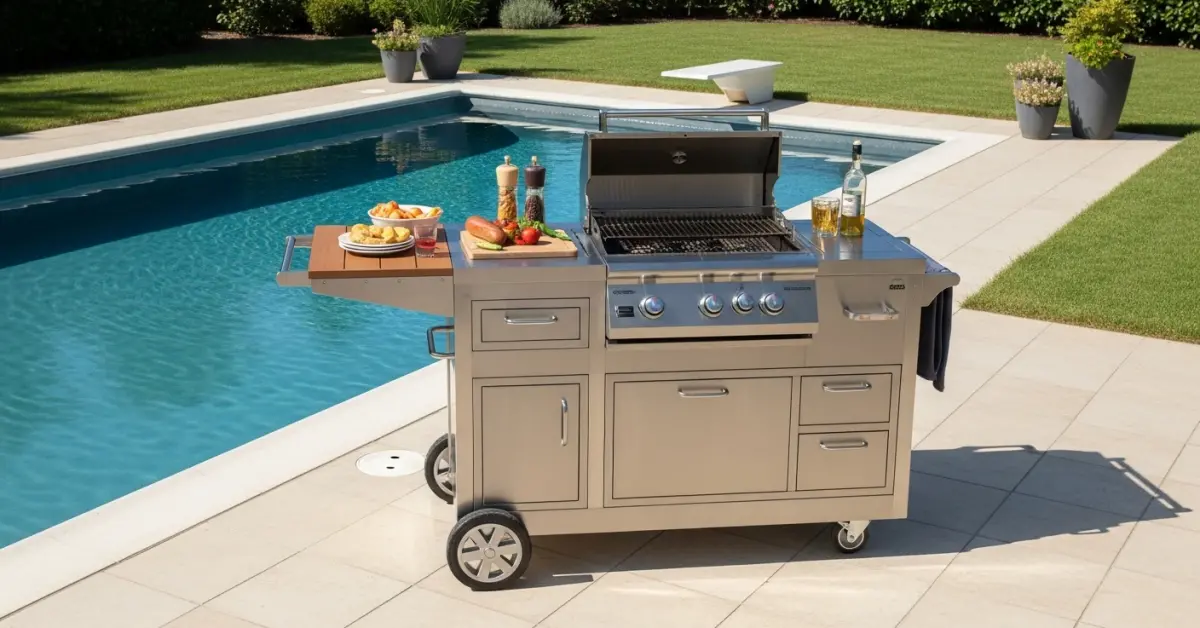
The smartest investment in a Sarasota outdoor living space isn't always the one cemented to the ground. For many homeowners, particularly from The Landings to Palmer Ranch, the most functional and financially sound decision is an outdoor kitchen that can be moved. A high-quality rolling outdoor kitchen island bypasses the permitting headaches and HOA battles over permanent structures, while delivering the same, if not better, culinary experience for our year-round outdoor lifestyle.
The Sarasota Homeowner's Guide to Mobile Outdoor Kitchens
From my direct experience setting up these systems across Sarasota County, the shift toward mobile outdoor kitchens is
From my direct experience setting up these systems across Sarasota County, the shift toward mobile outdoor kitchens is a direct response to local constraints—not a compromise on quality. Homeowners are realizing that a rolling outdoor kitchen island provides immense flexibility against our unpredictable weather and satisfies the strict aesthetic rules of many planned communities. The key is selecting a unit built not like patio furniture, but like a professional culinary cart designed to withstand the salt air and intense UV exposure we face daily.
- HOA Compliance: Most Sarasota HOAs classify rolling islands as 'patio furniture,' exempting them from the architectural review process required for permanent structures.
- Material Durability: 304-grade stainless steel is the minimum standard for our coastal environment to resist rust and corrosion; powder-coated aluminum frames offer a lighter but still durable alternative.
- Functional Footprint: A well-designed unit should incorporate a high-BTU grill, dedicated prep space, and integrated storage, often within a 60- to 72-inch frame.
- Utility Management: The primary consideration is the propane tank. Look for designs that safely and discreetly house a standard 20 lb tank, eliminating the need for permanent gas lines.
The Planning Failures I See Most Often
The most common mistake is treating a rolling outdoor kitchen like a simple barbecue grill purchase. Homeowners focus on the grill's brand name but completely overlook the chassis, wheels, and countertop material. This leads to a high-end grill head mounted on a wobbly, rust-prone frame that fails within two seasons of our humid, salty air.
The Most Expensive Oversight: Ignoring Wheel and Frame Quality
I was called to a beautiful condo on Lido Key where a client had purchased a very expensive rolling island. Within a year, the casters had seized from salt air corrosion, and rust streaks were bleeding from the low-grade stainless steel fasteners onto their pristine travertine deck. The 'rolling' kitchen was now a stationary, staining hazard. The real cost wasn't the unit; it was the premature replacement and the deck restoration. Heavy-duty, locking, marine-grade casters are non-negotiable in our environment.
How These Systems Work in a Sarasota Setting
A rolling outdoor kitchen is a self-contained unit that integrates cooking, preparation, and storage elements onto a mobile chassis. Unlike a permanent installation, it requires no building permits from Sarasota County, no slab foundation, and no utility trenching. The entire system is designed for plug-and-play functionality, typically centered around a propane-fueled grill.
Key Selection Criteria for Sarasota Homeowners
When advising clients here, I tell them to filter their options through a lens of local reality. A unit that looks great in a catalog for a dry climate will fail here quickly. These are the critical checkpoints:
- Wind and Weather Strategy: Does the unit have heavy-duty locking casters and enough weight to remain stable during our frequent thunderstorms? Can it be easily rolled into a garage or under a deep overhang for protection?
- Material Grade Verification: Insist on seeing the material specifications. Is it 304 or, even better, 316 (marine-grade) stainless steel? For powder-coated finishes, is the underlying metal aluminum to prevent rust?
- Countertop Heat & UV Resistance: Granite or other natural stone tops are heavy but excellent for resisting sun fading and heat from the grill. Some high-density composites also work, but avoid tile with grout lines, which will quickly fail in our humidity.
- Condensation & Drainage Management: Look for units with weep holes or design features that prevent rainwater from pooling inside cabinets and storage drawers, which becomes a breeding ground for mold.
Comparing a Rolling Kitchen to Permanent Alternatives
For a Sarasota homeowner, the choice between a mobile unit and a built-in kitchen is about more than cost; it’s about flexibility, future-proofing, and avoiding bureaucratic friction. The investment in a premium rolling outdoor kitchen island, which can range from $4,000 to over $15,000, must be weighed against its long-term value.
| Factor | Rolling Outdoor Kitchen | Custom Built-in Kitchen | Prefabricated Permanent Island |
|---|---|---|---|
| Permitting & HOA | Generally none required (classified as furniture) | Permits and architectural review always required | Permits and review typically required |
| Installation Timeline | Hours (assembly) | 4-12 weeks | 1-3 weeks |
| Flexibility | High (can be moved, re-positioned, or taken with you) | None (permanent structure) | None (permanent structure) |
| Cost Basis | $4,000 - $15,000+ | $15,000 - $50,000+ | $10,000 - $25,000 |
When a Rolling Kitchen is the Wrong Choice
A rolling solution is not the right fit if your primary need is for extensive utilities like a sink with running water, a full-size refrigerator, or a natural gas connection. While some high-end carts offer sinks with self-contained water systems, they are cumbersome. If your entertaining style demands a fully plumbed and wired outdoor culinary hub, a permanent, permitted structure is the more practical, albeit more complex, path.
Safe Buying Checklist for Sarasota
Before you purchase an outdoor portable kitchen island, use this checklist to avoid common pitfalls I've seen homeowners fall into. A few minutes of verification can save you thousands in the long run.
- Verify the Stainless Steel Grade: Ask the retailer for documentation confirming it is at least 304-grade stainless. Use a magnet; high-quality 300-series stainless steel is generally non-magnetic or only slightly magnetic.
- Inspect the Welds and Fasteners: Look at the joints. Are they cleanly welded and polished, or are they held together with low-grade screws that will be the first point of rust?
- Test the Casters In-Person: If possible, go to a showroom. Feel the weight and stability of the unit. Do the wheels lock securely? Do they roll smoothly? Imagine moving it across your paver patio.
- Confirm Warranty Coverage for Coastal Use: Read the fine print. Some manufacturers void warranties for corrosion if the product is used within a certain distance of the coast. This is a major red flag for anyone in Sarasota.
- Measure Your Storage Space: Know exactly where you will store the unit during a hurricane watch or the off-season. Confirm the dimensions, including height, will fit through your garage door or gate.
Decisions That Define Your Long-Term Satisfaction
The success of a rolling outdoor kitchen hinges on one key decision: prioritizing the chassis and build quality over flashy grill features. Many buyers are lured by a grill with multiple burners, a rotisserie, and fancy lights, only to have the entire structure supporting it degrade. A well-built outdoor rolling island with a solid, reliable grill will always outperform a premium grill on a flimsy, poorly constructed cart.
The Moment Homeowners Get It Wrong
The critical mistake happens at the point of purchase, when the allure of a 'great deal' on a feature-packed model overshadows a structural assessment. The best advice I can give is to allocate at least 40% of your total budget to the cart itself—the frame, countertop, storage, and wheels. If a $5,000 unit has a $3,000 grill head in it, the $2,000 cart is where corners were cut, and that's where it will fail first in our Sarasota climate.
Practical Answers for Operating in Sarasota
Navigating the specifics of using an outdoor island on wheels here involves more than just cooking. It’s about understanding the local context, from HOA rules to storm prep.
Do I Need HOA Approval for a Portable Kitchen Island?
In the vast majority of Sarasota communities I've worked in—from University Park to Casey Key—the answer is no, provided the unit is genuinely portable and not anchored. HOAs regulate 'structures' and 'permanent improvements.' Because a rolling island is classified as personal property, like patio furniture, it typically flies under the radar of the architectural review committee. However, it's always wise to check your community's covenants for specific rules on outdoor cooking appliances.
What are Propane Tank Storage Rules in Sarasota?
Sarasota follows the Florida Fire Prevention Code, which has specific guidelines for LP (liquefied petroleum) gas storage. You generally cannot store propane tanks inside a residence or attached garage. The beauty of an outdoor rolling island is that the tank is stored within its ventilated cabinet during use. When not in use, the tank should be disconnected and stored upright in a secure, well-ventilated area outdoors, away from ignition sources.
How Do I Secure a Rolling Kitchen for a Hurricane?
This is a critical, non-negotiable plan for any Sarasota resident. The primary strategy is to move the entire unit into a garage or other secure, enclosed structure. This is where investing in high-quality, smooth-rolling casters pays off. If moving it inside is not an option, it must be moved to the most sheltered part of your property, away from windows, with the caster wheels securely locked. Some owners use heavy-duty straps to anchor the unit to a structural element of the house as a last resort.