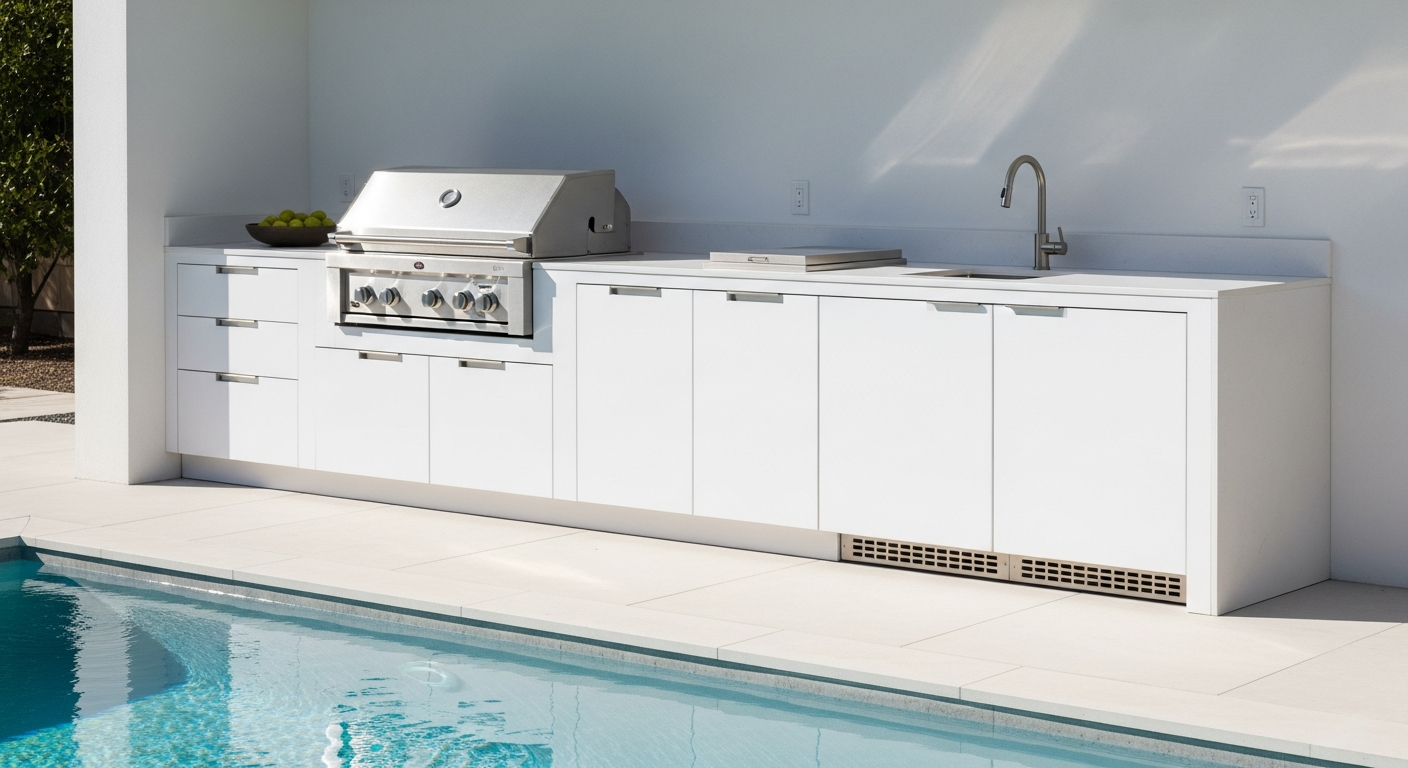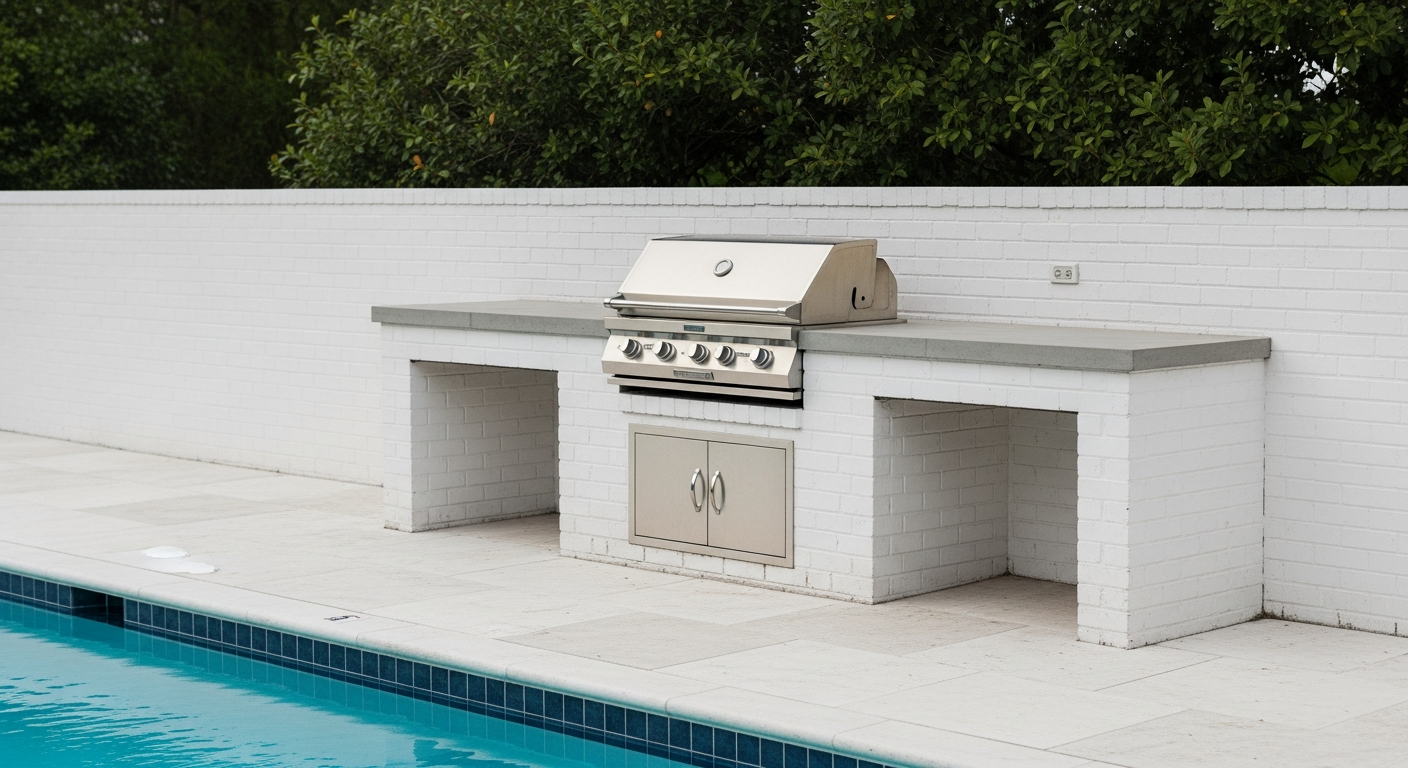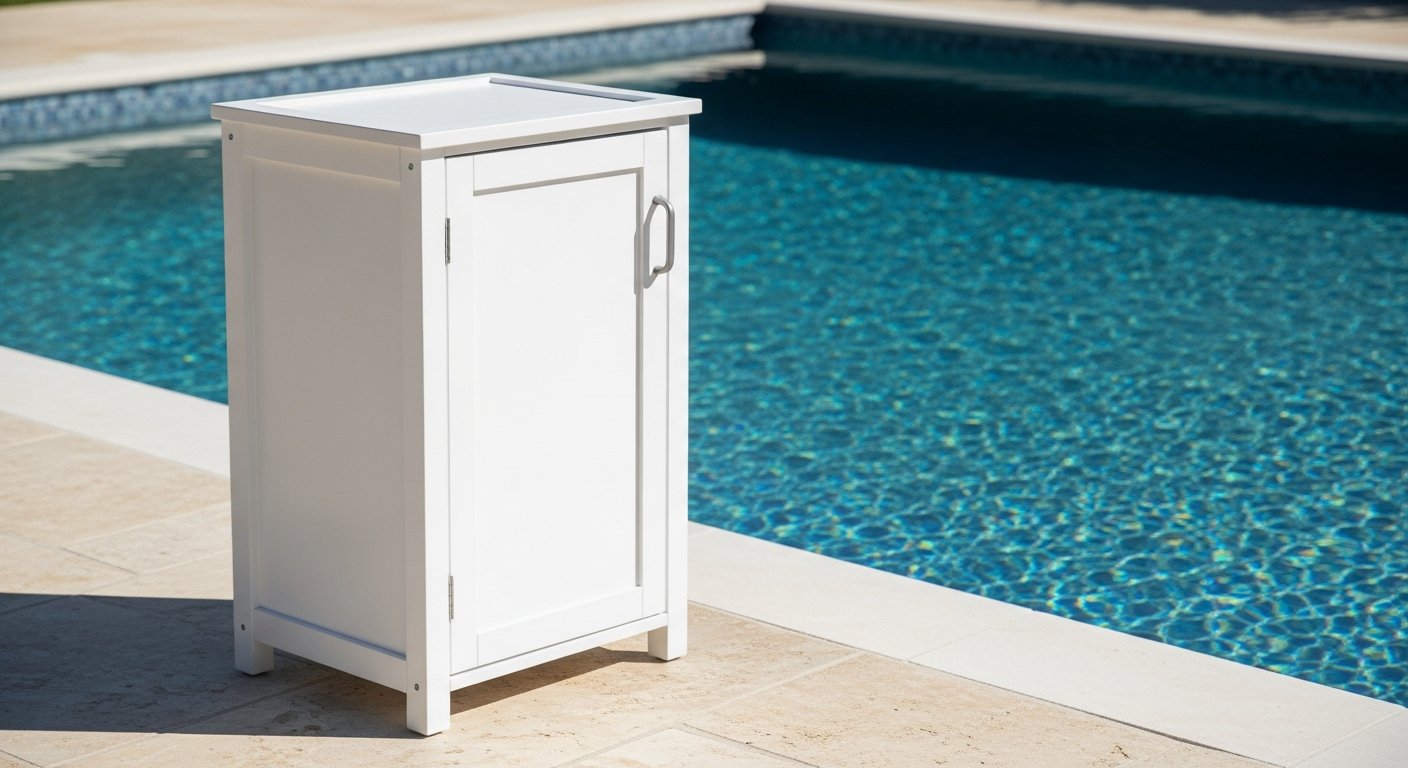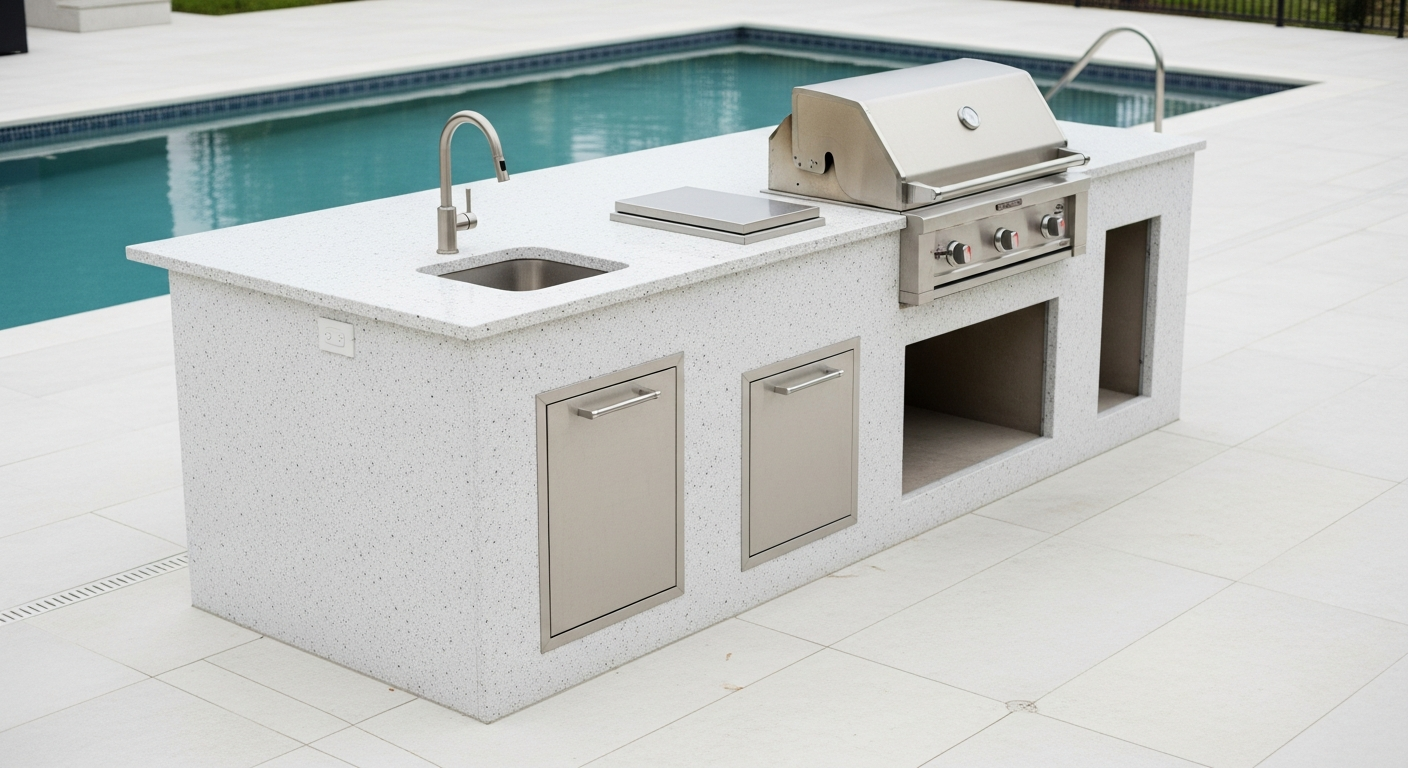
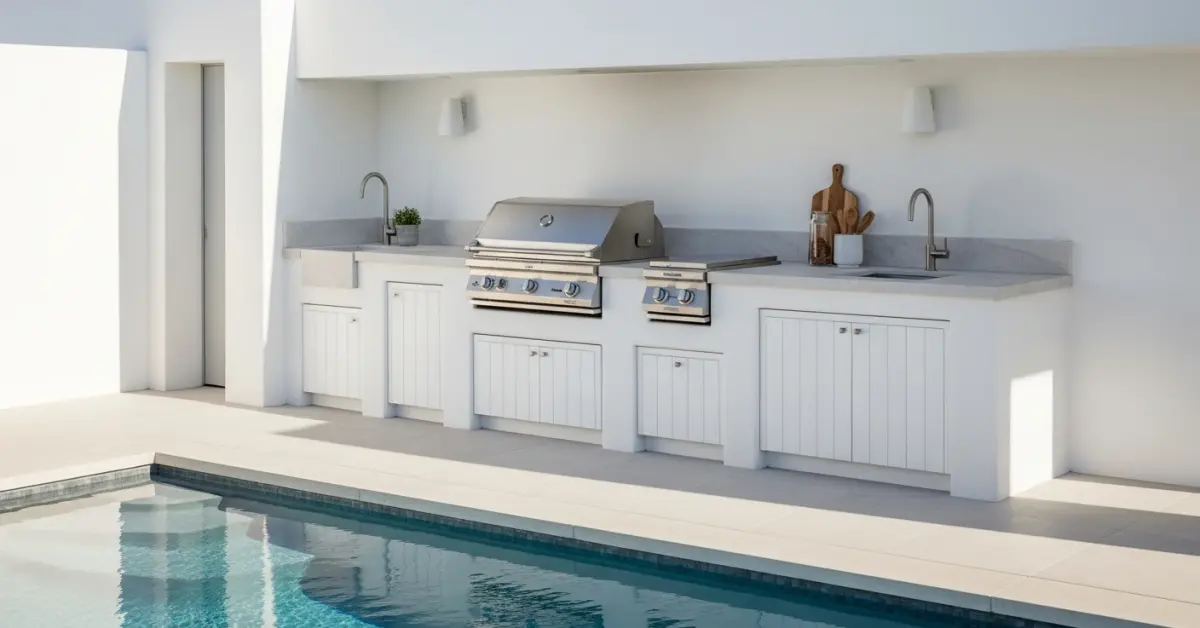
From my direct experience building custom outdoor kitchens in Sarasota County, the success of a white outdoor kitchen
From my direct experience building custom outdoor kitchens in Sarasota County, the success of a white outdoor kitchen hinges on one critical factor: selecting materials engineered to resist UV degradation and salt-air corrosion. Many homeowners fall for the aesthetic of a material without understanding how it will perform under constant Florida sun and humidity. The most common failure I see is the yellowing of polymers and powder coats not rated for marine environments, a problem that becomes visible within 18-24 months.
- Material Priority: Marine-grade polymers (like HDPE), specific non-yellowing powder-coated stainless steel, and certain engineered stones are the only reliable choices for a lasting white finish in Sarasota.
- Countertop Reality: While beautiful, porous stones like certain marbles will stain and are difficult to maintain. Non-porous, UV-stable quartz or Dekton are superior for performance.
- Design for Drainage: Proper ventilation and drainage within the cabinet structure are non-negotiable to prevent mold and mildew, a persistent issue in our humid climate.
- Hardware is Key: Using 316-grade stainless steel for all hardware (hinges, handles, screws) is mandatory to prevent rust streaks that will ruin a white finish, especially west of I-75.
The Critical Planning Failures for White Kitchens in Our Climate
The most significant mistake is underestimating the power of Sarasota's sun and salty air. Homeowners often focus on the initial look and cost, selecting materials that are perfectly adequate for an indoor setting or a less harsh climate. They see a beautiful white finish in a showroom but don't ask about its UV inhibitors or salt-spray test rating. This oversight leads directly to premature aging and costly repairs or replacement.
The Most Expensive Failure: Ignoring the Countertop's Porosity
I worked on a project in a beautiful home near Siesta Key where the client insisted on a brilliant white marble countertop for their outdoor BBQ kitchen. Despite warnings, the aesthetic appeal won. Within a year, the surface was marred by faint yellowing from sunscreen, red wine stains that had penetrated the stone, and dark spots from fallen leaves and pollen. The cost to professionally restore and re-seal the marble was nearly 30% of its initial installation price, and it became an annual maintenance battle. Choosing a non-porous alternative from the start would have saved them thousands and countless hours of frustration.
The Practical Process of Building an Outdoor Kitchen Here
A properly executed outdoor kitchen project in Sarasota County involves more than just design and installation; it's a structured process involving permits and inspections. It starts with a detailed site plan and design that specifies materials, appliance locations, and utility connections (gas, electric, water). This plan is then submitted to the Sarasota County Building Department for review. Depending on the scope, this can be a surprisingly involved step, often requiring a licensed contractor to pull the permits.
Key Selection Criteria for Sarasota Homeowners
- Verify Contractor's License: Ensure the contractor holds a valid Florida Certified Building or Residential Contractor license. You can verify this on the Florida Department of Business and Professional Regulation (DBPR) website. A simple handyman license is insufficient for projects involving structural or utility work.
- Insist on Marine-Grade Materials: Don't accept generic "outdoor-rated" claims. Ask for material spec sheets. For white finishes, look for terms like "UV-stabilized HDPE" or "AAMA 2605 certified powder coating."
- Review Their HOA Experience: In communities like Lakewood Ranch or The Founders Club, the Architectural Review Committee (ARC) has strict guidelines. A contractor unfamiliar with their submission process can add months of delays to your project.
- Check for Adequate Ventilation Design: Ask the designer to show you specifically how the grill island is ventilated. Improper ventilation is a fire hazard and a common reason for failed inspections in Sarasota County.
Comparing a Custom White Kitchen to Simpler Alternatives
While a custom white outdoor kitchen offers a stunning, integrated look, it's not the only option. Homeowners should weigh the cost and commitment against more flexible or budget-friendly alternatives. A modular outdoor kitchen or even a high-end standalone grill setup can provide excellent functionality without the permanence and permitting requirements of a fully custom build.
| Feature | Custom White Kitchen | Modular Outdoor Kitchen | High-End Grill Cart |
|---|---|---|---|
| Initial Cost | High ($20,000 - $70,000+) | Moderate ($5,000 - $15,000) | Low ($1,500 - $5,000) |
| Aesthetic Integration | Seamlessly matched to home | Good, but with visible seams | Freestanding appliance look |
| Durability in Salt Air | High (with proper materials) | Varies greatly by brand | Varies; check frame material |
| Permitting Required | Almost always in Sarasota Co. | Sometimes, if utilities are run | Never |
When a Custom Build Is the Wrong Choice
A fully custom outdoor kitchen is not the right choice if you anticipate moving within the next 3-5 years. While it adds value, you will rarely recoup the full investment in a short-term sale. In these cases, a high-quality modular system or a premium grill cart offers the immediate lifestyle benefit without the significant, permanent financial commitment. It's a practical trade-off that many homeowners overlook in the excitement of the design phase.
A Safe Hiring Checklist for Your Sarasota Project
Hiring the right team is the most important decision you'll make. The wrong contractor can turn your dream kitchen into a source of endless problems, from failed inspections to materials that degrade in our harsh coastal environment. I've been called in to fix too many projects where the initial work was done by an unqualified or careless installer.
- Verify their General Liability and Workers' Compensation insurance is active and sufficient for the project value.
- Confirm they are a licensed contractor in the state of Florida for the scope of work. A separate gas license is often required for connecting a grill.
- Ask for a portfolio of at least three completed white outdoor kitchens in the Sarasota or Manatee County area that are over two years old. Go see them if possible.
- Ensure the contract includes a detailed material list specifying brands and grades (e.g., "316 Stainless Steel hardware," "Brand X Marine-Grade Polymer Cabinets").
- Clarify who is responsible for pulling permits and scheduling inspections with Sarasota County. This should always be the contractor. A typical permit for this work can range from $250 to over $700 depending on complexity.
- Get a clear project timeline in writing, including contingencies for weather delays—a constant reality during our summer rainy season.
Decisions That Define the Long-Term Outcome
The success of your white outdoor kitchen isn't determined on installation day; it's defined by a few key decisions made at the very beginning. The choice of materials, the design of the layout for cleaning and airflow, and the quality of the installation itself are what separate a beautiful, lasting space from one that quickly becomes a disappointment.
I've observed that homeowners who prioritize long-term performance over short-term savings are always happier. They ask probing questions about warranties, UV resistance, and corrosion protection. They understand that paying 15% more for a marine-grade polymer or a superior powder coat on a stainless steel outdoor kitchen is an investment, not an expense. It's the difference between enjoying your kitchen and constantly cleaning or repairing it.
The Exact Moment Most Homeowners Get It Wrong
The critical mistake happens during the material selection for the structure and doors. A contractor will present several "good, better, best" options. Overwhelmed by choices, the homeowner often defaults to the middle-tier option, assuming it's a safe balance. This is the wrong approach for a white kitchen in a coastal city. You must start with the 'best' material rated for a marine environment as your baseline and work backwards on other features (like appliance brands or countertop edges) to meet your budget. The structural integrity and finish durability are non-negotiable here.
Practical Answers About Operating in Sarasota
Navigating the local requirements is a crucial part of the process. Simply designing a beautiful kitchen isn't enough; it must comply with Sarasota County codes and, often, strict HOA rules. These logistical hurdles are where inexperienced contractors often falter, causing significant delays and frustration for the homeowner.
Navigating the Sarasota County Permitting Process
Any outdoor kitchen with permanent utility connections (gas, plumbing, or hardwired electricity) requires a permit from Sarasota County. The process involves submitting engineered plans for review, which can take several weeks. The county is particularly stringent about gas line installation and electrical safety, requiring multiple inspections (e.g., rough-in, final) by a county official. Attempting to bypass this process can result in fines and an order to dismantle the unpermitted work.
Meeting HOA Architectural Review Board Standards
In many Sarasota communities, from Palmer Ranch to University Park, the HOA's Architectural Review Board (ARB) or Committee (ARC) has final say. They often have specific rules about materials, colors, and even the visibility of the kitchen from neighboring properties or the street. You must submit your full plan, including color and material samples, for their approval *before* applying for a county permit. I've seen projects delayed for months because a homeowner's chosen white finish was deemed "too bright" by their HOA.
Understanding Florida's Contractor Licensing Requirements
Florida law is very clear: structural work and utility connections must be performed by licensed contractors. An outdoor kitchen often involves multiple trades: a building contractor for the structure, a plumber for the sink, and a gas-certified technician for the grill. A single General Contractor can manage all of this, but it's crucial to ensure they (or their subcontractors) hold the specific, active licenses for each part of the job. Hiring an unlicensed individual for this work voids most warranties and can create major liability issues.