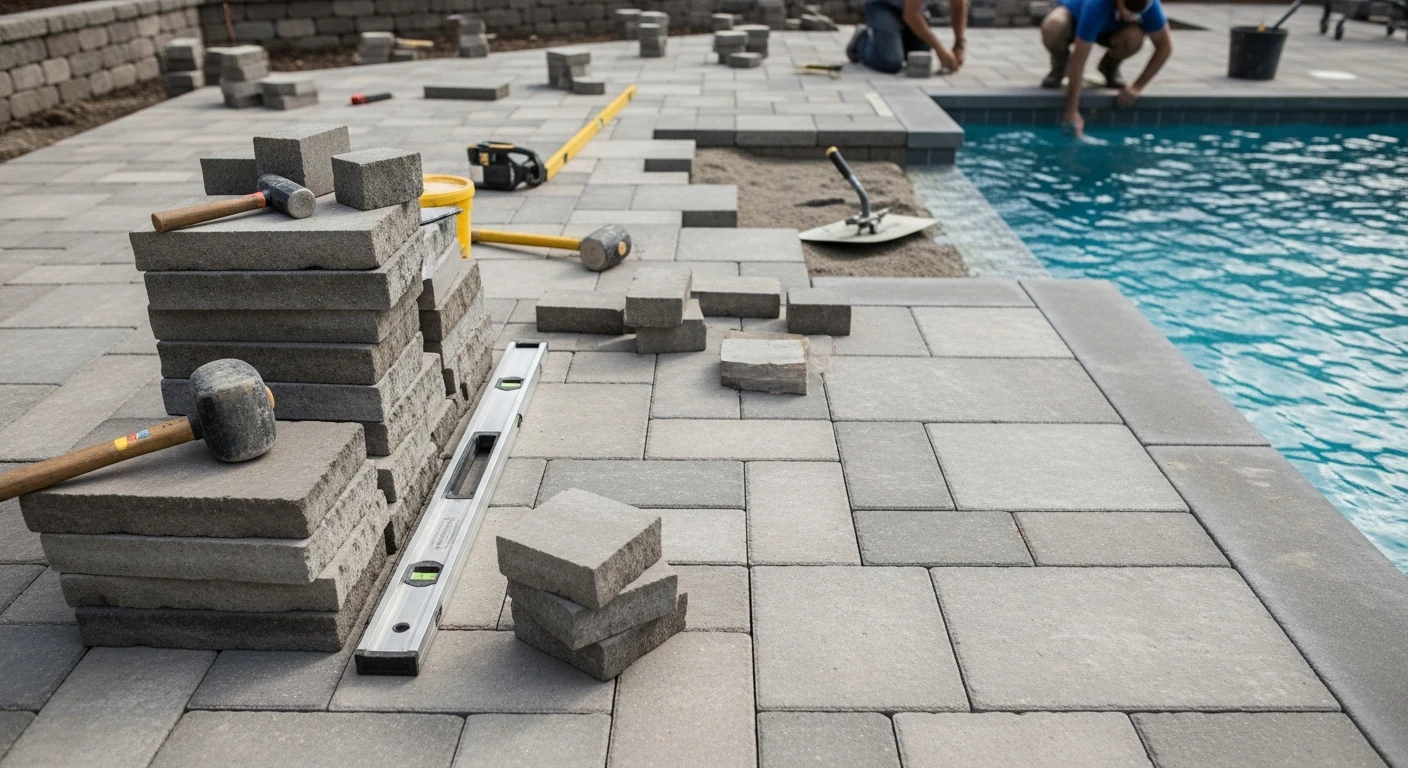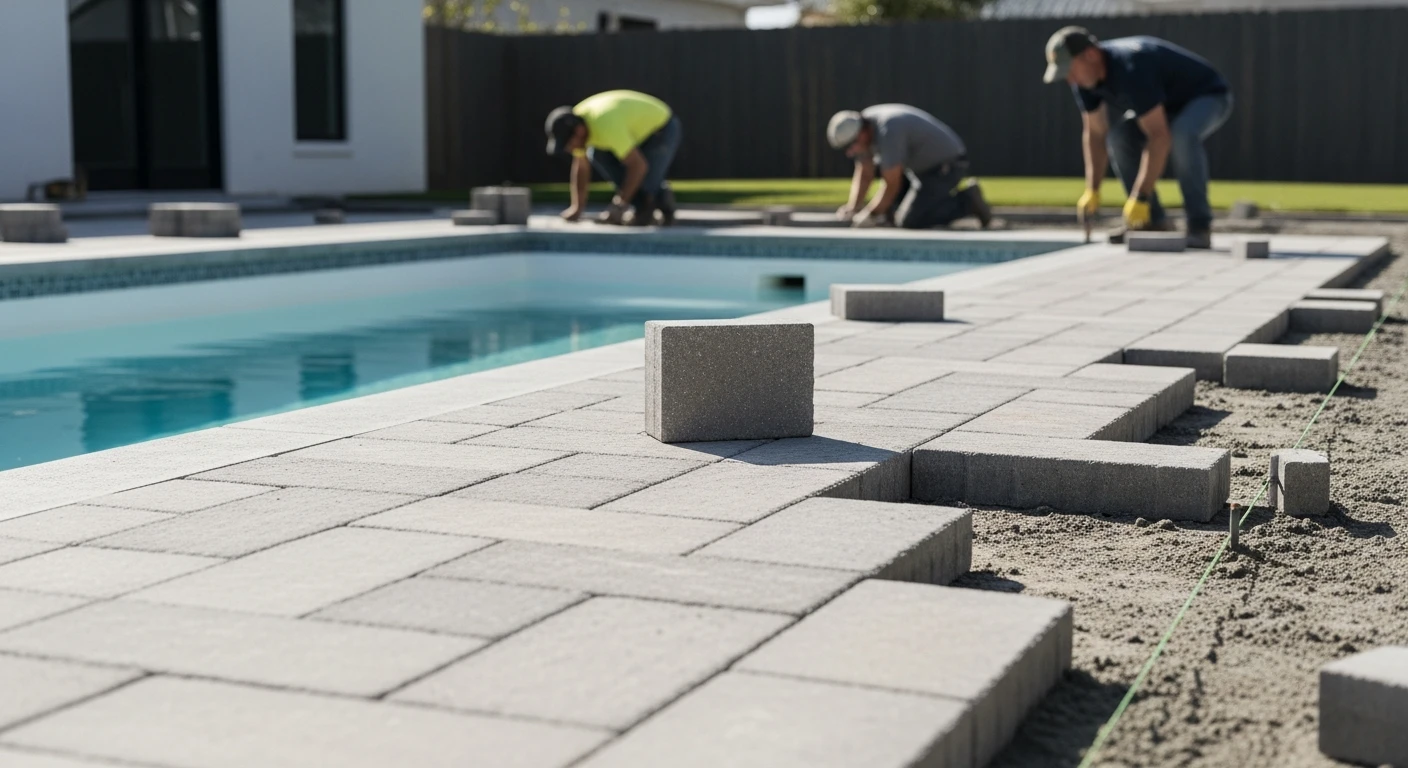
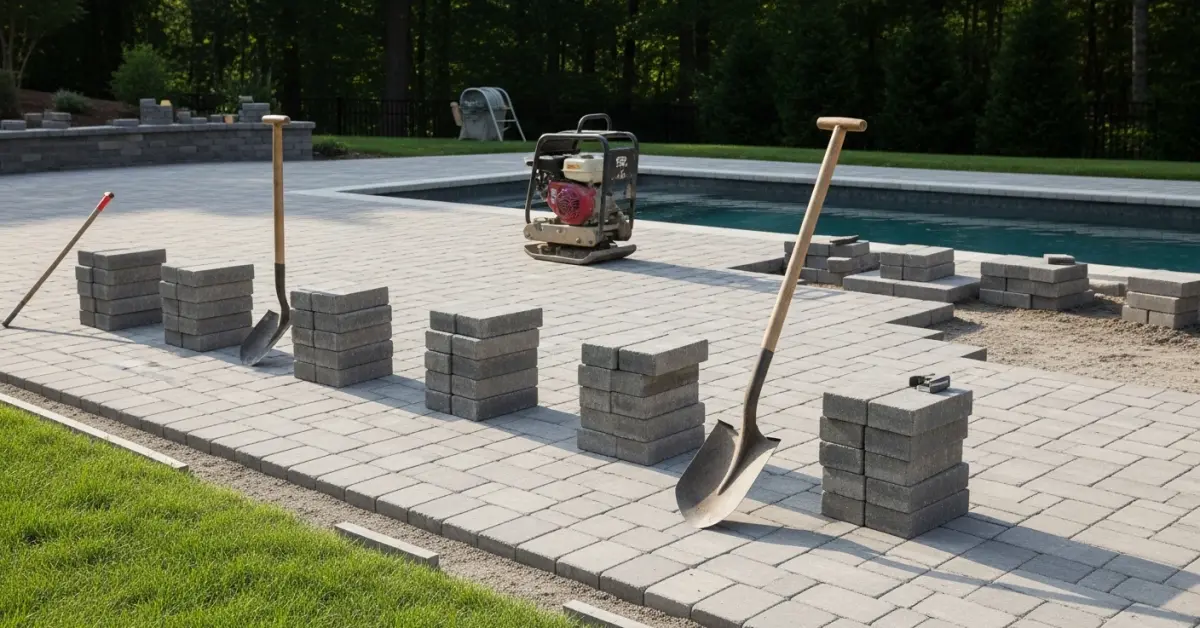
The most critical component of a paver driveway in Sarasota isn't the paver itself. It's the unseen, meticulously compacted layers of aggregate base beneath it. I've been called to repair beautiful, expensive driveways that failed within two years, and the problem is never a faulty brick; it's always an improperly prepared foundation that couldn't handle our sandy soil and torrential summer rains. Focusing only on the paver's color and style is the fastest path to a costly redo.
Executive Summary: A Resilient Driveway in Sarasota
From my experience on projects across Sarasota County, a successful paver installation hinges on combating two local
From my experience on projects across Sarasota County, a successful paver installation hinges on combating two local realities: our unstable sandy soil and our intense hydrostatic pressure during rainy season. A standard 4-inch base that works in other states will fail here. The focus must be on an over-engineered base and superior joint stabilization to prevent paver shifting and weed growth. The long-term performance is defined by the work done before a single paver is laid.
- Soil Stabilization: The native soil, often 'sugar sand', must be compacted and sometimes requires a geotextile fabric layer to prevent the base aggregate from migrating downwards.
- Base Depth and Compaction: A minimum of 6-8 inches of compacted road base (like crushed concrete or limestone) is non-negotiable for driveway applications here, compacted in 2-3 inch lifts.
- Stormwater Management: Proper grading (a minimum 1/4 inch per foot slope) and potentially incorporating permeable pavers are critical to manage runoff and comply with Sarasota County's impervious surface regulations.
- Edge Restraints and Joint Sand: Concrete bond beams are superior to plastic edging in our climate, and polymeric sand is essential to lock pavers and inhibit weed and ant intrusion.
The Planning Failures That Lead to Sinking Driveways
The most common missteps happen long before the crew arrives. Homeowners, focused on the final look, often overlook the technical specifications of the base preparation, which is where less reputable installers cut corners to lower their bids. This decision almost always leads to premature failure and repairs that cost more than the initial savings.
The Most Expensive Mistake: Skimping on the Base
I was consulted on a project in a Palmer Ranch community where a homeowner had a new paver driveway installed. Within 18 months, significant rutting appeared where the car tires ran, and the section near the garage had sunk nearly two inches. The contractor had used only 3 inches of base material directly over lightly tamped sand. To fix it, the entire driveway had to be pulled up, the inadequate base excavated, and a new, proper 8-inch foundation installed. The cost of the repair was nearly 70% of the original installation price, a devastating financial lesson in the importance of what lies beneath.
The Installation Process for Sarasota's Climate and Soil
A professional paver installation here is a multi-stage engineering project, not just a landscaping task. The process is specifically adapted to prevent the sinking and shifting that our sandy soil and heavy rains cause. It is a system designed from the ground up for resilience.
Key Selection Criteria for a Sarasota Contractor
When vetting local paver installers, your questions should focus on their specific methods for our environment. Generic answers are a red flag.
- Base Material and Depth: Do they specify a minimum of 6 inches of compacted FDOT-approved road base for driveways? Ask to see it in the contract.
- Compaction Method: Do they use a plate compactor on the sub-grade (the sand) before adding the base, and then again on the base in multiple lifts?
- Drainage and Grading Plan: How will they ensure water flows away from your home's foundation? They should be able to explain the grade and slope clearly.
- Sarasota County Permit Experience: Are they familiar with right-of-way permits if the work touches the sidewalk or street apron? Inexperience here can cause significant project delays.
- Sealer Specification: Do they use a high-solids, UV-resistant solvent-based sealer, or a cheaper water-based alternative that won't last a year in the Florida sun?
Paver Driveways vs. Concrete and Asphalt in Florida
Each driveway surface has its place, but in Sarasota, the choice involves specific trade-offs related to our climate, soil, and aesthetic standards, particularly in HOA-governed neighborhoods. Pavers offer a distinct advantage in repairability and design flexibility.
| Feature | Pavers | Poured Concrete | Asphalt |
|---|---|---|---|
| Heat Reflection | Good (Lighter colors) | Excellent (Standard gray) | Poor (Absorbs heat) |
| Repairability | Excellent (Individual units) | Poor (Patches are visible) | Fair (Sealing helps blend) |
| Soil Shift Tolerance | Very Good (Flexible system) | Poor (Prone to cracking) | Fair (Flexible but can rut) |
| Initial Cost | High | Medium | Low |
When a Paver Driveway Is the Wrong Choice
Despite their benefits, pavers are not always the best solution. If your property has significant issues with large, invasive tree roots from mature oaks, for example, the constant upward pressure can make maintaining a level paver surface a frustrating, ongoing battle. In such cases, a reinforced concrete driveway with strategic root barriers might be a more practical, albeit less flexible, long-term solution.
A Safe Hiring Checklist for Paver Installers
Hiring the right team is the single most important factor for a lasting paver driveway. A low price often signals cut corners on base depth, compaction, or materials. Use this checklist to protect your investment.
- Verify their General Liability and Workers' Compensation insurance is active and valid in Florida. Ask for the certificate.
- Check their status with the Florida Department of Business and Professional Regulation (DBPR). While a specific "paver license" doesn't exist, they should operate under a relevant contractor license.
- Request addresses of local installations that are at least three years old. A new job always looks good; a three-year-old job tells the truth about their work.
- Ensure the contract explicitly details the depth of the base (e.g., "8 inches of compacted base material"), the type of sand, and the type of edge restraint.
- Confirm they will handle all necessary permits with the City of Sarasota or Sarasota County, particularly if the driveway apron is being replaced.
- Ask what type of polymeric sand and sealer they use. Name brands like Alliance or Techniseal indicate a commitment to quality materials.
Decisions That Define a Successful Project
Two clients can hire the same reputable company and end up with different levels of satisfaction based on the decisions they make during the design and planning phase. The outcome is shaped by choices beyond just picking a contractor.
The Moment Most Homeowners Get It Wrong
The critical error happens when choosing the paver itself. A homeowner falls in love with a dark, porous paver they saw in a catalog designed for a northern climate. They insist on it, ignoring advice about heat absorption and stain resistance. The right decision is to prioritize pavers manufactured for the Florida climate—those with high density, low porosity, and lighter color palettes. These choices directly impact surface temperature, cleaning frequency, and how well the sealer performs against our intense UV and humidity.
Practical Answers for Installing Pavers in Sarasota
Navigating the local requirements is as important as the physical work. Understanding these specifics avoids delays and ensures your project is compliant from day one.
Do I Need a Permit for a Paver Driveway?
Generally, if you are only replacing the existing driveway within its current footprint and not altering the approach from the street (the apron), a permit from Sarasota County may not be required. However, the moment you expand the driveway, alter the curb cut, or replace the apron in the public right-of-way, a permit is absolutely mandatory. A reputable contractor will verify this with the county's Public Works department before starting.
How Do HOAs in Sarasota Impact Installation?
In communities like Lakewood Ranch or The Landings, the Homeowners Association Architectural Review Committee (ARC) has final say. They often have pre-approved color palettes, paver styles, and even specific patterns. Submitting your plan and receiving written approval before signing a contract with an installer is non-negotiable. Proceeding without it can result in fines and a costly order to remove the new driveway.
What About Permeable Pavers and Stormwater Rules?
Sarasota County has stringent regulations on impervious surface ratios—the amount of non-absorbent surface on your lot. If your project pushes you over the allowable limit, permeable paver systems are an excellent solution. They allow rainwater to percolate through the surface into a specialized gravel base below, reducing runoff. While more expensive to install, they are a key tool for landscape paver installers to meet environmental codes on tight lots.