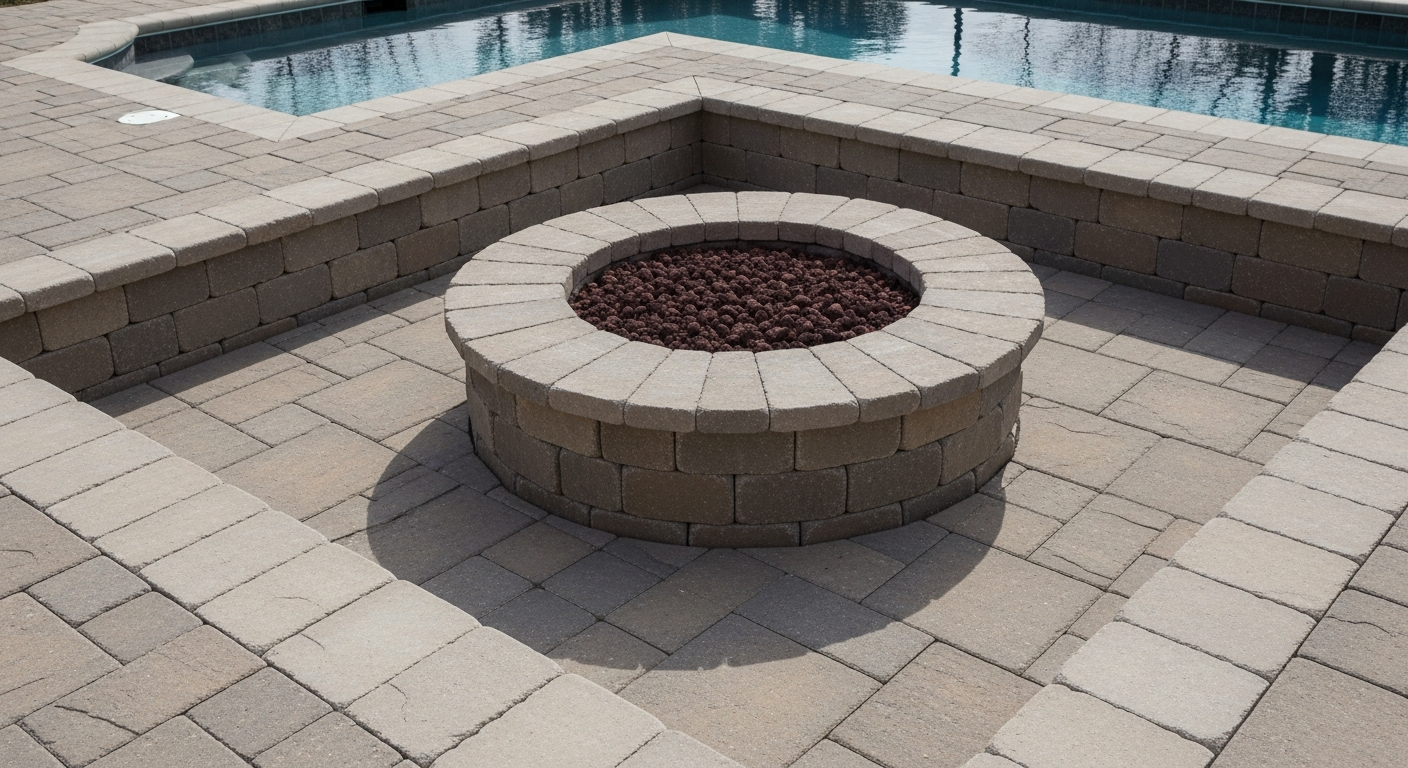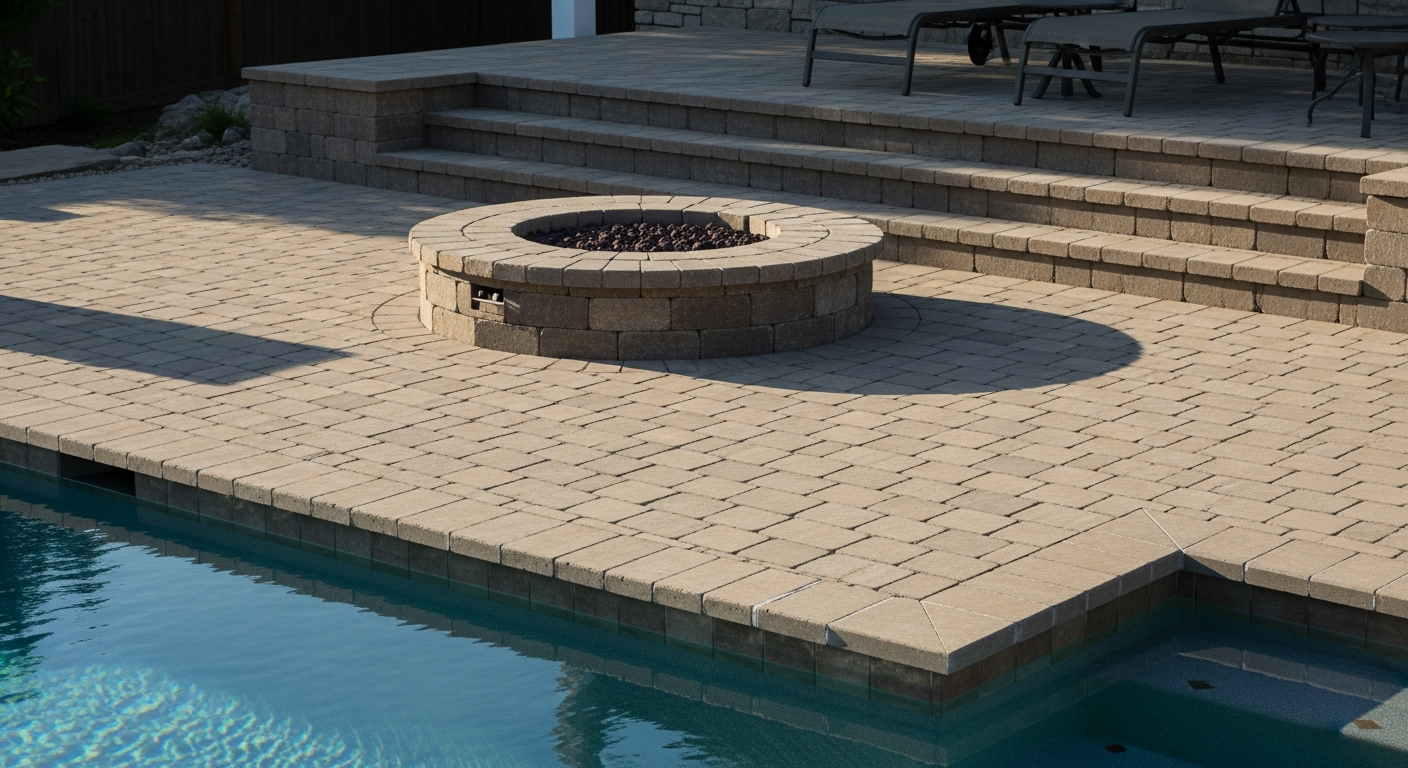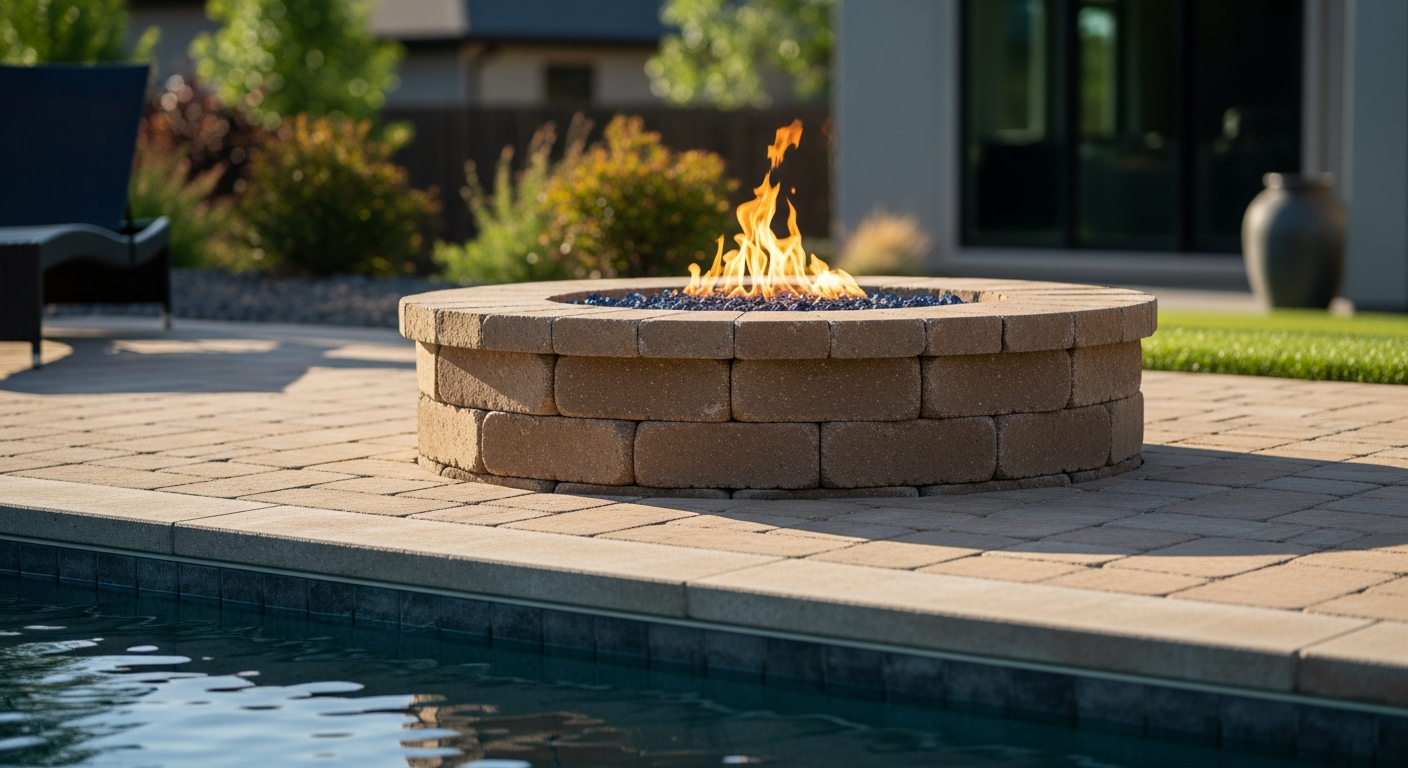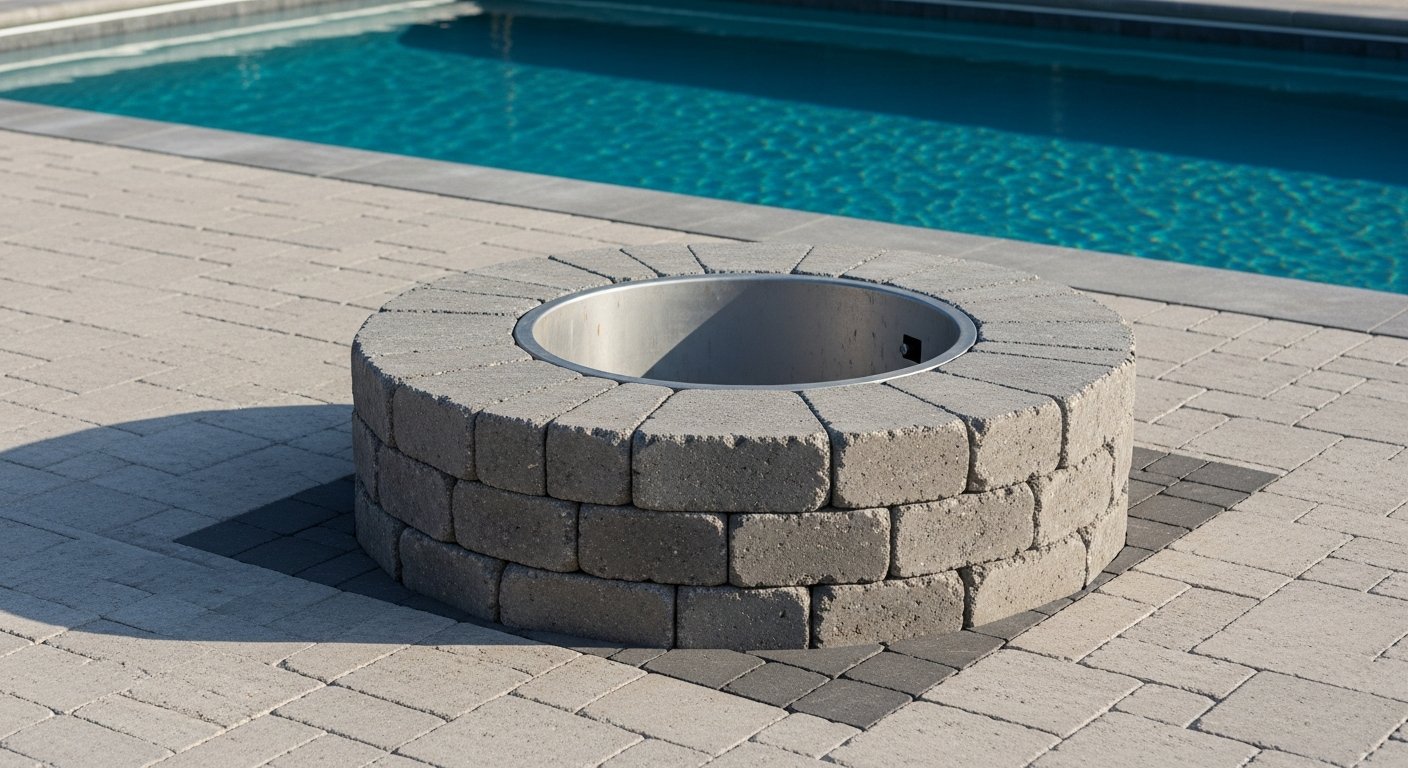
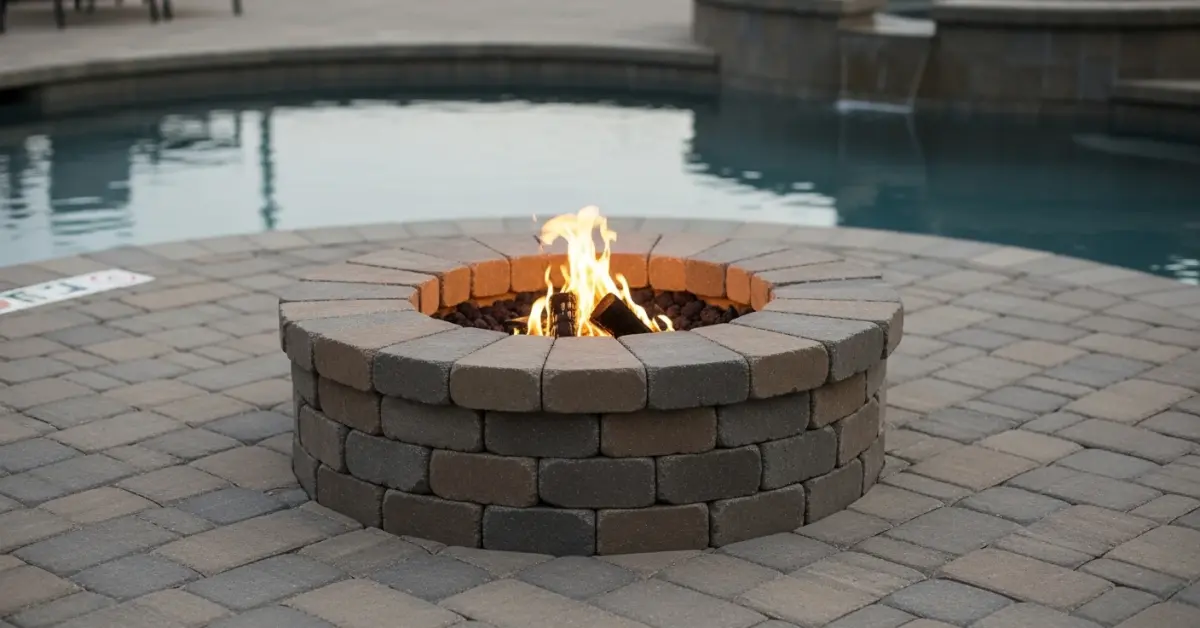
The most critical component of a paver firepit in Sarasota isn't the fire ring or the decorative cap stones. It's the 8 to 10 inches of engineered base material that no one ever sees. I've been called to fix more settled, cracked, and unsafe firepit patios in communities like Lakewood Ranch than I can count, and the failure always traces back to an improperly compacted base that couldn't handle our sandy, shifting soil and heavy rains.
Executive Summary: The Sarasota Approach to Paver Fire Pits
From my experience building and repairing hardscapes across Sarasota County, a successful paver fire pit project hinges
From my experience building and repairing hardscapes across Sarasota County, a successful paver fire pit project hinges on addressing our specific environmental challenges head-on. It's a system, not just a structure. The intense humidity accelerates material decay, our sandy soil demands a robust foundation to prevent settling, and strict local codes dictate placement and safety features. Ignoring these factors is the primary reason projects fail or incur unexpected costs.
- Foundation is Non-Negotiable: A minimum 8-inch compacted base of DOT-approved road base (not just gravel) is required to prevent shifting on Sarasota's sandy soil.
- Material Selection is Key: Use dense, low-porosity concrete pavers and high-grade stainless steel (316L) for burners and pans to resist salt air corrosion and moisture.
- Drainage Dictates Longevity: The fire pit structure and surrounding patio must have integrated drainage to manage our heavy downpours and prevent water from undermining the base.
- Compliance is Mandatory: Sarasota County Fire Prevention Code requires a minimum 25-foot clearance from any structure for wood-burning pits, a rule many HOAs enforce strictly. Gas fire pits offer more placement flexibility.
The Planning Failures I See Most Often
The biggest mistakes happen long before the first paver is laid. Homeowners, focused on aesthetics and initial cost, often underestimate the technical requirements of building in our coastal environment. This oversight leads to projects that look great for one season and then start to deteriorate.
The Most Expensive Mistake: The Undersized Base
The most common and costly failure is skimping on the foundation. A contractor might propose a 4-inch gravel base to lower the quote, which is standard in areas with clay soil. Here in Sarasota, that's a recipe for disaster. I was brought in on a project in a waterfront home near Lido Key where a beautiful new paver patio and fire pit had settled nearly two inches on one side after just one summer rainy season. The entire structure had to be dismantled, the base excavated and rebuilt correctly, more than doubling the client's total cost.
The Build Process in Practice
A properly executed paver fire pit project is a multi-stage process involving excavation, foundation work, construction, and finishing. It's far more than just stacking blocks in a circle. The timeline and steps are dictated by soil conditions, weather, and local administrative processes.
Key Steps for a Sarasota Installation
- Site Assessment and Permitting: Before any work begins, we verify setbacks with Sarasota County and check for any specific HOA architectural guidelines. A wood-burning fire pit almost always requires a site plan review to ensure it meets the 25-foot clearance rule.
- Excavation and Base Preparation: We excavate 10-12 inches deep. The first layer is a geotextile fabric to separate the native sand from our base material. Then, we install and compact an 8-10 inch base of crushed concrete or granite in 2-inch lifts.
- Construction and Assembly: The paver walls are built using a high-strength, concrete-rated adhesive between courses. For gas systems, all lines are installed and pressure-tested by a licensed gas professional before the interior is filled.
- Finishing and Sealing: We install the cap stones and sweep polymeric sand into the joints of the surrounding paver patio. I strongly recommend applying a high-quality breathable sealer to the pavers and cap stones to protect them from moisture intrusion and mildew growth.
Comparing Fire Pit Fuel Options for Sarasota Lifestyles
The choice between a wood-burning, propane, or natural gas fire pit has significant implications for cost, convenience, and placement on your property. This decision is often governed by HOA rules and proximity to your home.
| Feature | Wood-Burning | Propane (Tank) | Natural Gas (Lined) |
|---|---|---|---|
| Placement Flexibility | Very Low (25-foot rule) | High | Moderate (depends on gas line) |
| Initial Cost | Lowest | Moderate | Highest |
| Convenience | Low (requires tending) | High (tank swaps needed) | Highest (on/off switch) |
| Ambiance | Authentic crackle and smoke | Controlled, clean flame | Controlled, clean flame |
When a Paver Fire Pit Isn't the Right Choice
A permanent paver fire pit is a significant investment. If you have a very small lanai, are subject to extremely restrictive HOA rules that make placement impossible, or if you plan to move within the next few years, a high-quality portable fire pit might be a more practical solution. It won't add to your home's value, but it provides the function without the commitment and cost of a permanent installation.
A Safe and Compliant Hiring Checklist
Hiring the right contractor is the single most important decision you'll make. A low bid often hides shortcuts in materials or base preparation that will cost you more in the long run. Use this checklist to vet potential installers.
- Verify their Florida state license is active and in good standing on the DBPR (Department of Business and Professional Regulation) website. Look for a Certified General, Building, or Residential Contractor license for structural work.
- Request proof of both General Liability and Workers' Compensation insurance. A certificate of insurance should be sent to you directly from their insurance agent.
- Ask for a portfolio of local projects and speak with at least two recent clients in the Sarasota or Manatee County area.
- Ensure the contract specifies the depth of the base (minimum 8 inches), the type of base material, and the use of concrete adhesive between all block courses.
- If installing a gas fire pit, confirm they use a licensed and insured gas plumber for all connections and that the work will be permitted and inspected if required by the county.
- Discuss their plan for site drainage around the fire pit and patio area. This is a critical but often overlooked detail.
Decisions That Define a Lasting Outcome
Two clients can start with the same budget and vision, yet one ends up with a stunning, durable fire pit while the other faces repairs within three years. The difference lies in a few key decisions made at the start of the project.
The Moment Homeowners Get It Wrong: Prioritizing Aesthetics Over Structure
The critical mistake is falling in love with a specific paver color or design and letting that drive the entire conversation. The discussion should always start with the foundation. Your first question to any contractor should be: "Describe your base preparation process for sandy soil like we have in Sarasota." If they give a vague answer or suggest anything less than an 8-inch compacted base, they do not have the local experience required for a lasting installation. The most beautiful pavers in the world will fail if the ground beneath them gives way.
Practical Realities of Building in Sarasota County
Navigating the local requirements is a core part of my job. Understanding these specifics protects the homeowner from violations, fines, and unsafe installations.
Understanding Sarasota County Fire Code Setbacks
The Sarasota County Fire Prevention Code is explicit: any open flame, wood-burning recreational fire must be a minimum of 25 feet from any structure, including your house, pool cage, or shed. This is non-negotiable and a primary reason many homeowners in denser neighborhoods like Southgate or Gulf Gate Estates opt for natural gas or propane systems, which are typically classified as appliances and have less stringent setback requirements (often 10-15 feet, but always verify).
HOA Architectural Review: The First Hurdle
In communities like Palmer Ranch or The Founders Club, you cannot break ground without approval from the Architectural Review Committee (ARC) or Board (ARB). They will require a detailed site plan showing the fire pit's location, dimensions, materials, and colors. The plan must demonstrate compliance with all community and county setbacks. I've seen projects delayed for weeks because a homeowner submitted an incomplete application. We always prepare and submit this package as part of our process.
Material Choices for a Salt Air Environment
If you live west of I-75, and especially on the keys like Siesta or Lido, salt spray is a constant reality. Standard galvanized steel or powder-coated metal components in a fire pit kit will rust, sometimes within a year. For these projects, I only specify 316L marine-grade stainless steel for the burner, pan, and any access doors. It's a significant cost increase upfront but prevents the need for a full replacement down the road.