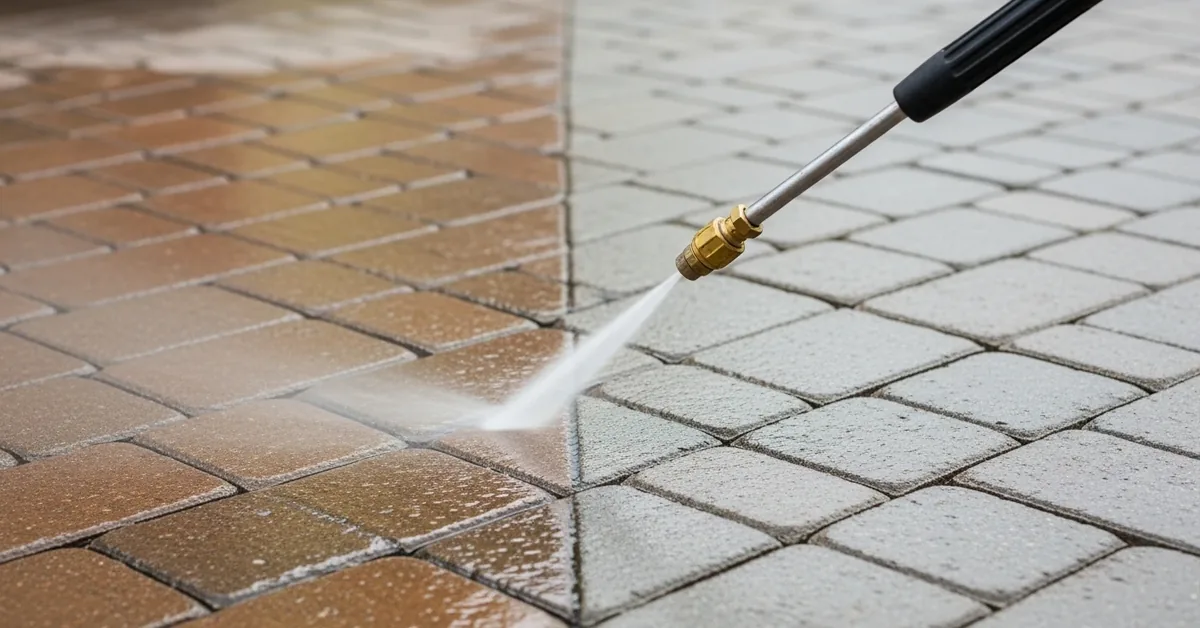
Paver Pressure Washing in Sarasota: An Executive Summary
After more than a decade of restoring paver surfaces in Sarasota County, I can state that pressure washing alone is a
After more than a decade of restoring paver surfaces in Sarasota County, I can state that pressure washing alone is a fundamentally flawed strategy for this climate. Our combination of intense sun, high humidity, and frequent rain creates a perfect breeding ground for mold and algae, which porous pavers absorb like a sponge. The real, lasting solution is a two-stage process: a meticulous cleaning followed by the application of a high-quality penetrating sealer. This is not an upsell; it's the only approach that provides long-term value by protecting the paver's color, structural integrity, and joint sand from the specific environmental pressures we face here.
- The Problem: Sarasota's humidity guarantees rapid regrowth of algae, mold, and mildew on unsealed pavers, often within 3-6 months.
- The Solution: A comprehensive 'wash and seal' process that cleans, re-sands joints, and applies a protective sealant.
- The Cost of Inaction: Unsealed pavers fade from UV exposure, and shifting joint sand can lead to paver movement and costly repairs.
- HOA Compliance: Many Sarasota communities, particularly in areas like Palmer Ranch, have strict bylaws regarding stained driveways, making this a maintenance necessity, not an option.
The Planning Failures That Double the Cost of Paver Maintenance
The most common mistake I see is homeowners viewing pressure washing as a simple, one-off task. They hire a low-bid contractor who uses excessive pressure, blasting away not just the grime but also the crucial jointing sand between the pavers. This creates immediate problems and sets up a cascade of future costs that far exceed the initial savings.
The Most Expensive Failure: Ignoring the Jointing Sand
When a technician uses a zero-degree nozzle to aggressively clean pavers, they strip out the polymeric sand that locks the pavers together. I was called to a home in The Landings where a 'budget' pressure wash had left the driveway clean but unstable. Within two months of heavy rain, the pavers started to shift and sink because the stabilizing sand was gone. The homeowner saved $200 on the initial wash but faced a $1,800 repair bill to lift sections of the driveway, re-level the base, and reinstall new polymeric sand. This is a direct, measurable consequence of treating the service as a commodity.
The Correct Paver Wash and Seal Process in Practice
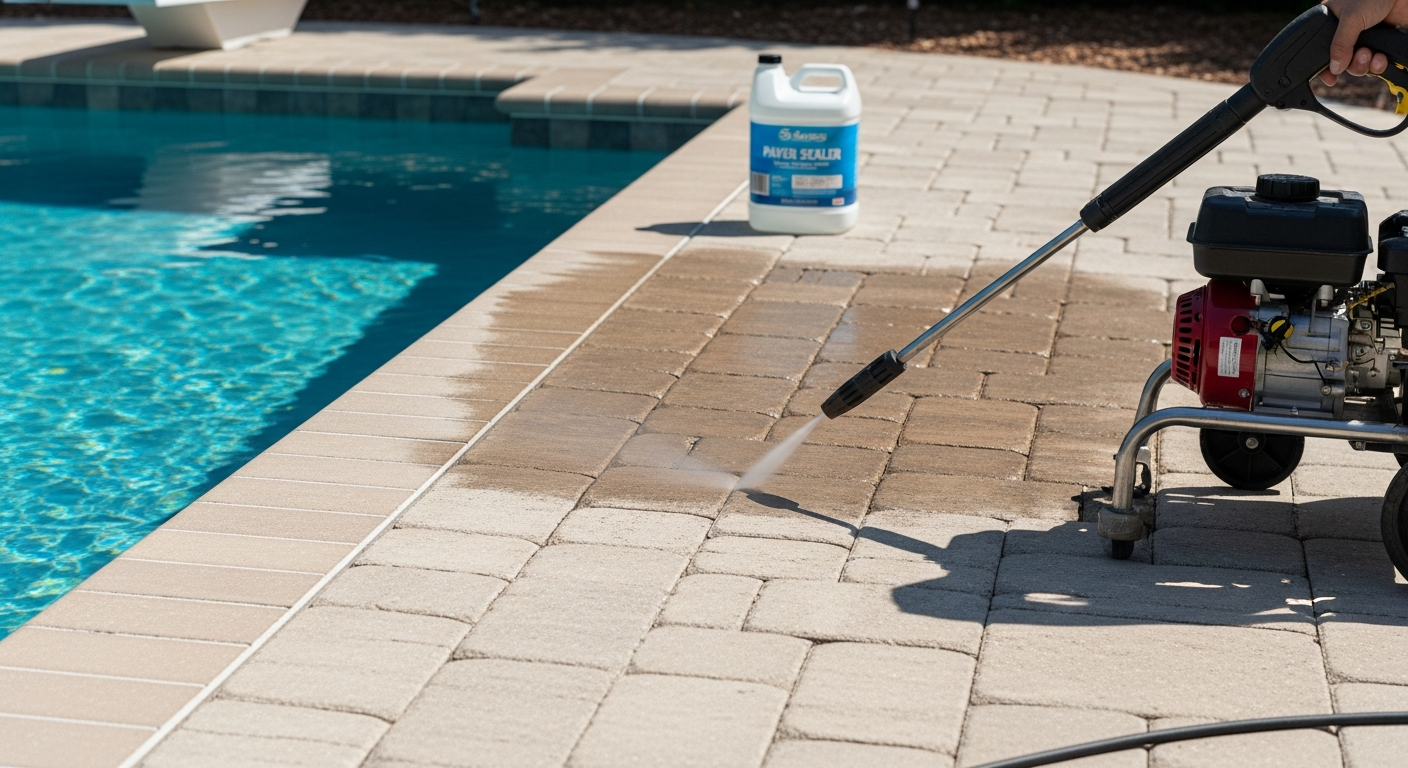
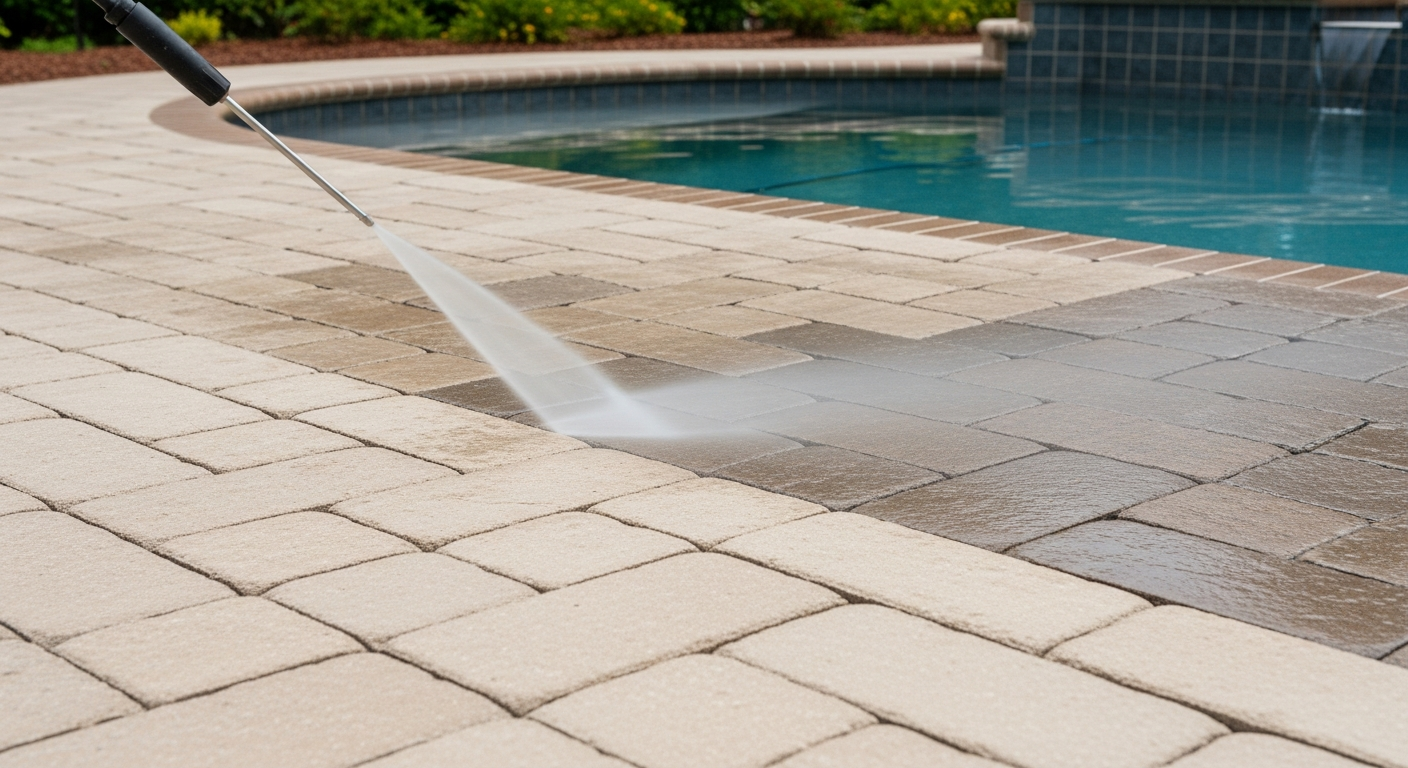
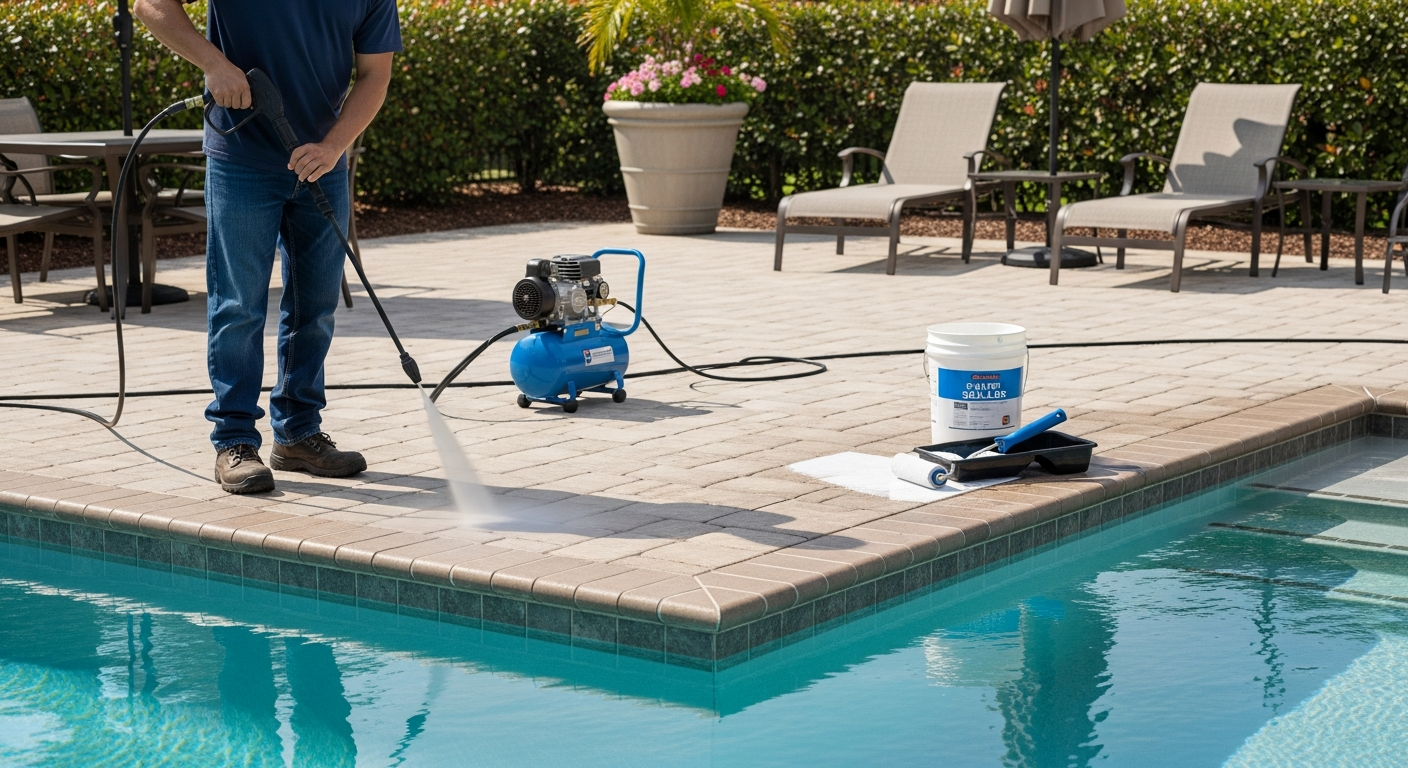
A professional paver restoration process is methodical and multi-staged, designed to protect the asset, not just clean it. It starts with a pre-treatment using a specialized paver cleaner for pressure washer systems, which is a biodegradable solution that kills mold and algae at the root. This allows for a lower-pressure wash, preserving the paver surface and minimizing sand loss.
The next critical step is re-sanding. After the pavers are completely dry—a process that can take a full day in our humid climate—we sweep new polymeric sand into the joints. This sand contains a polymer that, when activated with a light mist of water, hardens to lock the pavers in place and inhibit weed growth. Only then is the sealer applied.
Selection Criteria for Sarasota Homeowners
- Sealer Expertise: Ask if the contractor uses a penetrating, breathable sealer. Film-forming acrylic sealers can trap moisture, turn hazy in the Florida sun, and become very slippery when wet—a major liability around pool decks.
- Sarasota County Insurance and Licensing: Verify they carry General Liability and Workers' Compensation insurance specific to Florida. A legitimate contractor will provide their license number, which you can check with the state.
- Process Transparency: Do they explain the full process, including pre-treatment, pressure settings, re-sanding, and the type of sealer used? A refusal to detail these steps is a red flag.
- Local Portfolio: Can they show you completed projects in Sarasota neighborhoods like Gillespie Park or Southside Village? This demonstrates familiarity with local paver types and environmental challenges.
Comparing 'Wash and Seal' to Other Options
Homeowners often weigh a professional 'power wash and seal' service against a simple pressure wash or a DIY approach. The long-term performance and cost in Sarasota's climate make the choice clear when viewed as an investment in your property's value and safety.
| Indicator | DIY Pressure Wash | Pressure Wash Only (Pro) | Pressure Wash and Seal (Pro) |
|---|---|---|---|
| Initial Cost | Low (rental equipment) | Moderate ($0.25 - $0.50/sq ft) | High ($1.50 - $3.00/sq ft) |
| Longevity of Cleanliness | Very Short (1-4 months) | Short (3-8 months) | Long (2-4 years) |
| Paver & Joint Protection | None (often damaging) | None (joint sand loss) | Excellent (locks sand, blocks stains) |
| Long-Term Cost | High (repairs, frequent re-cleaning) | Moderate (cycle of re-cleaning) | Low (reduced cleaning frequency, avoids repairs) |
When a Full Seal Is Not the Right Choice
There is one scenario where I advise against immediate sealing: newly installed pavers. Pavers need to off-gas and release naturally occurring mineral salts, a process called efflorescence. Sealing them too soon can trap this white, hazy residue under the sealer. I typically recommend waiting at least 60-90 days after installation before cleaning and sealing a new paver surface in our area.
A Safe Hiring Checklist for Paver Services
Protecting yourself from unqualified or uninsured operators is critical. The barrier to entry for pressure washing is low, but the potential for property damage is high. Before hiring anyone, follow this checklist.
- Verify Florida Contractor License: While a specific 'pressure washing' license doesn't exist, if they perform sealing or repairs, they may need a specialty license. Always ask for their business license and verify it's active.
- Request a Certificate of Insurance (COI): Don't just take their word for it. Ask for a COI sent directly from their insurance agent. It should list both General Liability and Workers' Compensation coverage.
- Confirm Use of Polymeric Sand: Ensure their quote explicitly includes the installation of new polymeric sand after cleaning. If it's not listed, they are skipping a critical step.
- Inquire About Sealer Type: Ask for the specific brand and type of sealer they use (e.g., solvent-based vs. water-based, penetrating vs. film-forming). A professional will know exactly what they are using and why it's right for your pavers.
- Check for HOA Vendor Requirements: Many planned communities in Sarasota require vendors to register with the management office and provide proof of insurance. Confirm the contractor is compliant before work begins.
- Get a Written Scope of Work: The quote should detail every step: chemical pre-treatment, cleaning method, sand installation, number of sealer coats, and total cost.
Decisions That Determine the Outcome
The success of a paver restoration project hinges on decisions made before a single drop of water is sprayed. The most important choice is to frame the project as 'asset protection' rather than 'surface cleaning.' This mental shift changes the questions you ask and the qualifications you look for in a contractor.
A client in a bayfront home on Bird Key had beautiful, expensive travertine pavers around their pool. They understood this principle perfectly. They weren't looking for the cheapest price; they were looking for the specialist who could protect their investment from saltwater corrosion and algae. We chose a premium saline-resistant, penetrating sealer. The result is a surface that beads water, resists stains, and has maintained its look for years, justifying the higher upfront cost many times over.
The Moment Most Homeowners Get It Wrong
The critical mistake happens at the quoting stage. Most homeowners collect three quotes and default to the lowest or middle option, assuming the service is standardized. The correct approach is to disqualify contractors based on their process, not their price. Ask each one to describe their step-by-step method for cleaning, re-sanding, and sealing. The one who can't explain why they use a specific type of paver cleaner, why they re-sand, and what benefits their chosen sealer provides in a humid, high-UV environment is the one you eliminate, regardless of price.
Practical Answers About Operating in Sarasota
How do local water restrictions impact paver washing?
Sarasota County and the Southwest Florida Water Management District can implement water restrictions during dry spells. Professional contractors are typically aware of these and use high-efficiency equipment with proper nozzles that use significantly less water than a garden hose. We also monitor schedules, as restrictions often limit watering/washing to specific days and times. A professional service plans projects to remain compliant.
Are there specific paver sealers for coastal Sarasota homes?
Yes, for properties near saltwater, like those on Siesta Key or Longboat Key, it's crucial to use a sealer with high resistance to salt degradation. Standard acrylic sealers can break down quickly from salt air and spray. We use specialized silane/siloxane-based penetrating sealers in these environments. They create a hydrophobic barrier within the paver itself, preventing salt from absorbing and causing spalling (surface flaking).
What happens if my HOA has specific paver color or finish rules?
This is a common consideration in communities like Lakewood Ranch. Some sealers, particularly 'wet look' or enhancing sealers, can darken the pavers and add a sheen. Before work begins, it's essential to confirm if your HOA has regulations on paver appearance. We always recommend doing a small test spot in an inconspicuous area to get approval on the final look from both the homeowner and, if necessary, the HOA's architectural review committee to avoid any compliance issues.