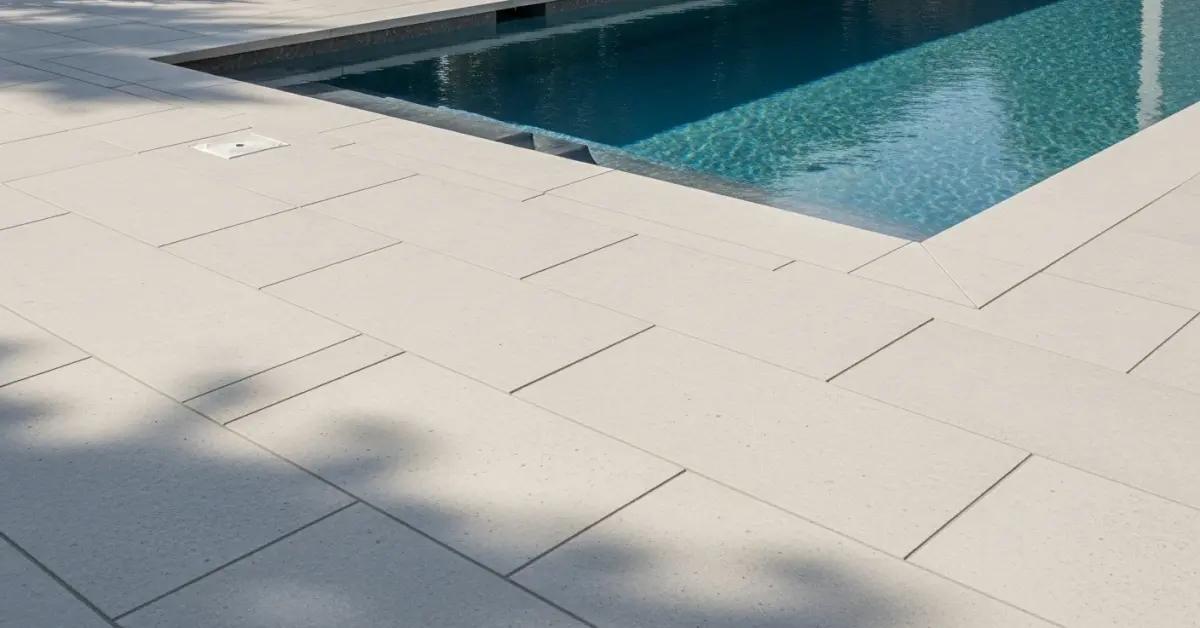
Why do so many Sarasota homeowners invest in a beautiful new pool deck, only to see it stained, slippery, and faded within a few years? The issue isn't always the material itself, but the mismatch between the product and our demanding coastal environment. I've been called to far too many projects where a travertine or concrete paver deck, barely three years old, looks a decade past its prime. The problem stems from underestimating the combined assault of UV radiation, humidity, and salt spray.
The Sarasota Verdict on Porcelain Pavers
From my direct experience, porcelain pavers are the most resilient and functionally superior pool deck material for the
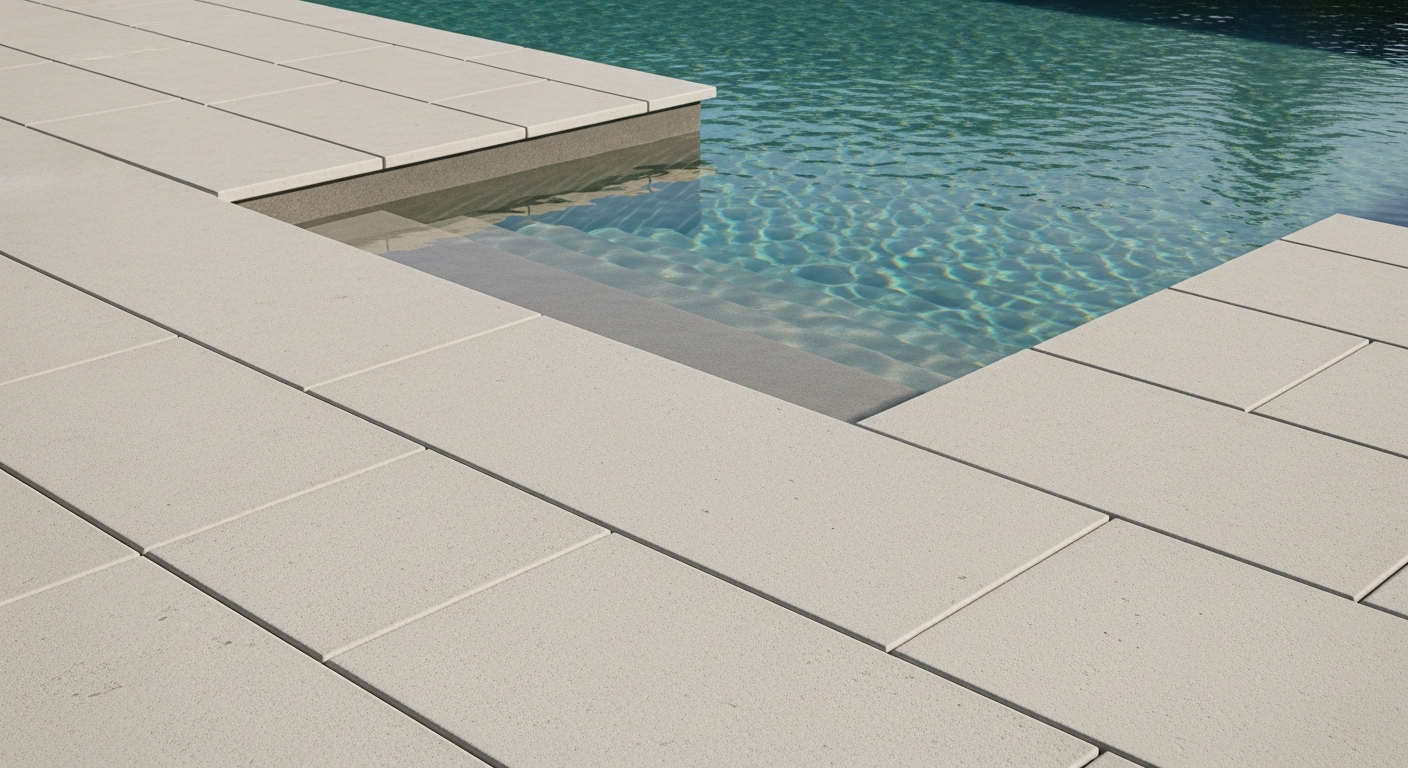
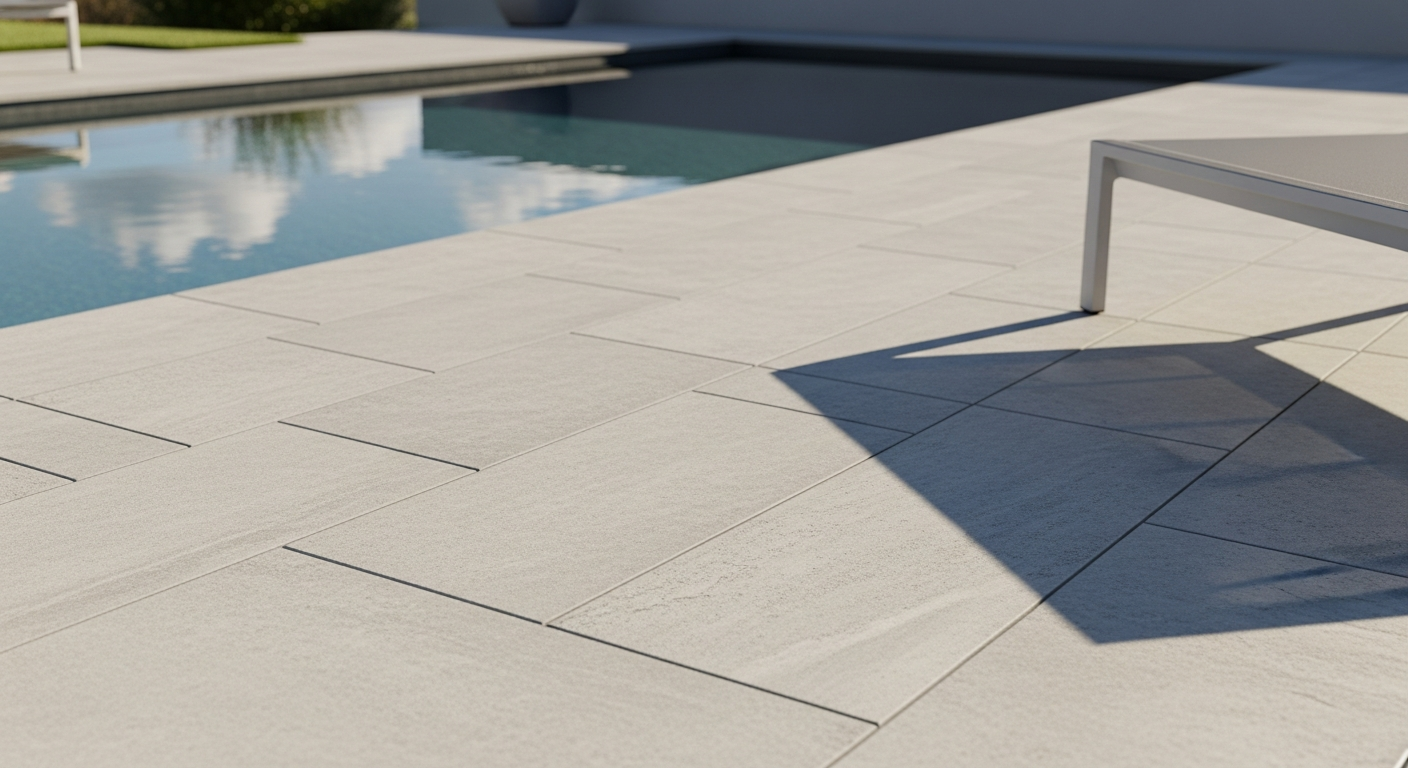
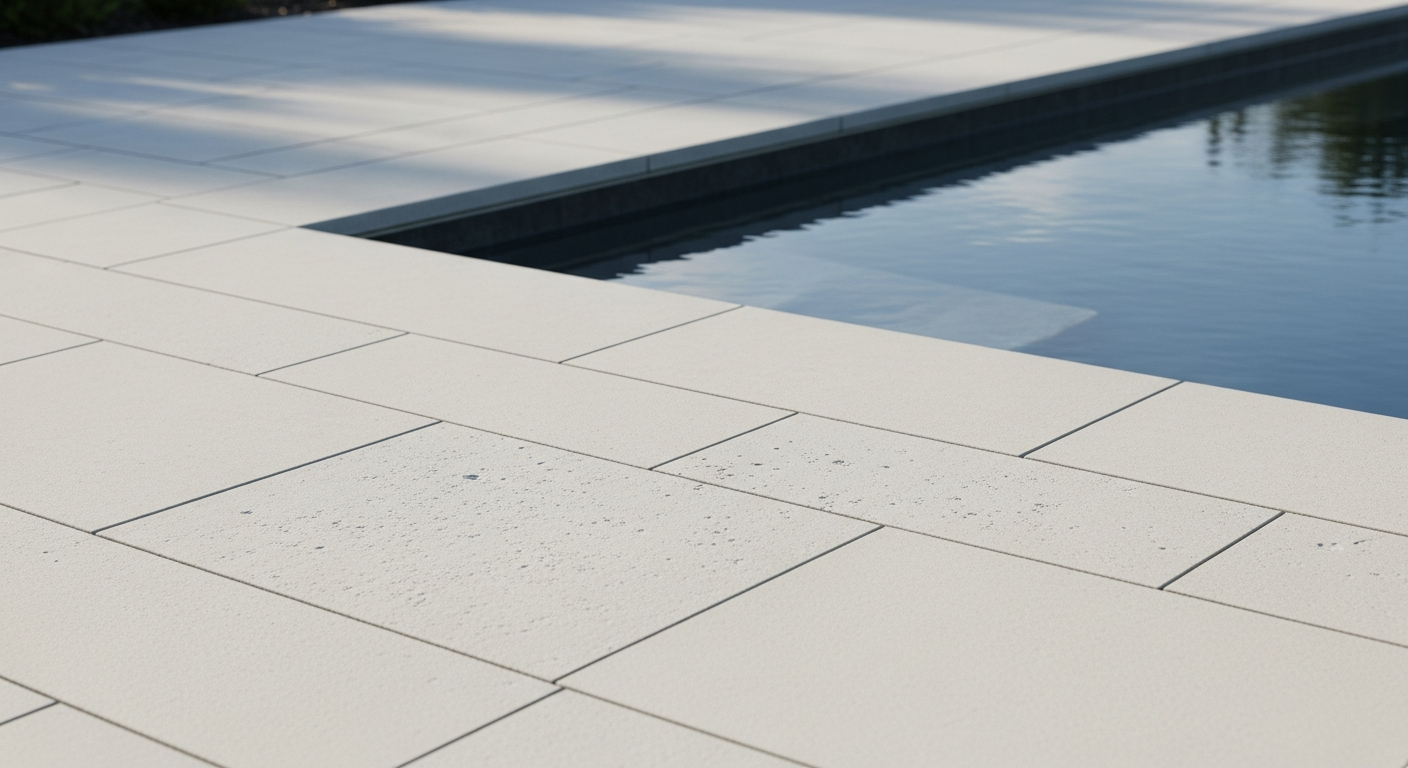
From my direct experience, porcelain pavers are the most resilient and functionally superior pool deck material for the Sarasota climate, provided the installation is executed flawlessly. They solve the core issues we face here: intense sun, high humidity, and salt exposure. Homeowners who focus solely on the upfront cost per square foot often miss the total cost of ownership, which includes sealing, pressure washing, and eventual replacement of lesser materials.
- UV & Fade Resistance: Porcelain's color is baked through the entire body (full-body porcelain), making it virtually immune to the fading that plagues stained concrete and even some natural stones under the Florida sun.
- Non-Porous Surface: With an absorption rate of less than 0.5%, these pavers resist mold, mildew, and stains from pool chemicals or spilled drinks—a major issue in our humid climate.
- Saltwater & Chlorine Proof: Unlike porous travertine or concrete, porcelain is inert and will not degrade, pit, or spall from exposure to saltwater pools or chlorine.
- Consistent Sizing & Thickness: Machine-made precision allows for tighter joint lines and a more stable, uniform surface, which is critical when setting on a sand or pedestal system over our local soil.
Planning Failures That Compromise a Porcelain Deck Project
The most common errors happen before a single paver is laid. Homeowners often get quotes comparing porcelain to travertine on a per-square-foot basis, but this comparison is fundamentally flawed. The real cost and success lie in the preparation of the substrate and the specific installation method required for a non-porous material like porcelain.
The Substrate Miscalculation
The most expensive failure I see is treating a porcelain paver installation like a standard concrete paver job. A contractor who proposes a minimal sand base is setting you up for failure. Because porcelain is non-porous, water doesn't soak through; it runs off the surface and into the joints. If the base isn't engineered for rapid drainage with a proper slope, water sits, saturates the base, and leads to shifting, sinking pavers, and efflorescence blooms that are nearly impossible to clean. In one case in The Landings, a client had to have their entire 1,200 sq. ft. deck pulled up and the base completely redone just two years after installation because the initial contractor used a standard, inadequate sand setting bed.
The Installation Process for Sarasota's Climate
A proper porcelain paver installation for a pool deck is a multi-step process that accounts for our sandy soil and heavy rains. It's less about the pavers themselves and more about creating a stable, permeable foundation that can manage water effectively. The process is meticulous and cannot be rushed.
Key Selection Criteria for Sarasota Homeowners
When you're evaluating installers, your questions should focus on their method, not just their price. Here's what to look for, specific to our area:
- Sub-base Compaction Method: Ask specifically about their compaction process for Sarasota's sandy soil. They should be using a vibrating plate compactor and testing for proper density to prevent future settling.
- Drainage Plan: Demand to see a clear drainage plan. Where will the water go? They should be able to explain the deck's slope (minimum 1/4 inch per foot) and the placement of channel drains, especially around the house foundation.
- Edge Restraint System: On a sand or gravel set, what type of edge restraint will they use? In Florida, cheap plastic restraints can warp and break under the intense sun. Insist on heavy-duty concrete or aluminum restraints.
- Polymeric Sand or Grout Choice: For joints, are they using a high-quality polymeric sand designed for wider joints and our wet climate, or a specialized exterior grout if it's a mortar-set application? The wrong choice leads to washed-out or cracked joints within the first rainy season.
Porcelain Pavers vs. Common Alternatives in Sarasota
Choosing a deck material involves trade-offs between initial cost, long-term maintenance, and performance. For Sarasota homeowners, heat retention and slip resistance are just as important as aesthetics. Here's how porcelain stacks up against the two most common choices I see installed locally.
| Feature | Porcelain Pavers | Travertine Pavers | Stamped Concrete |
|---|---|---|---|
| Upfront Cost (Installed) | High ($25 - $40 / sq. ft.) | Medium ($18 - $30 / sq. ft.) | Low ($12 - $20 / sq. ft.) |
| Maintenance in FL Climate | Very Low (Occasional cleaning) | High (Requires sealing every 1-2 years) | Medium (Requires sealing every 2-3 years) |
| Stain & Mold Resistance | Excellent (Non-porous) | Poor (Highly porous, stains easily) | Fair (Dependent on sealer quality) |
| Heat Retention (Barefoot Test) | Good (Lighter colors stay cooler) | Excellent (Naturally cool to the touch) | Poor (Can get extremely hot) |
When Porcelain Pavers Are NOT the Right Choice
Despite its advantages, porcelain isn't always the best fit. If your budget is extremely tight and you cannot afford the proper, robust sub-base preparation, you are better off with a professionally installed stamped concrete deck. A poorly installed porcelain deck is a far greater liability and waste of money than a well-installed, properly sealed concrete deck. The performance of porcelain is entirely dependent on the quality of the foundation beneath it.
Safe Hiring Checklist for Your Pool Deck Project
Vetting a contractor in Florida's busy market requires more than just checking reviews. The consequences of hiring an unlicensed or unqualified installer are significant, from voided warranties to liens on your property. This is my personal checklist I advise clients to use.
- Verify FL State License: Use the Florida Department of Business and Professional Regulation (DBPR) portal to confirm their contractor license is active and in good standing. A General Contractor (CGC) or specialty license may be required depending on the scope.
- Confirm Liability & Workers' Comp Insurance: Ask for the certificate of insurance and call the provider to verify coverage is current. Without it, you could be liable for injuries on your property.
- Check Sarasota County Permit History: You can look up a contractor's name in the Sarasota County permit portal. A history of successfully pulled and closed permits is a good sign. A lack of history is a red flag.
- Request a Porcelain-Specific Portfolio: Don't look at their general paver work. Ask to see at least three completed porcelain paver pool deck projects that are over a year old.
- Review the Sub-Base Specification in the Contract: The contract must detail the depth and type of base material (e.g., "4-6 inches of compacted #57 stone"), the slope, and the drainage plan. Vague terms like "standard base" are unacceptable.
Decisions That Determine the Outcome
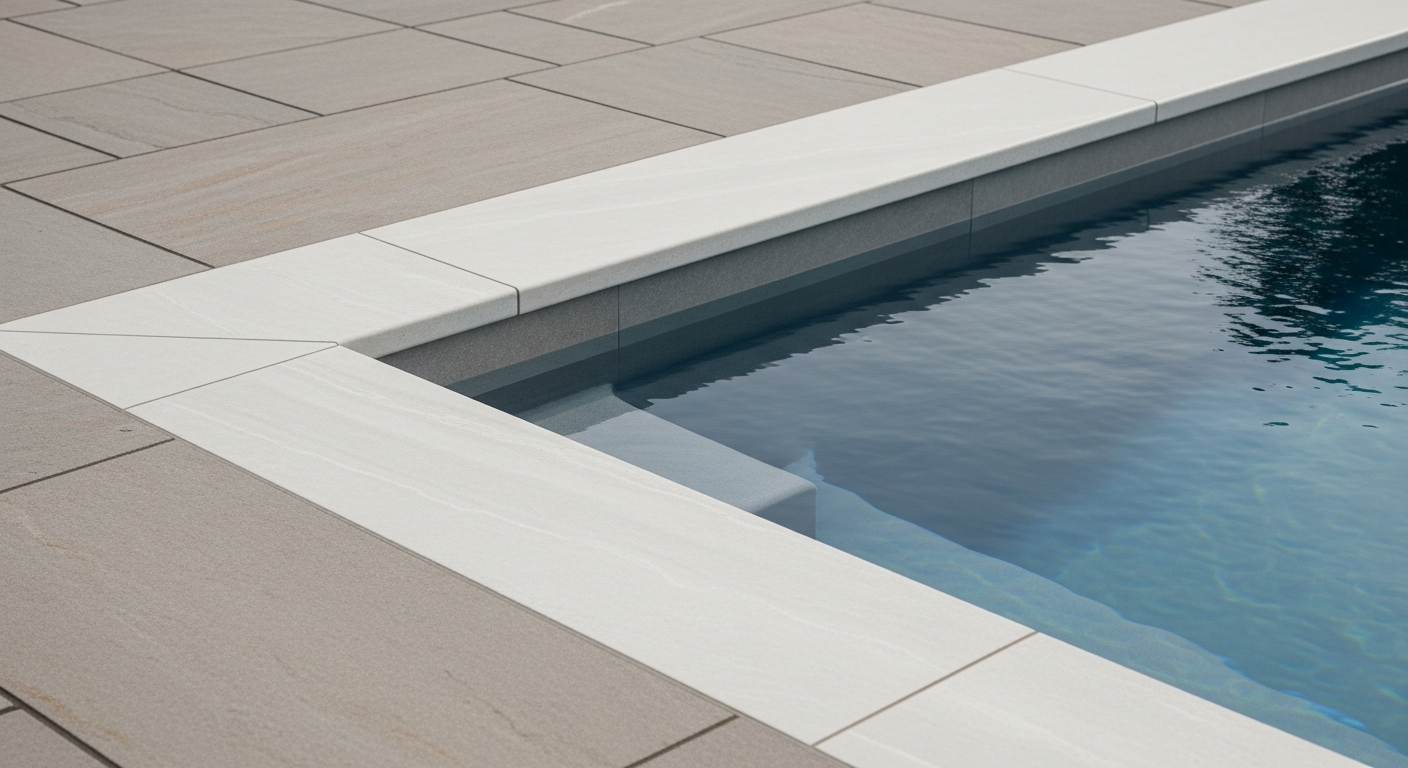
Over the years, I've seen that the ultimate success of a porcelain paver deck hinges on two key moments. The first is choosing the right contractor, which we've covered. The second is the homeowner's decision regarding the material itself, specifically the coping and the paver's finish.
The Moment Most Homeowners Get It Wrong
The critical mistake is choosing a paver based on a small sample viewed indoors. A porcelain paver that looks perfect in a showroom can be blindingly bright or dangerously slick in the real world. You must evaluate a full-size sample paver at your own poolside, at different times of day. Check its glare at high noon. More importantly, pour water on it and feel its texture. The required slip-resistance rating for pool decks is crucial (look for a DCOF rating of >0.42), but feeling it yourself is the final test.
Practical Answers About Operating in Sarasota
Navigating the local requirements for a pool deck project can be frustrating if you don't know the process. It's not just about the installation; it's about doing it legally and in compliance with local and community rules.
Navigating Sarasota County Permit Requirements
Any new pool deck or significant expansion in Sarasota County requires a permit. This process involves submitting plans that show the deck's dimensions, materials, and its relation to property lines and easements. The county's primary concern is impervious surface coverage—how much of your lot is covered by non-draining surfaces. A porcelain deck set on a concrete slab is considered 100% impervious, while one set on a proper permeable base may get some credit, depending on the plan reviewer. An experienced contractor handles this process, but you should know that approval can take 4-6 weeks.
HOA Architectural Review in Communities like Palmer Ranch
In many Sarasota communities, especially those with strict architectural guidelines like Palmer Ranch or Lakewood Ranch, the county permit is only half the battle. Your HOA's Architectural Review Committee (ARC) has its own set of rules for materials, colors, and even the installation timeline. You must submit your paver choice and project plans to the ARC for approval *before* any work begins. I've seen projects delayed for months because a homeowner signed a contract before getting this crucial approval.
Florida Building Code and Pool Safety Barriers
Any work on a pool deck triggers a review of your current pool safety features under the Florida Building Code. This means your fence, gates, and door alarms must be up to current standards. A deck renovation often requires bringing these elements into compliance. A reputable contractor will identify these needs during the initial inspection and include any necessary upgrades in the scope of work and budget, preventing costly surprises during the final inspection.