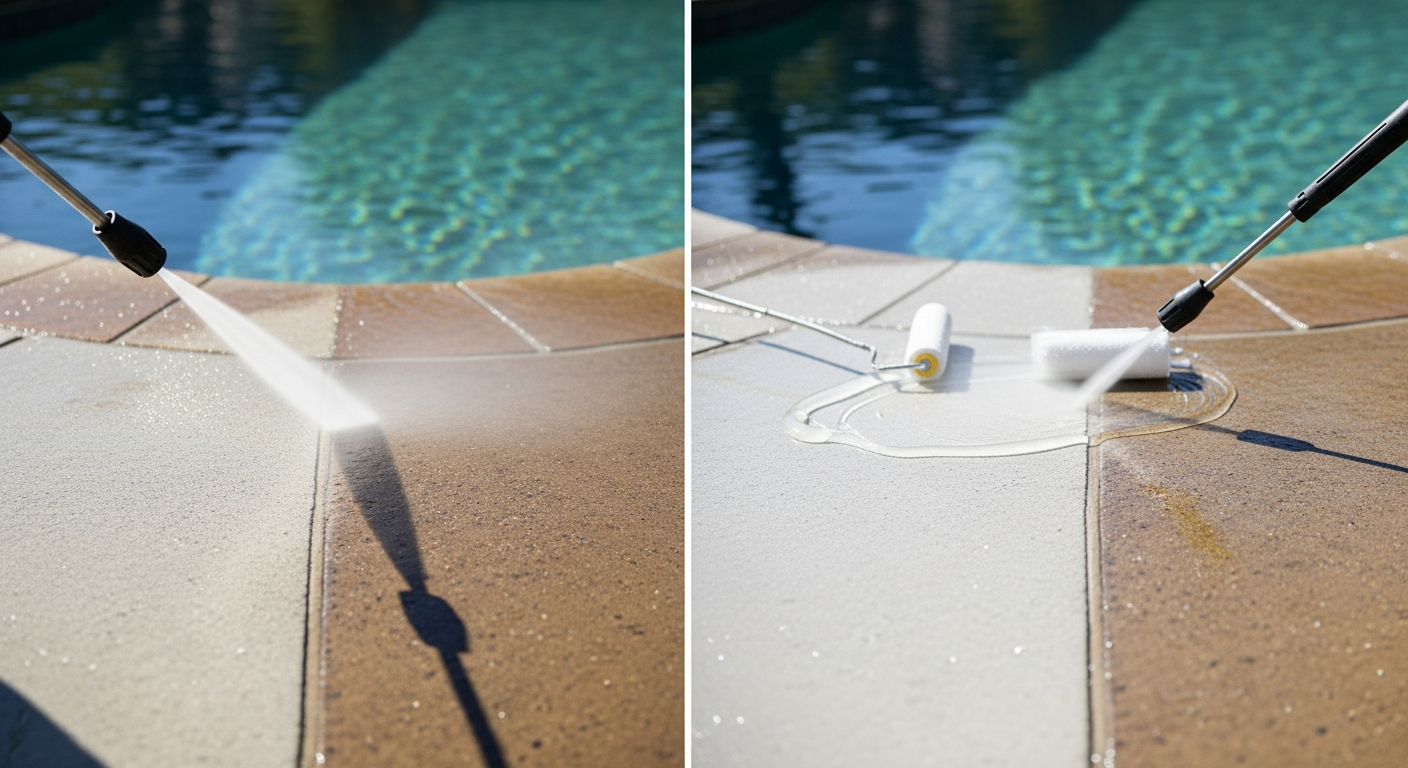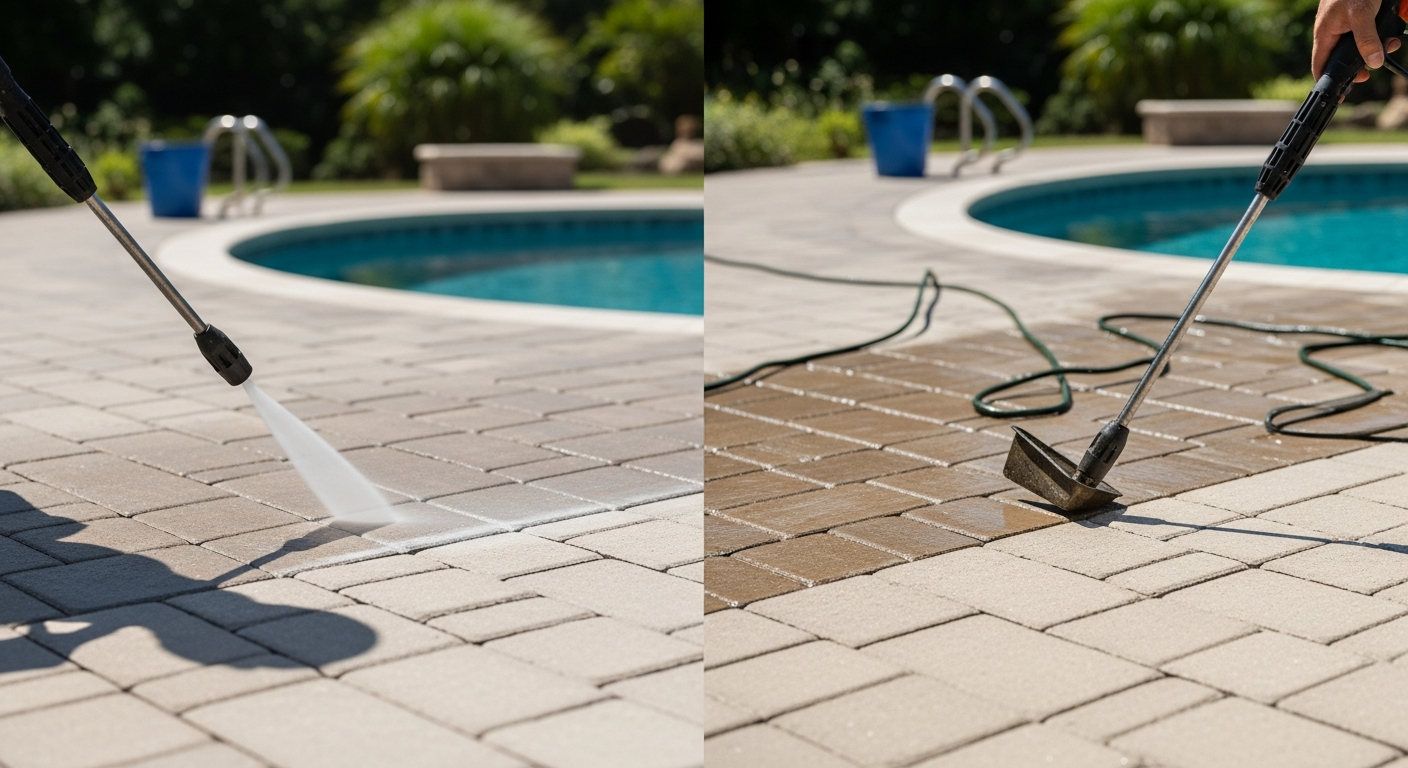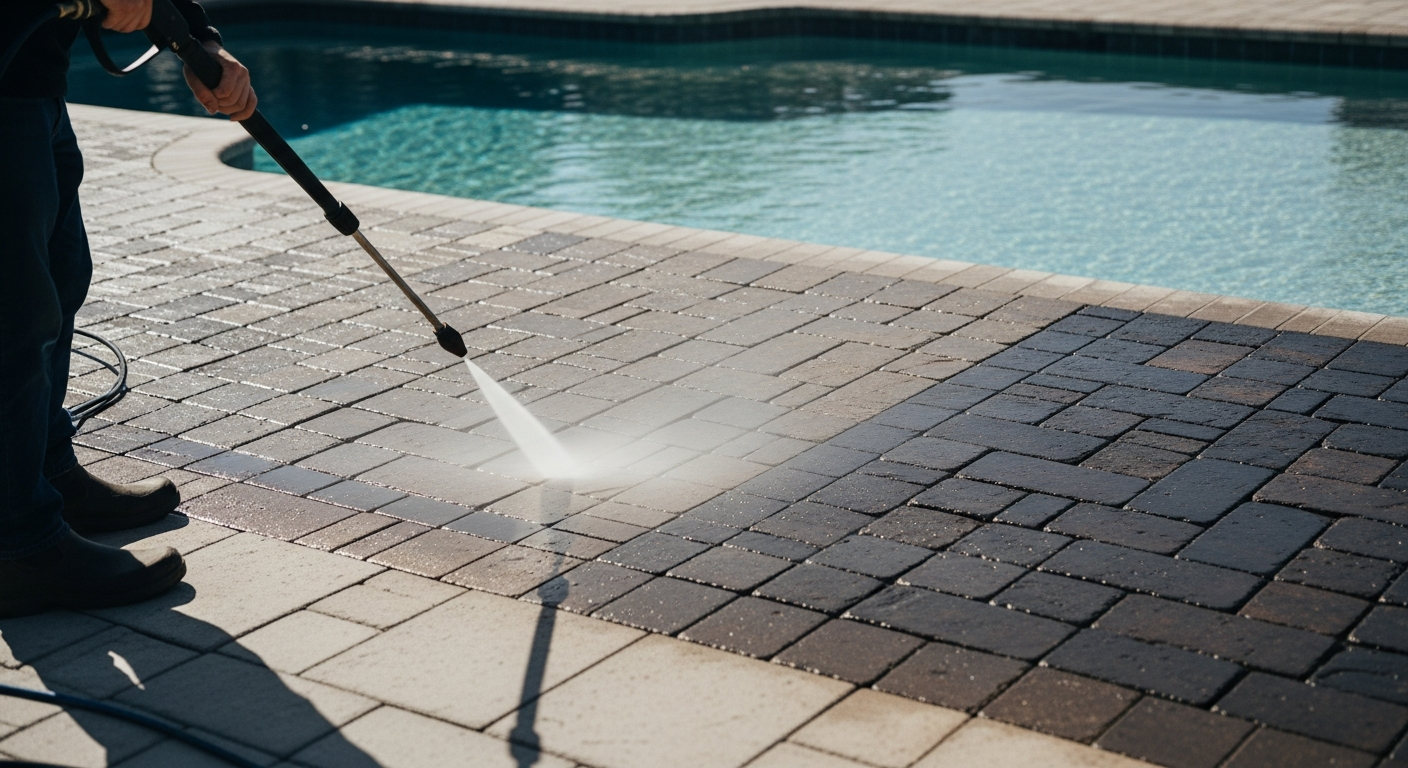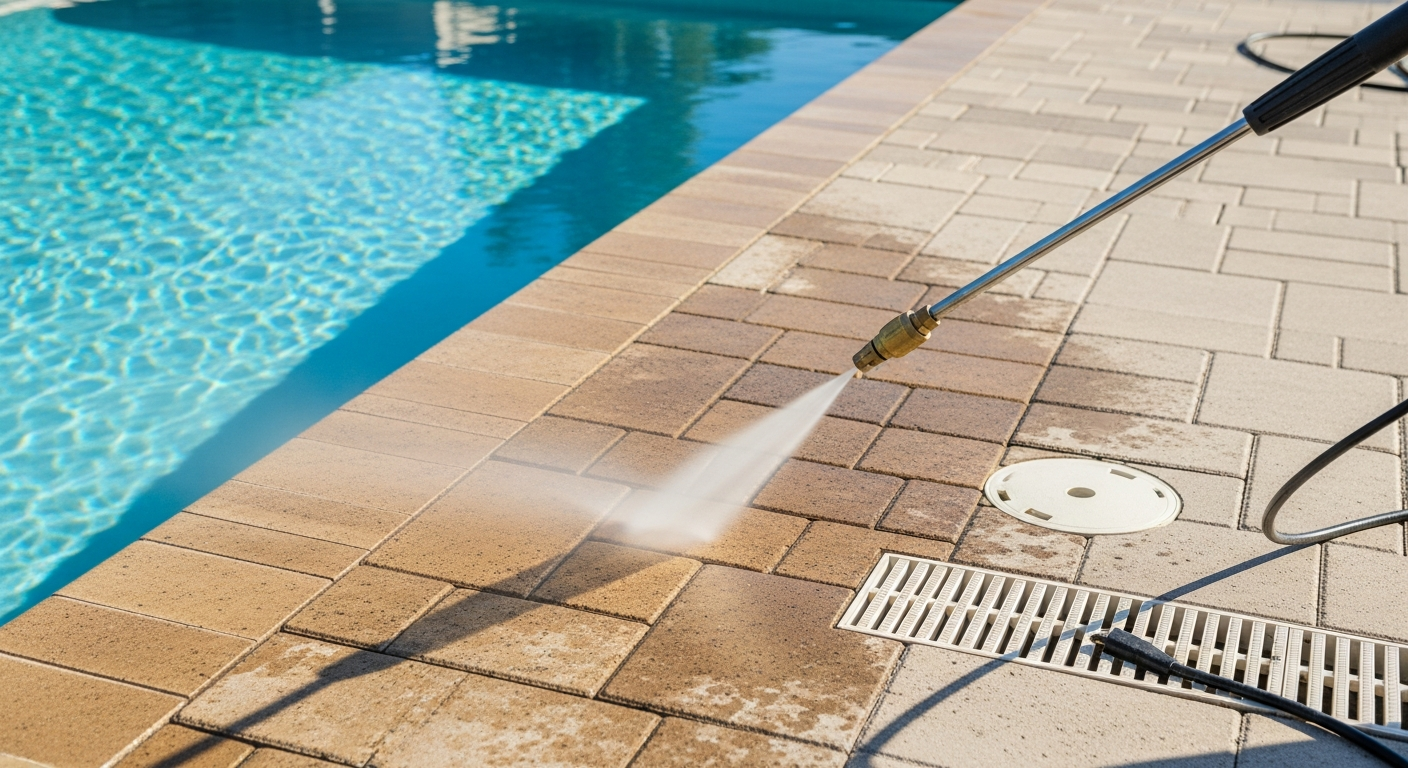
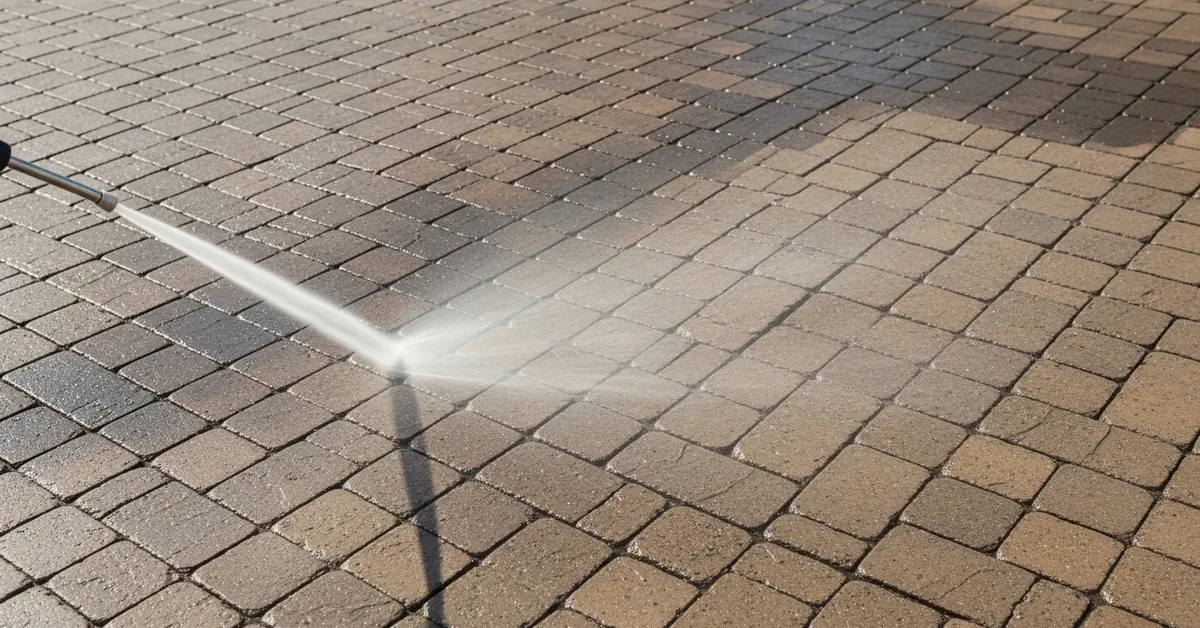
It's a familiar sight across Sarasota, from the sprawling driveways in Palmer Ranch to the lanais on Lido Key: a paver surface that looked pristine a year ago is now riddled with dark organic stains, stubborn weeds in the joints, and a chalky white haze that no amount of hose-spraying can remove. That haze is efflorescence, and it's our humid climate's way of telling you that your pavers are unprotected and actively degrading. The real problem isn't the dirt; it's the moisture that’s been allowed to penetrate the porous surface, creating a perfect breeding ground for mold and algae while leaching out mineral salts.
The Sarasota Standard for Paver Longevity
In my 15 years working on hardscapes in Florida, I can tell you that in Sarasota, treating paver power washing and
In my 15 years working on hardscapes in Florida, I can tell you that in Sarasota, treating paver power washing and sealing as two separate services is a fundamental mistake. The intense UV exposure and near-constant humidity mean an unsealed paver surface is an open invitation for rapid decay. The goal isn't just to clean; it's to create a hydrophobic barrier that stabilizes the joint sand and armors the paver against mold, efflorescence, and color fading. Without that protective layer, you're just pressure washing on a loop, season after season.
- Climate-Specific Problem: The primary failure point for pavers in Sarasota County is moisture intrusion, leading to rampant organic growth (black mold, green algae) and mineral efflorescence.
- The Critical Second Step: Sealing is not an upsell; it is the essential preservation step. It locks in the cleanliness, hardens the joint sand to prevent weed growth and paver shifting, and protects against sun-induced color bleaching.
- Material Mismatch: Using an acrylic-based, film-forming sealant on high-density travertine pool decks is a common error that creates a dangerously slick surface and can trap moisture, causing the stone to spall.
- Verifiable Cost: A complete professional power wash and seal for a standard two-car driveway (approx. 600 sq ft) in the Sarasota area typically ranges from $500 to $900, depending on the paver condition and sealant type.
The Planning Failures That Compromise Paver Surfaces
The biggest mistakes happen before a contractor even starts their pressure washer. Homeowners often focus solely on the visual cleaning, underestimating the technical aspects of surface preparation and sealant selection, which are far more critical in our coastal environment.
The Most Expensive Failure: Ignoring Pre-Existing Efflorescence
I was called to a project in The Meadows where a homeowner had hired a low-bid crew to wash and seal their large circular driveway. The crew simply blasted the surface and immediately applied a cheap, high-gloss "wet look" sealer. Within two months, large, milky-white clouds appeared under the sealant. This is called sealant blushing, and it's irreversible without chemically stripping the entire surface. The crew had sealed over damp pavers and trapped efflorescence, creating a costly mess that required a full strip-and-reseal, more than doubling the original project cost.
The Wash-and-Seal Process for Florida's Climate
A professional power wash and seal is a multi-day process dictated by surface conditions and weather, not a single-afternoon job. It involves deep cleaning, joint re-sanding, and meticulous sealant application, with drying time being a non-negotiable factor.
Key Selection Criteria for Sarasota Homeowners
- Sealant Chemistry: Does the contractor use a water-based or solvent-based sealant? For our high-humidity environment, a breathable water-based silane/siloxane penetrating sealer is often superior for pool decks as it won't trap moisture or become slippery. High-gloss acrylics are better suited for driveways but require a completely dry surface for application.
- Sanding Method: Verify they are using polymeric sand, not regular play sand. Polymeric sand contains polymers that harden when wet, locking pavers together and creating a formidable barrier against weeds and ants.
- Pressure and Tip Usage: Ask about the PSI (pounds per square inch) and nozzle tips they use. A contractor using a red-tipped (0-degree) nozzle close to the surface is an amateur who will etch your pavers and void any manufacturer's warranty. A professional uses wider-angle tips (25 or 40-degree) and relies on cleaning solutions, not just raw force.
- HOA Compliance Knowledge: In communities like Lakewood Ranch or University Park, the type of sealant finish (e.g., matte vs. high-gloss) may be regulated. A contractor unfamiliar with local HOA architectural guidelines can put you in violation.
Comparing Paver Sealing to Alternatives
Simply power washing pavers without sealing them is a common choice, but it's a short-sighted one in Sarasota. The initial savings are quickly offset by the frequency of cleaning required and the accelerated deterioration of the pavers themselves.
| Indicator | Power Wash & Seal | Power Wash Only | DIY Cleaning |
|---|---|---|---|
| Longevity of Cleanliness | 2-3 years | 4-6 months | 1-2 months |
| Protection Against Fading/Stains | High | None | None |
| Weed & Mold Inhibition | Excellent (with polymeric sand) | Minimal | Minimal |
| Upfront Cost | High | Low | Very Low |
When Sealing Pavers Is the Wrong Choice
There is one scenario where I advise clients to hold off on sealing: if the paver base is failing. If you have significant sinking, shifting, or widespread unevenness, sealing is like putting a new coat of paint on a crumbling wall. The money should first be invested in a proper hardscape company to lift the pavers, re-grade and re-compact the base, and then re-lay them. Sealing a failing installation is a complete waste of money.
Safe Hiring Checklist for Paver Contractors
Finding a qualified contractor in the Sarasota market requires looking beyond a truck and a power washer. The liability for surface damage or improper application falls on you if you hire an unlicensed or uninsured operator.
- Verify Florida Licensing and Insurance: Ask for proof of their General Liability and Worker's Compensation insurance. In Florida, a painter's license or general handyman registration is not sufficient for this type of specialized work. While no specific "paver sealing" license exists, their business registration and insurance are key.
- Request a Test Patch: A confident professional will have no problem applying a small test spot of the proposed sealant to an inconspicuous area. This allows you to see the final finish and slip resistance before committing to the entire project.
- Ask for a Portfolio of Local Work: Request addresses of projects they completed over a year ago in Sarasota or Bradenton. This lets you see how their work holds up to our specific climate, not just how it looks the day after completion.
- Review the Contract for Weather Contingencies: The contract must specify what happens if it rains during the multi-day process. A professional will have a clear protocol for pausing and restarting the project to ensure the pavers are bone-dry before sealing.
- Confirm Use of Polymeric Sand: Explicitly ask if polymeric sand is included in the quote for re-sanding the joints. This is a critical detail that separates professional results from amateur work.
Decisions That Determine the Outcome
The success of a paver sealing project is determined by a few key decisions you make, often based on assumptions about the process. The difference between a beautiful, protected surface and a peeling, hazy mess comes down to prioritizing technical expertise over a low price.
The Moment Most Homeowners Get It Wrong
The critical mistake happens during the quote comparison. Most homeowners line up three bids and gravitate toward the lowest price, assuming that "power washing is power washing." The most important question is not "How much?" but "What specific brand and type of sealant are you using, and why is it right for my pavers?" A contractor who can't explain the difference between a penetrating siloxane sealer and a film-forming acrylic sealer for your specific application (e.g., poolside travertine vs. a concrete paver driveway) is not a specialist. They are a generalist who will likely use a one-size-fits-all product that fails within a year.
Practical Answers About Operating in Sarasota
Navigating the specifics of paver maintenance in Sarasota involves understanding local conditions and expectations, particularly within managed communities.
Do I Need HOA Approval for Paver Sealing?
In most cases, you do not need formal approval for cleaning and sealing with a clear, non-enhancing sealer. However, if you choose a "wet look," color-enhancing, or tinted sealant that significantly alters the appearance of your driveway or walkway, you absolutely must check your community's architectural guidelines. Many HOAs in places like University Park or Palmer Ranch have strict rules to maintain a uniform aesthetic, and an unapproved high-gloss finish could result in a violation notice and a fine.
How Does the Rainy Season Affect Scheduling?
Sarasota's rainy season (June through September) is the most challenging time for this work. A legitimate contractor will not schedule a sealing job if there is more than a 30% chance of rain within 24 hours of the planned application. The paver surface must be completely dry, and the sealant needs an uninterrupted cure time. This means projects can be delayed. Be wary of any company that promises a quick turnaround during these months without discussing weather contingencies.
What's the Solution for Stubborn Rust Stains?
Rust stains, common from irrigation systems with high iron content or metal outdoor furniture, will not come out with a standard pressure washer. This requires a separate chemical treatment, typically an acid-based cleaner like F9 BARC. This is a specialty service. If a contractor says they can just "blast it out," they will likely damage the paver surface. Ensure any quote for stain removal specifies the chemical process they intend to use.