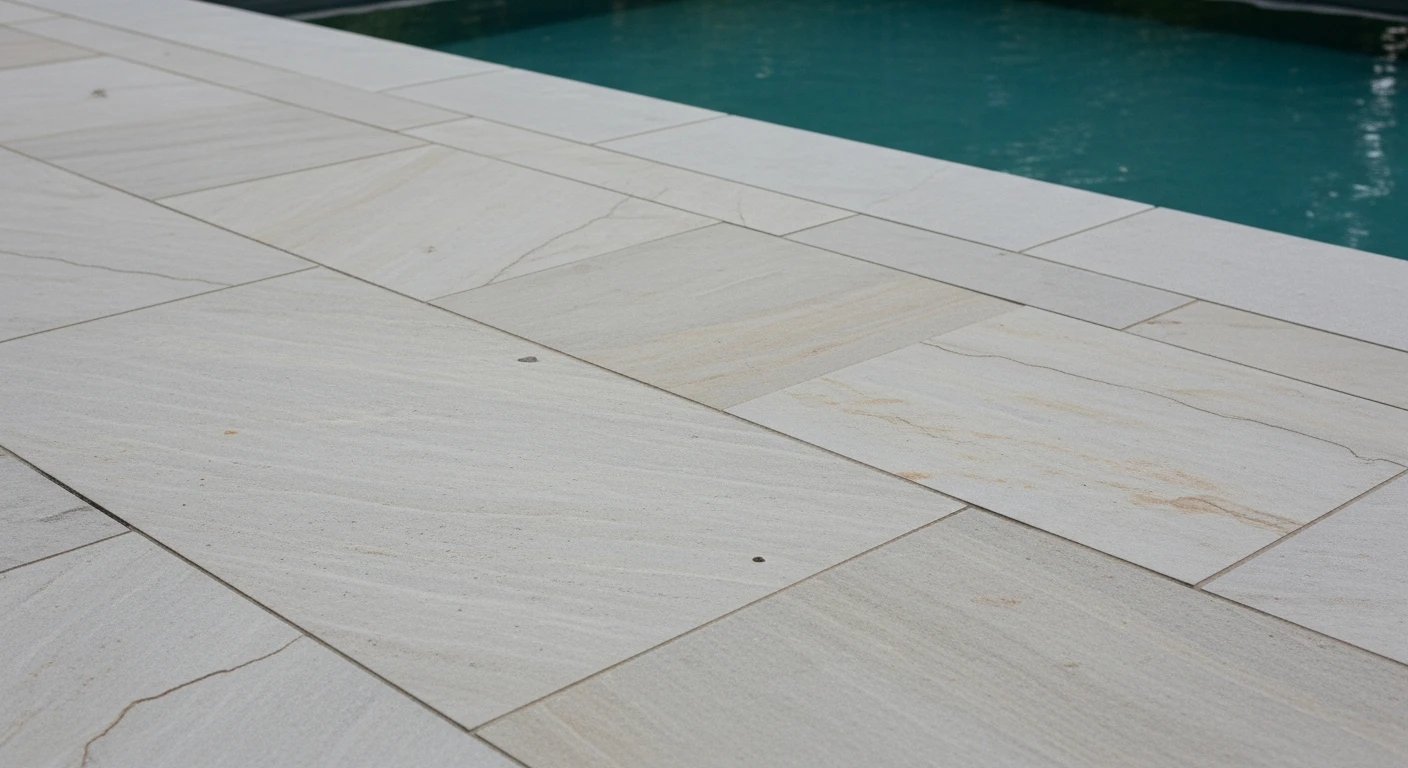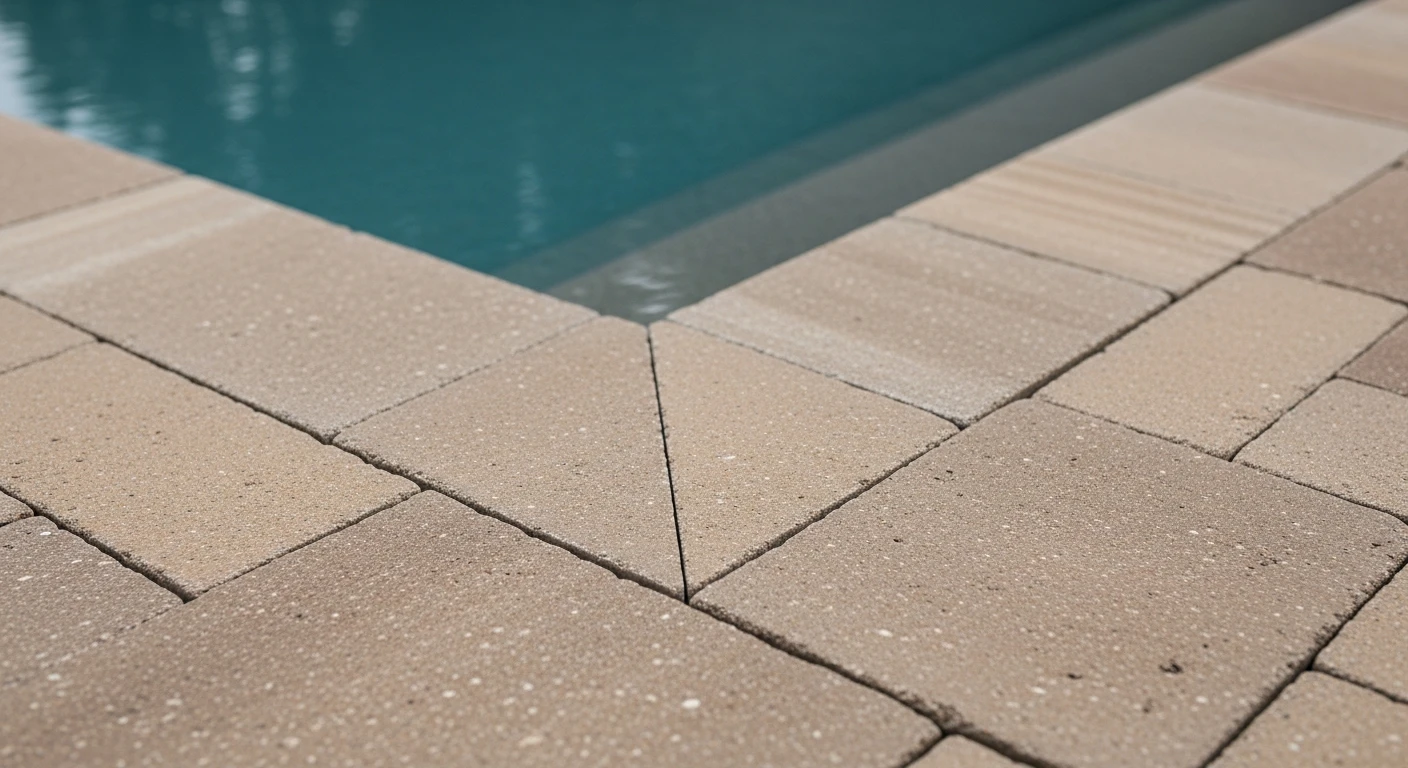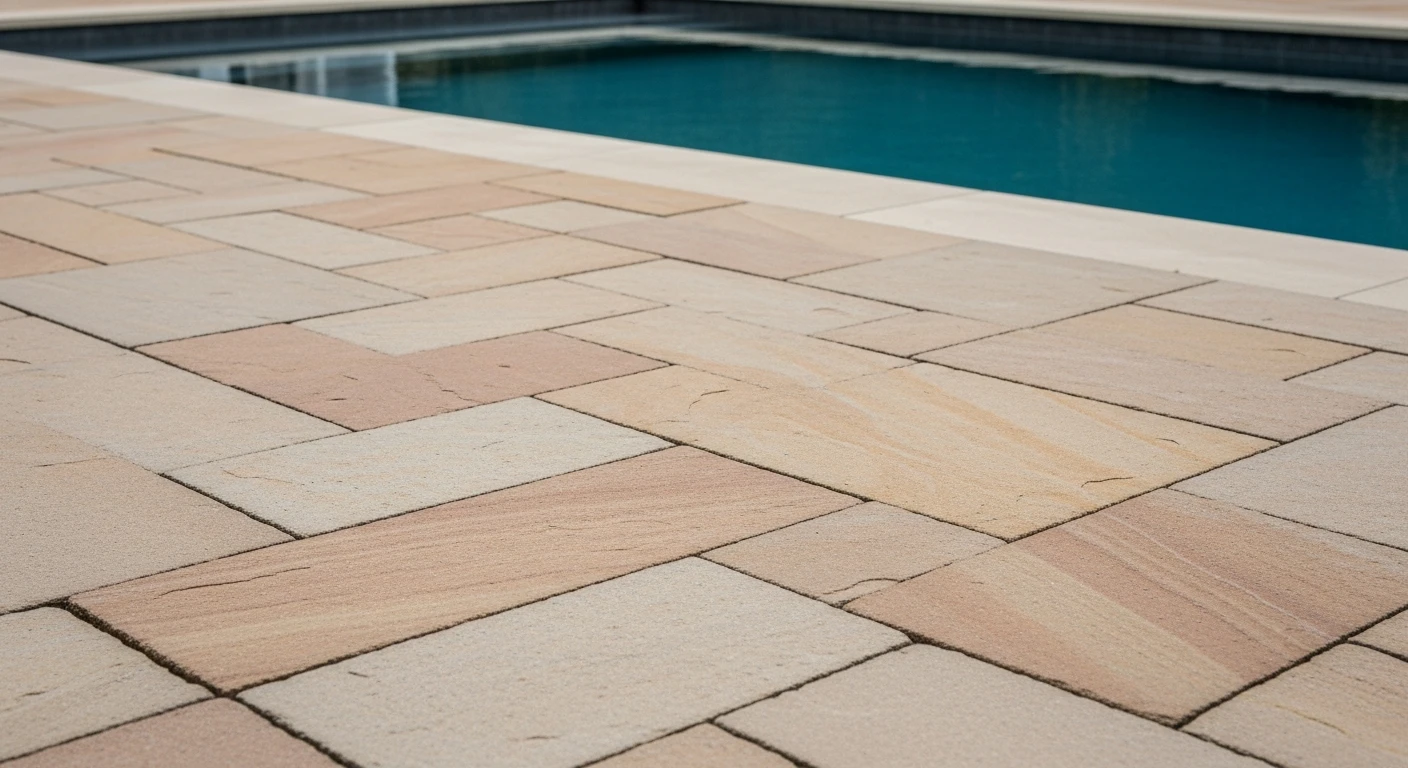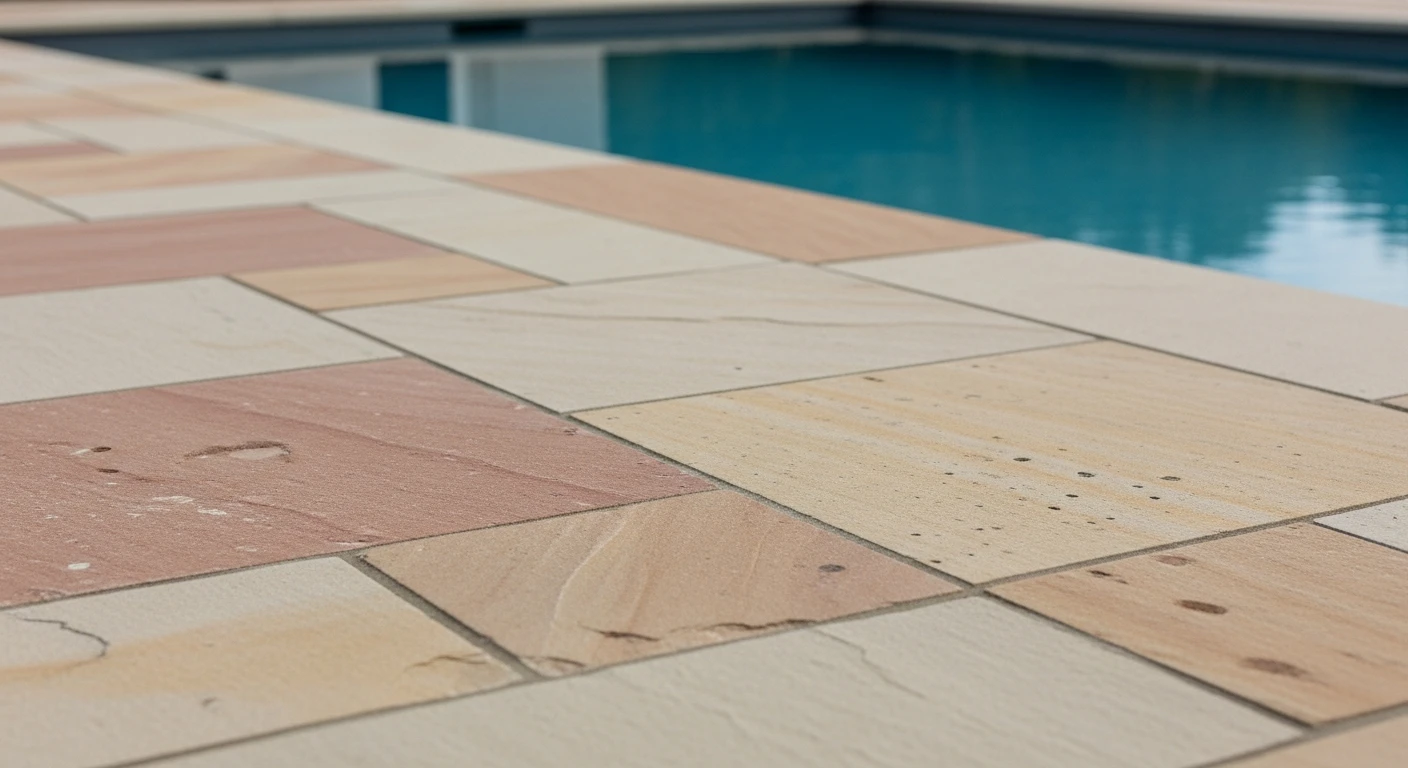
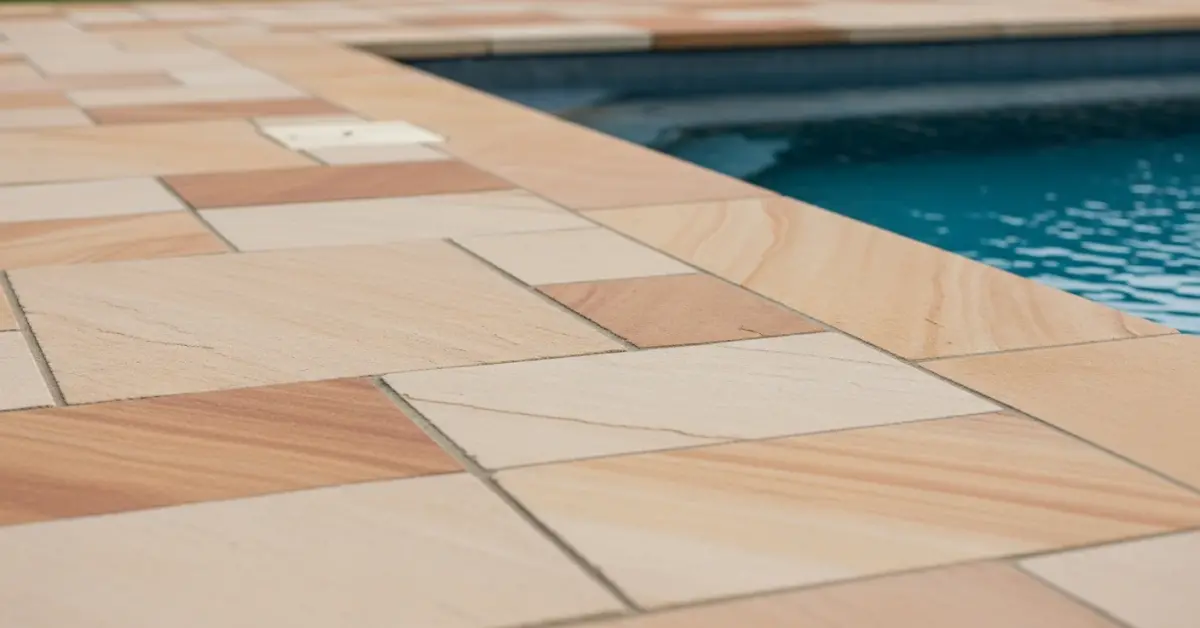
A client in a waterfront home on Lido Key called me out, frustrated. Their beautiful, light-toned sandstone pool deck, less than two years old, had developed dark, slick patches that never seemed to dry out. They had followed the installer's advice, but what they didn't account for was the constant shade from their dense oak canopy combined with the humid, salty air. This created a perfect breeding ground for persistent algae that standard pressure washing couldn't defeat. Their problem wasn't the sandstone itself; it was a mismatch between the specific type of stone and the microclimate of their own backyard.
From my experience installing hardscapes across Sarasota County, the success of sandstone pavers hinges entirely on
From my experience installing hardscapes across Sarasota County, the success of sandstone pavers hinges entirely on selecting the right type and finish for our specific coastal conditions. It's a fantastic material for its natural, non-slip texture, but it demands a nuanced approach. The relentless humidity, intense UV exposure, and salt in the air mean that a paver that works in an inland city can fail spectacularly here. The key is understanding that not all sandstone is created equal, and the sealant and jointing sand are just as critical as the stone itself.
- Porosity vs. Climate: Sandstone's natural porosity makes it cooler underfoot but also highly susceptible to moisture, algae, and staining in Sarasota's humid environment.
- Salt Air Degradation: Proximity to the Gulf, especially in areas like Siesta Key or Longboat Key, accelerates the breakdown of weaker sandstones and poor-quality sealants.
- Sealant is Non-Negotiable: In this climate, an unsealed sandstone paver is a costly mistake. A high-quality, penetrating, salt-resistant sealer is mandatory for longevity.
- Jointing Sand Matters: Standard sand will wash out during heavy rains and allow weed and mold growth. Polymeric sand is the professional standard here to lock pavers and prevent organic growth.
The Critical Planning Failures with Sandstone in Florida
The most common missteps with sandstone pavers in this region happen long before the first stone is laid. Homeowners are often captivated by the aesthetic of grey or mocha sandstone in a showroom but fail to account for how our environment will interact with the material. They underestimate the impact of constant moisture and UV radiation, leading to issues that are expensive to fix.
Ignoring the Power of Microclimates
The single most expensive mistake I see is choosing a sandstone paver based solely on color or pattern, without considering the specific light and moisture conditions of the installation area. A dense, less porous grey sandstone might be perfect for a full-sun patio in Lakewood Ranch, but that same stone in a shaded, damp area behind a Casey Key home will likely become a maintenance nightmare, perpetually covered in a slick film of green algae. We had to completely lift, clean, and reseal a patio in The Meadows because the homeowner insisted on a highly porous, light-colored stone for a north-facing lanai surrounded by vegetation. Within a year, it was dangerously slippery and stained, a problem a denser stone or better initial sealing strategy would have prevented.
The Installation Process for Sarasota's Climate
A proper sandstone paver installation here is a multi-stage process designed to combat moisture and instability from the ground up. It begins with an excavation of at least 6-8 inches, followed by a geotextile fabric layer to prevent the sub-base from mixing with the native sandy soil. A compacted base of crushed limestone or similar aggregate provides the foundational stability needed to handle our heavy summer downpours without shifting.
Selecting Pavers and Contractors for Local Conditions
Choosing the right professional is as vital as selecting the stone. Many installers can lay pavers, but few understand the specific material science required for sandstone to survive in coastal Florida. Look for contractors who can discuss the nuances of different stone densities and recommend appropriate sealing products from experience, not just a catalog.
- Verify Local Experience: Ask for addresses of projects they completed 3-5 years ago in Sarasota or Manatee County, not just recent installations. See how their work holds up to our climate.
- Discuss Sealant Strategy Upfront: Your contractor should have a strong opinion on penetrating vs. topical sealers and be able to explain why one is better for your specific stone choice and location.
- Check Sarasota County Permits: For any significant patio or pool deck work, a permit may be required. A reputable contractor will handle this process. The typical permit review for minor projects can take 2-4 weeks.
- HOA Architectural Review: In communities like Palmer Ranch or University Park, any change to exterior hardscaping requires approval from the Architectural Review Committee (ARC). This can add another 30 days to your project timeline.
Sandstone Pavers vs. Common Alternatives in Sarasota
While sandstone offers a unique, natural beauty, it's not the only option. Homeowners often weigh it against travertine and concrete pavers. The best choice depends on budget, desired aesthetic, and willingness to perform routine maintenance in our demanding climate.
| Feature | Sandstone Pavers | Travertine Pavers | Concrete Pavers |
|---|---|---|---|
| Algae/Mold Resistance | Low to Moderate (Highly dependent on sealant) | High (Less porous) | Moderate (Can be porous if unsealed) |
| Heat Retention (Barefoot Test) | Low (Generally cooler) | Very Low (Stays cool in direct sun) | High (Can get very hot) |
| Salt Air Tolerance | Moderate (Requires high-quality sealing) | High (Excellent for coastal areas) | Moderate to High (Varies by quality) |
| Upfront Cost | Moderate to High | High | Low to Moderate |
When Sandstone Is the Wrong Choice
I advise clients against sandstone in a few specific scenarios. If a property has significant drainage issues or areas that remain perpetually damp and shaded, the maintenance battle against organic growth on sandstone will be constant and frustrating. In these cases, a less porous material like travertine or a high-density concrete paver is a more practical, long-term solution, even if it deviates from the client's initial aesthetic preference.
A Practical Checklist for Hiring a Paver Installer
Hiring the right team in Sarasota is crucial for a lasting sandstone installation. The market has many installers, but expertise varies wildly. Use this checklist to vet potential contractors and protect your investment.
- Florida State License Verification: Ensure the contractor holds a valid, current license. You can verify this on the Florida Department of Business and Professional Regulation (DBPR) website. A general contractor or specialty license is required.
- Proof of Liability and Workers' Comp Insurance: Do not proceed without seeing a current certificate of insurance. An injury on your property without it can become your financial responsibility.
- Detailed, Itemized Proposal: The contract should specify base preparation depth, materials used (e.g., #57 stone, polymeric sand), paver source, and the exact sealant product to be applied.
- Local Project Portfolio: Ask for photos and addresses of completed sandstone projects specifically within Sarasota County. Pay attention to ones near the water.
- No Full Payment Upfront: A reasonable deposit, typically 10-25%, is standard. In Florida, it's illegal for a contractor to ask for more than 10% deposit on contracts over $2,500 unless the project requires special-order materials. Final payment should only be made upon satisfactory completion.
Key Decisions That Define Project Success
Two main decisions dictate the outcome of a sandstone paver project here: the choice of sealant and the commitment to a maintenance schedule. Getting these right ensures the patio or pool deck looks great for years; getting them wrong leads to regret.
The Moment Homeowners Underestimate Sealing
The critical error happens when homeowners treat sealing as an optional add-on to save money. In Sarasota, it is the most vital part of the installation. The correct approach is to budget for a premium, salt-resistant, penetrating sealer from day one. This type of sealer soaks into the stone, hardening it from within and repelling water without creating a slippery film on the surface. A cheap, topical sealer will peel and flake under our intense UV, trapping moisture and making the problem worse. I've seen homeowners save $1,000 on sealing only to spend $3,000 two years later on stripping a failed sealer and correcting mold issues.
Navigating Sarasota's Local Requirements
Working on exterior projects in Sarasota involves navigating specific local rules and environmental factors. Understanding these ahead of time prevents delays and ensures your project is compliant from the start.
Permitting for Hardscaping in Sarasota County
Any new patio or deck construction over a certain size, or one that impacts drainage, typically requires a permit from the Sarasota County Planning and Development Services. The process involves submitting plans for review. A key detail they look for is how your project manages stormwater runoff, ensuring it doesn't negatively affect neighboring properties. A knowledgeable contractor will be familiar with these impervious surface regulations.
Choosing Paver Patterns for Visual Appeal and Stability
Sandstone patio patterns are not just about looks; they contribute to the structural integrity of the surface. A running bond pattern is simple and classic, while a herringbone pattern provides greater interlock and is excellent for areas with light vehicular traffic like a driveway apron. For pool decks, a random or ashlar pattern helps hide imperfections and creates a more natural, organic look that complements the stone.
The Impact of Salt-Tolerant Landscaping
Your landscaping choices directly affect your sandstone pavers. Plants that drop a lot of acidic flowers or berries can stain the stone. Furthermore, irrigation systems are a major factor. Sprinkler heads should be aimed away from the patio to minimize constant wetting of the stone surface, which encourages algae growth. Using salt-tolerant, low-mess plants appropriate for our coastal environment reduces maintenance on your hardscape.