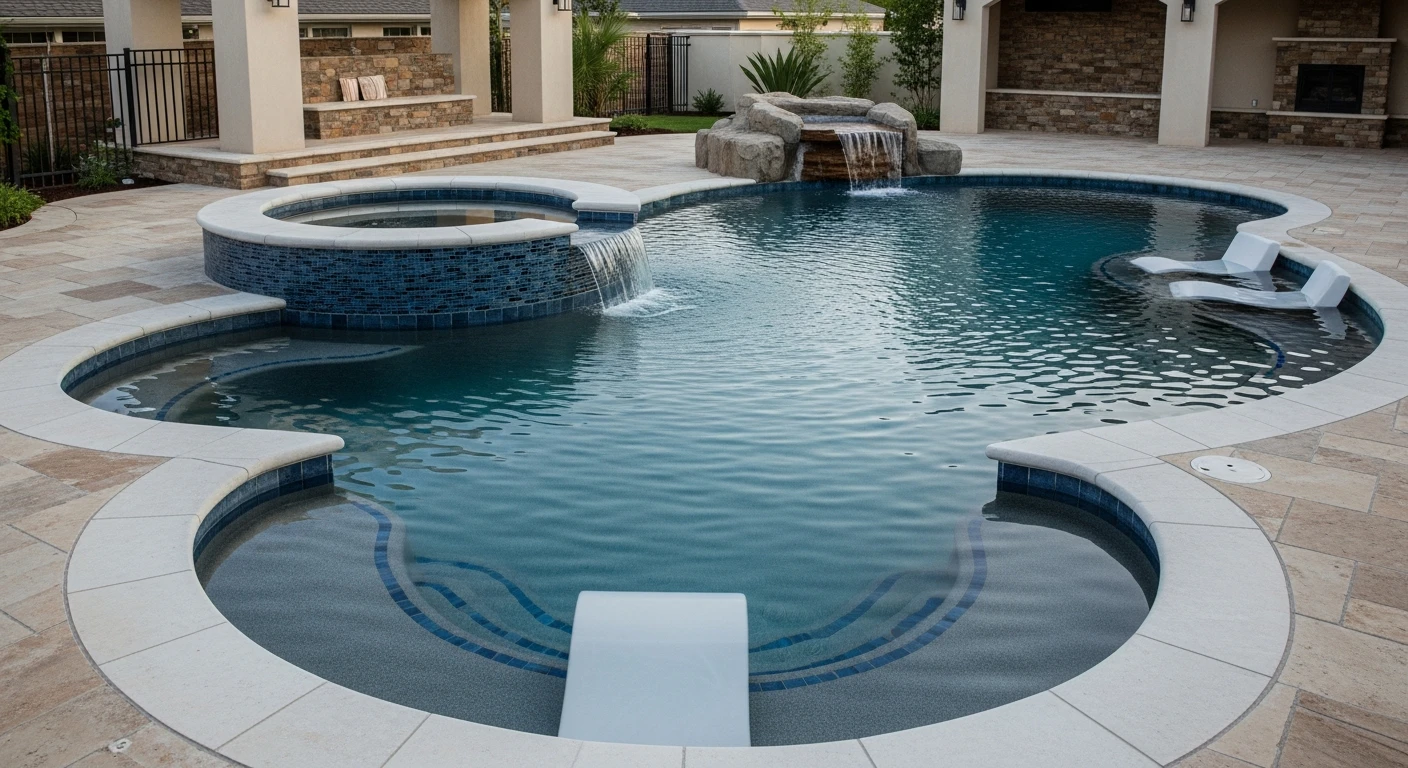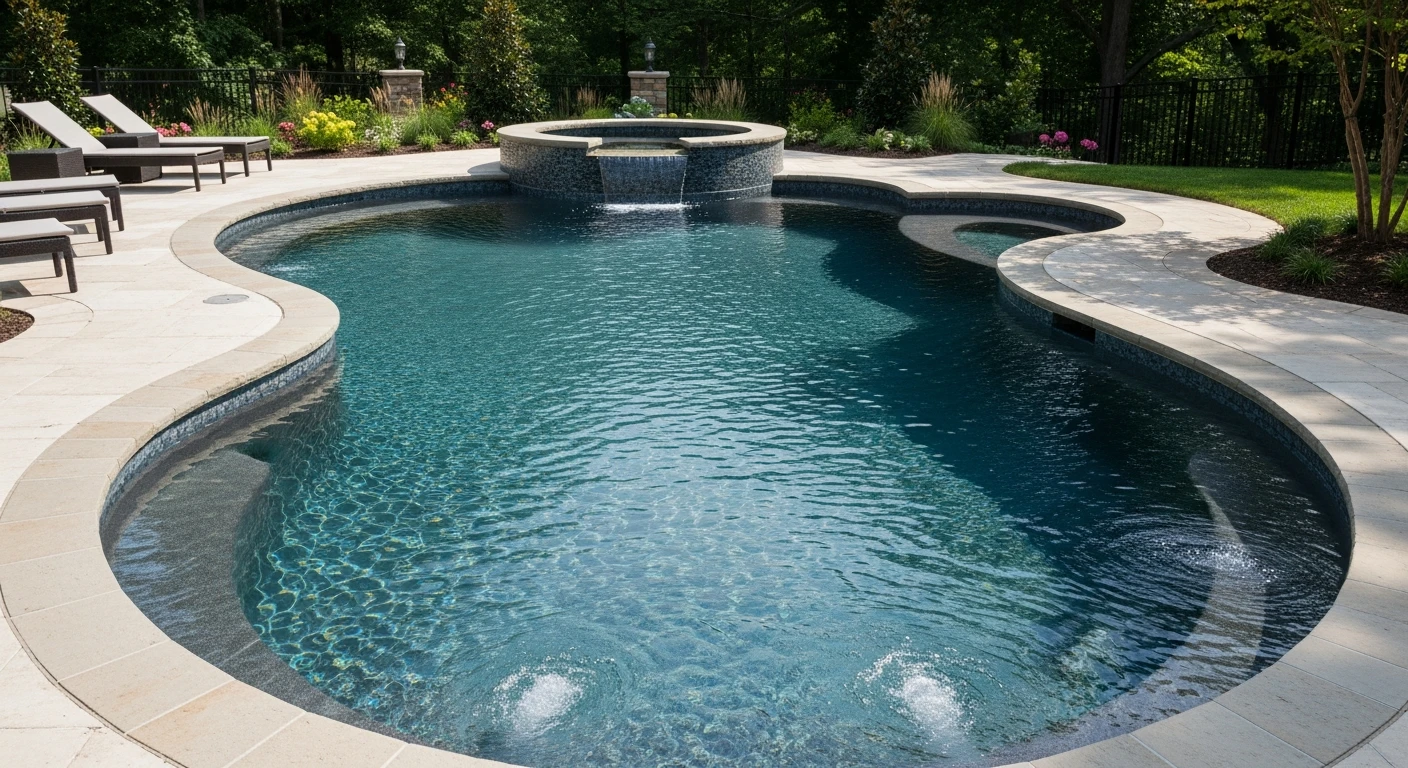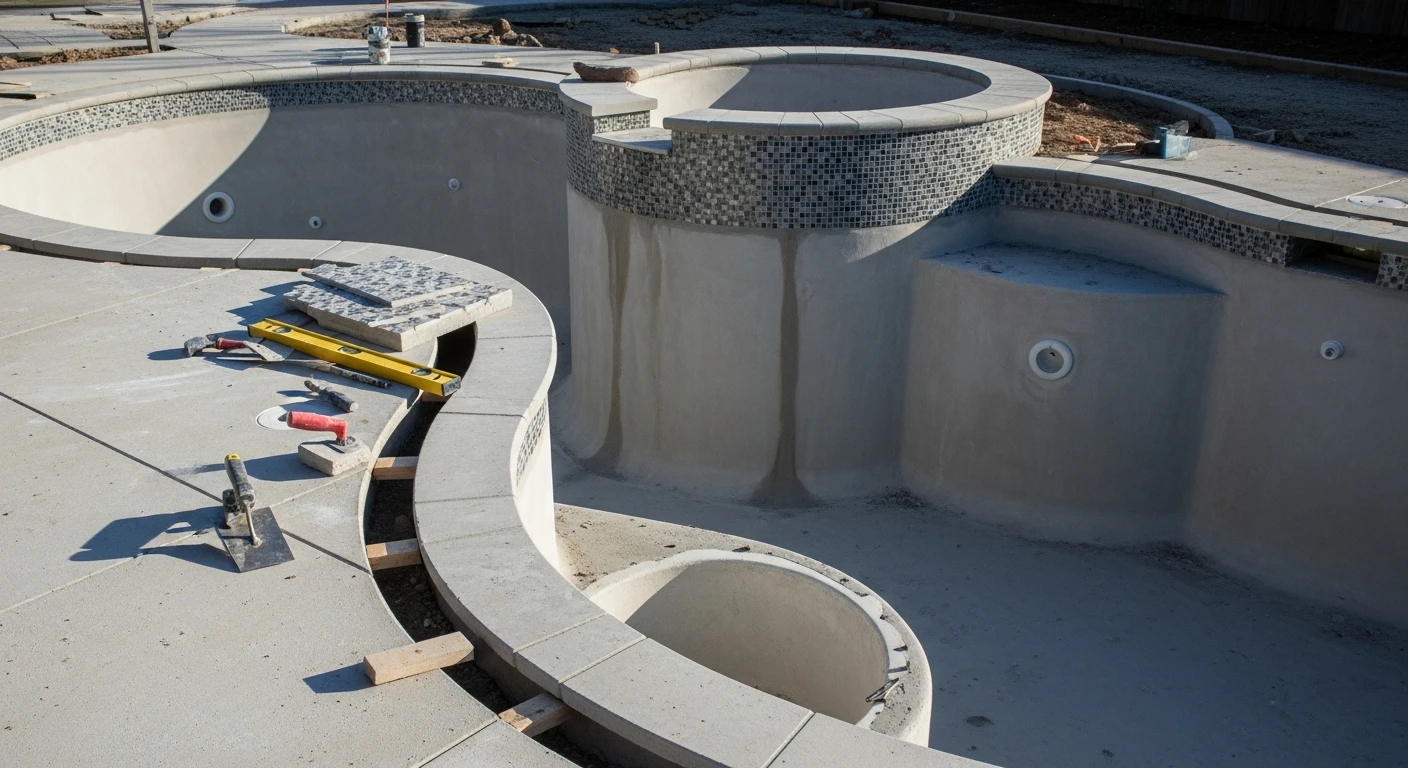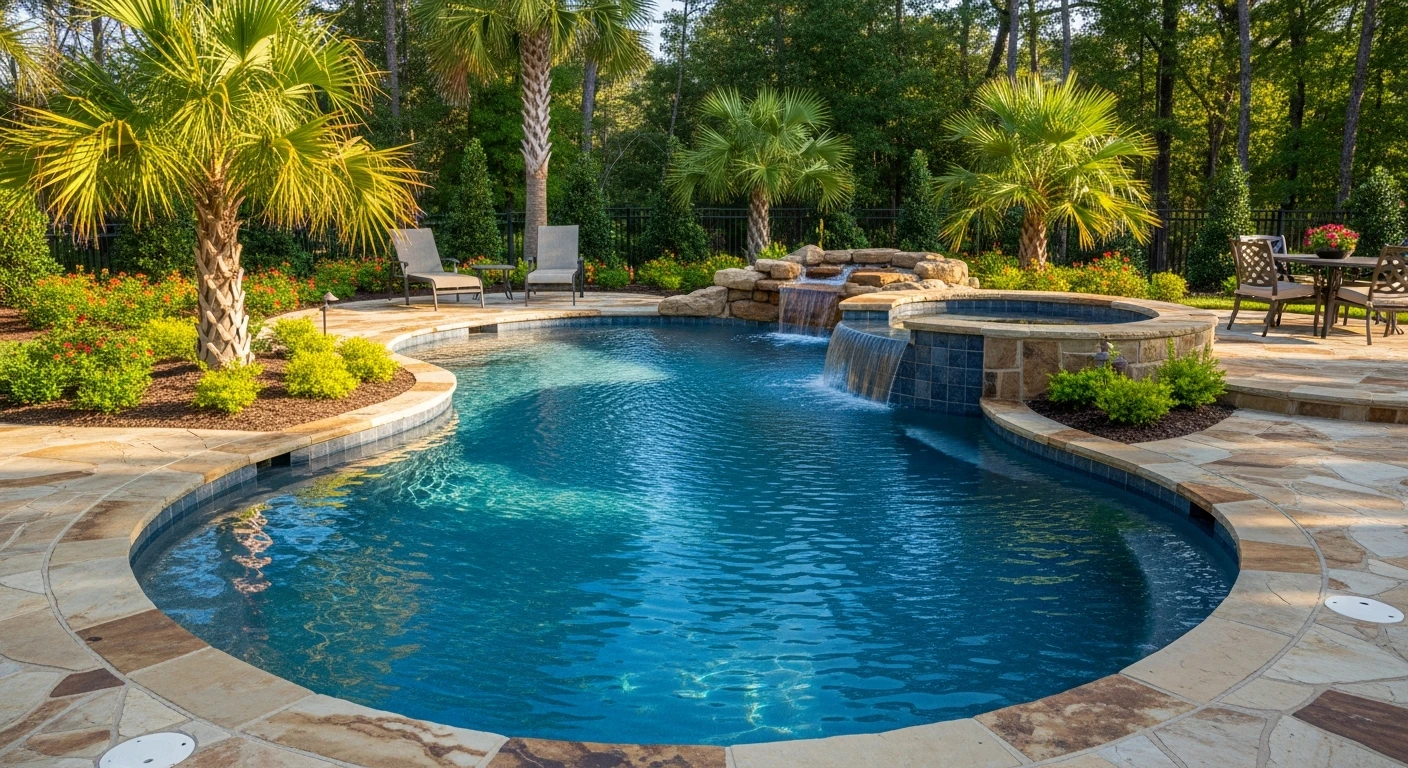
Executive Summary: Building a Custom Pool in Sarasota
From my hands-on experience managing custom pool projects from Siesta Key to Lakewood Ranch, the primary failure point
From my hands-on experience managing custom pool projects from Siesta Key to Lakewood Ranch, the primary failure point is a disconnect between aesthetic design and functional engineering. A beautiful infinity edge pool designed without accounting for Sarasota County's soil settlement can become a structural nightmare within five years. The process here is less about 'what it looks like' and more about 'how it will perform' under the specific stresses of our coastal Florida environment. The success of a custom pool is determined by the engineering, not the aesthetics.
- Soil & Water Table: The sandy, porous soil and high water table in much of Sarasota require specialized engineering for the pool shell to prevent floating or cracking. This is a non-negotiable cost factor.
- Permitting Timelines: Expect a minimum of 6-8 weeks for permit approval from Sarasota County for a custom pool, longer if it involves complex features or is near a waterway or conservation area.
- Material Selection is Critical: High UV exposure and humidity demand specific material choices. Travertine and certain non-slip porcelain tiles outperform standard pavers in longevity and safety, justifying their higher upfront cost.
- HOA Architectural Review Boards (ARBs): In communities like The Founders Club or Palmer Ranch, the ARB's approval is a separate, often lengthy, process from the county permit. Design must align with community guidelines from day one.
The Planning Failures That Drive Up Custom Pool Costs
The most common mistake is falling in love with a design before understanding its real-world cost and engineering requirements in our local context. A homeowner sees a zero-edge pool on a California hillside and wants to replicate it in their Osprey backyard, not realizing the extensive dewatering and foundation work required here adds 30-40% to the shell cost alone. This isn't an upsell; it's a geological necessity.
The Most Expensive Failure: Underestimating Site Work
The pattern I've observed is that homeowners focus their budget on visible features—waterfalls, lighting, decking—and treat site preparation as a basic line item. In Sarasota, it's the reverse. A client building near Phillippi Creek had a design with a deep-end swim lane. The high water table meant we had to install a permanent dewatering system and hydrostatic relief valves, a $15,000 addition that wasn't in their initial budget because their designer, who wasn't a local engineer, hadn't accounted for it. The ground beneath your pool is the most expensive and important feature you will pay for.
How a Custom Pool Project Actually Unfolds in Sarasota
A true custom pool project isn't a linear path from sales to construction. It's an iterative loop between design, engineering, and budgeting. Once a conceptual design is approved, it goes to a licensed Florida engineer who creates the structural and hydraulic plans. These are the blueprints that get submitted to the Sarasota County Permitting office, not the glossy 3D renderings.
Key Selection Criteria for Sarasota Homeowners
- Verify In-House vs. Subcontracted Engineering: Does the pool builder have a Professional Engineer (P.E.) on staff or do they subcontract? An in-house engineer can often resolve design and permit issues faster.
- Ask for Examples on Similar Soil Conditions: Request addresses of completed projects in areas with challenging soil, like the barrier islands (Lido Key, Siesta Key), and ask about the foundation work performed.
- Confirm Their HOA Submission Process: A builder experienced with prominent Sarasota HOAs will have a dedicated person to manage the ARB submission packet, which is often more detailed than the county's requirements.
- Evaluate Their Stormwater Management Plan: Sarasota County is strict about stormwater runoff. The builder's plan for grading, drains, and pervious surfaces around the pool is a critical part of the permit application.
Comparing Custom Concrete Pools to Other Options
For a truly integrated and unique design, a gunite (concrete) pool is the standard. However, understanding how it compares to fiberglass is crucial for homeowners balancing budget, speed, and design flexibility.
| Feature | Custom Gunite (Concrete) | Fiberglass (Pre-fabricated) | Vinyl Liner |
|---|---|---|---|
| Design Flexibility | Virtually unlimited shapes and features | Limited to manufacturer's molds | Good flexibility in shape, limited depth |
| Installation Time | 3-6 months | 3-6 weeks | 4-8 weeks |
| Initial Cost | Highest ($90,000 - $200,000+) | Medium ($60,000 - $110,000) | Lowest ($50,000 - $85,000) |
| Durability in FL Climate | Excellent, but requires resurfacing every 10-15 years | Very durable, non-porous surface resists algae | Liner replaced every 5-9 years due to UV/chemical wear |
When a Full Custom Pool is the Wrong Choice
A full custom gunite pool is not the right choice if your timeline is compressed or your budget is rigid. If you need a pool ready for the summer and you only have three months, a high-end fiberglass model is a more realistic option. I've seen homeowners force a custom project into a tight timeline, leading to rushed work, compromised quality, and immense stress. The flexibility of custom design comes with the trade-off of a longer, more complex construction process.
Safe Hiring Checklist for a Sarasota Pool Builder
Vetting a custom pool builder goes beyond checking their license and insurance. You are hiring a project manager for a complex, multi-month construction project on your property.
- Verify FL Contractor's License: Use the Florida Department of Business and Professional Regulation (DBPR) portal to check their license (CPC for Certified Pool/Spa Contractor) is active and complaint-free.
- Confirm Workers' Compensation and Liability Insurance: Ask for the insurance certificate directly. Do not rely on a verbal confirmation. A lapse in their coverage could make you liable for on-site accidents.
- Check Sarasota County Permit History: You can search the county's public records for permits pulled by the contractor. A history of open or failed inspections is a major red flag.
- Request a Full Subcontractor List: Who is doing the electrical, plumbing, and decking? A reputable builder has a consistent team of trusted, licensed subcontractors.
- Review the Draw Schedule: The payment schedule should be tied to completed construction milestones (e.g., excavation, steel, gunite, tile), not arbitrary dates. Large upfront payments are a warning sign.
- Ask About Warranty Details: Get specifics on the warranty for the shell, equipment, and workmanship. Understand what is covered and for how long.
Decisions That Determine the Final Outcome
The most successful projects I've worked on shared one common trait: the homeowner prioritized the structural and hydraulic integrity of the pool over cosmetic finishes during the budgeting phase. They allocated sufficient funds for proper engineering, drainage, and high-quality equipment first, then decided on the tile and water features with the remaining budget. This approach prevents the heartbreaking scenario of having a beautiful pool that constantly needs expensive repairs.
The Moment Most Homeowners Get It Wrong
The critical mistake happens during the proposal review. Homeowners line up three quotes and compare the total price at the bottom. The correct approach is to compare the specifications for the structural shell, the plumbing size, and the equipment package. A builder who saves you $5,000 by using smaller pipes or a lower-horsepower pump is costing you thousands more in future energy bills and poor circulation. You must compare the engineering specs, not just the final number.
Practical Answers for Building in Sarasota
Navigating the local bureaucracy and environment is key to a smooth project. These are the issues that consistently cause delays and confusion for homeowners.
Navigating the Sarasota County Permitting Process
The permit application for a new pool in Sarasota County requires a site plan, full engineering drawings stamped by a Florida P.E., and a drainage plan. If your property is in a flood zone (common west of the Trail) or near a wetland, additional surveys and environmental reviews are required, which can add weeks or months to the approval timeline. The builder, not the homeowner, is responsible for this entire process.
Meeting HOA Architectural Review Board (ARB) Requirements
In planned communities like Lakewood Ranch, the ARB has its own set of rules regarding pool setbacks, fence types, and even equipment location. These rules are often stricter than the county's. The ARB must approve your plan *before* the builder can even apply for a county permit. A builder unfamiliar with your specific HOA's process can cause significant delays from the very start.
Understanding Florida's Lien Law and Your Protection
Florida's Construction Lien Law allows subcontractors and suppliers who aren't paid by your primary contractor to place a lien on your property. To protect yourself, you must get a 'Release of Lien' from all major subcontractors (plumber, electrician, etc.) and suppliers as payments are made. Your builder should provide these to you at each payment draw. This is a critical piece of financial protection that many homeowners overlook.