Why do so many Sarasota pool owners who meticulously balance their chlorine and pH still end up with cloudy water, stubborn scale on their waterline tiles, and prematurely failed salt cells? The answer isn't in their weekly chemical routine; it's in the hard, mineral-laden municipal water they use to fill and top off their pools from day one. This unseen factor is the primary driver of long-term equipment damage and aesthetic problems I encounter from The Meadows to Siesta Key.
A Proactive Approach to Sarasota's Challenging Water
From my hands-on work, the most effective water treatment strategy in Sarasota isn't reactive chemical dosing—it's
From my hands-on work, the most effective water treatment strategy in Sarasota isn't reactive chemical dosing—it's managing the source water itself. Our region's high Total Dissolved Solids (TDS) and calcium hardness create a constant battle against scaling and equipment calcification. Focusing solely on sanitation with chlorine or salt is a defensive, and ultimately more expensive, game. A proactive approach involves treating the mineral content to protect the entire pool system, not just sanitize the water.
- The Core Problem: Sarasota County's municipal water typically has high calcium hardness (often 250-400 ppm) and TDS, which accelerates scale formation on surfaces and inside equipment.
- Equipment at Risk: Salt chlorinator cells, heat exchangers in gas heaters, and pump impellers are the most common victims of premature failure due to calcium buildup.
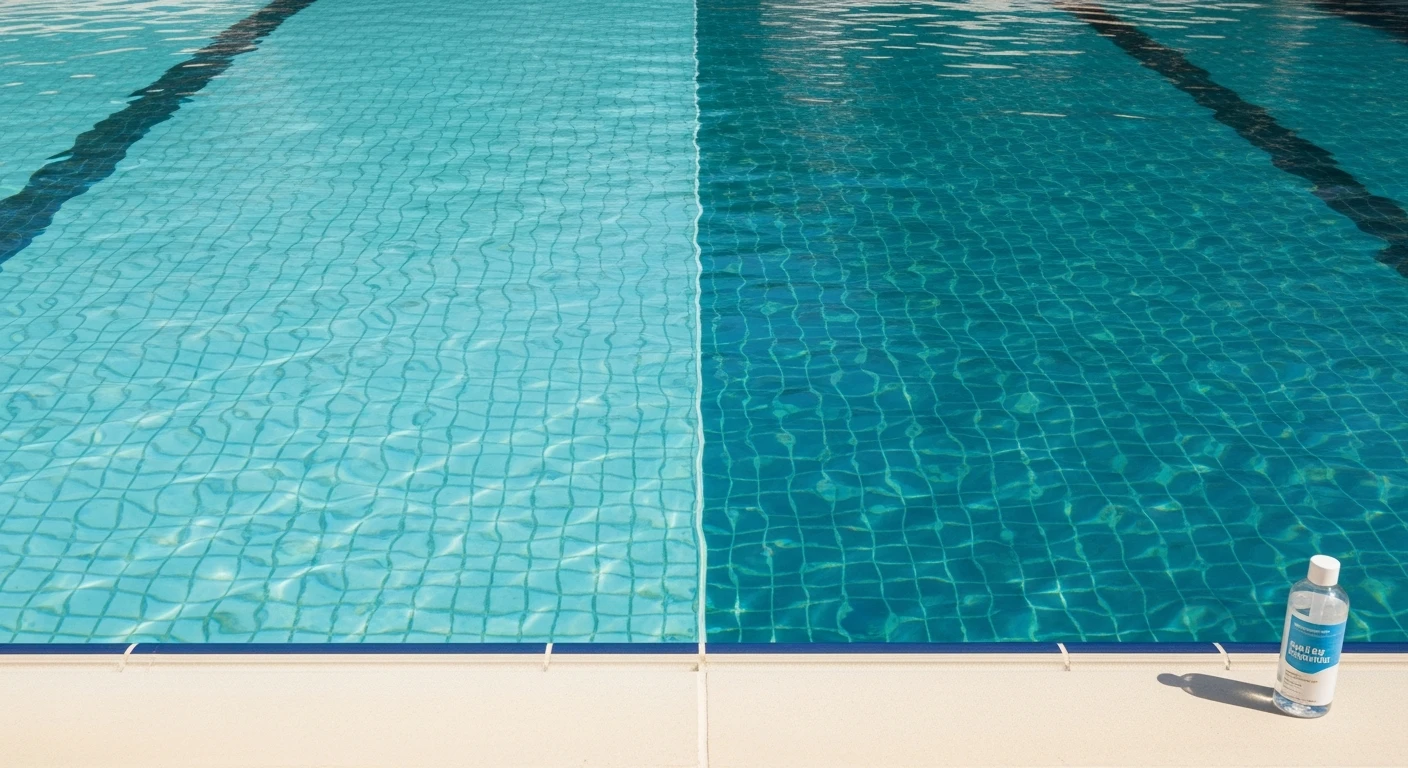
- Aesthetic Impact: High mineral content leads to persistent cloudy water and a chalky white residue on waterline tiles and dark plaster finishes, which are very popular in newer communities like Lakewood Ranch.
- Long-Term Solution: Integrating systems like reverse osmosis filtration or ion exchange reduces the mineral load, drastically lowering chemical consumption and extending equipment life.
The Misconception That Silently Destroys Pool Equipment
The most common planning failure I see is the assumption that a standard salt system or chlorinator is a complete water treatment solution. Homeowners invest thousands in automation and salt chlorination, believing it handles everything. But these systems are for sanitation only; they do nothing to address the mineral content that is inherent in our local water supply. This oversight is what silently clogs and destroys the very equipment they were meant to protect.
The Costly Mistake: Ignoring Total Dissolved Solids (TDS)
I was called to a home in Palmer Ranch with a three-year-old pool where the owner was on their third salt cell, each costing over $900. Their pool service company kept blaming faulty equipment. When I tested the water, the TDS was over 6,000 ppm—well above the 3,000-4,000 ppm range most salt cells are designed for. The real problem wasn't the cells; it was the water chemistry. The combination of added salt and evaporating water concentrating our already hard source water created an environment where the cells were constantly overworking and scaling up, leading to repeated failure.
The Water Treatment Process for a Sarasota Pool
A truly effective water treatment plan begins before the first chemical is added. It starts with analyzing the source water from the tap to establish a baseline for calcium hardness, alkalinity, and TDS. From there, we build a strategy that includes sanitation, mineral management, and clarification. This integrated approach prevents problems rather than just reacting to them week after week, which is the standard model for too many service companies.
Key Selection Criteria for Sarasota Homeowners
- Evaluate Your Surfaces: If you have dark pebble or plaster finishes, glass tile, or a spa with a spillover, managing calcium is non-negotiable. These surfaces show scale immediately and are expensive to descale.
- Check Your Heater Warranty: Many pool heater manufacturers will void the warranty on the heat exchanger if damage is caused by scaling due to improper water chemistry. Ask any potential service provider how they specifically manage calcium hardness to protect your heater.
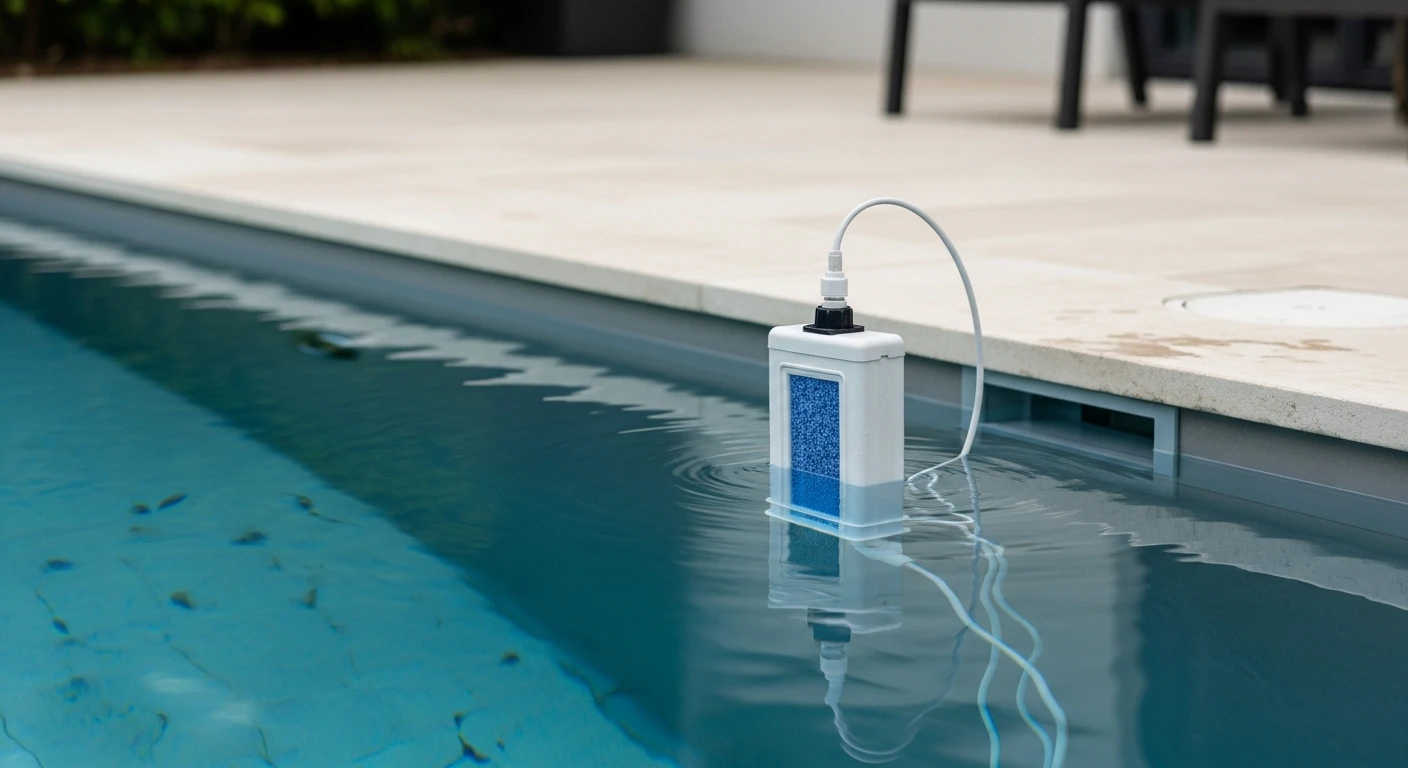
- Factor in Salt Cell Longevity: If choosing a salt pool, budget for a water softening or reverse osmosis treatment every 2-3 years. A typical mobile RO filtration service in the Sarasota area can cost between $600-$900, but it can double the life of a $1,000 salt cell.
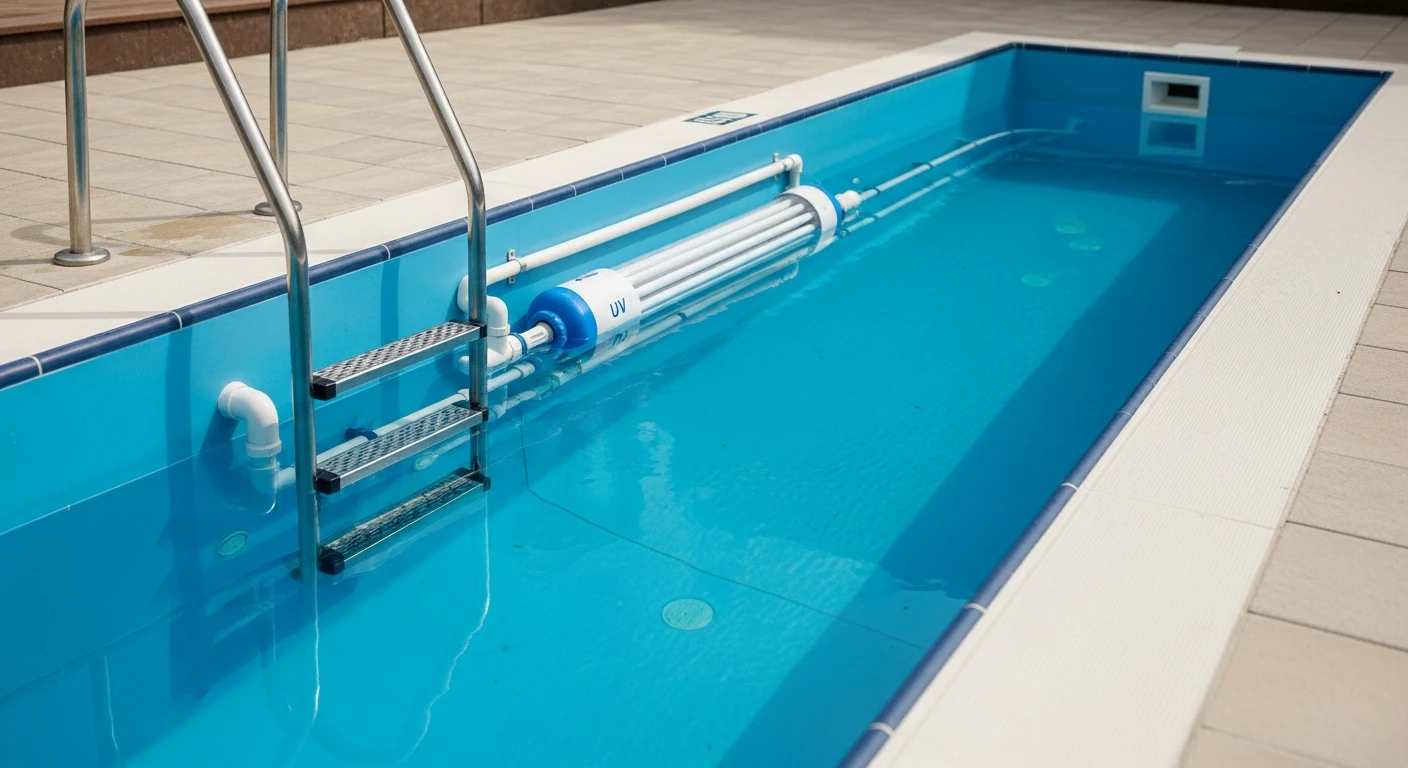
- Consider UV Systems for Supplemental Sanitation: Given our intense sun which degrades chlorine rapidly, a UV water filtration system can be a powerful secondary sanitizer. It destroys chlorine-resistant microorganisms and reduces overall chlorine demand by up to 50%, saving money and reducing harsh chemical exposure.
Comparing Advanced Water Treatment Systems
For Sarasota pool owners, relying on chlorine and acid alone is a short-sighted strategy. The real decision is between different methods of proactive water management. Each has its place, depending on the pool's age, features, and the owner's budget.
| Treatment Method | Primary Function | Best For | Typical Upfront Cost |
|---|---|---|---|
| Standard Salt Chlorinator | Sanitation (creates chlorine) | Basic sanitation, convenience | $1,500 - $2,500 |
| UV Filtration System | Supplemental sanitation (destroys pathogens) | Reducing chlorine usage, high-use pools | $800 - $1,800 |
| Mobile RO Filtration | Mineral reduction (lowers TDS, calcium) | Restoring water balance without draining | $600 - $900 per treatment |
| Ion Exchange System | Water softening (removes calcium) | Dedicated fill lines to prevent scale buildup | $2,000 - $4,000 |
When a Simpler Approach is Better
For a small, simple, and older white plaster pool without a heater or salt system, investing in an advanced system like ion exchange is likely overkill. In these cases, the classic approach of partial drains every few years combined with diligent chemical balancing and regular brushing to prevent scale buildup is often the most cost-effective path. The key is recognizing when the complexity and cost of your pool's features justify the investment in more advanced treatment.
Safe Hiring Checklist for Water Treatment Specialists
Hiring someone to manage your pool's water chemistry is an act of trust. A mistake can lead to thousands in damage. This checklist is designed to help you verify a contractor's legitimacy and expertise in the specific context of Southwest Florida.
- Verify Florida CILB License: Any work beyond basic chemical service, like installing a heater, pump, or filtration system, requires a Certified Pool/Spa Contractor license from the Florida Construction Industry Licensing Board (CILB). Ask for their CPC license number and verify it online.
- Ask About Their Approach to Calcium Hardness: A true professional in Sarasota will have a specific, proactive strategy for managing calcium. If their only answer is "add acid," they are treating a symptom, not the cause.
- Request Proof of Liability and Workers' Compensation Insurance: A certificate of insurance is non-negotiable. An uninsured worker getting injured on your property can become your financial liability.
- Inquire About Their TDS Management Protocol: Ask them at what TDS level they recommend action (like RO filtration or a drain/refill). A competent technician should have a clear threshold, typically around 2,500-3,000 ppm above the starting salt level for a saltwater pool.
- Check for Local Experience: Ask for references from clients in your specific area, be it Venice, Longboat Key, or central Sarasota. Water chemistry can have subtle variations even within the county, and a contractor with local experience will know them.
Decisions That Define Your Pool's Lifespan
The single most important decision a Sarasota pool owner makes is choosing to view water treatment as long-term asset protection rather than short-term maintenance. This means prioritizing water balance and mineral content over simply keeping the water blue. A pool can be crystal clear and sanitized but still be corrosive or scaling, silently destroying its surfaces and equipment.
The Moment of Truth: Responding to the First Sign of Scale
The critical mistake is made when a homeowner first notices a faint white line on their waterline tile or a bit of chalky residue on their spa spillover. The common reaction is to try and scrub it off or ask their pool tech to add more chemicals. The correct response is to demand a full water test that includes calcium hardness and TDS. That test result is the fork in the road. Ignoring it leads to a costly battle with acid washing and equipment replacement. Acting on it by scheduling a water dilution or filtration treatment saves thousands in the long run.
Practical Answers for Operating in Sarasota
Navigating the specifics of pool ownership here involves more than just chemistry. It involves understanding local regulations and environmental factors that are unique to our area.
Dealing with Summer Rains and Water Dilution
Sarasota's intense summer downpours can dump inches of rainwater into a pool in under an hour, drastically throwing off alkalinity, pH, and stabilizer levels. A good service plan includes post-storm visits to rebalance the water. Without this, the diluted, unstable water becomes a breeding ground for algae blooms, even in a well-maintained pool.
HOA Compliance for Pool Equipment Upgrades
In communities like Lakewood Ranch or The Isles, any new exterior equipment, including a UV system or an ion exchange unit, often requires approval from the Architectural Review Committee (ARC). Before signing a contract for new equipment, confirm the submission requirements. I've seen projects delayed for weeks because a homeowner installed equipment that was visible from a neighboring property, violating HOA covenants.
Navigating Sarasota County Water Restrictions
During dry periods, Sarasota County may implement watering restrictions that can affect how and when you can add fresh water to your pool. This makes mineral buildup even more of a concern, as topping off less frequently concentrates TDS. This is where technologies like reverse osmosis, which recycle existing water, become particularly valuable, allowing you to rebalance your pool without draining and refilling, thus complying with local ordinances.