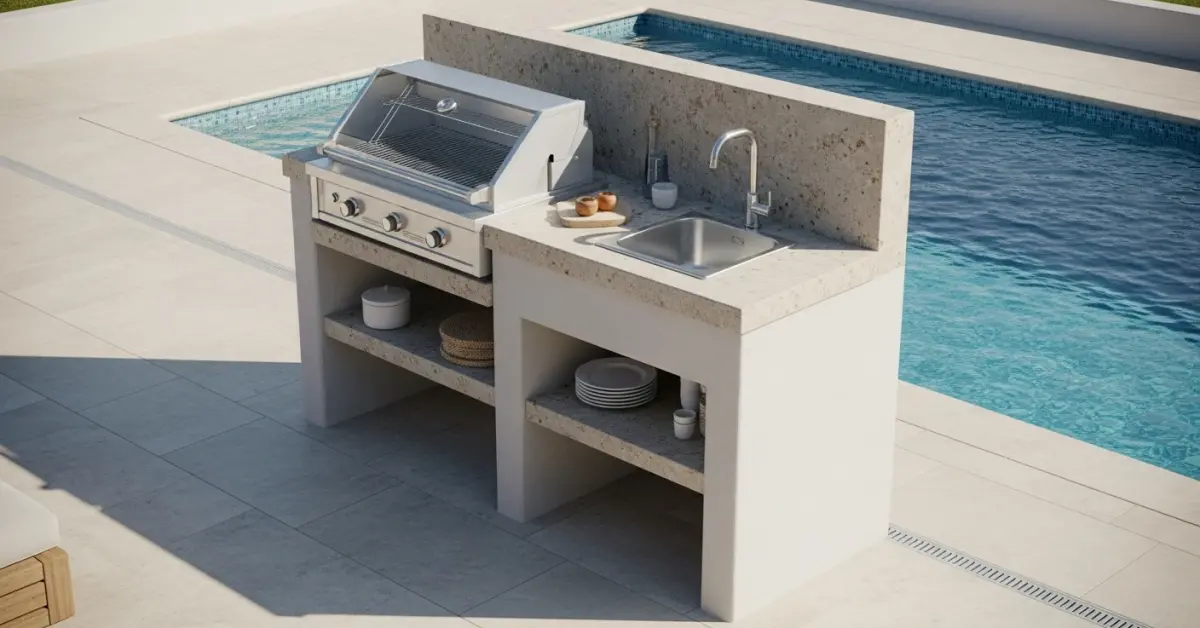
Executive Summary: Building a Lasting Compact Kitchen in Sarasota
From my years designing and building outdoor kitchens specifically for Sarasota's challenging environment, the most
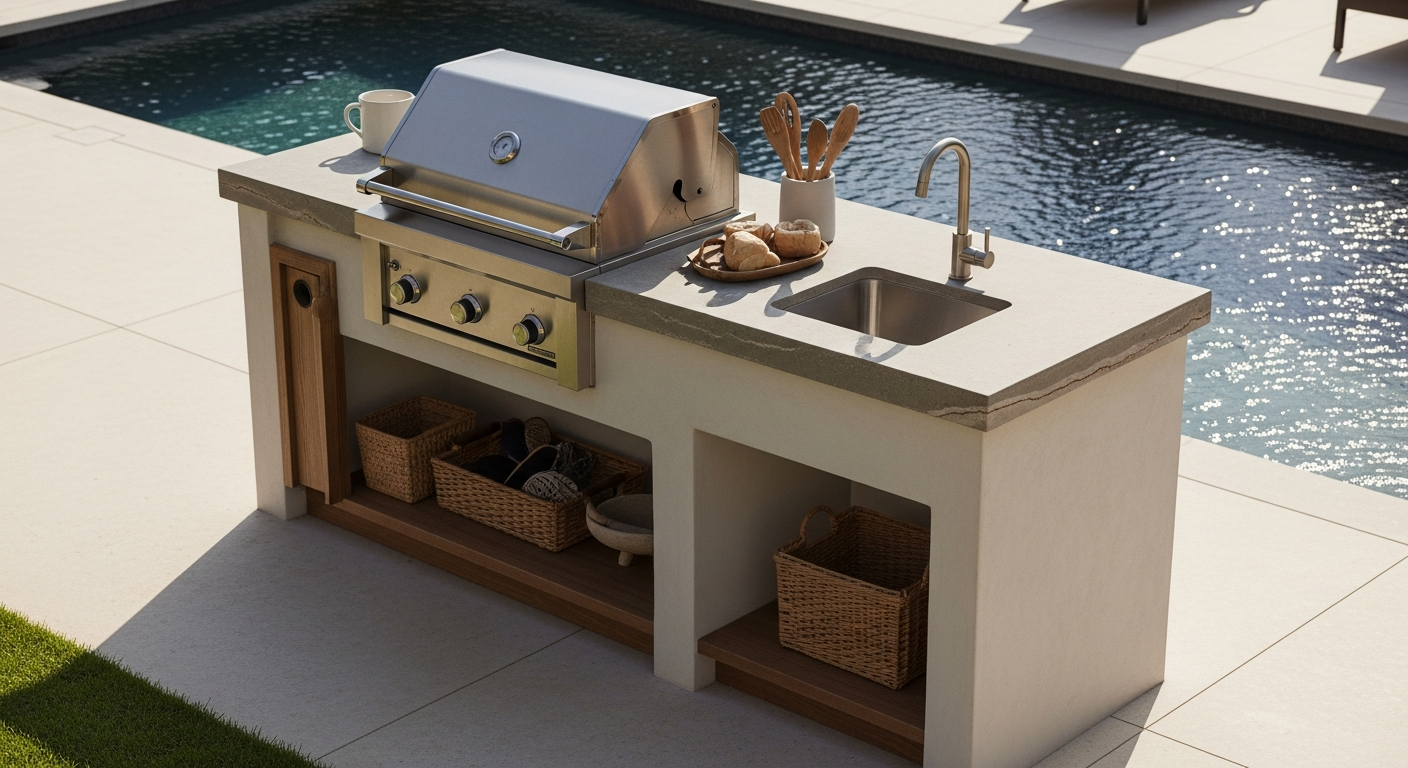
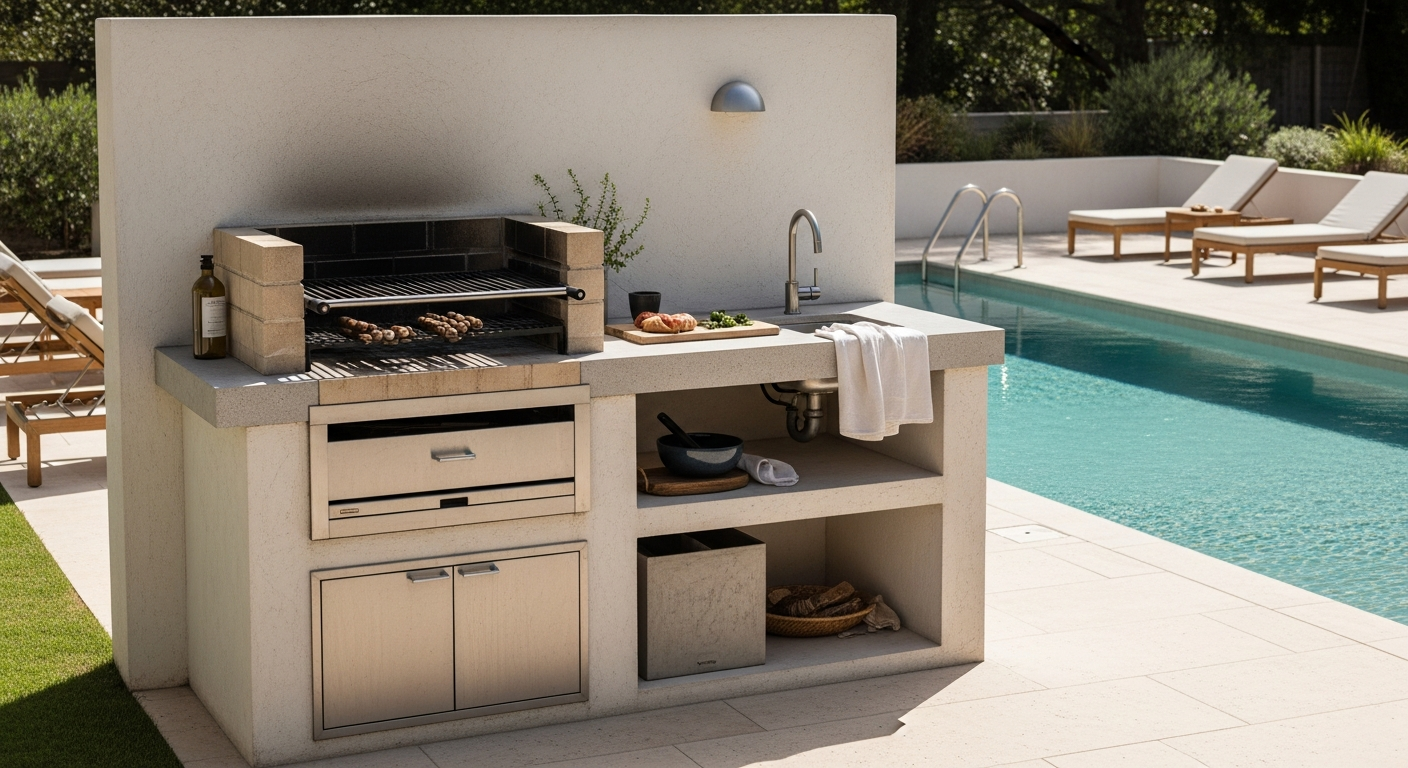
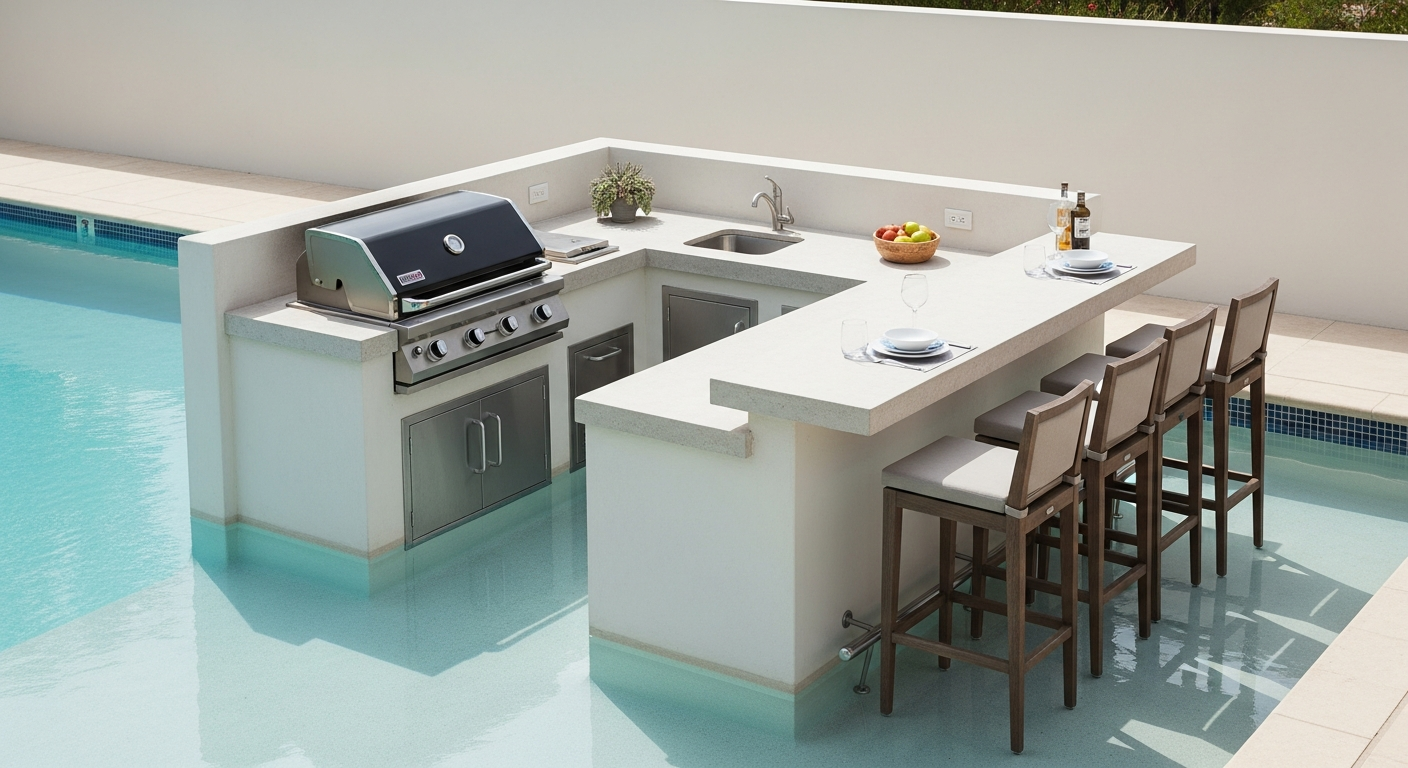
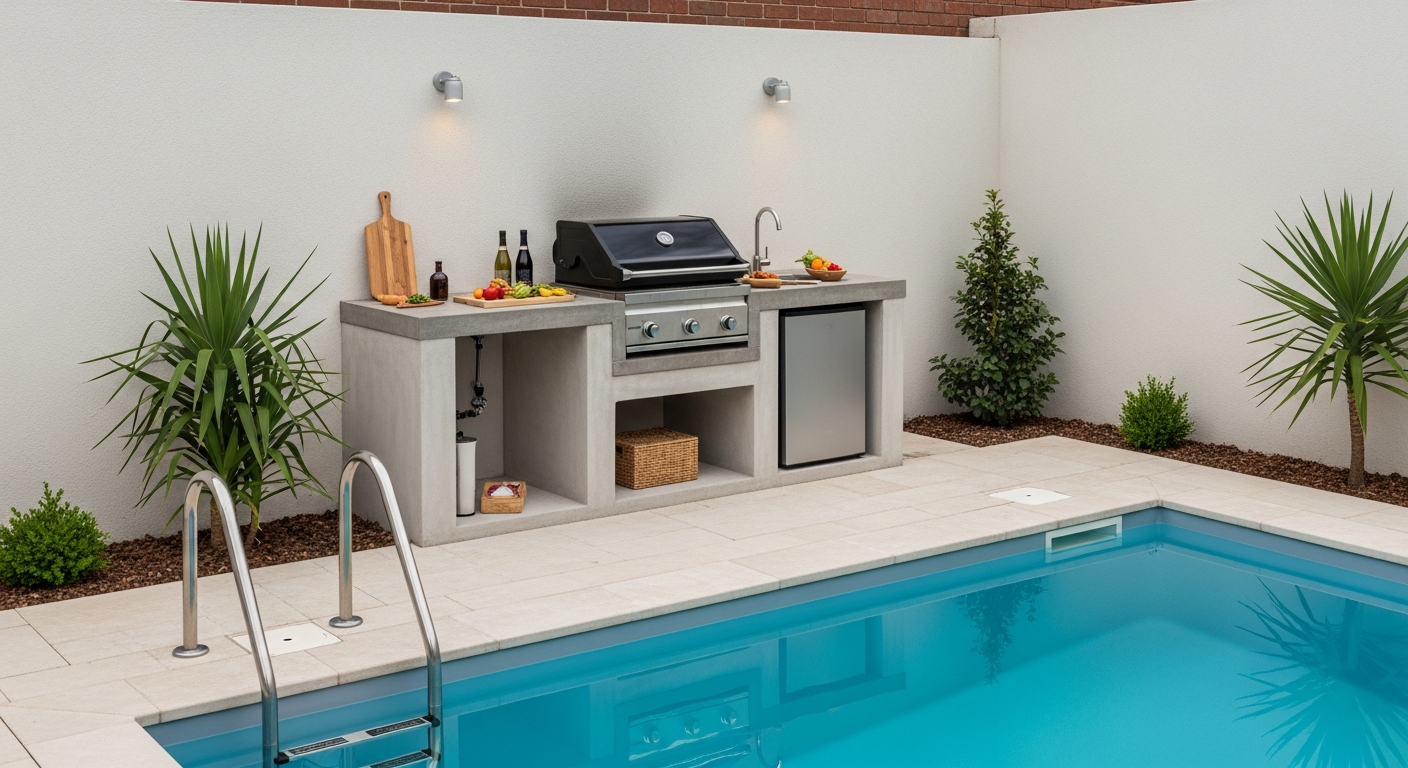
From my years designing and building outdoor kitchens specifically for Sarasota's challenging environment, the most successful projects are not the largest, but the most intelligently planned. A compact outdoor kitchen island or a small bar setup can offer 90% of the functionality of a large installation if it's designed for our climate and lifestyle. It's about resisting the urge to oversize and instead focusing on workflow, material durability, and compliance with local building codes.
- Material Priority: 316 marine-grade stainless steel for all appliances and hardware is non-negotiable to resist corrosion from salt air.
- Code Compliance: All electrical work requires GFCI protection, and any gas appliance installation requires a permit from Sarasota County and must adhere to strict ventilation and clearance rules under the Florida Building Code.
- HOA Navigation: Most planned communities, like those in Lakewood Ranch, require pre-approval from an Architectural Review Board (ARB), including material samples and detailed schematics.
- Footprint Efficiency: A well-designed 8-foot island can incorporate a grill, sink, under-counter refrigerator, and trash pull-out, making it a complete workstation.
The Planning Failures That Inflate Costs and Timelines
The most common missteps I see happen long before a single paver is moved. Homeowners get excited about appliances and layouts but neglect the foundational work that ensures a project is viable in Sarasota County. This oversight is where budgets and schedules unravel.
Forgetting the HOA Architectural Review Board
I had a client in a beautiful Palmer Ranch community who purchased over $10,000 in high-end appliances for their compact outdoor kitchen before ever consulting their HOA. When we submitted the design, the ARB rejected the proposed stacked stone finish, deeming it inconsistent with the neighborhood's aesthetic. The project was delayed by two months while we redesigned the structure, and the client was stuck with appliances they couldn't install. The lesson is stark: your HOA's approval is the true first step, not a final formality.
The Practical Process for a Small Outdoor Kitchen Project
Building even a mini outdoor kitchen is a construction project, not a simple appliance installation. It involves multiple trades—masonry, electrical, plumbing, and gas—and requires a clear, sequential process to avoid costly rework and ensure safety and compliance.
Key Selection Criteria for Sarasota Homeowners
The process begins with a site assessment to verify utility access and setbacks. From there, we develop a design that maximizes the small space, often using a compact L-shape or a highly efficient small outdoor kitchen island. Once the design and materials are approved by you and your HOA, we move to permitting.
- Contractor Licensing: Verify your contractor holds a valid Certified General Contractor (CGC) or Residential Contractor (CRC) license with the Florida Department of Business and Professional Regulation (DBPR). A handyman cannot legally run gas or electrical lines.
- Wind Load Engineering: Does the structure's design account for Florida's hurricane-related wind load requirements? For any attached or substantial structure, this is a part of the Florida Building Code review.
- Material Suitability for Salt Air: Ask for proof that all specified metals are 316-grade stainless steel. For cabinetry, question whether marine-grade polymers or powder-coated stainless steel are being used over less durable options.
- Permit Management: Confirm the contractor will pull all necessary permits from Sarasota County Planning and Development Services. A homeowner-pulled permit places all liability on you.
Comparing Compact Kitchens to Other Outdoor Cooking Setups
A fully integrated small outdoor kitchen is a significant investment. It's crucial to understand how it compares to simpler, less permanent solutions. The right choice depends entirely on your usage patterns, property value goals, and tolerance for setup and breakdown.
| Feature | Compact Outdoor Kitchen | High-End Grill Cart | Portable Electric Grill Station |
|---|---|---|---|
| Upfront Cost | $12,000 - $25,000+ | $1,500 - $5,000 | $500 - $1,200 |
| Functionality | Grill, sink, fridge, storage, prep space | Grill, side burner, minimal storage | Grilling surface only |
| Property Value Impact | High positive impact | Negligible | None |
| Weather Resistance | Engineered for permanent exposure | Requires a cover; susceptible to wind | Must be stored indoors |
When a Built-In Kitchen is the Wrong Choice
A built-in kitchen is not the right fit if you are in a rental property or plan to move within the next two to three years. The return on investment is realized over a longer term. Additionally, if your outdoor space is extremely limited, such as a small condo balcony on Lido Key, building code and HOA restrictions on permanent structures and open flames may make a high-quality portable electric grill a more practical and compliant option.
Safe Hiring and Verification Checklist for Your Project
Hiring the right team in Florida's active construction market is your most important defense against project failure. Verifying credentials isn't about distrust; it's about due diligence to protect your investment and your home.
- License and Insurance Check: Use the Florida DBPR portal to verify the contractor's license is active and free of complaints. Ask for a copy of their general liability and workers' compensation insurance certificates.
- Sarasota-Specific Experience: Ask for a portfolio of completed projects specifically within Sarasota County. A contractor familiar with local inspectors and HOA nuances (e.g., in The Founders Club vs. Southside Village) can prevent significant delays.
- Subcontractor Transparency: Who will be performing the electrical and plumbing work? They must also be licensed and insured in Florida. Ask for their credentials upfront.
- Detailed Written Contract: The contract must clearly itemize materials, appliance model numbers, payment schedule, and an estimated timeline. Vague agreements are a major red flag.
- Permit Confirmation: Do not allow work to begin before a permit is issued and posted visibly on-site. You can verify the permit status online through the Sarasota County permit portal.
- Lien Waivers: Ensure your contract specifies that you will receive signed lien waivers from the contractor and major subcontractors upon final payment.
The Decisions That Truly Define a Successful Outcome
After overseeing dozens of these projects, I can pinpoint the moments where a project is set up for success or failure. The successful ones are not defined by the most expensive grill or the most exotic countertop, but by a series of smart, early decisions that prioritize durability and function.
The Moment Homeowners Miscalculate Value
The critical mistake happens when comparing bids. A homeowner will see one bid that is $3,000 lower and assume it's a better deal. What they often miss is that the lower bid specifies a cheaper grade of stainless steel, a standard granite countertop instead of a non-porous material like Dekton, or uses pressure-treated wood framing instead of a lifetime-warranted aluminum or steel frame. The best decision you can make is to compare the material specifications and framing system first, and the price second. In our coastal air, the cheaper option will cost you more in repairs and replacement within five to seven years, guaranteed.
Practical Answers About Operating in Sarasota
Navigating the local rules is half the battle. Here are the answers to the questions that often become roadblocks for homeowners planning a small outdoor kitchen.
How are Gas Lines and Electrical Handled for Permitting?
In Sarasota County, any new gas line requires a separate permit and must be installed by a licensed plumbing or gas contractor. The line must be pressure tested and inspected before it can be concealed. Similarly, any new outdoor electrical outlet, which must be GFCI-protected, requires an electrical permit and inspection. These are not optional steps; they are fundamental safety and code requirements.
What are Common HOA Restrictions on Outdoor Kitchens?
HOAs in Sarasota are primarily concerned with aesthetics and safety. Common restrictions include limits on structure height, mandatory setbacks from property lines (often stricter than the county's), and pre-approved lists of exterior finishes (stucco colors, stone types). Many also prohibit charcoal grills in multi-family lanais or require specific fire-rated construction if the kitchen is near a combustible wall.
Does a Small Kitchen Island Need to be Permitted?
If the island is a simple, non-fixed structure with no utility connections (a rolling cart), it typically does not require a permit. However, the moment you connect it to a permanent gas line, hard-wired electricity, or plumbing, it becomes a permanent structure. At that point, it absolutely requires a building permit from Sarasota County, regardless of its size. The typical permit fee for a project of this scale can range from $250 to $600, depending on the scope of the utility work.